
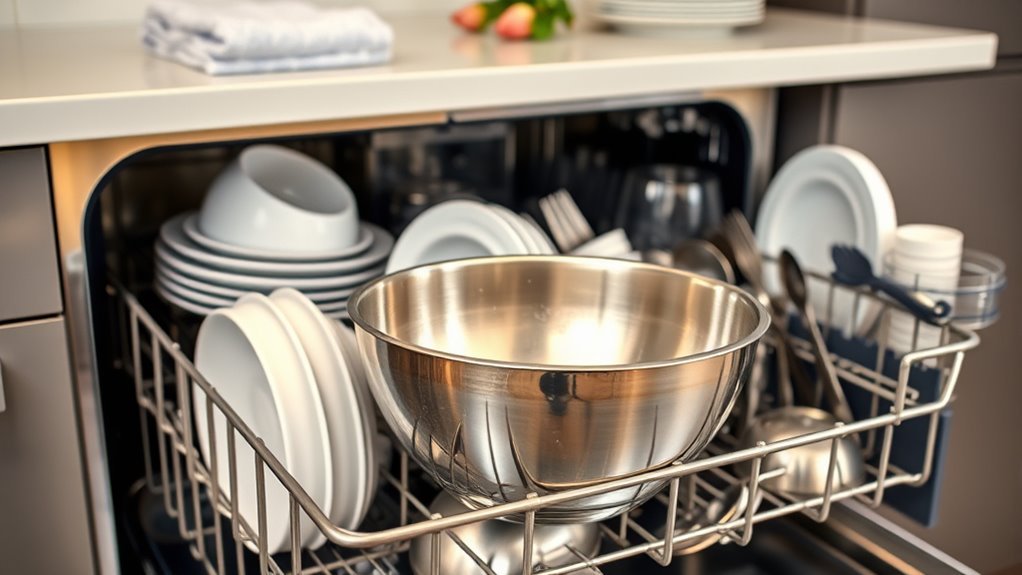
Did you know that about 70% of people mistakenly assume all stainless steel bowls are dishwasher safe? While many are designed for the dishwasher, it’s essential to understand the specifics of your bowls. High heat and harsh detergents can take a toll, especially on those with coatings or mixed materials. So, what should you know to keep your bowls in top condition? Let’s explore the best practices for washing and caring for your stainless steel items.
What Does “Dishwasher Safe” Mean for Stainless Steel Bowls?
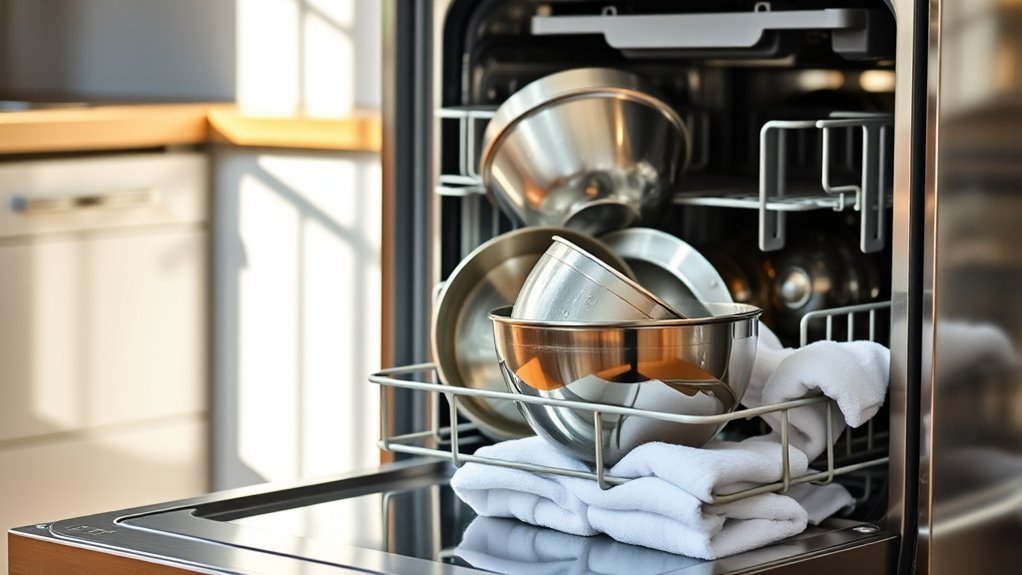
When you see “dishwasher safe” on stainless steel bowls, it means they’re built to withstand high heat, strong wash sprays, and detergents without damage. However, this definition can vary by the manufacturer, so it’s essential to check the specific manufacturer’s instructions.
Many stainless steel mixing bowls are designed to handle the dishwasher, but some may have coatings or finishes that could be compromised.
To guarantee you’re making the right choice, always refer to the guidelines provided. Bowls with rubber or silicone grips mightn’t be dishwasher safe, adding another layer of consideration.
While using the dishwasher is convenient, handwashing is generally recommended to prolong the lifespan and maintain the shine of your stainless steel bowls.
Are All Stainless Steel Bowls Dishwasher Safe?
Many people assume all stainless steel bowls are dishwasher safe, but that’s not always the case. While most stainless steel bowls are generally considered dishwasher safe, it’s essential to check the manufacturer’s instructions first. Some bowls might risk damage in the dishwasher due to high heat or harsh detergents. For these, hand washing is often a safer option.
If your bowl has mixed materials or coatings, it likely won’t withstand the dishwasher’s environment. To prevent scratches and dulling, always place stainless steel bowls on the top rack if you choose to wash them there.
Regularly inspect your bowls for signs of wear and tear; this helps maintain their appearance and longevity. By taking these precautions, you can enjoy your bowls without worrying about damage, ensuring they remain beautiful and functional for years to come.
Best Practices for Washing Stainless Steel Bowls
To keep your stainless steel bowls looking their best, adopting effective washing practices is crucial. While these bowls are generally considered dishwasher safe, always check the manufacturer’s instructions first.
For ideal care, hand washing is often recommended to maintain their shine and avoid damage. If you do use the dishwasher, place the bowls on the top rack to protect them from harsh sprays and high heat.
Avoid abrasive cleaners or scrubbers, as they can scratch the surface, diminishing their appearance over time. Instead, use a gentle dish soap and a soft sponge.
After washing, dry the bowls immediately to prevent water spots and preserve their luster. By following these simple steps, you can guarantee your stainless steel bowls remain in excellent condition, ready for your next culinary adventure.
Embrace these best practices and enjoy the freedom of maintaining your kitchen essentials effortlessly!
Preventing Water Spots and Maintaining Shine
While stainless steel bowls are durable and resistant to stains, they can still develop unsightly water spots if not cared for properly. To prevent this, always dry your bowls thoroughly right after washing to avoid mineral deposits from hard water.
Stainless steel bowls are durable but can show water spots; always dry them thoroughly to prevent mineral buildup.
If you prefer to wash by hand, using a vinegar rinse can help eliminate any residue and enhance the shine.
If you use a dishwasher, avoid overcrowding it; proper water circulation is key to minimizing spotting on stainless steel surfaces. Additionally, employing a quality stainless steel cleaner or polish can restore shine and protect against future tarnishing.
Regular maintenance with a soft cloth will help maintain the luster of your bowls over time. By following these simple steps, you can keep your stainless steel bowls looking pristine, ready for your next culinary adventure.
What You Should Skip When Washing Stainless Steel Bowls
When washing stainless steel bowls, you should skip high heat settings and harsh detergents that can cause damage.
Always check the manufacturer’s instructions, as some bowls may not be dishwasher safe.
To maintain their quality, consider handwashing or placing them on the top rack if you do use the dishwasher.
Avoiding High Heat
Although many stainless steel bowls are labeled as dishwasher safe, it’s important to be cautious about the high heat settings in your dishwasher. High heat can warp or discolor stainless steel, especially if the bowls aren’t specifically designed for such conditions.
Always check the manufacturer’s instructions to avoid potential damage. If your bowls have mixed materials or coatings, they mightn’t withstand dishwasher conditions, leading to deterioration.
To preserve their lifespan and appearance, consider handwashing with warm, soapy water instead.
Also, avoid placing bowls with plastic parts or decorations in the dishwasher, as these components may not be dishwasher safe and could sustain damage.
Prioritize care to keep your stainless steel bowls looking their best.
Damage From Detergents
To maintain the pristine condition of your stainless steel bowls, it’s crucial to choose your detergents wisely. Harsh detergents can cause discoloration and damage over time, so you’ll want to avoid those containing citric acid, which can lead to pitting and corrosion.
When washing, skip high-temperature cycles, as they can exacerbate tarnishing and dull your bowls’ finish. Always check the manufacturer’s instructions for any specific care guidelines, as some bowls may have unique requirements.
If you’re serious about preserving the appearance and longevity of your high-quality stainless steel, handwashing is often the best option. By being mindful of the detergent you use, you can prevent damage and keep your bowls looking their best for years to come.
Tips for Hand Washing Stainless Steel Bowls
When hand washing your stainless steel bowls, stick to a mild detergent to avoid damaging the surface.
Use a soft sponge instead of abrasive scrubbers to keep the finish intact.
Rinse your bowls immediately after use to prevent soap residue from affecting their shine and the taste of your food.
Use Mild Detergent Only
Using a mild detergent is crucial for hand washing stainless steel bowls, as it protects the surface and preserves their shine.
When you wash, be sure to use mild detergent only, avoiding harsh chemicals that can dull the finish. For effective cleaning, consider using wash sprays and detergent designed specifically for stainless steel.
After scrubbing, rinse the bowls thoroughly with warm water to eliminate any soap residue that could alter the taste of your food.
If you encounter stubborn stains, soak the bowls in a warm water and vinegar solution beforehand.
Finally, dry your stainless steel bowls immediately with a soft cloth to prevent water spots and maintain their luster.
This extra care guarantees your bowls stay beautiful and functional.
Avoid Abrasive Scrubbers
While mild detergent is important for maintaining your stainless steel bowls, the tools you use for cleaning also play a significant role. Avoid abrasive scrubbers or steel wool, as they can scratch and damage the surface. Instead, opt for softer alternatives that won’t harm your bowls.
- Use soft sponges or cloths for effective cleaning.
- Soak your bowls in warm, soapy water to loosen stuck-on food particles.
- Rinse thoroughly with warm water to eliminate soap residue.
To keep your stainless steel looking its best, dry them immediately with a soft towel. By taking care of your bowls like you’d a cast iron skillet, you guarantee they stay shiny and functional for years to come.
Rinse Immediately After Use
Rinsing your stainless steel bowls immediately after use is one of the best practices for keeping them in top condition. It prevents food particles from drying and sticking, making them easier to clean later.
Use warm water and a mild detergent without harsh chemicals to maintain that shiny appearance and eliminate lingering odors. Be cautious—avoid abrasive cleaners or scrubbers, as they can scratch the surface and diminish your bowl’s luster over time.
For tough stains, consider a paste of baking soda and water, which cleans effectively without damaging the material.
Finally, thoroughly drying your stainless steel bowls after washing helps prevent water spots, ensuring they stay polished and ready for your next culinary adventure.
Misconceptions About Stainless Steel Bowls in the Dishwasher?
Many people assume that all stainless steel bowls are dishwasher safe, but this isn’t always the case. Variations in materials and construction mean some bowls may suffer damage over time.
Here are a few misconceptions to reflect on:
- All stainless steel bowls are the same: Different grades of stainless steel can react differently to heat and detergent.
- Dishwashing is always safe: Some manufacturers recommend handwashing to avoid dulling or scratching.
- Coated bowls are fine: Bowls with coatings or mixed materials often aren’t dishwasher safe, and you should handwash them to maintain their integrity.
Always check the manufacturer guidelines before tossing your bowls into the dishwasher.
By understanding these points and regularly inspecting your bowls, you can prolong their lifespan and keep them looking great.
Alternatives to Dishwashing Stainless Steel Bowls
If you want to keep your stainless steel bowls in pristine condition, handwashing is often the best alternative to dishwashing. Using hot, soapy water and a soft sponge helps prevent scratches, ensuring their shine lasts. For stubborn stains, a baking soda and water mixture serves as a gentle abrasive scrub. After washing, dry your bowls with a microfiber cloth to avoid water spots.
Here’s a quick guide to maintain your bowls:
| Method | Description | Tips |
|---|---|---|
| Handwashing | Use hot, soapy water and a soft sponge. | Consult manufacturer’s instructions. |
| Stain Removal | Baking soda and water mixture. | Apply gently with a soft cloth. |
| Drying | Use a microfiber cloth. | This prevents water spots. |
| Avoiding Damage | Keep metal utensils away from the bowls. | Protects the surface from scratches. |
Frequently Asked Questions
Is Stainless Steel Safe in the Dishwasher?
Yes, stainless steel is generally safe in the dishwasher, thanks to its durability. It can handle the dishwasher’s efficiency well, but you should still be cautious.
Place your bowls on the upper rack to minimize exposure to high heat and avoid abrasive detergents that might damage their finish.
To keep them looking great over time, handwashing is recommended for high-quality items. Always check the manufacturer’s instructions for specific guidance.
What Are Six Things I Should Never Put in the Dishwasher?
You should never put cast iron cookware, aluminum items, enameled cast iron, good kitchen knives, non-stick cookware, and wooden utensils in the dishwasher.
These dishwasher myths can lead to rust, discoloration, dull blades, or damaged surfaces.
Instead, handwash these kitchen tools to maintain their quality and longevity.
What Metal Cannot Go in the Dishwasher?
Aluminum cookware and copper utensils simply can’t handle the dishwasher’s intense heat and harsh detergents.
Picture delicate treasures tarnishing and warping in a tempest—it’s not pretty! Instead, keep these metals safe by handwashing them gently.
You’ll preserve their beauty and functionality, ensuring they remain your trusty companions in the kitchen.
So, when you’re loading that dishwasher, remember these metals deserve a little extra TLC.
Your cookware will thank you!
What Should You Not Put in a Stainless Steel Bowl?
You shouldn’t put highly acidic foods, like tomatoes or citrus, in a stainless steel bowl, as they can react and damage the finish.
Avoid storing food in these bowls for long periods to prevent metallic tastes.
If your bowl has a non-stick coating, steer clear of the dishwasher to protect it.
For proper stainless steel care and bowl maintenance, never use abrasive cleaners, as they can scratch and dull the surface.
Conclusion
In the world of kitchenware, stainless steel bowls shine like polished silver under sunlight. While they often fare well in the dishwasher’s embrace, treating them with care guarantees they sparkle longer. Handwashing is like a gentle caress, preserving their integrity and beauty. Remember, a little attention goes a long way—avoid harsh detergents and overcrowding. By nurturing your bowls, you keep them gleaming, ready to serve delightful meals for years to come.
