
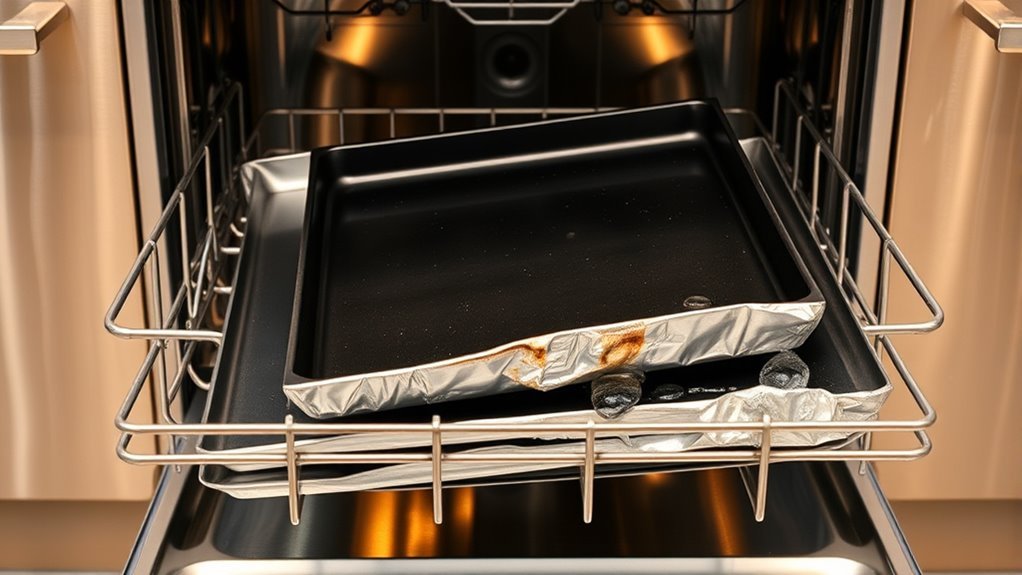
You probably toss a lot of cookware into the dishwasher without thinking, but baking sheets are a special case and can suffer warped metal, faded nonstick coatings, and pitting from harsh detergents. You’ll want clear guidance on which materials cope with dishwashers, how to tell if a pan is dishwasher-safe, and simple hand-wash steps that protect finish and shape—so you don’t ruin a favorite pan before its time.
Are Baking Sheets Dishwasher‑Safe? The Short Answer
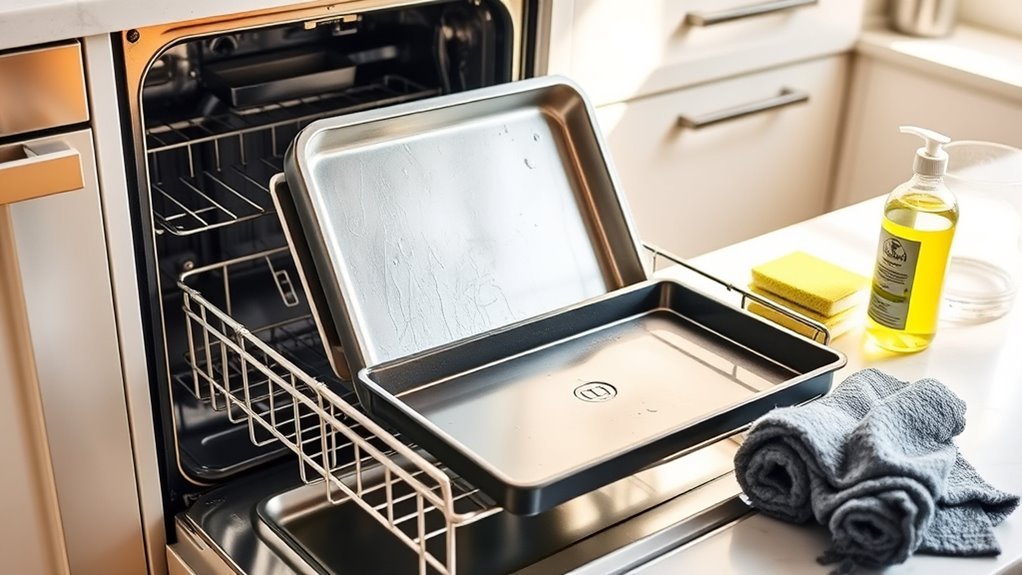
Wondering whether you can pop your baking sheet in the dishwasher? Short answer: most baking sheets aren’t dishwasher safe.
If you want to keep control over your cookware’s lifespan, skip the dishwasher for aluminum and many stainless pieces — high heat and harsh detergents can warp metal and strip finishes.
Nonstick sheets are especially vulnerable; the detergent and cycles can degrade the coating over time, so don’t rely on machine convenience if you care about performance.
Instead, take a few liberating minutes to hand-wash with mild dish soap and a soft sponge. Prompt cleaning after use prevents buildup and makes the job easier, preserving color and shape.
Take a few liberating minutes to hand-wash with mild soap and a soft sponge to preserve color and shape.
Avoid abrasive pads that scratch surfaces. By choosing gentle maintenance, you protect your tools and keep them working like new, giving you more freedom in the kitchen without trading long-term quality for short-term convenience.
Why Dishwashers Damage Aluminum and Nonstick Pans
If you’ve been tempted to save time by running aluminum or nonstick sheets through the dishwasher, think again: the machine’s combination of high heat, strong detergents, and vigorous water action attacks both the metal and its coatings.
You’ll see aluminum baking sheets discolor, pit, or warp as repeated cycles expose thin metal to alkaline detergents and sustained heat. That changes appearance and weakens structural integrity, so pans don’t sit flat or conduct heat evenly.
Nonstick baking pans suffer differently: detergents and abrasive spray remove the microscopic textured finish, and high temperatures accelerate coating breakdown.
Scratches from other items or from rough cycles let food stick and shorten lifespan. You want freedom from wasted replacements, so opt for handwashing with mild soap, warm water, and a soft sponge.
That preserves surface coatings and keeps aluminum sheets true, saving you money and frustration while keeping your bakeware reliable.
Which Sheet‑Pan Materials Handle Dishwashers Best
Because different metals and coatings react very differently to heat, detergent, and spray pressure, you should pick sheet pans with cleaning in mind as much as cooking performance.
Choose stainless steel when you want resilience and low maintenance: it tolerates dishwasher cycles, detergents, and spray pressure far better than aluminum or coated surfaces, so you can reclaim time without sacrificing durability.
Avoid relying on plain aluminum in the dishwasher — its surface can pit, discolor, and lose life under harsh detergent.
Nonstick baking pans, especially Teflon-coated ones, will degrade faster in dishwashers; the coating can dull or flake, undermining release and safety.
Cast iron belongs to a different regimen — never dishwasher it if you value seasoning and rust prevention.
Ultimately, let manufacturer guidance and intended use be your rulebook: pick materials that match your lifestyle and cleaning needs, and you’ll free yourself from needless maintenance while keeping performance intact.
Is Your Sheet Pan Dishwasher‑Safe? How to Check
You picked a material with care — now confirm whether that particular sheet pan can actually go in the dishwasher. First check the manufacturer’s label or user manual: they’ll state if the baking sheets are dishwasher safe or not.
You picked the material—now check the manufacturer’s label or manual to confirm dishwasher safety.
If the pan is unmarked, look for cues — stamped symbols on the rim, model information you can search online, or the product page.
Remember common limits: most aluminum and many stainless pans aren’t dishwasher safe because harsh detergent and heat can warp or pit them. Nonstick coatings usually aren’t dishwasher safe either; machines degrade the finish over time.
Don’t assume similarity across brands — two steel pans can have different coatings and tolerances.
If guidance is unclear or absent, choose hand-washing to protect your freedom from premature replacement. Also avoid stacking pans in the machine; that causes scratches and warping.
Confirming the official care directions gives you confidence to care for your sheets without wasting energy or money.
Hand‑Wash Aluminum and Nonstick Pans: Step‑by‑Step
When caring for aluminum or nonstick sheet pans, wash them by hand with warm water, a few drops of mild dish soap, and a soft sponge to protect the finish and avoid scratching.
Begin by rinsing loose crumbs and oil under warm running water. Add a small squirt of soap to the pan, then gently clean with the soft side of a sponge, following the grain or pattern if present.
If food is stuck, fill the pan with hot, soapy water and let it soak for about 30 minutes to loosen residue; this preserves the surface without scrubbing.
Never use abrasive cleaners, steel wool, or harsh scouring pads, since they’ll degrade coatings and shorten performance.
After washing, rinse thoroughly to remove all soap, then dry immediately with a clean towel to prevent spots and water marks.
Treating your bakeware this way keeps nonstick pans and aluminum looking and working their best while giving you freedom from constant replacement.
Remove Stains and Burnt Food Safely
After hand-washing to protect coatings, you’ll still occasionally face browned-on bits or dark stains on aluminum and nonstick sheets. You can reclaim those baking sheets without harsh tactics: soak in hot, soapy water about 30 minutes, then scrub with a sturdy sponge to loosen burnt food.
After hand-washing, soak stained aluminum and nonstick sheets in hot, soapy water ~30 minutes, then scrub gently.
For persistent marks, apply Bar Keepers Friend or a baking soda paste, let it sit 30 minutes, then scrub and rinse. Don’t use the dishwasher — heat and detergent can warp metal and ruin coatings.
- Soak in hot, soapy water for ~30 minutes to soften stuck-on food.
- Scrub with a nonabrasive yet sturdy sponge to avoid scratching surfaces.
- Use Bar Keepers Friend or baking soda paste for stubborn stains.
- Let cleaners sit before scrubbing for maximum effectiveness.
- Rinse and dry immediately to prevent water spots and oxidation.
You’ll preserve appearance and function by removing stains promptly, avoiding abrasive tools, and treating each sheet with consistent, intentional care.
When Staining or Warping Means Replace the Pan
If your baking sheet shows visible warping—like a bulge in the center—you’ll notice uneven baking and should consider replacing it.
Persistent surface discoloration can signal advanced wear that, while not harming food, often coincides with thinning metal and reduced performance.
When shape changes or staining lead to loss of cooking performance, it’s practical to invest in a new pan for consistent results.
Visible Structural Warping
Because a baking sheet that bulges or twists under heat won’t cook evenly, you should replace any pan that shows visible structural warping. You deserve cookware that performs reliably, so don’t tolerate compromised results or safety risks.
Warping in baking sheets usually signals exposure to temperatures beyond the pan’s tolerance; bulges in the center cause uneven browning and can tip hot trays.
- Inspect pans flat on a level surface before heating.
- Stop using sheets that noticeably bow after a few bakes.
- Avoid high oven temperatures if a sheet seems marginally warped.
- Hand-wash and dry to slow further deformation.
- Replace warped pans to protect consistent results and kitchen freedom.
Act decisively: replace warped sheets rather than squeeze more use from failing gear.
Persistent Surface Discoloration
When staining builds up on a baking sheet and the metal shows deep, persistent discoloration, you should treat it as a wear signal rather than just an aesthetic problem.
You can keep using pans that are merely stained, since discoloration alone usually won’t affect food, but watch for warping or structural change.
Avoid the dishwasher—its high heat and harsh detergents accelerate staining and can promote the bulging that forces replacement. Hand-wash with mild detergent and dry thoroughly to extend life.
If you hear popping under high heat, see uneven edges, or the sheet no longer sits flat, replace it for safety and consistent results.
Choosing replacement is a liberation: pick durable, easily maintained pans and stop forcing damaged cookware to perform.
Loss Of Cooking Performance
One clear sign it’s time to replace a baking sheet is a persistent loss of cooking performance: if your pan bulges in the center, warps along the edges, or no longer yields even browning, it won’t give reliable results and should be retired.
You deserve tools that free you, not frustrate you—staining alone won’t ruin food, but structural issues will.
- Inspect regularly: look for bulges, uneven rims, and visible warping.
- Test with a flat surface: a warped sheet rocks and won’t bake evenly.
- Note heat history: frequent high-heat use and dishwashing accelerate wear.
- Prefer heavy-gauge aluminum for durability; replace when integrity declines.
- Replace when dishes consistently brown unevenly despite recipe accuracy.
Rescue Methods for Heavily Stained or Warped Pans
If your baking sheets look scorched or are slightly warped, you can often revive them with a few targeted steps that won’t damage the metal: make a baking soda paste (baking soda + water) and coat heavy duty baking sheets’ stained areas, let sit 30 minutes, then scrub gently with a non‑abrasive sponge.
For stubborn grime, soak sheets in hot, soapy water for 30 minutes to loosen baked‑on food before scrubbing.
To flatten a warped pan, preheat the oven to 450°F, place the pan inside for about 10 minutes, then monitor closely as it cools; this often helps it reflatten without further damage.
For stainless steel, use Bar Keepers Friend on persistent stains, but rinse and scrub immediately to avoid etching.
After any rescue, rinse thoroughly and dry promptly — especially for aluminum — to prevent rust and preserve performance.
These steps free you from replacing pans prematurely and get you back to confident cooking.
Choosing a Durable Baking Sheet: Gauge, Material, and Design
When choosing a durable baking sheet, you’ll want a heavier gauge—around 20-gauge aluminum—to get fast, even heat and resist warping.
Prefer uncoated aluminum for its superior thermal conductivity compared with stainless steel, which helps with consistent browning and quicker cooldowns.
Also check for rolled edges, since they stiffen the rim and keep the sheet flat at high temperatures.
Gauge And Heat Conductivity
Gauge matters: heavier-gauge baking sheets—commonly 18- or 20-gauge aluminum measured in ounces per square foot—resist warping at high heat and deliver more consistent results because they conduct and distribute heat evenly.
You’ll notice thicker pans give predictable browning and fewer hot spots; that reliability frees you to bake boldly.
Consider aluminized steel if you want corrosion resistance plus decent conductivity, though pure aluminum conducts best.
Choose materials that align with practical values: durability, recyclability, and performance.
- Heavier gauge = less warp, more even baking
- Aluminum = top heat conductivity for quick, even results
- Aluminized steel = corrosion resistance with fair conductivity
- Uncoated aluminum = durable, recyclable option
- Avoid thin pans that sacrifice consistency and longevity
Rolled Edges And Sturdiness
Look for baking sheets with rolled edges—you’ll get a noticeably stiffer, more warp-resistant pan that holds its shape under high heat.
Rolled edges add structural integrity and instant sturdiness, so you can push limits in the kitchen without worrying about bowed pans.
Pair that design with a heavier gauge metal — 20-gauge uncoated aluminum is ideal — and you’ll gain durability and superior heat distribution for even baking.
Aluminum’s fast heating and cooling give you control professionals trust, while design choices like rimless or low-profile options ease handling and reduce scratching.
Choose high-quality materials and construction to free yourself from flimsy gear: you’ll bake reliably, clean confidently, and keep sheets performing longer without constant replacement.
Maintenance Habits to Extend Sheet‑Pan Life (What to Avoid)
Although you might be tempted to toss aluminum pans in the dishwasher for convenience, avoid doing so—hot water and harsh detergent can strip coatings, cause discoloration and warping, and shorten pan life.
You want your baking sheets to serve you, not the other way around, so choose soap and water, a soft sponge, and prompt drying after use. Don’t let grease bake on; rinse soon and hand-wash gently to preserve flatness and finish.
- Never put aluminum or coated baking sheets through a dishwasher cycle.
- Don’t stack pans wet or let them sit with residue that promotes staining.
- Avoid abrasive pads and steel wool that scratch surfaces and remove coatings.
- Don’t use aggressive oven cleaners or bleach that degrade metal and finishes.
- Inspect regularly for warping or discoloration and replace when performance drops.
Adopt these simple habits to keep sheet pans reliable, extend their life, and reclaim time from needless replacements.
Frequently Asked Questions
Can You Put a Metal Baking Tray in the Dishwasher?
No — you shouldn’t put most metal baking trays in the dishwasher. You’ll risk dishwasher damage to metal bakeware: heat and detergents can discolor, warp, or strip coatings.
You’ll protect performance and freedom from replacing warped pans by handwashing with mild soap and a soft sponge, avoiding abrasives.
Regular gentle cleaning preserves nonstick surfaces and extends lifespan, letting you bake confidently without surrendering durability to a dishwasher cycle.
Why Shouldn’t Aluminum Pans Go in the Dishwasher?
They’ll degrade fast: aluminum oxidation and high dishwashing temperatures strip finish and cause discoloration.
You’ll see tarnish, pitting, and fading of nonstick coatings, and warping from intense heat and water pressure.
You’ll preserve performance by hand-washing with mild detergent, warm water, and a soft sponge, drying promptly.
That simple choice gives you freedom from replacing warped, stained pans and keeps your cookware reliable and long-lasting.
What Is the Best Way to Wash Baking Sheets?
Wash baking sheets by hand: you’ll treat each baking sheet material properly and preserve performance.
Use warm water, mild dish soap, and a soft sponge; avoid abrasive cleaners on nonstick or aluminum surfaces.
For baked-on grime, soak in hot, soapy water 30 minutes, then scrub with a brush or scouring pad.
Use baking soda or Bar Keepers Friend sparingly for deep cleaning, rinse thoroughly, and dry immediately to prevent rust and warping.
Why Do My Baking Sheets Change Color When I Put Them in the Dishwasher?
Like a slow storm darkening metal, your baking sheets change color because dishwasher chemicals react with the surface.
You’ll see baking sheet discoloration when harsh detergents, heat and moisture oxidize aluminum or wear nonstick coatings. That chemical attack causes dulling, staining or peeling and speeds pitting or corrosion.
You can reclaim control by hand-washing with mild soap, avoiding high-heat dishwasher cycles, and drying sheets promptly to prevent further damage.
Conclusion
So go ahead—love your pans, not your dishwasher. If you toss aluminum or nonstick into the sudsy maw, expect warped egos and peeling finishes; hold the detergent tantrums and wash by hand. Pick heavier-gauge metal or stainless if you want a dishwasher flirtation, but really, routine hand-washing and quick inspections keep things honest. Treat your sheet pans like reliable friends: a little effort now saves melodrama later. Your oven deserves better.
