
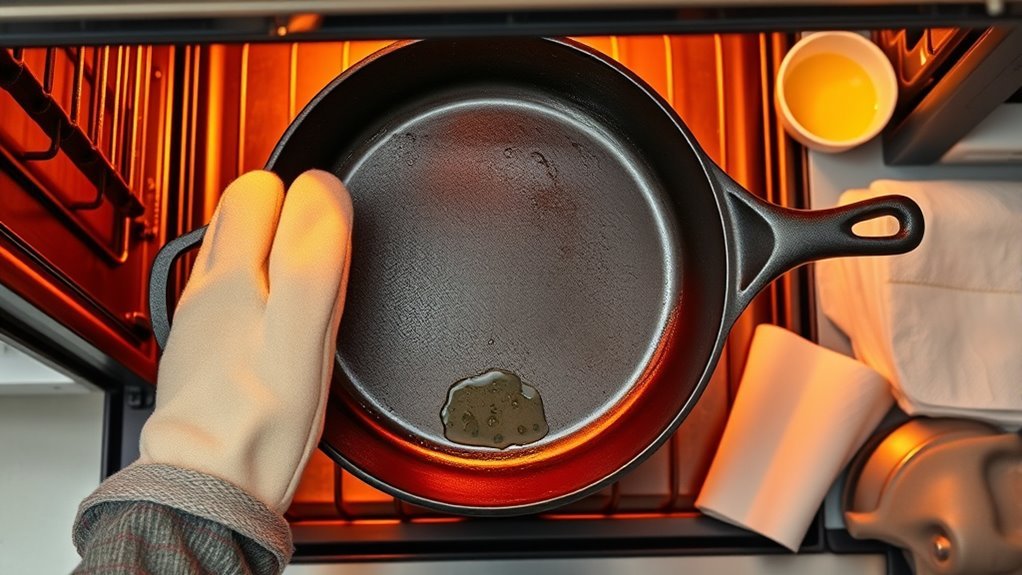
Seasoning your cast iron skillet is essential for maintaining its non-stick surface and preventing rust. You’ll want to start with a clean skillet, ensuring it’s completely dry before applying any fat. Choosing the right fat and knowing the ideal oven settings are vital for a successful seasoning. Once you understand these steps, you’ll be well on your way to achieving that perfect finish. Let’s get started on the process that will enhance your cooking experience.
How to Season Your Cast Iron Skillet: A Step-by-Step Guide
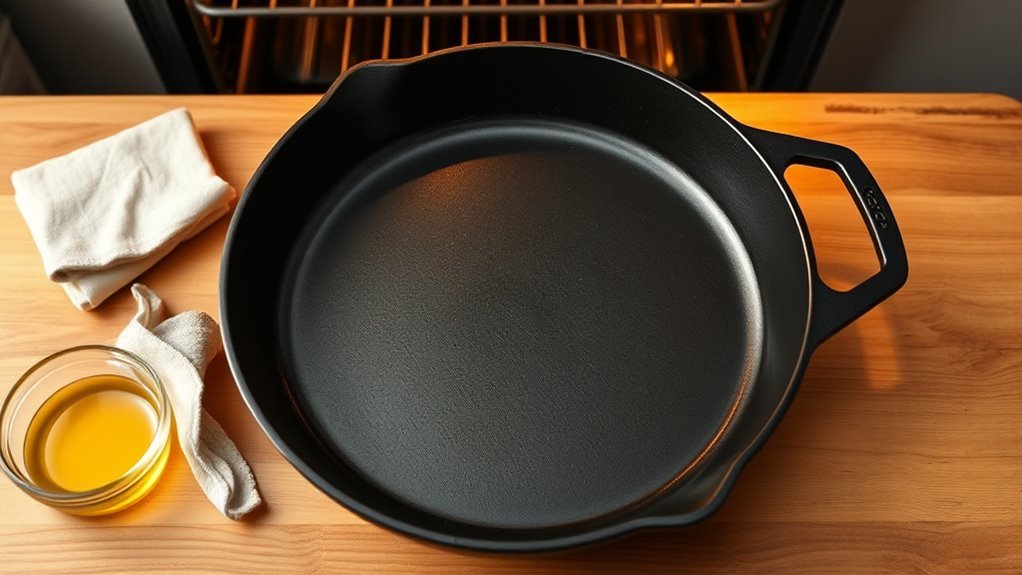
To season your cast iron skillet effectively, start by giving it a thorough wash with a small amount of dish detergent and soapy water. Rinse it well and dry it completely to prepare for seasoning.
Next, apply a thin layer of Crisco all over the skillet, including the lid and handle, making sure to wipe off any excess grease.
Preheat your oven to 450°F, then place the greased skillet upside down in the oven. Set a timer for 20 to 30 minutes; expect some smoking as the seasoning develops.
Once the timer goes off, turn off the oven and let the skillet sit inside overnight. This allows the seasoning to set properly, creating a durable non-stick surface.
Embrace this process; your cast iron skillet will thank you with every delicious meal you cook!
The Essential Tools and Ingredients for Seasoning
To properly season your cast iron skillet, you’ll need a few essential tools and ingredients.
Grab your skillet, some solid fat like Crisco, a soft cloth or paper towels, and access to an oven.
With these items in hand, you’re ready to create a non-stick surface that enhances your cooking experience.
Essential Tools Needed
When you’re ready to season your cast iron skillet, having the right tools makes all the difference. Here’s what you’ll need:
| Tool/Ingredient | Purpose | Notes |
|---|---|---|
| Clean, Dry Skillet | Base for seasoning | Prevents rust |
| Crisco or Similar Fat | Greasing the skillet | Avoid non-salted fats for retention |
| Oven | Ideal environment for seasoning | Preheat to 450°F |
| Timer | Track seasoning time | Set for 20-30 minutes |
| Paper Towels | Wipe off excess grease | Guarantee a thin, even layer |
After you’ve applied the fat, use a paper towel to wipe off excess. Once done, let it cool before using, and you’re all set! I’m going to make my skillet last!
Recommended Seasoning Oils
Choosing the right oil for seasoning your cast iron skillet is essential, as it can greatly affect the durability and non-stick quality of the surface.
For ideal results, consider these options:
- Crisco: Offers a stable layer of seasoning without salt, preventing corrosion.
- Flaxseed Oil: Has a high smoke point and polymerizes well for a durable finish.
- Grapeseed Oil: Another great alternative oil with a high smoke point, ensuring smooth seasoning.
Avoid oils with low smoke points, like olive oil, as they create a sticky residue.
Remember to grease your skillet evenly, including the lid and handle, and wipe off excess oil.
Preheating your oven to 450°F helps polymerize the oil, enhancing the non-stick surface.
Follow these seasoning tips for best results!
Cleaning Supplies Required
Before you start seasoning your cast iron skillet, gather the essential cleaning supplies to guarantee a successful process. You’ll need a small amount of dish detergent to wash away any residues from manufacturing or previous use.
A stainless steel scrubber can help tackle tough residues, ensuring effective cast iron care. For seasoning, Crisco is your go-to due to its high smoke point and lack of salt, which can harm the skillet’s surface.
Don’t forget a clean, dry cloth or paper towels to apply a thin layer of grease and wipe off excess. Finally, have an oven-safe surface or tray ready to catch any drips while your skillet heats—a key step to debunking seasoning myths and achieving perfect results.
Step-by-Step Guide to Washing and Drying Your Skillet
Washing and drying your cast iron skillet correctly is essential for maintaining its seasoning and preventing rust.
Start with a small amount of dish detergent to clear out any residue, then rinse thoroughly under hot water.
Finally, dry it completely with a clean towel to guarantee it’s ready for your next cooking adventure.
Essential Washing Techniques
To keep your cast iron skillet in top shape, mastering essential washing techniques is key. Following these maintenance tips will enhance your skillet longevity and prevent rust:
- Start by washing with a small amount of dish detergent to remove residue.
- Rinse thoroughly with warm water; leftover soap can strip the seasoning.
- For tough residues, soak for only 1-2 minutes and gently scrub with a stainless steel scrubber.
Always dry your skillet completely with a clean towel. Any moisture can lead to rust formation.
Remember to store your cast iron in a dry place and avoid stacking it with other cookware without protection.
Proper Drying Methods
Once you’ve washed your cast iron skillet, drying it properly is crucial to maintain its seasoning and prevent rust. Here are some effective drying techniques:
| Step | Action | Purpose |
|---|---|---|
| 1. Towel Drying | Use a clean towel to wipe the skillet. | Removes surface moisture. |
| 2. Heat Drying | Place the skillet on low heat for a few minutes. | Evaporates lingering moisture. |
| 3. Storage Tips | Store in a dry place with paper towels. | Guarantees moisture prevention. |
Avoid soaking your skillet for long periods; limit it to 1-2 minutes if needed. By following these steps, you’ll achieve the best rust protection and keep your skillet in top shape.
Importance of Seasoning
Seasoning your cast iron skillet is essential for achieving that coveted non-stick surface and preventing rust. This process not only protects your skillet but also enhances the flavor of your meals.
Here’s why you shouldn’t skip seasoning:
- Seasoning benefits: A well-seasoned skillet lasts longer and performs better.
- Flavor enhancement: Each layer of seasoning adds a unique depth to your dishes.
- Rust prevention: Properly seasoned cast iron is less prone to moisture, keeping rust at bay.
To season, wash your skillet with a little dish detergent, rinse thoroughly, and dry completely.
Apply a thin layer of oil, wipe off excess, and bake at 450°F for 20-30 minutes. This creates a durable, non-stick finish that you’ll love using.
How to Apply Crisco for Optimal Seasoning
Before you plunge into seasoning your cast iron skillet, it’s crucial to prepare it properly. Start by washing the skillet with mild dish detergent, rinsing thoroughly, and drying completely. For peak seasoning, use Crisco application techniques that guarantee a thin, even layer covers the entire skillet, including the lid and handle.
Here’s a quick guide to help you:
| Step | Action | Purpose |
|---|---|---|
| Wash | Clean with mild detergent | Remove old residue |
| Apply Crisco | Thin layer all over | Even seasoning |
| Wipe excess | Prevent sticky residue | Smooth finish |
After applying, preheat your oven to 450°F and place the skillet inside for 20-30 minutes. This smoking indicates the seasoning is bonding. Finally, remember to regularly reapply Crisco after cooking to maintain that peak, non-stick surface.
Oven Temperature and Timing for Seasoning
To achieve the best seasoning for your cast iron skillet, you’ll want to preheat your oven to 450°F (232°C). This high temperature creates an ideal environment for the seasoning process, ensuring a durable, non-stick surface.
- Place the greased skillet and its lid in the oven for even coverage.
- Set your timer for 20-30 minutes; you may notice some smoke as the grease polymerizes.
- After the timer goes off, turn off the oven and leave the skillet inside to cool overnight.
This cooling period lets the seasoning set properly. For excellent results, remember these oven maintenance tips and consider seasoning frequency recommendations based on usage.
If you’re exploring alternative seasoning methods, adjusting temperatures or oils can yield different results, but starting at 450°F is a solid foundation. Enjoy your beautifully seasoned skillet!
Common Issues With Cast Iron Skillets and How to Fix Them?
Even with proper seasoning, cast iron skillets can encounter a few common issues that may affect their performance.
If you notice rust, use rust removal techniques by scrubbing the area with a stainless steel scrubber, then wash, dry, and re-season to restore protection.
For flaking seasoning, apply flaking seasoning solutions by removing the flaking areas, cleaning the skillet, and re-seasoning thoroughly.
If your skillet has a sticky surface, it’s likely due to using the wrong oil or not applying a thin enough layer during seasoning.
Clean the skillet and re-season with a proper thin layer of Crisco to fix this.
To tackle uneven heating, confirm proper seasoning and consider a heat diffuser.
If food sticks, it may indicate insufficient seasoning or low cooking temperatures; make sure your skillet is well-seasoned and preheat it adequately before cooking.
Frequently Asked Questions
What Are Some Common Mistakes When Seasoning Cast Iron?
When seasoning cast iron, you might make common mistakes like improper cleaning, which leaves residue that affects seasoning.
Avoid excessive oiling; too much can lead to a sticky surface instead of a smooth finish.
Also, don’t forget to use high heat—preheat your oven to 450°F for ideal polymerization.
Finally, let your skillet rest overnight after turning off the oven to guarantee a well-developed seasoning layer.
Each step matters for liberation in your cooking!
Should I Season Cast Iron at 350 or 450?
You should season your cast iron at 450°F. This temperature allows the seasoning oils to polymerize effectively, creating a durable, non-stick surface.
Seasoning at 350°F won’t achieve the necessary bond, leaving you with a weaker layer. For best results, aim for a baking duration of about an hour at 450°F.
This not only guarantees a robust finish but also helps burn off any old residues, giving your skillet a fresh start.
What Ruins Cast Iron Seasoning?
To ruin your cast iron seasoning, neglect rust prevention, misuse seasoning methods, and adopt poor cooking techniques.
Avoid using oils with salt, soaking your skillet in soapy water, or storing it damp—these habits lead to sticky residue and rust.
Also, steer clear of cooking acidic foods that strip away your seasoning.
Protect your skillet by embracing proper care, and you’ll enjoy a resilient, non-stick surface for years to come.
Do You Oil Cast Iron After Seasoning?
Yes, you should oil your cast iron after seasoning.
Use a small amount of Crisco or a cooking oil without salt or high acidity. Apply a thin layer to reinforce the seasoning and enhance its non-stick properties.
Make this a regular maintenance tip—do it after each use for best results.
Keep your skillet clean and dry before adding oil to prevent moisture buildup, which can lead to rust.
Enjoy your liberated cooking!
Conclusion
Now that you’ve seasoned your cast iron skillet, it’s ready to shine like a star in your kitchen! With each use, the seasoning will deepen, creating a non-stick surface that’s second to none. Don’t forget to care for it—treat it well, and it’ll serve you delicious meals for years to come. Embrace the art of cooking with your trusty skillet, and watch as it transforms your culinary creations into mouthwatering masterpieces!
