
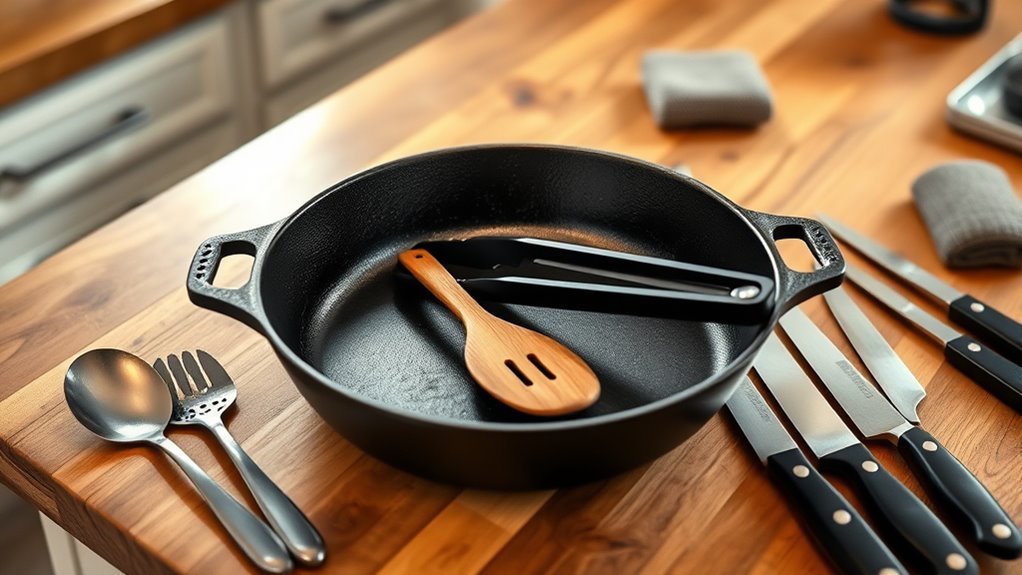
When it comes to cast iron cookware, the utensils you choose can make a significant difference in both performance and longevity. You might think any tool will do, but certain materials can either enhance or damage your cookware’s precious seasoning. From high-quality metal tools to the warmth of wooden spoons, each option has its place. But what about silicone? And are there really utensils you should avoid altogether? Let’s explore your best choices and pitfalls.
Why Choosing the Right Utensils Matters for Cast Iron
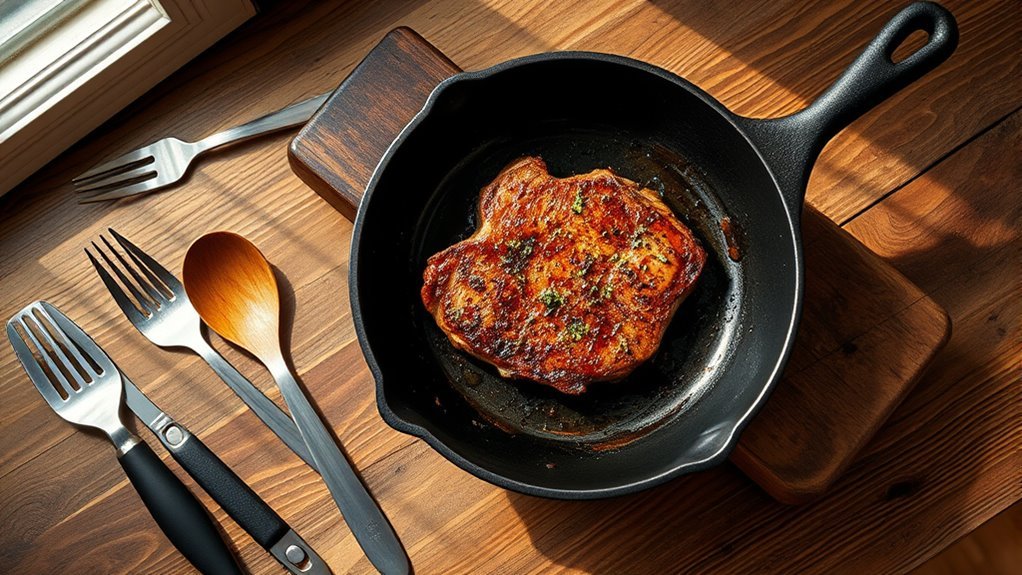
When you cook with cast iron, choosing the right utensils can make all the difference in preserving your cookware’s longevity and performance.
Using the wrong tools can scratch and damage the seasoning, which is essential for maintaining that beloved nonstick surface. While Metal Utensils can be effective for techniques like searing, they need to be high-quality and used with care.
Using improper tools can harm the seasoning, crucial for that cherished nonstick finish; choose high-quality metal utensils with caution.
On the other hand, Wooden Spoons are gentle on your cast iron, perfect for stirring and mixing without compromising the seasoning. Silicone utensils also offer heat resistance and versatility, allowing you to cook effectively without risking damage.
By selecting the right utensils for cast iron, you not only protect your cookware’s integrity but also enhance your overall cooking experience.
Embrace the right tools, and liberate your culinary skills while enjoying the rich flavors cast iron brings to your meals.
When to Use Metal Utensils With Cast Iron?
While using metal utensils might seem risky for your cast iron, there are specific situations where they truly shine.
When you’re cooking with a cast iron skillet, knowing when to reach for metal can elevate your culinary game. Here are some scenarios to assess:
- Searing Proteins: Metal utensils excel at achieving that perfect Maillard reaction, giving you a flavorful brown crust.
- Deglazing: Use them to scrape up fond from the pan, creating delicious sauces or gravies.
- Breaking Up Food: When cooking ground beef or fried potatoes, metal utensils make it easy to break up larger pieces.
- High Heat Cooking: Quality metal spatulas withstand high heat, tackling tough tasks without damaging your skillet’s seasoning.
Benefits of Using Wooden Utensils on Cast Iron
Switching gears from metal utensils, wooden options bring their own set of advantages that can enhance your cooking experience with cast iron. Wooden utensils are gentle on the cooking surface, preserving the essential seasoning without scratching or chipping. Plus, they don’t conduct heat, which means you can stir or rest them in hot pans without worrying about burns. They’re perfect for delicate dishes like sauces and stews, offering versatility while protecting your cookware.
Beyond their practical benefits, wooden utensils are eco-friendly and sustainable, adding a tactile comfort to your culinary adventures. A little care—like hand washing and occasional oiling—can guarantee your wooden tools last for years, remaining effective and beautiful.
Embrace the joy of cooking with wooden utensils; they’ll elevate your cast iron dishes while aligning with your desire for a more liberated, mindful kitchen experience.
The Role of Silicone Utensils in Cast Iron Cooking
Silicone utensils play an essential role in cast iron cooking, offering a perfect blend of durability and versatility. These heat-resistant tools are safe for high temperatures, ensuring you won’t risk melting or damaging your cookware.
Plus, their non-stick surface helps maintain the seasoning of your cast iron pans. Here’s why you should embrace silicone:
- Versatility: Ideal for stirring, flipping, and scraping, making every cooking task easier.
- Ergonomic Design: Many have comfortable handles, reducing the chance of burns during long cooking sessions.
- Flexibility: Easily maneuver around the contours of your cast iron cookware for thorough mixing.
- Scratch-Free: Keep your pans pristine by preventing scratches, ensuring they last even longer.
With silicone, you’ll elevate your cooking experience, making it more enjoyable and efficient. Embrace the liberation of using the right tools in your kitchen!
Myths About Metal Utensils and Cast Iron
Have you ever wondered if using metal utensils with your cast iron cookware is a recipe for disaster? Many myths about metal utensils suggest they’ll ruin your precious pans, but that’s not the whole truth.
High-quality metal spatulas, when used carefully, won’t considerably damage the seasoning. In fact, if the seasoning is brittle or flaking, it’s more vulnerable to chipping. But don’t worry—any scratches left behind are often superficial and don’t affect performance.
Using metal utensils can actually enhance your cast iron cooking, especially for searing proteins and deglazing pans, boosting flavor through the Maillard reaction.
The key is to handle them with care. So, while you’re enjoying your cooking adventures, remember that caring for wooden utensils isn’t your only option. Embrace the versatility of metal, and liberate your culinary creativity!
How to Care for Utensils and Your Cast Iron Cookware
When it comes to caring for your utensils and cast iron cookware, a little attention goes a long way. Proper Iron Care guarantees your kitchen tools last while keeping your cast iron in top shape. Here’s how to maintain them:
- Use wooden utensils for gentle stirring to protect your seasoning and avoid scratches.
- Opt for metal utensils when searing or deglazing, but be cautious to prevent brittle seasoning.
- Choose silicone utensils for high temperatures; they’re heat-resistant and won’t damage your cookware.
- Regularly wash wooden utensils by hand, avoiding soaking to maintain their shape and longevity.
With these tips, you’ll keep both your utensils and cast iron cookware functioning beautifully, ready for whatever culinary adventure lies ahead!
Embrace the art of caring for your kitchen essentials, and enjoy liberation in your cooking.
Utensils to Steer Clear Of: Protect Your Cast Iron
When it comes to protecting your cast iron, you’ll want to steer clear of plastic utensils; they can easily melt or warp under high heat, risking both your safety and your cookware.
Low-quality metal utensils are also a no-go, as they can chip the seasoning and compromise the integrity of your beloved skillet.
Plastic Utensils Risks
While it might be tempting to reach for plastic utensils when cooking with cast iron, doing so can lead to a host of problems. Here are some risks you should consider:
- Melting or Warping: Plastic utensils can’t handle high temperatures, risking contamination and damage to your cookware.
- Durability Issues: They’re less durable than metal or wood, increasing the chance of breakage during cooking tasks.
- Scratching: Plastic can scratch the cast iron’s surface, compromising its seasoning and causing food to stick.
- Heat Resistance: Many aren’t heat-resistant, making them unsuitable for frying or other high-heat methods.
Instead, opt for metal, wood, or silicone utensils. They not only protect your cast iron but also elevate your culinary experience.
Low-Quality Metal Dangers
Using low-quality metal utensils can be just as detrimental to your cast iron cookware as opting for plastic. Utensils made from brittle materials can chip away at the seasoning, compromising your cooking performance.
Sharp edges and rough surfaces increase the risk of scratching, disrupting the non-stick properties you’ve cultivated. You might even find metal particles flaking off into your food, posing health risks and altering your dish’s flavor.
Plus, low-grade metal often lacks heat resistance, which can lead to warping or melting, further damaging your precious cookware.
Instead, invest in high-quality utensils that guarantee peak performance and protect the seasoning on your cast iron. Your culinary creations—and your health—will thank you!
Frequently Asked Questions
What’s the Best Utensil to Use on Cast Iron?
The best utensil to use on cast iron is a wooden spoon or high-quality metal spatula. These options not only support your best cooking techniques but also guarantee peak cast iron maintenance.
Remember, silicone utensils are great too, as they’re heat-resistant and won’t scratch your cookware. Avoid common myths about plastic utensils; they can warp under heat.
For utensil care tips, always choose materials that respect your cast iron’s seasoning and longevity.
What Is the Healthiest Material for Cooking Utensils?
The healthiest materials for cooking utensils are wooden spoons, silicone spatulas, bamboo utensils, and ceramic ladles.
Wooden spoons offer a natural touch, while silicone spatulas resist heat and chemicals.
Bamboo utensils are eco-friendly and antimicrobial, promoting cleanliness.
Ceramic ladles are non-reactive, ensuring your food stays pure.
By choosing these materials, you liberate your kitchen from harmful substances, empowering your cooking experience.
Embrace these options for a healthier, safer culinary journey!
What Should You Not Put in Cast Iron?
You shouldn’t put plastic utensils, abrasive cleaners, or soak cast iron in water. These actions ruin your cast iron maintenance and damage the seasoning techniques you’ve worked hard on.
Avoid cooking acidic foods for long periods, as they can strip away seasoning, leading to metallic flavors.
Also, steer clear of high cooking temperatures with metal utensils on enameled cast iron, as this can chip the enamel and compromise its integrity.
Is It Okay to Use Stainless Steel Utensils on Cast Iron?
Using stainless steel utensils on cast iron is like a dance between durability and tradition.
The stainless steel pros shine when you’re searing or deglazing, enhancing your cooking techniques. While you might spot some cast iron scratches, they usually don’t harm the seasoning if you maintain it well.
Just steer clear of brittle spatulas to protect your skillet’s longevity. Embrace the freedom to cook boldly without fear of damaging your beloved cast iron!
Conclusion
Choosing the right utensils for your cast iron cookware isn’t just smart—it’s like giving your kitchen a superhero sidekick! By using metal, wood, or silicone tools, you’re not only protecting your pan’s seasoning but also enhancing your cooking experience. Avoid plastic and low-quality metal options that could spell disaster for your beloved cookware. Invest in quality utensils, and you’ll guarantee your cast iron lasts longer than your favorite family recipe! Happy cooking!