
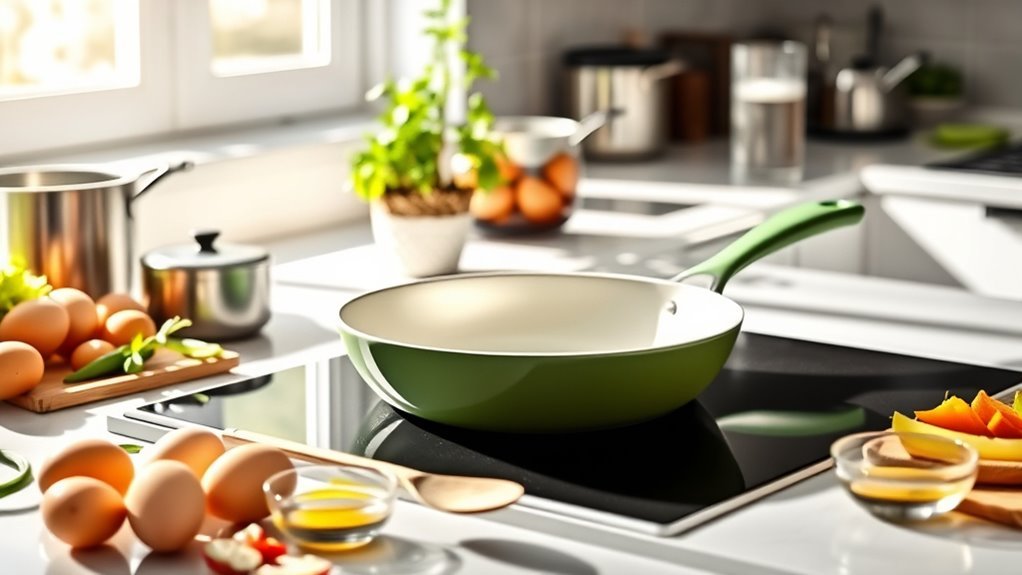
When considering the safety of the Original GreenPan, it’s crucial to examine its materials and nonstick coating. While the Thermolon™ coating is marketed as PFAS-free and designed to withstand high temperatures, questions about long-term health effects linger. Additionally, the cookware’s eco-friendly claims and production practices add another layer to the discussion. What do independent tests reveal about its performance and safety? Understanding these aspects can clarify whether GreenPan is truly a worthy addition to your kitchen.
Understanding GreenPan’s Nonstick Coating
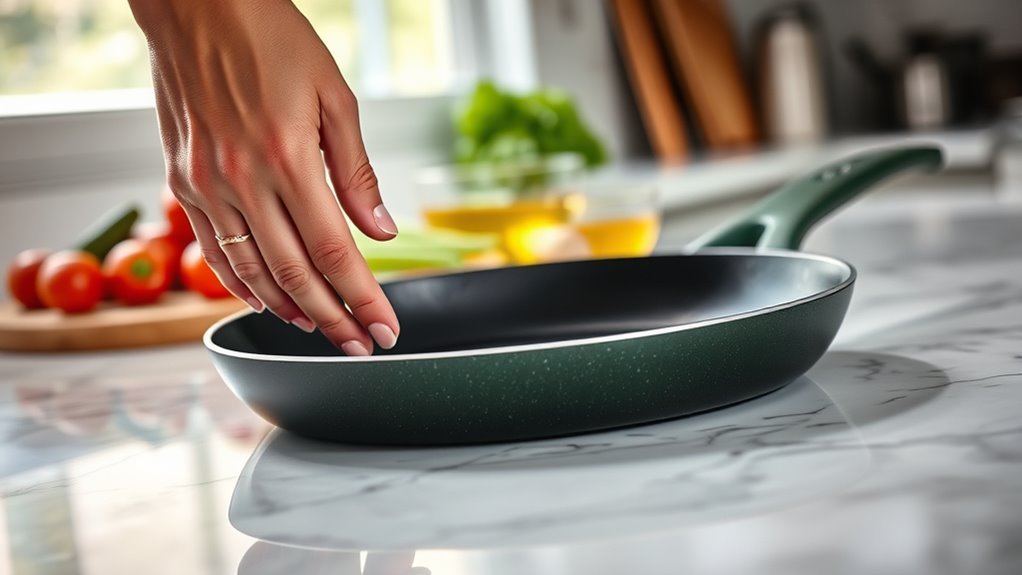
When you choose GreenPan, you’re opting for a nonstick cooking experience that sets itself apart with its innovative Thermolon™ coating. This PFAS-free nonstick coating is derived from Silicon Dioxide, promoting a healthier cooking environment.
Unlike traditional options, Thermolon can withstand temperatures up to 850°F (454°C) without releasing toxic fumes, ensuring that your kitchen remains safe.
GreenPan emphasizes eco-friendly practices, claiming that Thermolon generates 60% fewer CO2 emissions during its curing process compared to conventional coatings.
The company also assures you of its commitment to safety, as Thermolon has undergone rigorous testing by independent labs to meet international food safety regulations.
GreenPan stands firm in its commitment to safety, ensuring Thermolon meets stringent international food safety regulations through rigorous independent testing.
With nine generations of development, GreenPan continues to innovate, enhancing the durability and performance of its aluminum core while remaining free from harmful chemicals.
This combination of safety, performance, and sustainability makes GreenPan a compelling choice for conscious cooks.
What’s Actually in GreenPan Cookware?
GreenPan cookware features a unique blend of materials designed to enhance safety and performance in your kitchen. At the heart of this cookware is Thermolon™, a proprietary ceramic nonstick coating that sets it apart from traditional options. Here’s what you should know:
- PFAS-Free: GreenPan guarantees its cookware is free from harmful substances like PFAS, PTFE, and PFOA, ensuring safer cooking.
- Temperature Resistance: Thermolon™ withstands temperatures up to 850°F (454°C) without releasing toxic fumes, prioritizing food safety.
- Materials Disclosure: The brand emphasizes transparency, listing over 3,000 substances of concern on its website, aligning with California’s AB1200 bill for materials disclosure.
While GreenPan maintains strict quality control in its wholly owned factories, independent third-party testing to fully verify these claims is limited.
Nevertheless, their commitment to non-toxic cookware brands makes them a significant choice for health-conscious consumers.
What Health Risks Should You Consider Before Buying GreenPan?
Before buying GreenPan, you should consider potential chemical concerns, particularly regarding silanes and aluminum oxide in their coatings.
While the Thermolon coating is marketed as toxin-free, reports of fumes and aluminum exposure raise red flags.
Additionally, the long-term health effects of ceramic non-stick coatings remain largely unknown, making it essential to weigh these risks carefully.
Potential Chemical Concerns
While evaluating the purchase of GreenPan cookware, you should weigh potential chemical concerns that may impact your health. Though marketed as PFAS-free and featuring the Thermolon™ non-toxic coating, skepticism remains regarding safety claims and unverified components like aluminum oxide and silanes.
Here are three key points to keep in mind:
- Independent Testing: While tests show Thermolon™ doesn’t emit toxic fumes at high temperatures, some users report otherwise.
- Class Action Lawsuit: A lawsuit questioned the validity of health benefits, although it was dismissed without liability findings, raising transparency issues.
- Long-Term Health Effects: Concerns linger about exposure to aluminum and the health implications of ceramic coatings, as thorough studies are scarce.
Long-Term Health Effects
When considering the long-term health effects of cookware, it’s essential to evaluate not just the materials used but also potential risks associated with their coatings. Traditional non-stick cookware often contains harmful PFAS and heavy metals, linked to metabolic issues and cancers. GreenPan’s Thermolon coating is designed to be PFAS-free, yet independent testing isn’t publicly available, fostering consumer skepticism. Reports of fumes during cooking raise questions about undisclosed materials. The long-term health effects of ceramic coatings remain under-researched, making it crucial to weigh these factors.
| Concern | GreenPan Products |
|---|---|
| PFAS Presence | None, claims PFAS-free |
| Heavy Metals | Claims to be free |
| Fume Emission | Occasional reports |
| Independent Testing | Not publicly available |
| Long-Term Research | Lacking |
How Does GreenPan Compare to Traditional Nonstick Cookware?
How does GreenPan stack up against traditional nonstick cookware? When you prioritize safety and performance in your kitchen, GreenPan’s advantages are compelling.
- PFAS-Free: GreenPan’s Thermolon coating is free from harmful chemicals like PFAS, PTFE, and PFOA, unlike traditional nonstick options that can emit toxic fumes when overheated.
- Heat Resistance: Traditional nonstick cookware can decompose at temperatures above 500°F, while GreenPan withstands up to 850°F without releasing toxins.
- Heavy Metal Safety: GreenPan cookware avoids hazardous materials like lead and cadmium, which are often present in conventional nonstick products.
In terms of performance, users report that GreenPan operates effectively at lower heat settings, enhancing energy efficiency.
Additionally, GreenPan’s commitment to reducing environmental impact is evident, with 60% fewer CO2 emissions during manufacturing compared to traditional nonstick.
Insights From Independent Tests on Greenpan
What do independent tests reveal about GreenPan’s safety and performance?
GreenPan’s Thermolon™ ceramic coating stands out as a PFAS-Free Ceramic Nonstick option, confirmed by independent testing to be free from harmful substances like PTFE, PFOA, and heavy metals such as lead and cadmium. This guarantees that the cookware remains non-toxic during food contact, addressing significant safety concerns.
The coating can endure temperatures up to 850°F (454°C) without emitting toxic fumes, a common issue with traditional nonstick cookware. Additionally, GreenPan products boast NSF certification, signifying compliance with rigorous safety and quality standards.
Third-party lab testing reinforces these claims, demonstrating adherence to international food contact safety regulations. GreenPan further promotes transparency by disclosing over 3,000 substances of concern on their website, aligning with California’s AB1200 bill.
This commitment to safety and quality underscores GreenPan’s dedication to providing reliable cookware.
Customer Experiences: Are Users Satisfied With Greenpan?
GreenPan’s commitment to safety and quality, as evidenced by independent testing, raises important questions about user satisfaction. Customer experiences reveal a landscape of mixed reviews, highlighting both strengths and weaknesses in their non-stick cookware.
- Non-Stick Performance: Many users appreciate the initial non-stick quality of GreenPan’s ceramic coating, but some report issues with food sticking over time.
- Durability Concerns: Complaints about rusting and chipping are prevalent, leading to doubts about the longevity of the cookware.
- Customer Service Feedback: Experiences with customer service often appear dismissive, which can erode trust in the brand.
Though over 60,000 five-star reviews underscore satisfaction, significant variance in experiences—especially related to cooking methods and heat settings—carries implications for safety.
Some consumers even express concerns about fumes during cooking, further complicating the overall perception of GreenPan.
How Eco-Friendly Is GreenPan’s Manufacturing Process?
When you consider GreenPan’s manufacturing process, you’ll find it prioritizes sustainable material sourcing and emission reduction.
By using 30% solar energy and employing a unique Thermolon coating, GreenPan minimizes its environmental impact remarkably.
This commitment not only enhances product quality but also aligns with eco-friendly practices throughout the entire production cycle.
Sustainable Material Sourcing
While many cookware brands overlook sustainability, GreenPan stands out by integrating eco-friendly practices into its manufacturing process.
Here’s how they prioritize sustainable material sourcing:
- Ceramic Coating: Their non-stick Thermolon coating generates 60% fewer CO2 emissions during curing, minimizing environmental impact.
- Responsible Sourcing: GreenPan guarantees materials are free from PFAS, PFOA, and heavy metals, promoting safety and sustainability.
- Wastewater Treatment: They operate an onsite facility to manage water usage, showcasing a commitment to responsible resource management.
Emission Reduction Processes
Building on its commitment to sustainable material sourcing, GreenPan employs advanced emission reduction processes that greatly enhance the eco-friendliness of its manufacturing. By generating 60% fewer CO2 emissions compared to traditional nonstick coatings, it showcases a dedication to minimizing environmental impact. The factory utilizes 30% solar energy, further investing in renewable energy sources. Additionally, a dedicated wastewater treatment plant responsibly manages water usage and pollution. GreenPan’s use of recycled aluminum promotes sustainability, while compliance with California’s AB1200 guarantees high transparency regarding substances used in their ceramic nonstick cookware.
| Aspect | GreenPan | Traditional Cookware |
|---|---|---|
| CO2 Emissions Reduction | 60% less | N/A |
| Renewable Energy Usage | 30% solar | Minimal |
| Transparency on Substances | High compliance | Varies |
Final Verdict: Should You Choose GreenPan for Your Kitchen?
Are you considering GreenPan for your kitchen? Here’s what you should know before making your choice:
- Safety Assurance: GreenPan’s Thermolon coating is free from PFAS and other harmful substances, supported by independent testing that confirms no toxic fumes are released at high temperatures.
- Sustainable Practices: The brand promotes eco-conscious initiatives, such as using 30% solar energy in its factory and minimizing CO2 emissions during production.
- Long-Term Reliability: While initial safety benefits are clear, user experiences with non-stick performance can be mixed over time, raising questions about durability.
Frequently Asked Questions
Why Can’t You Use Olive Oil on Greenpan?
You can’t use olive oil on GreenPan because its lower smoke point leads to olive oil reactions that create a sticky residue when overheated. This compromises your nonstick surface and shortens cookware longevity.
For frying techniques, stick to high-smoke point oils like refined coconut oil or ghee for best results.
While olive oil offers health benefits and flavor, using it at low temperatures is essential for maintaining your cookware’s effectiveness.
Is There a Lawsuit Against Greenpan?
Yes, there’s a GreenPan lawsuit history involving consumer safety concerns. A class action was dismissed without liability findings, but it raised questions about product liability issues and health implications.
The company’s response strategies highlight its commitment to safety, disputing claims of harmful chemicals. Regulatory compliance questions linger, impacting customer reviews and perceptions.
While legal settlements are absent, GreenPan’s marketing practices have faced scrutiny, leaving potential buyers to weigh these factors carefully.
What Is the Least Toxic Cookware to Use?
The least toxic cookware options include ceramic coatings, stainless steel, cast iron, and glass cookware.
These materials are free from harmful chemicals, ensuring your cooking safety.
Carbon steel is durable and develops a natural non-stick surface but requires maintenance.
You can also consider BPA-free plastics for eco-friendly options.
Prioritizing these non-toxic materials not only enhances your cooking experience but also promotes a healthier kitchen environment.
Choose wisely for liberation from harmful substances!
What Are the Common Complaints About Greenpan?
You might find GreenPan appealing at first, but common complaints include durability concerns and non-stick issues, leading to frustration.
Users often mention scratching problems and color fading, which can diminish its allure.
Price complaints arise when the cookware doesn’t perform as expected, while heat retention and cleaning difficulties add to the woes.
Additionally, many express disappointment with warranty limitations and customer service, leaving you questioning if the investment was truly worthwhile.
Conclusion
In the grand culinary showdown of cookware, GreenPan struts its eco-friendly stuff, touting a PFAS-free coating and a heartwarming backstory of sustainability. But before you toss out your trusty, albeit questionable, Teflon, consider the long-term effects and durability. After all, who doesn’t love a non-stick surface that might play hard to get after a few months? So, if you’re ready to embrace a greener kitchen with a pinch of skepticism, GreenPan might just be your new best friend—or frenemy.
