
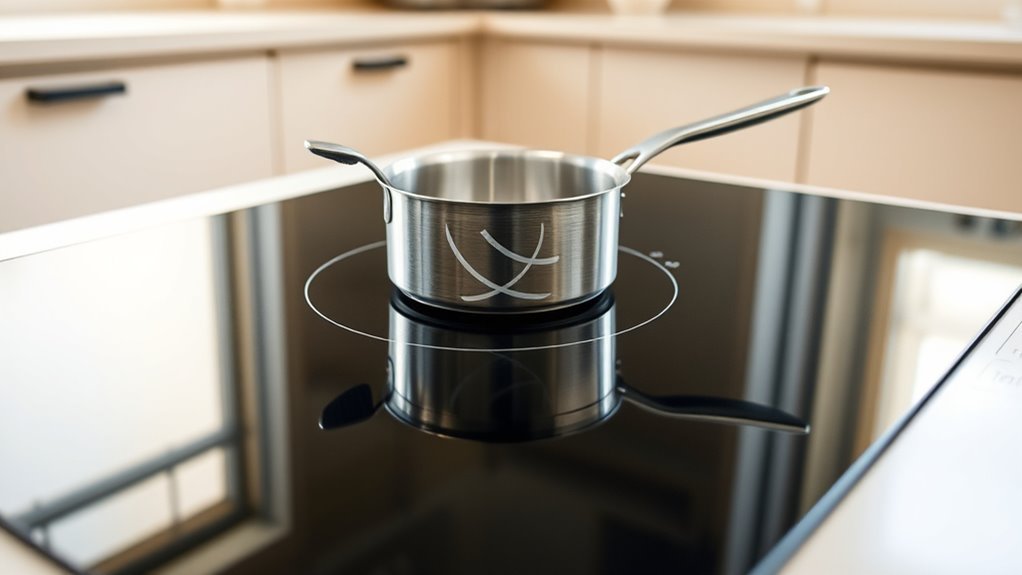
When you’re shopping for cookware, identifying the induction symbol is essential. This symbol, often a coil or spiral, signals compatibility with induction cooktops. But how do you know if your cookware meets this requirement? You might be surprised by the simple methods available for testing. Understanding these nuances can save you time and effort in the kitchen. So, what should you look for, and how can you confirm your cookware is truly induction-ready?
The Importance of the Induction Symbol for Cookware
When you’re equipping your kitchen with induction-compatible cookware, the induction symbol plays an important role. This symbol, typically a coil or spiral, signifies that your pots and pans will work efficiently on induction cooktops through magnetic induction.
Spotting this symbol is vital; it guarantees you’re using compatible cookware that maximizes cooking performance and energy efficiency.
Without the induction symbol, you risk using cookware that won’t generate heat, wasting both time and resources. Imagine preparing a meal only to find your pan’s cold on the stove—frustrating, right?
When shopping, always look for this symbol stamped on the bottom of pots or on packaging. It’s your quick reference guide to make sure you’re investing in the right cookware for modern induction technology.
Identifying Key Features of the Induction Symbol
The induction symbol, often depicted as a spiral or coil, is essential for identifying cookware that works seamlessly with induction cooktops. You’ll typically find this symbol stamped on the bottom of your cookware or on its packaging, providing a quick reference when shopping.
To verify your cookware is compatible with induction, it must be made from ferromagnetic materials; the induction symbol confirms this compatibility. Some manufacturers enhance clarity by including additional markings, such as a “magnetic” label, alongside the induction symbol.
When you’re in the market for induction cookware, always look for this symbol to guarantee efficient heating and ideal performance. The magnetic field generated by induction cooktops requires specific materials to function properly, and recognizing the induction symbol empowers you to make informed choices.
With this knowledge, you’re one step closer to enjoying the benefits of induction cooking.
Induction Compatibility: What Cookware Materials Work?
Which materials make your cookware induction-compatible? To effectively harness the power of induction cooking, your cookware must be made from ferromagnetic materials. This includes options like cast iron, carbon steel, and magnetic stainless steel. A simple magnet test can help you identify if your pots and pans are induction-ready—if the magnet sticks firmly to the base, you’re good to go!
Here’s a quick reference table:
| Cookware Material | Induction-Compatible? |
|---|---|
| Cast Iron | Yes |
| Carbon Steel | Yes |
| Aluminum (without base) | No |
| Magnetic Stainless Steel | Yes |
Look for the induction symbol on your cookware, usually depicted as a spiral or coil, to confirm compatibility. Remember, thickness and a flat-bottomed design enhance efficiency, ensuring ideal heat transfer during cooking.
Testing Your Cookware: Magnet and Water Methods
Determining whether your cookware is induction-compatible is straightforward and can be done with simple methods.
Start with the magnet test: take a refrigerator magnet and place it on the base of your cookware. If it sticks firmly, you’ve got induction-ready cookware made of ferrous metals like cast iron or certain stainless steels. Non-ferrous materials, such as copper and aluminum, won’t pass this test.
Next, conduct the water test. Pour a small amount of water into the pot, set it on the induction cooking surface, and turn on the unit. If you see an error message, your cookware isn’t compatible.
Lastly, keep an eye out for the induction-ready symbol, often depicted as a spiral or coil spring, on the bottom of your cookware.
Always verify packaging or labels for induction compatibility before making a purchase to guarantee your cooking experience is seamless.
What Are the Common Misconceptions About Induction Symbols?
What misconceptions do many people have about induction symbols?
First, many assume all stainless steel cookware is induction-ready, but only those with ferromagnetic properties will work. This misconception can lead to frustrating cooking experiences when your induction cooker fails to heat the pan.
Another common belief is that a flat bottom guarantees compatibility; however, the most reliable method is still the magnet test. Simply place a magnet on the bottom of your cookware to see if it sticks.
A flat bottom doesn’t ensure induction compatibility; always perform the magnet test for reliable results.
Additionally, while the induction-ready symbol helps identify suitable cookware, not all manufacturers include it, which can leave you guessing.
Finally, some think they can use non-ferrous materials without modification, but induction cooking strictly requires ferromagnetic options for efficient heating.
Understanding these points will help you navigate cookware compatibility confidently and optimize your cooking experience.
Where to Find Induction Symbols on Cookware and Why It Matters
Finding the induction symbol on your cookware is key to ensuring a seamless cooking experience. This symbol, typically a coil or spiral design, usually appears on the bottom of pots and pans that are compatible with an induction cooktop. It indicates that the cookware can effectively utilize induction cooking technology, promoting efficiency in energy transfer and heating.
To make your shopping easier, many manufacturers also label their packaging to highlight induction-ready options. Checking for the induction symbol is essential; using non-compatible cookware can lead to inefficient cooking and potential damage to both your pots and pans and the induction cooktop itself.
Benefits of Using Induction-Compatible Cookware
Using induction-compatible cookware brings a host of benefits that enhance your cooking experience.
You’ll enjoy faster cooking times and improved energy efficiency, as these pots and pans heat up quickly while minimizing heat loss.
Plus, with a cooler cooking surface, you can feel safer in the kitchen, reducing the risk of burns and accidents.
Enhanced Cooking Efficiency
Induction-compatible cookware revolutionizes your cooking experience by harnessing electromagnetic induction for efficient heat generation.
This innovative cookware works with induction cooktops, reducing energy consumption by about 76% compared to traditional electric coils and gas stoves. You’ll notice faster heating, as water boils nearly twice as quickly, greatly enhancing your cooking efficiency.
The flat-bottomed design of induction cookware maximizes heat transfer, ensuring even heating and minimizing cooking time. Plus, with precise temperature control, you can make rapid adjustments that help eliminate the risk of overcooking.
Embracing induction cookware not only streamlines your cooking process but also empowers you to achieve perfectly cooked meals while conserving energy and time.
Enjoy the liberation that comes with efficient cooking!
Safety and Convenience Benefits
When it comes to safety and convenience in the kitchen, induction-compatible cookware stands out for its innovative design and functionality. This cookware, marked by a coil symbol, uses electric current to create heat directly in the pot, minimizing heat loss.
With induction cooking, the surface remains cooler, greatly reducing burn risks. You’ll also appreciate the precise temperature control that allows for quick adjustments, enhancing your cooking accuracy.
Furthermore, induction cooktops automatically shut down if no compatible pot is detected, further boosting safety. Plus, since induction emits no air pollution, it’s a healthier alternative to gas stoves, ensuring your kitchen environment remains safe and clean.
Embrace the liberation of efficient, safe cooking with induction cookware!
Next Steps After Identifying Your Induction-Compatible Cookware
After you’ve identified your induction-compatible cookware, it’s crucial to start utilizing it on your induction cooktop to fully harness its efficient heating capabilities. Induction cooktops heat pans directly, so you’ll quickly notice how responsive they are.
However, keep an eye on your cookware for any signs of wear and tear, as damaged surfaces can compromise cooking performance.
Familiarize yourself with induction-specific cooking techniques, as the rapid heat changes require close monitoring to prevent burning. Consider expanding your collection with additional induction cookware to enhance versatility in your cooking. Whether it’s skillets or saucepans, the right pieces can elevate your culinary experience.
Lastly, always consult the manufacturer’s guidelines for care and maintenance to prolong the life of your induction-compatible pans.
Frequently Asked Questions
How Do You Know if Cookware Is Induction?
To know if your cookware is induction-ready, check for induction cookware materials like cast iron or magnetic stainless steel. You can also do the magnet test; if it sticks, you’re good to go!
Embrace the benefits of induction, like faster cooking and energy efficiency. Don’t believe common induction cooking myths—many materials work if they’ve a magnetic base.
For troubleshooting induction issues, verify the cookware sits flat on the cooktop.
What Is the Symbol for an Induction?
The symbol for induction is a sleek spiral or coil. This design highlights induction technology, ensuring cooking efficiency and energy savings.
When you spot this symbol on your cookware, it guarantees compatibility with the magnetic heat distribution of induction cooktops. Made from ferromagnetic materials like cast iron or specific stainless steels, this cookware enhances safety features, allowing you to cook confidently.
What Is the Icon for Induction Cookware?
The icon for induction cookware often resembles a spiral or coil, found on the bottom of compatible pots and pans. This symbol signifies that the cookware uses ferromagnetic materials, allowing you to enjoy induction cooking benefits like quick heating and precise temperature control.
When choosing cookware, look for trusted brands and always prioritize safety features.
Induction cooking techniques can revolutionize your kitchen experience, especially compared to traditional gas methods.
What Cannot Be Cooked on Induction?
You can’t cook with cookware made from non-magnetic materials like glass or aluminum on induction stoves.
While induction cooking offers energy efficiency and safety features, you’ll face compatibility issues if your pans lack ferromagnetic properties.
Even some stainless steel may not work, so testing with a magnet is key.
Unlike gas, induction’s precise control is fantastic, but without the right cookware types, you’ll miss out on its multiple benefits.
Conclusion
In summary, identifying the induction symbol on cookware is essential for efficient cooking. While some may worry that induction cooking is overly complex, it’s actually straightforward—just look for that spiral symbol or perform the magnet test. Embracing induction-compatible cookware not only enhances your cooking experience but also boosts safety and energy efficiency. So, take the time to check your pots and pans; the benefits are well worth it, making your kitchen more modern and efficient.
