
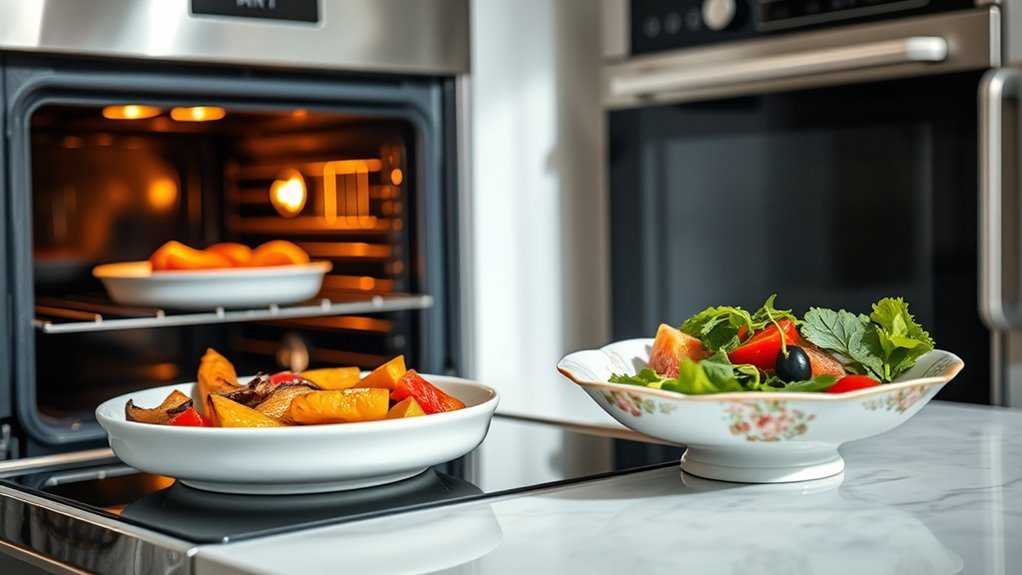
When considering whether ceramic plates can go in the oven, it’s essential to assess their composition and heat tolerance. While many ceramic plates are designed for oven use, not all are suitable. Understanding the specific types that can withstand high temperatures and how to handle them properly can prevent costly mistakes. You might be surprised by the factors that influence their performance, which could impact your cooking experience considerably.
What Types of Ceramic Plates Are Oven-Safe?
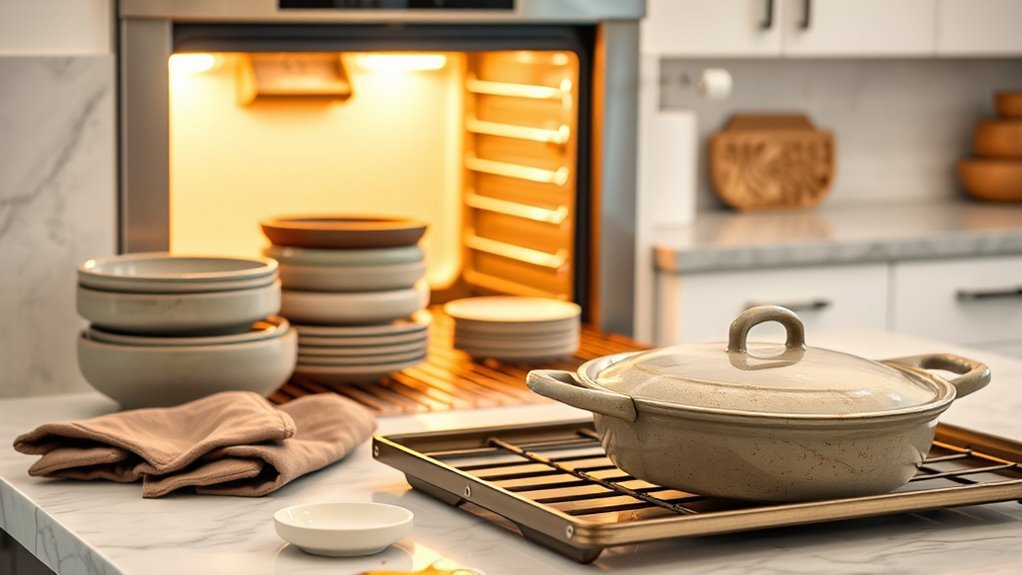
When determining whether ceramic plates are oven-safe, it’s essential to take into account the material and any specific labels. Stoneware and porcelain are typically more heat-resistant than earthenware, making them ideal for oven use.
Always check the manufacturer guidelines or markings that confirm the plate’s heat resistance. If the label specifies that a plate is oven-safe, you can use it confidently at high temperatures.
However, avoid decorative plates with metallic finishes, as these can spark or release harmful chemicals when heated.
Additionally, to prevent thermal shock—where sudden temperature changes cause cracking—gradually warm your ceramic plates in the oven. This practice minimizes the risk of damage and guarantees that your ceramic plates function as intended, enhancing your culinary experience.
Identifying Oven-Safe Ceramic Plates
Identifying oven-safe ceramic plates involves scrutinizing specific features and markings. Look for labels on the underside indicating terms like “oven-proof” or specifying temperature limits, generally ranging from 350°F to 500°F, depending on the manufacturer.
Be cautious with handmade pottery; it often contains air bubbles that can lead to cracking when exposed to heat. Additionally, assess any decorative glazes, as some may not withstand high temperatures and can release harmful substances.
To minimize the risk of thermal shock, allow ceramic plates to reach room temperature before placing them in a preheated oven. This practice helps guarantee durability and safety while cooking.
What’s the Ideal Temperature for Ceramic Plates?
When using ceramic plates in the oven, you should aim for temperatures up to 450°F (232°C) unless specified otherwise by the manufacturer.
Factors like the type of ceramic and the presence of metallic decorations can notably affect safety and performance.
Understanding these elements will help you avoid damaging your plates while ensuring ideal cooking results.
Recommended Temperature Range
Although ceramic plates are versatile kitchenware, understanding their ideal temperature range is vital for safe usage. Typically, these plates can withstand temperatures up to 500°F (260°C), but specific temperature tolerances may vary by manufacturer. To guarantee oven safety, check for heat-proof markings on the underside.
- Always allow plates to reach room temperature before placing them in a hot oven.
- Gradual heating is essential to prevent thermal shock and cracking.
- Avoid ceramic plates with metallic accents, as they may not be heat-resistant.
Factors Affecting Safety
Understanding the ideal temperature for ceramic plates is essential for safe oven usage, as several factors influence their performance. Typically, ceramic plates can withstand oven-safe temperatures up to 450°F (232°C), but always check the manufacturer’s guidelines for specific tolerances.
Uneven heating can cause thermal shock, so placing your plates in a cold oven and allowing for gradual heating is vital. Avoid ceramic plates with metallic decorations, as they may react negatively to high temperatures and compromise the plate’s integrity.
Look for heat-proof markers on the underside to confirm suitability for baking. After use, allow for gradual cooling to prevent cracking or shattering from sudden temperature changes, ensuring your ceramic plates serve you well for years.
Essential Tips for Safe Ceramic Plate Use in the Oven
When using ceramic plates in the oven, always check for an oven-safe label to guarantee they can withstand high temperatures.
Avoid rapid temperature changes by allowing plates to reach room temperature before placing them in a hot oven.
Additionally, employing proper cooking techniques, like using a tray for spills, will enhance safety and prevent damage.
Check Oven-Safe Label
How can you guarantee your ceramic plates are safe for oven use? Start by checking for an oven-safe label. Not all ceramic plates can withstand high temperatures, and failure to verify can lead to cracking or shattering.
- Look for heat-proof materials marked on the underside.
- Avoid handmade pottery, as air bubbles can compromise integrity under heat stress.
- Always place plates in a preheated oven to minimize the risk of thermal shock.
Additionally, consider using a tray or baking sheet beneath your ceramic plates to catch spills, which can prevent messy situations and potential damage.
Avoid Rapid Temperature Changes
Even with the right oven-safe label, using ceramic plates in the oven requires careful handling to prevent damage. To avoid thermal shock, place your ceramic plates in a cold oven before turning it on. This gradual heating minimizes the risk of cracking.
Never set hot ceramic plates directly on cold surfaces or wet towels, as sudden temperature shifts can lead to failure. Allow plates to cool down to room temperature before washing them with cold water, avoiding rapid temperature changes that can weaken their structure.
When cooling, use a wire rack to prevent exposure to abrupt temperature shifts from a countertop. Always verify your ceramic plates are rated for oven-safe temperatures to maintain their integrity.
Use Proper Cooking Techniques
Using proper cooking techniques is essential for safely utilizing ceramic plates in the oven. By following these guidelines, you can minimize risks and enjoy your culinary creations.
- Always check for visible flaws, like hairline cracks, before use.
- Place cold ceramic plates in a preheated oven to avoid sudden temperature changes.
- Use a cooling rack after removing plates to prevent thermal shock.
Ensure your ceramic plates are labeled as oven-safe, and adhere to the manufacturer’s recommended maximum temperature, typically between 350°F and 450°F.
These steps will guarantee safe use and maintain the integrity of your ceramic plates throughout the cooking process. By employing these techniques, you’ll enhance both safety and enjoyment in your kitchen endeavors.
Mistakes to Avoid With Ceramic Bakeware
When you’re working with ceramic bakeware, it’s essential to avoid common mistakes that can lead to damage or poor cooking results.
First, always check the manufacturer guidelines to verify your bakeware is oven-safe; not all ceramics can endure high temperatures without cracking.
Always consult manufacturer guidelines to ensure your ceramic bakeware is oven-safe, as not all can withstand high temperatures without damage.
Be cautious about sudden temperature changes; letting your ceramic plates warm up gradually prevents thermal shock, which may cause shattering.
Additionally, never place hot ceramic bakeware directly on cold surfaces, as this can create thermal stress and increase the risk of cracks.
Before using your dishes, inspect them for visible defects, as these imperfections can worsen under heat.
Finally, when handling hot bakeware, always use oven mitts or protective gloves; ceramic retains heat for extended periods, raising burn risks.
How to Prevent Cracking During Temperature Changes
Ceramic bakeware is susceptible to cracking due to rapid temperature changes, so understanding how to mitigate this risk is essential. To protect your ceramic plates, follow these key strategies:
- Let ceramic plates reach room temperature before placing them in a hot oven to minimize thermal shock.
- Gradually heat ceramic plates by starting in a cold oven; this promotes even temperature distribution.
- Avoid placing hot ceramic dishes directly on cold surfaces to prevent cracking.
Additionally, always use wire racks to cool your hot ceramic dishes, ensuring they don’t contact cold countertops or sinks.
Regularly inspect your ceramic plates for any pre-existing cracks; ignoring these can exacerbate issues during temperature changes.
Alternative Bakeware Options for Oven Use
While ceramic plates offer versatility in the kitchen, exploring alternative bakeware options can enhance your cooking experience and minimize risks associated with oven use.
Stoneware is a reliable choice, as it withstands high temperatures and thermal shock better than standard ceramic plates. If you prioritize durability, consider metal bakeware, such as aluminum or stainless steel, which can endure extreme heat without cracking.
Stoneware offers superior heat resistance and durability, making it a smart alternative to standard ceramic plates for your baking needs.
Glass cookware, particularly Pyrex, is also oven-safe, but be cautious; newer models may shatter with sudden temperature changes.
For those seeking flexibility, silicone bakeware is an excellent option—it tolerates a wide temperature range, is non-stick, and simplifies cleanup, making it ideal for various baking tasks.
Always consult manufacturer guidelines to verify your chosen bakeware meets oven-safe standards, safeguarding both your dishes and your culinary ambitions.
Caring for Your Ceramic Bakeware
Selecting the right bakeware is just the beginning; proper care assures your ceramic pieces remain functional and safe. Follow these guidelines to maintain your ceramic bakeware’s integrity:
- Check oven-safe labels: Not all ceramics withstand high temperatures without cracking.
- Prevent thermal shock: Allow dishes to reach room temperature before placing them in a hot oven. Avoid cold surfaces.
- Use non-abrasive cleaners: Scratching can shorten the longevity of your bakeware, especially with decorative glazes.
Regularly inspect your ceramic bakeware for cracks or chips, as these imperfections can compromise safety during baking.
Always handle your pieces with care to avoid drastic temperature changes that could lead to breakage.
Frequently Asked Questions
How Do I Know if My Ceramic Is Oven Safe?
To determine if your ceramic is oven-safe, check for brand guidelines or markings indicating heat resistance.
Consider ceramic types and their material properties; avoid handmade pieces due to potential air bubbles.
Examine glazing materials and confirm they’re designed for high temperatures.
Conduct a gradual heating test and be mindful of temperature limits.
For best ceramic care, use reputable brands known for durability and follow cooking techniques that minimize thermal shock.
Can You Put Ceramic in the Oven at 350?
Yes, you can put ceramic in the oven at 350°F, but not all ceramic types are created equal.
Check the material composition and heat resistance of your plates. Oven safety hinges on adhering to temperature guidelines and usage instructions.
Avoid decorative finishes that may lack durability under heat. To protect against thermal shock, let your plates reach room temperature before use.
Will Ceramic Break if Heated?
Yes, ceramic can break if heated improperly. Different ceramic types have varying heat resistance, and sudden temperature variations can lead to thermal shock.
Pay attention to glazing effects, as metallic accents can weaken structural integrity. Follow specific usage guidelines based on the manufacturing processes of your ceramics.
To guarantee safety, allow your ceramic to reach room temperature before heating and avoid drastic temperature changes. Proper care and attention can prevent breakage.
Can Ceramic Go in the Oven at 400 Degrees?
Yes, ceramic can go in the oven at 400 degrees, but only if it meets specific oven-safe guidelines.
Different ceramic types have varying heat resistance, so check the material composition. Common brands often indicate their temperature limits.
To guarantee ceramic durability, avoid sudden temperature shifts. Embrace cooking techniques that respect these care tips, and you’ll enjoy safe, delicious meals without risking your plates.
Conclusion
In the culinary world, your ceramic plates are like trusted companions on a journey through heat and flavor. By choosing oven-safe options and respecting their limits, you can guarantee they thrive in high temperatures, just as a seasoned traveler adapts to various climates. Avoiding drastic temperature shifts is essential, like guiding a ship through stormy seas. With proper care, your ceramic bakeware will serve you well, creating delicious memories that stand the test of time.
