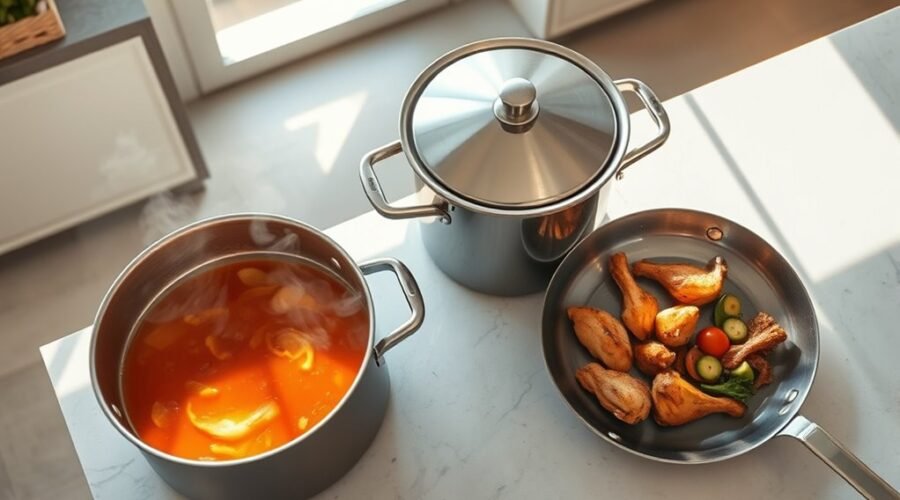
Imagine stepping into a kitchen where pots and pans are the unsung heroes of culinary creativity. While you might think they’re interchangeable, each serves unique purposes that can elevate your cooking. Pots, deep and sturdy, are perfect for hearty dishes, while pans, with their shallow design, shine in quick, high-heat tasks. Understanding these differences can transform your approach to cooking. So, what exactly sets them apart, and how can you make the most of each?
What Are Pots and Pans? Understanding the Basics
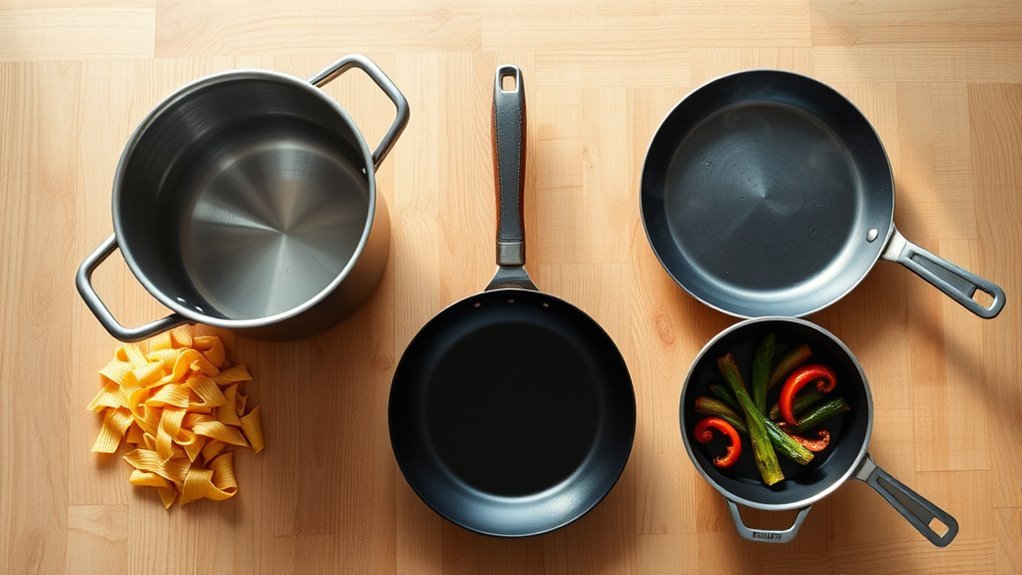
When it comes to cooking, understanding the tools you use is essential, and that’s where pots and pans come into play.
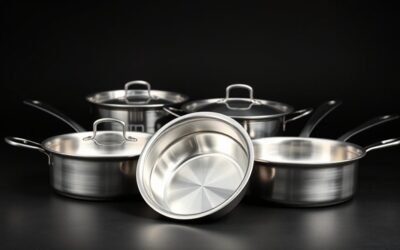
Pots are deep, round vessels with high sides and two handles, perfect for boiling and simmering larger quantities of food. Their design promotes heat retention, making them ideal for dishes that need a gentle simmer.
Pots, with their deep design and high sides, excel at boiling and simmering large quantities, ensuring optimal heat retention for gentle cooking.
On the other hand, pans have low sides and usually one long handle, which makes them your go-to for frying and sautéing. A sauté pan, with its wide base and straight walls, offers ample surface area, preventing overcrowding while cooking at high heat.
This distinction in design and purpose is vital; pots keep moisture in, while pans allow for evaporation, enabling various cooking techniques.
Key Structural Differences Between Pots and Pans
Understanding the basics of pots and pans sets the stage for exploring their key structural differences. Pots typically feature tall, deep sides, perfect for simmering and boiling, while pans have shallow, wide bases that maximize surface area for frying and browning.
The shape and size of each vessel cater to specific cooking techniques; pots retain heat and moisture, making them ideal for soups and stews.
In terms of handles, pots usually come with two loop handles for stability, allowing you to lift heavy contents with ease. On the other hand, pans usually have a single long handle, promoting easier maneuvering during high-heat cooking.
Additionally, pots often include lids to control steam and moisture, while pans generally don’t require lids, as the focus is on evaporation. These structural differences greatly impact your cooking experience, guiding you in choosing the right tool for your culinary adventures.
How Cooking Techniques Differ Between Pots and Pans
When you cook, the choice between pots and pans greatly impacts your technique and results.
Pots are perfect for simmering and boiling, helping retain moisture for slow-cooked dishes, while pans shine in high-heat applications like frying and sautéing, promoting that irresistible crispiness.
Understanding these differences lets you harness the full potential of your cookware, elevating your culinary creations.
Cooking Methods Comparison
How do cooking techniques differ between pots and pans?
When you choose a pot, you’re embracing methods that rely on moisture retention, ideal for boiling or simmering large volumes of food. Pots distribute heat evenly, making them perfect for slow cooking.
On the flip side, pans shine in high-heat cooking methods like sautéing and frying, promoting quick evaporation and creating crispy exteriors. Their shallow design allows for better control over smaller portions, enhancing texture and flavor.
Heat Retention Differences
While both pots and pans are essential in the kitchen, their heat retention characteristics set them apart and influence your cooking techniques.
Pots, with their tall sides, excel at retaining heat, making them perfect for simmering and slow-cooking dishes that need moisture and prolonged exposure to heat.
In contrast, pans feature a wider surface area, ideal for high-heat cooking methods like sautéing and frying, where rapid evaporation and browning are key.
The depth of pots traps steam for thorough cooking, while pans let moisture escape, achieving that crispy texture you crave.
When making sauces or dishes requiring constant stirring, using shallow pans guarantees even heat distribution, preventing scorching and elevating your culinary creations.
Benefits and Drawbacks of Pots for Cooking
When you think about cooking, pots offer a world of versatility that can elevate your meals. They excel at simmering soups and stews, allowing flavors to meld beautifully while keeping moisture locked in.
However, while they shine in slow-cooking, they mightn’t be your best bet for high-heat techniques like frying.
Versatile Cooking Options
Pots offer a versatile cooking option that can elevate your culinary experience, especially when it comes to simmering and boiling. Their deep design retains moisture and guarantees even heat distribution, making them perfect for slow-cooked sauces and hearty stews.
With tall sides that minimize evaporation, you can create rich flavors without constantly monitoring the pot. The included lid helps control temperature and steam, assuring tender, well-cooked meals.
While pots excel in low-and-slow cooking, they may not deliver the browning or crisping you’d get with pans at high temperatures.
Ideal For Simmering Soups
For anyone looking to create the perfect soup, choosing the right pot can make all the difference. Pots, especially stockpots with their high-sided design, excel at simmering soups. They can hold large volumes without spilling, while their tall walls help retain heat and moisture, promoting even cooking. Lids are essential, too, allowing you to control evaporation and keep flavors concentrated.
| Benefits | Drawbacks |
|---|---|
| Retain heat effectively | Can be heavy when full |
| Reduce splattering risk | Take longer to heat up |
| Ideal for large batches | Requires more storage space |
| Promote flavor melding | Limited versatility for frying |
| Easy to clean with non-stick options | May not fit in small sinks |
Choosing a pot wisely guarantees your soups will be delicious and satisfying.
Pros and Cons of Pans for Cooking
While you might think all cooking vessels are created equal, pans offer unique advantages that make them essential in the kitchen. Their shallow design and low sides are perfect for quick cooking methods like shallow frying and sautéing, allowing moisture to escape and achieving that crispy texture you crave.
Pans are essential kitchen tools, designed for quick cooking methods that achieve crispy textures while allowing moisture to escape.
Here are some pros and cons to evaluate:
- Better Heat Distribution: Larger surface areas mean quicker cooking.
- Versatility: Use them for everything from frying eggs to reducing sauces.
- High Heat Capability: Ideal for stir-fries and searing meats.
- Easy Maneuverability: Single long handles make tossing ingredients a breeze.
- Moisture Escape: Perfect for techniques like caramelization.
In short, if you want proper cookware that excels at high heat cooking, pans are better suited for your culinary adventures.
Their versatility makes them a staple you’ll reach for again and again.
When to Use a Saucepan or Sauté Pan for Best Results?
When should you reach for a saucepan over a sauté pan? If you’re simmering sauces or boiling small quantities, the saucepan is your best bet. Its tall sides and narrow base offer excellent moisture retention, creating a perfect environment for rich flavors to develop.
On the other hand, when you’re diving into high-heat cooking, like frying foods or searing proteins, a sauté pan shines. With its low straight sides and wide base, it prevents overcrowding, allowing for that coveted crispy texture.
For quick meals like stir-fries, grab the sauté pan; its design promotes even cooking.
Meanwhile, if you’re crafting soups or stews where ingredients need to be submerged, stick with the versatile saucepan. Understanding when to use each piece of cookware elevates your culinary game, ensuring you achieve the best results every time.
Choosing the Right Material for Your Cookware
Choosing the right material for your cookware can greatly influence your cooking experience and results. Understanding the various types of pots and pans can help you select the best for your needs. For instance, stainless steel provides even heat distribution, enhancing your cooking performance.
Selecting the appropriate cookware material is essential for optimizing your cooking performance and achieving delicious results.
Consider these factors:
- Durability considerations: Stainless steel and forged carbon steel last longer than non-stick options.
- Compatibility with cooking methods: Carbon steel pans excel at high-heat searing, while non-stick is perfect for delicate frying.
- Maintenance requirements: Cast iron needs seasoning, whereas stainless steel is easier to clean.
- Heavy lid: A good lid can trap heat and moisture, improving cooking efficiency.
- Types of pots: Match your cookware to your cooking style for best results.
Tips for Maximizing Cooking Efficiency With Pots and Pans
Maximizing cooking efficiency with pots and pans hinges on understanding how to use each type effectively.
Choose the right vessel: pots are ideal for simmering and boiling, helping to retain moisture, while sauté pans excel at frying and browning, maximizing surface area for evaporation.
Match the size of your cookware to the task; overcrowding can lead to steaming instead of proper cooking.
Consider material for heat control—stainless steel guarantees even distribution, while cast iron is best for slow cooking and heat retention.
Don’t forget to utilize lids appropriately: cover pots to manage steam and pressure, but keep pans uncovered to let moisture escape.
Invest in versatile cookware; a few high-quality pieces, like a sauté pan and a stockpot, can cover most cooking needs, making your time in the kitchen not just efficient, but liberating.
Frequently Asked Questions
Are Pots and Pans the Same?
No, pots and pans aren’t the same. You’ll notice size variations, with pots being deeper and pans shallower. Their handle designs differ too—pots have two loop handles, while pans sport one long handle.
Each serves unique cooking techniques; pots excel in simmering, and pans shine in frying. Material types affect heat distribution, impacting your dishes.
Consider cost and maintenance, as quality cookware can enhance your culinary creations and elevate your cooking experience.
What’s the Healthiest Type of Pots and Pans to Use?
The healthiest pots and pans are those made from non-toxic materials like stainless steel or enameled cast iron. They offer excellent heat conductivity and can withstand high cooking temperatures without harmful surface coatings.
For food safety, avoid non-stick options with PFOA or PFAS. In a durability comparison, these materials last longer and require simple maintenance—season cast iron regularly and clean stainless steel properly.
Eco-friendly options guarantee your cooking experience is both safe and sustainable.
What Does It Mean When Someone Says Pots and Pans?
When someone says “pots and pans,” they’re referring to essential cookware that shapes your culinary experience.
Did you know that the right material can impact heat distribution by up to 30%? Each piece, from deep pots for simmering to shallow pans for sautéing, offers unique size variations and cooking techniques.
With varied price ranges and historical uses, understanding these tools enhances your cooking style and makes cleaning a breeze.
Embrace the art of cooking!
What Type of Pots and Pans Should I Avoid?
You should avoid non-stick surfaces with damaged coatings, as they can release harmful chemicals.
Steer clear of thin aluminum cookware that warps easily and compromises heat conductivity.
Don’t use aluminum pots without protective coatings, which can alter flavors in acidic dishes.
Watch out for heavy cast iron and copper pots that are hard to handle.
Finally, make certain any glass lids fit securely; loose handles can lead to accidents while cooking.
Conclusion
In the world of cooking, understanding the differences between pots and pans can elevate your culinary skills. By choosing the right vessel for your dish, you not only enhance flavors but also improve efficiency. So, next time you’re in the kitchen, ask yourself: are you maximizing the potential of your cookware? Embrace the unique strengths of each and watch your meals transform into delicious creations. Happy cooking!