
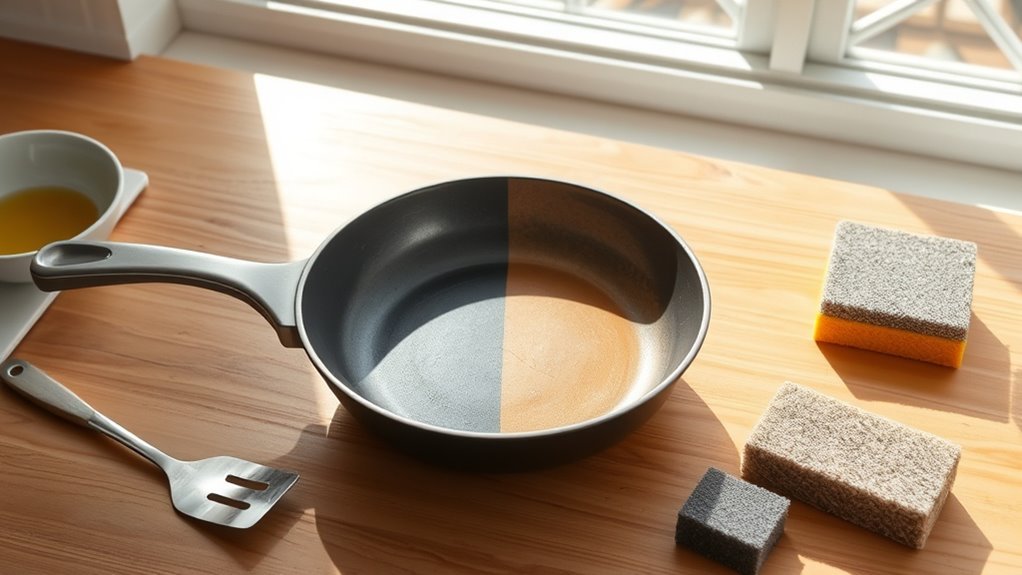
Ceramic nonstick coating is a silicone-based layer derived from sand, designed to enhance cooking efficiency and safety. However, its performance can decline due to factors like excessive heat or physical wear. Understanding why these issues arise is essential for maintaining your cookware. By recognizing the causes, you can implement effective strategies to restore its nonstick properties and extend its lifespan. The next steps can greatly impact your cooking experience.
What Is Ceramic Nonstick Coating?
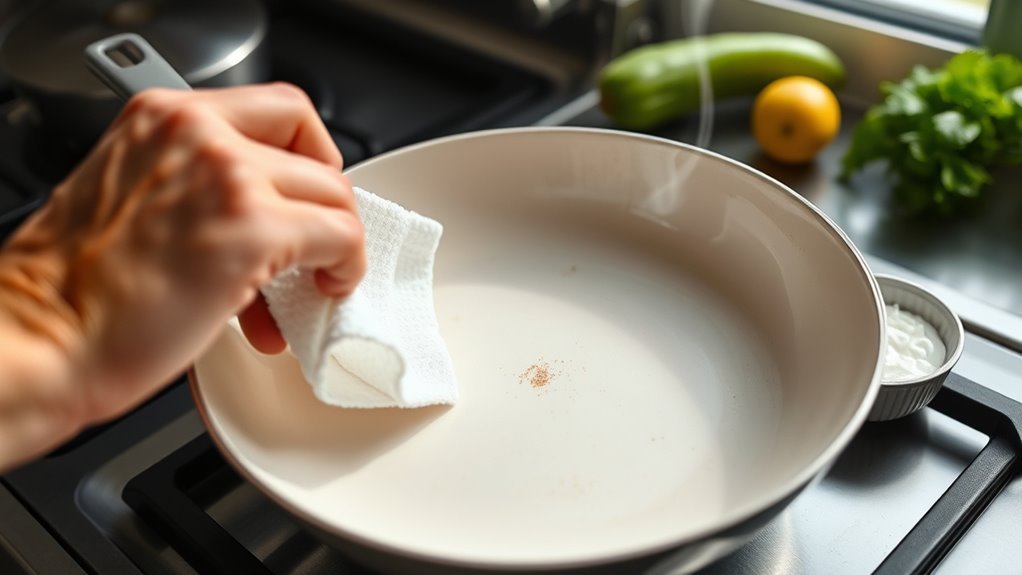
Ceramic nonstick coating is an innovative layer applied to metal cookware, primarily composed of a silicon-based material derived from sand. This coating offers a nonstick surface without using traditional PFAS chemicals, making it a popular choice for those seeking environmentally friendly options.
Unlike PTFE coatings, ceramic nonstick coatings are free from PFOA, lead, and cadmium, enhancing safety for everyday cooking.
While effective at low to medium heat, the nonstick properties can diminish when subjected to high heat, necessitating careful cooking practices. You’ll need to maintain these coatings through hand washing and by avoiding metal utensils, as they can scratch the surface and compromise performance.
Consumer feedback suggests that while initial results are promising, ceramic nonstick coatings may wear out faster than traditional options, often within a year of regular use. Understanding these factors is essential for maximizing the lifespan and efficiency of your cookware.
How Does Ceramic Coating Work?
Understanding how ceramic coating works involves examining its key components, the technology behind its nonstick properties, and the best practices for maintenance.
You’ll find that the sol-gel process is essential, as it creates a durable silicone-based layer that enhances cooking efficiency.
Proper care can greatly extend the lifespan of the coating, ensuring peak performance.
Key Components of Coating
Nonstick coatings rely on a complex interplay of materials and processes to achieve their unique properties. Understanding the key components can optimize your cooking experience:
- Inorganic Materials: Primarily silica from sand forms the foundation.
- Metal Base: Typically aluminum, providing durability and heat conductivity.
- Sol-Gel Process: Transforms a liquid solution into a solid ceramic layer for a smooth, nonstick surface.
- Heat Resistance: Designed to withstand high heat up to 450°F (232°C) without compromising performance.
These ceramic coatings allow for healthier cooking with minimal oil or butter while ensuring easy cleanup.
However, maintaining their effectiveness requires avoiding metal utensils and using low to medium heat to prevent damage.
Nonstick Technology Explained
When you cook with ceramic nonstick coatings, the technology behind their functionality is rooted in a sol-gel process that creates a silica-based layer bonded to a metal substrate, usually aluminum or stainless steel.
This coating provides excellent nonstick properties, enabling easy food release and allowing you to cook with less oil. Unlike traditional PTFE coatings, ceramic nonstick cookware is often free from harmful chemicals like PFAS, lead, and cadmium, appealing to health-conscious users.
However, you must be mindful of your cooking habits; high temperatures and abrasive utensils can diminish the coating’s effectiveness over time.
Maintenance and Care Tips
Ceramic coatings require specific maintenance to preserve their nonstick qualities and longevity. By adhering to proper care techniques, you can guarantee that your ceramic cookware remains effective and durable.
- Use low to medium heat to avoid diminishing nonstick properties.
- Hand wash with warm, soapy water; avoid dishwashing to protect the ceramic finish.
- Choose silicone or wooden utensils to prevent scratching the surface.
- Clean stubborn residue with a baking soda and vinegar paste for effective results.
Understanding these maintenance tips will empower you to maximize the lifespan of your ceramic cookware.
With diligent care, you’ll enjoy the benefits of a smooth, nonstick surface that simplifies your cooking and cleanup processes.
Benefits of Ceramic Nonstick Cookware
While many cookware options claim convenience, ceramic nonstick cookware stands out due to its unique benefits. The silica-based coating provides impressive nonstick properties, allowing you to cook with minimal oil for healthier meals. This feature not only supports your wellness goals but also enhances food release, making it easier to serve and clean up afterward.
Ceramic nonstick cookware offers exceptional health benefits, enabling healthier meals with minimal oil and effortless food release for easy serving and cleanup.
Versatile by design, ceramic cookware works on all stovetops, including induction, and is oven-safe up to 450°F, accommodating various cooking methods. Many options are crafted from recycled aluminum, aligning with eco-friendly cooking practices and reducing your environmental footprint.
Unlike traditional nonstick coatings, ceramic cookware is free from harmful substances like PFAS, lead, and cadmium, ensuring a safer choice for everyday use.
With these advantages, ceramic nonstick cookware empowers you to enjoy cooking while prioritizing health and sustainability.
Common Issues With Ceramic Nonstick Coating
Though ceramic nonstick cookware offers numerous advantages, users often encounter several common issues that can affect performance. Over time, the initial nonstick properties of ceramic nonstick pans may diminish, leading to frustrating sticking issues, particularly with delicate foods.
- Chipping or cracking from metal utensil use
- Loss of nonstick properties after about a year
- Increased need for oil or butter during cooking
- Faster degradation from frequent dishwashing
These factors make it increasingly challenging to keep your cookware easy to clean.
If you face sticking issues, consider using a baking soda and vinegar paste to combat stubborn residue, which can help restore some nonstick capabilities.
Causes of Ceramic Nonstick Coating Wear?
As you regularly use ceramic nonstick cookware, several factors contribute to the wear of its coating. High temperatures can degrade the nonstick properties, causing the ceramic surfaces to break down over time. Additionally, using metal utensils or abrasive cleaning tools can scratch the coating, further compromising its integrity. The natural wear and tear from cooking, especially with acidic foods, accelerates this degradation, leading to sticking issues.
Improper cleaning methods, like using dishwashers or harsh detergents, can also hasten the deterioration of the ceramic coating. Recognizing these factors is essential for maintaining the performance of your cookware.
| Factors | Impact on Coating | Recommended Actions |
|---|---|---|
| High Temperatures | Degradation of nonstick | Use lower heat settings |
| Metal Utensils | Scratching | Opt for silicone or wood |
| Acidic Foods | Accelerated wear | Limit exposure |
| Improper Cleaning | Faster deterioration | Hand wash with gentle soap |
Signs Your Ceramic Cookware Needs Replacement
You should monitor your ceramic cookware for visible scratches, chips, and signs of uneven heat distribution, as these indicate compromised integrity.
If you notice food sticking despite using oil or butter, it’s a clear signal that the nonstick properties have diminished.
Recognizing these signs early can help you determine when it’s time for a replacement.
Visible Scratches And Chips
Visible scratches and chips on ceramic cookware are clear indicators that the nonstick surface has deteriorated, compromising both cooking performance and food safety. Ignoring these signs can lead to food sticking, uneven cooking, and potential health risks.
- Scratches reduce nonstick properties, making cooking difficult.
- Chips expose the metal base, which can react with food.
- Regular use of metal utensils increases damage.
- Ceramic cookware typically has a shorter lifespan than traditional options.
If you notice visible scratches or chips, it’s vital to replace your cookware. Doing so guarantees peak cooking performance and maintains food safety, allowing you to enjoy healthy meals without compromise.
Uneven Heat Distribution
Uneven heat distribution in ceramic cookware often manifests as inconsistent browning, where certain areas cook faster than others, leading to unsatisfactory meal outcomes.
Signs of wear, like discoloration or scratches, indicate that the nonstick properties are compromised, impacting cooking performance. If you notice food sticking or burning in specific spots, this deterioration suggests uneven heat distribution, necessitating your attention.
Regularly using high heat can exacerbate these issues, creating hotspots that further disrupt even cooking. If achieving desired results becomes a struggle, it’s likely time to replace your ceramic cookware.
Sticking Food Residue
As ceramic cookware ages, sticking food residue often becomes a telltale sign that the nonstick coating has worn down. This deterioration can occur after about a year of regular use.
Look for these signs:
- Increased difficulty in food release, especially with delicate items like eggs or fish
- Scratches or chips on the ceramic surface
- Consistent sticking, even with proper care
- Frequent use of high heat, which accelerates coating breakdown
When you notice these issues, it’s vital to assess your cookware.
If food consistently sticks despite your best efforts, the nonstick properties are unlikely to improve. At this point, considering replacement is essential to maintain your cooking experience and enjoy the liberation that nonstick cooking offers.
Best Practices for Keeping Your Ceramic Cookware Nonstick
To guarantee your ceramic cookware remains nonstick for years, it’s vital to adopt specific maintenance practices. Always use low to medium heat; high heat can damage the coating and compromise its nonstick properties.
For the best use and care, hand wash your ceramic pans with warm, soapy water. Avoid the dishwasher and abrasive cleaners, as these can degrade the finish over time. When cooking, opt for silicone or wooden utensils instead of metal to prevent scratching the delicate surface.
Additionally, store your ceramic cookware with padding or cloth between pieces to avoid chipping and scratching during storage.
If you encounter stubborn residues, a paste of baking soda and vinegar can effectively clean without harsh scrubbing.
Reviving Your Ceramic Cookware: Simple Restoration Tips
Even with careful maintenance, ceramic cookware can lose its nonstick qualities over time. To revive these essential nonstick properties, follow these straightforward tips:
- Clean thoroughly with a baking soda and water mixture to eliminate stubborn residue.
- For light scratches, apply a thin layer of cooking oil and heat on low to temporarily restore nonstick qualities.
- Avoid metal utensils and abrasive cleaners that can damage the ceramic coating.
- Regularly hand wash with mild soap and steer clear of the dishwasher to extend your cookware’s lifespan.
If deterioration is significant, consider re-seasoning by applying oil and gently heating it to create a protective layer.
Alternatives to Ceramic Nonstick Cookware
When considering alternatives to ceramic nonstick cookware, cast iron stands out for its heat retention and the ability to develop a natural nonstick surface through seasoning.
Stainless steel offers versatility, excelling in browning while remaining non-reactive, though it may necessitate additional oil for effective cooking.
Each option presents distinct advantages that cater to different cooking styles and preferences.
Cast Iron Cookware Benefits
While ceramic nonstick cookware has its advantages, cast iron offers a range of benefits that make it a formidable alternative. Consider these key points:
- Exceptional heat retention and even heat distribution for perfect searing and frying.
- Develops a natural nonstick surface with proper seasoning, minimizing oil use.
- Can withstand high temperatures, ideal for oven use and grilling.
- Highly durable, often lasting generations and improving with age.
In contrast to ceramic pans, cast iron not only enhances cooking performance but also provides dietary iron, a health benefit absent in traditional nonstick options.
Stainless Steel Versatility
Cast iron’s robust performance highlights the need for cookware that meets diverse culinary demands.
Stainless steel emerges as a versatile alternative, well-suited for various cooking styles—from sautéing to searing and deglazing. Its excellent heat retention and even cooking capabilities allow for precise temperature control, essential for browning meat or achieving a perfect sear.
Unlike ceramic nonstick cookware, stainless steel maintains its integrity over time, avoiding chipping or loss of nonstick properties. It can withstand high heat, making it ideal for creating fond for sauces, where ceramic may falter.
Compatible with all stovetops, including induction, and typically dishwasher safe, stainless steel cookware offers convenience without sacrificing performance, empowering you to explore your culinary creativity with confidence.
Is Ceramic Nonstick Cookware Worth It?
Is ceramic nonstick cookware truly a worthwhile investment for your kitchen? While it offers some appealing features, the long-term benefits may not justify the cost for everyone.
- Naturally slick surface reduces oil usage.
- Higher heat tolerance than traditional nonstick.
- Requires careful handling to avoid chipping.
- Nonstick properties may diminish within a year.
Ceramic cookware provides an effective barrier to prevent food from sticking initially, but it often loses its nonstick properties relatively quickly.
Although it can withstand high heat better than some alternatives, prolonged exposure risks damaging the ceramic layer.
Additionally, compared to traditional nonstick options, ceramic pans may come with a higher price tag and require hand-washing to maintain their finish.
Frequently Asked Questions
Is a Ceramic Nonstick Coating Safe?
Yes, a ceramic nonstick coating can be safe, provided you choose high-quality products. Its ceramic durability guarantees better heat resistance compared to traditional nonstick options, but it’s essential to avoid high temperatures to maintain safety.
Employ proper cleaning methods, like hand washing with non-abrasive tools, to extend the coating’s life.
Additionally, consider the environmental impact of your cookware; opting for tested, nontoxic ceramic options can enhance both safety and sustainability in your kitchen.
Is Ceramic Nonstick Healthier Than Nonstick?
Ceramic nonstick can be healthier than traditional nonstick options, primarily due to its lack of PFAS and other harmful chemicals.
Its ceramic properties offer good heat resistance, contributing to safe cooking performance.
However, you should consider the environmental impact of production and disposal.
While it’s marketed as a nontoxic alternative, be mindful that its longevity may not match that of PTFE coatings, potentially affecting your cooking experience over time.
What Is the Healthiest Nonstick Cookware to Use?
The healthiest nonstick cookware options for you include PFOA-free traditional coatings and high-quality ceramic cookware.
When considering durability comparison, ceramic may wear down faster than PTFE options.
Prioritize eco-friendly options that maintain excellent cooking performance while ensuring safety.
For longevity, follow maintenance tips like using silicone or wooden utensils and avoiding high heat.
This way, you’ll enjoy safe, efficient cooking without compromising health or the environment.
What Is the Downside of Ceramic Coating?
The downside of ceramic coating lies in durability concerns, as it can chip or crack easily, leading to scratching issues.
You might find that its initial nonstick properties diminish over time, resulting in cleaning challenges.
Additionally, ceramic coatings struggle with heat resistance, especially at temperatures above 800°F, which limits your cooking methods.
Regular maintenance is essential, but even then, the longevity of ceramic cookware can be considerably less than expected.
Conclusion
In the quest for the perfect nonstick surface, you might find yourself ironically battling the very nature of ceramic. While it promises an eco-friendly cooking experience, its vulnerability to heat and scratches can leave you longing for the ease of traditional nonstick. Yet, with the right care and maintenance, you can restore its functionality, transforming your kitchen struggle into a seamless glide. So, are you ready to embrace the challenge of keeping your ceramic cookware in prime condition?
