
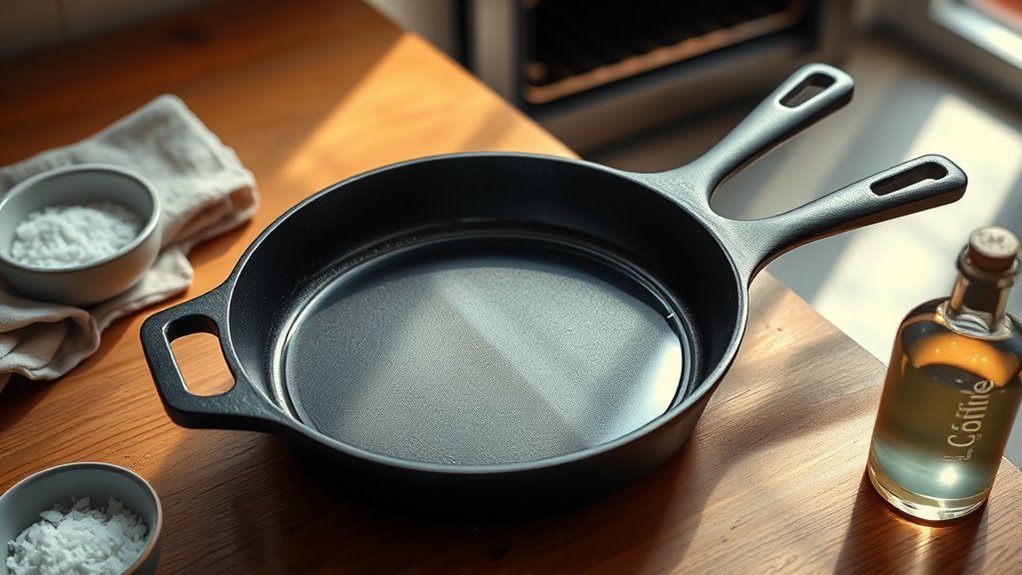
Most people don’t realize that even brand-new cast iron skillets often require seasoning for ideal performance. While some come pre-seasoned, this initial layer isn’t always enough to guarantee longevity and nonstick qualities. Knowing when and how to season your skillet is essential for maintaining its effectiveness. What signs should you look for to determine if your skillet needs a refresh? Let’s explore the nuances of cast iron care and seasoning.
Understanding the Importance of Seasoning
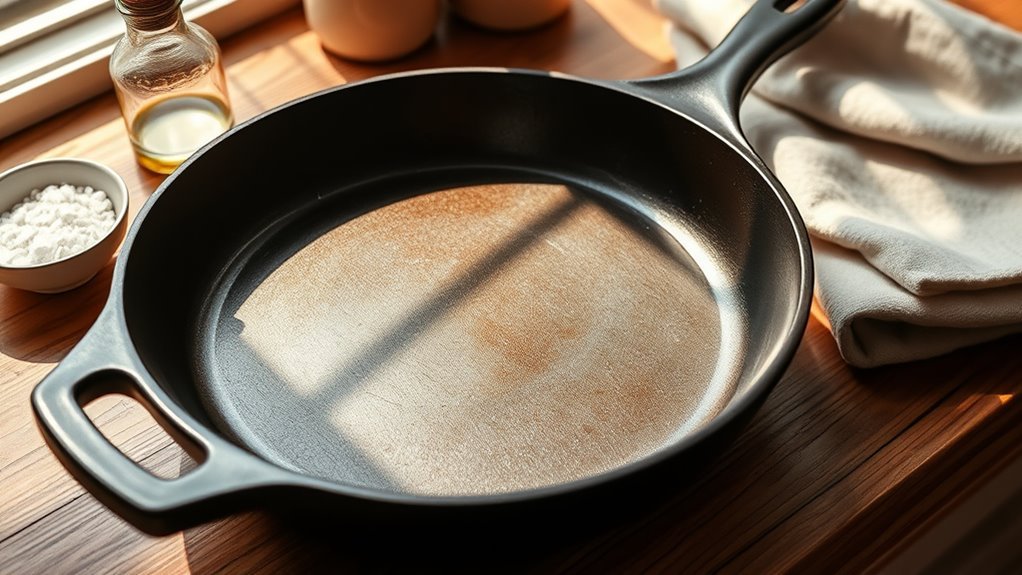
Why is seasoning your cast iron skillet so important? Seasoning creates a protective layer that prevents rust and enhances the skillet’s nonstick properties, making it essential for effective cooking.
During the seasoning process, fat bonds to the metal and itself through polymerization, forming a hard, blackened surface that improves with regular use. While new skillets often come pre-seasoned, adding extra layers of oil boosts their performance and longevity.
Proper seasoning also allows you to cook with acidic ingredients without damaging the iron beneath. This protective coating is critical for maintaining the skillet’s integrity.
Ongoing maintenance is equally important; regular cooking with fat and light oiling after cleaning helps preserve and improve the seasoning over time. Embracing this simple practice not only enhances your cooking experience but also liberates your skillet to reach its full potential.
Does Factory Seasoning Count?
When you buy a new cast iron skillet, the factory seasoning provides a solid starting point for cooking right away. This initial layer offers protection against rust, but to maximize its nonstick capabilities, you might want to add your own seasoning over time.
Just keep in mind that avoiding acidic foods until the seasoning is more established will help maintain that factory finish.
Factory Seasoning Effectiveness
While some might question the necessity of additional seasoning, factory-seasoned cast iron skillets offer a surprisingly effective nonstick surface right out of the box.
Typically coated with a soy-based vegetable oil, these skillets undergo a high-temperature baking process that enhances the seasoning layer. This means you can jump into cooking immediately without any extra steps.
However, while factory seasoning effectiveness is solid for initial use, layering more seasoning through regular cooking can elevate those nonstick properties over time.
Just remember to steer clear of acidic ingredients until the seasoning is well-established, as they can interfere with that initial coating.
Trust in brands like Lodge, known for their reliable craftsmanship, to guarantee your skillet performs beautifully from day one.
Immediate Cooking Readiness
Isn’t it great to know that new cast iron skillets often come ready for immediate cooking? Thanks to factory seasoning, you can dive right in without re-seasoning.
Here’s how to get started:
- Wash your skillet with warm, soapy water to remove shipping residues.
- Dry it thoroughly to prevent rust.
- Start cooking your favorite dishes right away; many users report great results!
- Enhance nonstick properties over time by adding layers of seasoning through regular cooking.
Long-Term Maintenance Considerations
Although factory seasoning provides a solid starting point, long-term maintenance is essential for keeping your cast iron skillet in top shape.
Regular cooking with fats naturally enhances the seasoning, improving its nonstick properties. For effective long-term maintenance, wash your skillet with minimal soap, dry it thoroughly, and apply a light coat of oil after each use. This routine preserves the seasoning and prevents rust.
If you notice signs of wear, reseasoning is simple—just apply oil and bake at high temperatures. Don’t stress too much about re-seasoning; focus on enjoying your cooking experiences!
Initial Cooking Tips for Your New Cast Iron Skillet
When you start cooking with your new cast iron skillet, choose fatty foods like bacon or sausage to help build seasoning.
Keep the heat low to avoid damaging the surface and guarantee even cooking, and always preheat your skillet for ideal heat distribution.
After cooking, proper maintenance will keep your skillet in top shape for years to come.
Recommended First Foods
To kickstart your journey with a new cast iron skillet, it’s best to focus on cooking fatty foods like bacon. This helps render pork fat, establishing a solid seasoning layer.
Here are some recommended first foods to contemplate:
- Bacon – It’s rich in fat, perfect for seasoning.
- Fried Eggs – Simple and great for low to medium heat.
- Sautéed Vegetables – Use oils like vegetable or canola to build that nonstick surface.
- Chicken Thighs – Their fat content aids in seasoning while adding flavor.
Avoid acidic ingredients like tomatoes or lemon early on, as they can break down your seasoning.
Regular use for everyday cooking will enhance your skillet’s nonstick properties over time. Enjoy your culinary liberation!
Heat Control Techniques
After getting comfortable with your new cast iron skillet through cooking those initial fatty foods, mastering heat control is the next step to accessing its full potential.
Start by cooking on medium-low heat to prevent overheating and protect the skillet’s seasoning. Preheat your cast iron cookware for a few minutes before adding food; this guarantees even cooking and helps prevent sticking.
Don’t forget to use fats like butter or oil to enhance its nonstick properties and build additional seasoning. Avoid excessive flipping or moving of food, as this allows for proper browning and flavor development.
Finally, keep an eye on the temperature—cast iron heats differently than nonstick pans, so familiarity is key to success.
Maintenance After Cooking
Proper maintenance of your new cast iron skillet is essential for longevity and performance. Follow these steps after cooking to keep it in top shape:
- Hand wash with warm, soapy water and a soft sponge to remove food residues without damaging the seasoning.
- Dry thoroughly right after washing to prevent rust. Use stovetop heat if necessary to eliminate moisture.
- Reapply a light layer of cooking oil to the inside of the skillet after cleaning to maintain the seasoning and protect the metal.
- Avoid abrasive tools and harsh soaps, as they can strip the seasoning and diminish the skillet’s nonstick properties.
Washing a New Skillet
Before diving into cooking, it’s essential to wash your new cast iron skillet to remove any shipping residues. Although these skillets often come pre-seasoned with soy-based vegetable oil, a thorough wash with warm, soapy water guarantees a clean surface for your culinary adventures.
After washing a new skillet, make sure to dry it completely; moisture is a skillet’s enemy and can lead to rust. You can briefly heat the skillet on the stovetop to eliminate any lingering moisture. This step not only prepares your skillet for immediate use but also helps maintain its integrity over time.
How to Tell If Your Skillet Needs Reseasoning?
A well-maintained cast iron skillet is a valuable kitchen asset, but it won’t stay in prime condition forever. Knowing when to perform reseasoning is essential for keeping it functional and enjoyable to use.
A well-cared-for cast iron skillet is invaluable, but it requires periodic reseasoning to remain functional and enjoyable.
Here are some signs your skillet needs a refresh:
- Dull, Gray Appearance: If it looks lackluster instead of shiny black, it’s time for reseasoning.
- Rust Spots: Any rust indicates the seasoning has worn away and needs immediate attention.
- Food Sticking: If your meals are starting to stick, the seasoning layer is compromised and should be revived.
- Rough Texture: A rough or uneven surface suggests degradation, requiring reseasoning for peak cooking performance.
Pay attention to these signs, and you’ll guarantee your skillet continues to be a reliable kitchen companion!
Cooking Tips for Enhancing Seasoning Over Time
As you cook with your cast iron skillet, you can naturally enhance its seasoning over time, guaranteeing it remains a reliable tool in your kitchen. Here are some tips to elevate your seasoning game:
| Tip | Details | Benefits |
|---|---|---|
| Use Fats | Cook with oils or butter for initial uses. | Builds flavorful seasoning layer. |
| Avoid Acids | Steer clear of tomatoes and citrus initially. | Preserves the protective coating. |
| Start Simple | Begin with fatty foods like bacon or sausages. | Promotes effective seasoning. |
| Regular Maintenance | Clean and lightly oil after each use. | Guarantees consistent seasoning. |
The more you use your skillet, the better the seasoning will develop, improving its nonstick properties and overall cooking performance. Embrace these practices, and enjoy the delicious dishes you create!
Debunking Common Myths About Cast Iron Maintenance
Have you ever wondered if you need to go through an elaborate process to maintain your cast iron skillet? Let’s debunk some common myths about cast iron maintenance:
- Pre-Seasoning is Perfect: New skillets often come pre-seasoned, so you can start cooking right away.
- Soap is Your Enemy: A light wash with soap and hot water won’t strip the seasoning; it’s safe for cleaning.
- No Overthinking Required: Don’t complicate the seasoning process; simply cook with fats to build it up naturally.
- Sanding Isn’t Necessary: Modern manufacturing guarantees your skillet has a good initial seasoning, so skip the sanding.
Embrace the simplicity of cast iron care.
Regular cooking, especially with fatty ingredients, will enhance your skillet’s seasoning over time.
Focus on enjoying your cooking experience rather than stressing over maintenance!
How to Restore a Rusty Cast Iron Skillet
Restoring a rusty cast iron skillet is a straightforward process that can bring your cookware back to life.
Start by scrubbing away the rust with steel wool or a stiff brush until the metal feels smooth and free of corrosion. Once you’ve removed the rust, wash the skillet with soap and hot water, then rinse thoroughly to eliminate any residues.
Next, apply a thin layer of cooking oil to the entire surface, including the handle, to prepare it for seasoning.
Place the oiled skillet upside down in a preheated oven at 450°F (230°C) for one hour. This allows the oil to polymerize, creating a protective nonstick layer.
Repeat the oiling and baking process as necessary to build up the seasoning until your skillet regains its beautiful blackened finish.
With patience and care, you’ll restore your cast iron skillet to its former glory.
Long-Term Care for Your Cast Iron Skillet
After bringing your rusty cast iron skillet back to life, the next step is ensuring it stays in top shape for years to come. Proper long-term care is essential for maintaining its seasoning and nonstick properties. Here’s how to do it:
- Cook Regularly with Fat: Using oils or fats while cooking helps build and maintain the seasoning layer.
- Clean After Use: Rinse with hot water and a stiff brush. Avoid soap unless absolutely necessary to preserve the seasoning.
- Dry Thoroughly: Always dry your skillet completely to prevent rust, then apply a light layer of oil before storing.
- Store Properly: Keep it in a dry place, optionally with a paper towel inside to absorb moisture.
Frequently Asked Questions
What Happens if You Don’t Season Your Cast Iron Skillet?
If you don’t season your cast iron skillet, you risk rust formation, as the bare iron is sensitive to moisture and air.
Food will stick, making cooking and cleaning a hassle, and you might notice a metallic taste in your dishes.
Plus, without that protective layer, you’ll find yourself scrubbing more often, which can damage the skillet.
Ultimately, neglecting seasoning shortens its lifespan, leading to corrosion and degradation over time.
Can I Use a New Cast Iron Skillet Right Away?
Absolutely, you can use a new cast iron skillet right away!
Think of it as your trusty ally in the kitchen, ready to help you whip up delicious meals.
Just give it a quick wash with soap and hot water to remove any shipping residues, and you’re set for your first use.
Cooking fatty foods, like bacon, will build up its seasoning naturally.
Enjoy your culinary adventures without delay!
What Ruins a Cast Iron Skillet?
Excessive moisture and improper cleaning techniques can really ruin your cast iron skillet. If you scrub it with abrasive tools or use too much soap, you’ll strip away the seasoning.
Cooking acidic foods too soon can also break down the seasoning, leading to sticking. To guarantee rust prevention, always oil your skillet after cleaning.
Avoid high heat during initial uses to protect its integrity and keep your skillet in top shape for years to come.
What Should I Do if I’m Using a Cast Iron Skillet for the First Time?
When using a cast iron skillet for the first time, you’re joining over 90% of chefs who swear by its versatility.
Start by washing it lightly with warm, soapy water to remove any residues. Dry it thoroughly, then cook some fatty foods like bacon to help build seasoning.
Keep the heat at medium-low to avoid damaging the skillet. With regular use, you’ll enjoy a naturally nonstick surface that enhances your cooking experience.
Conclusion
In the end, seasoning your cast iron skillet isn’t just a chore; it’s a rewarding ritual. You might find that the more you cook, the better your skillet becomes, almost like a trusty friend honing its skills alongside you. When you notice that dullness or stubborn sticking, don’t fret—just reseason and keep the magic alive. With a little care and attention, your skillet will not only serve you well but also become a cherished kitchen companion for years to come.
