
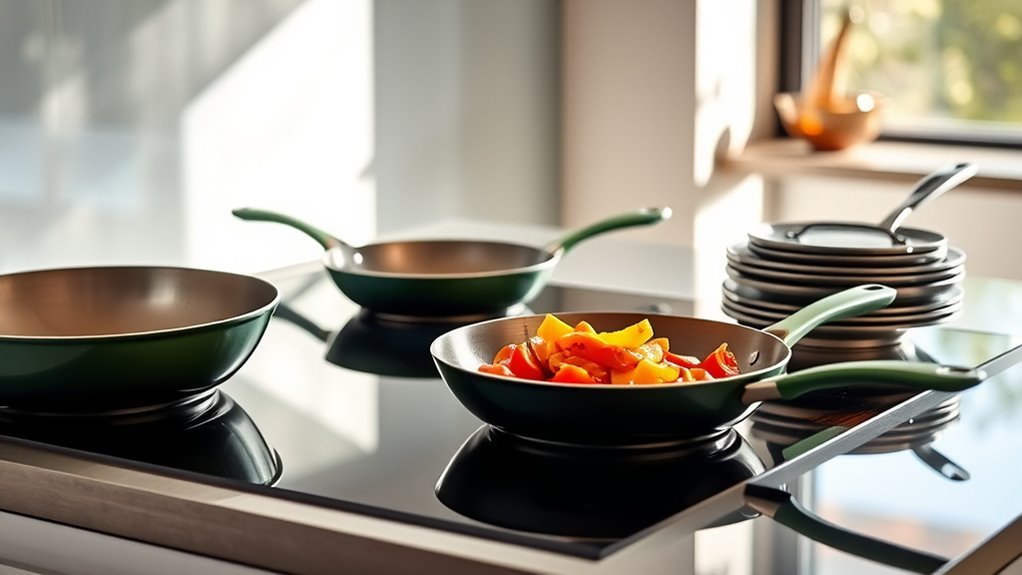
If you’re considering Green Pans for your induction cooktop, it’s essential to know which models work best. Not all Green Pans are created equal; only those with a magnetic base are compatible. Understanding the materials behind induction cooking can help you make informed choices. Curious about which specific models meet these criteria and how they perform? Let’s explore the best options available for efficient induction cooking.
What Are Green Pans and Their Benefits?
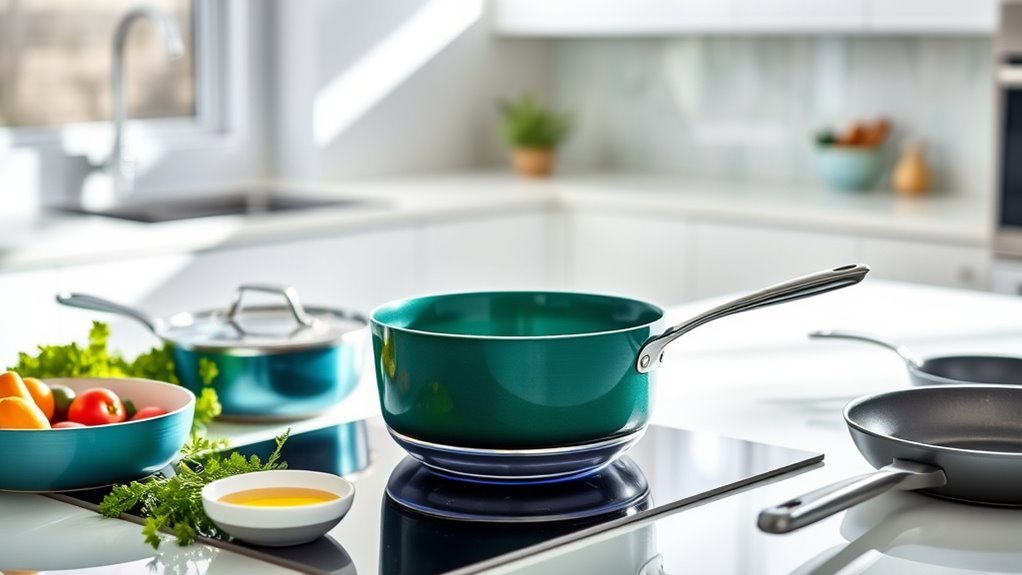
Green Pans represent a revolutionary approach to cookware, combining modern design with health-conscious materials. These innovative pieces utilize a ceramic non-stick coating made from natural materials, eliminating harmful chemicals like PFAS. This means you can enjoy safe, high-heat cooking without worrying about toxic fumes.
Many Green Pan models are induction compatible, allowing you to efficiently harness the power of induction cooktops, but always check for specific compatibility to guarantee peak performance.
Many Green Pan models are designed for induction cooking, ensuring optimal performance—just confirm compatibility for best results.
Users often praise the effective non-stick properties of Green Pans, making cooking and cleanup a breeze. They also feature heat-resistant handles, enhancing safety during use.
However, some reports suggest potential durability concerns over time. Overall, Green Pans not only offer a healthier alternative but also embody convenience and style, making them a compelling choice for those seeking liberation in their cooking experiences.
How Induction Cooking Works: The Need for Ferrous Materials
Induction cooking relies on the principles of electromagnetism to heat cookware directly, which means your choice of materials is essential for effective performance.
For induction to work, your cookware must be made from ferrous materials that can generate a magnetic field. Here’s what you need to know:
- Only materials like cast iron or certain stainless steels are suitable.
- Non-stick pans won’t heat unless they’ve a magnetic base.
- A flat, smooth bottom is necessary to transfer magnetic energy efficiently.
- To check compatibility, simply use a magnet; if it sticks, you’re good to go.
Understanding these requirements helps you make informed choices about your cookware, ensuring you harness the full potential of induction cooking.
Finding Induction-Compatible Green Pans
When searching for induction-compatible Green Pans, it’s essential to understand which models are specifically designed for this purpose.
Look for options with a magnetic base and always check product specifications to guarantee compatibility.
Plus, performing a simple magnet test can save you from potential cooking frustrations down the line.
Induction Compatibility Overview
If you’re considering Green Pans for your induction cooktop, it’s important to understand which models actually work with this technology. Not all ceramic nonstick options are compatible, so always check for the “induction-ready” label on packaging or product descriptions.
Here are some key points to help you find the right non-stick pan:
- The base must be flat and magnetic for effective induction cooking.
- Verify compatibility using a magnet; if it sticks, you’re good to go.
- Some ceramic pans may struggle with heat distribution and cooking efficiency.
- If you can’t find a suitable Green Pan, consider alternatives like stainless steel or cast iron.
With these tips, you’ll make a more informed choice for your induction stoves.
Recommended Green Pan Models
Finding the right Green Pan model for your induction cooktop can greatly enhance your cooking experience.
The GreenPan Venice Pro and Rio collections are excellent choices, designed specifically for induction compatibility with their flat magnetic bases. These ceramic frying pans not only offer impressive non-stick performance but also guarantee even heat distribution, essential for effective cooking.
When selecting a cookware set, always check product labels or manufacturer specifications to confirm induction compatibility, as not all Green Pan models meet this requirement.
Remember to avoid high heat settings to maintain the integrity of the ceramic coating.
Tips for Best Use
To guarantee you get the most out of your Green Pans on an induction cooktop, start by confirming their compatibility through the product specifications or packaging.
Not all Green Pans are created equal, so here are some tips to make sure you choose the right cookware:
- Check for a stainless steel base, which enhances induction compatibility.
- Conduct the magnet test; if it sticks, your pan is likely induction-friendly.
- Consider the weight; heavier ceramic-coated pans often provide better heat distribution.
- Avoid high heat settings to maintain non-stick properties and extend the lifespan of your cookware.
Key Materials for Induction-Compatible Green Pans
Understanding the key materials in Green Pans is essential for determining their compatibility with induction cooktops. While many models boast a ceramic surface, it’s the stainless steel base that enhances their induction capabilities. Users often report mixed experiences, so always check product specifications to verify compatibility.
Here’s a quick reference table to help you:
| Material | Induction Compatibility |
|---|---|
| Ceramic | Usually not compatible |
| Stainless Steel | Likely compatible |
| Nonstick Frying Pan | Check for stainless base |
For a simple test, use a magnet; if it sticks, your pan is probably induction-friendly. However, remember to avoid high heat—excessive temperatures can compromise the performance of your Nonstick Frying Pan. Prioritize quality materials to maximize your induction cooking experience!
Best Green Pan Options for Induction Cooking
When choosing the best Green Pan options for induction cooking, it’s essential to focus on models labeled as “induction ready” to guarantee compatibility.
You’ll want to take into account the materials used, as a flat base enhances heating efficiency on induction cooktops.
Additionally, understanding care and maintenance tips will help preserve the integrity of the ceramic coating and prolong the life of your cookware.
Top Induction Green Pans
Whether you’re an experienced chef or a home cook, choosing the right cookware for your induction cooktop is essential, and Green Pans can be a great option if you select the right models.
Here are some top choices to take into account:
- GreenPan Valencia Pro: Features a stainless steel base for enhanced induction compatibility.
- GreenPan Chatham: Designed with a sturdy, magnetic base for reliable heating on induction surfaces.
- GreenPan Paris: Offers a ceramic non-stick surface paired with stainless steel for ideal performance.
- GreenPan Padova: This option is marketed as induction-friendly, ensuring effective cooking results.
Always conduct a magnet test to confirm the induction compatibility of your Green Pans, as only those with magnetic materials will work effectively on induction cooktops.
Material Compatibility Explained
While many Green Pans boast eco-friendly ceramic coatings, their compatibility with induction cooktops hinges on the materials used in their construction.
To be induction compatible, a pan must have a magnetic base, yet not all Green Pan models guarantee this feature. Users often report mixed experiences, noting that some pans don’t heat evenly on induction surfaces.
When purchasing, it’s essential to check for explicit indications of induction compatibility on the packaging or product description.
For reliable performance, consider alternatives like stainless cookware or cast iron, which generally excel on induction cooktops.
Brands such as Scanpan and Circulon offer non-stick options that are often more dependable than certain Green Pan models, ensuring a more liberated cooking experience.
Care and Maintenance Tips
To guarantee your Green Pans perform at their best on induction cooktops, following specific care and maintenance tips is essential.
While these pans offer great versatility, proper handling guarantees their longevity and effectiveness.
- Always check individual product specifications for induction compatibility.
- Avoid high heat settings to protect the ceramic coating.
- Hand wash with mild soap; skip the dishwasher for better care.
- Use wooden or silicone utensils to prevent scratches on the ceramic surface.
What Do Users Say About Green Pans on Induction?
What do users really think about Green Pans when it comes to induction cooking? Feedback is mixed, with some users enjoying effective performance on induction cooktops, while others face compatibility issues. Many Green Pans lack a magnetic base, leading to inconsistent heating. Users often recommend testing with a magnet to verify compatibility before purchase.
| User Experience | Notes on Performance |
|---|---|
| Positive | Eco-friendly, good heat distribution |
| Negative | Inconsistent heating, some models not compatible |
| Caution | Avoid high heat to protect ceramic coating |
| Recommendation | Test for magnet compatibility |
Frequently Asked Questions
Why Is Greenpan Being Sued?
GreenPan’s facing lawsuits due to claims about their ceramic non-stick coatings not meeting safety and durability standards.
Consumers express environmental concerns, questioning the materials used and the potential health risks.
This situation undermines consumer trust, as users feel misled about the longevity and non-toxic nature of the products.
As GreenPan emphasizes its commitment to safety, these legal challenges highlight the ongoing battle between marketing promises and actual performance in cookware.
How Do I Know if a Pan Is Induction Compatible?
To know if a pan’s induction compatible, use induction testing methods like a magnet; if it sticks, you’re good to go.
Focus on cookware materials—cast iron, stainless steel, and some carbon steel are your best bets.
Avoid pans with a disc-bottom, as they often lead to uneven heat distribution.
Always check product descriptions for any specific compatibility notes, ensuring you make an informed choice that enhances your cooking experience.
Why Can’t You Use Olive Oil on Greenpan?
Using olive oil on Green Pans can be tempting due to its health benefits, but it’s risky. At high cooking temperatures, olive oil breaks down, leaving a sticky residue that clings to your pans.
Instead, consider alternative oils like avocado or canola, which have higher smoke points. This choice not only preserves your pan’s non-stick coating but also guarantees your meals taste great, freeing you to enjoy cooking without worry.
What Are the Common Complaints About Greenpan?
You might encounter several common complaints about Green Pans. Many users express durability concerns, noting that the ceramic coating can wear off quicker than expected.
The non-stick performance often varies, with some finding it less effective than traditional options. Additionally, heat distribution can be uneven, leading to cold spots during cooking.
These issues, combined with the pans’ heavier weight, may affect your overall cooking experience and satisfaction.
Conclusion
To sum up, while many Green Pans offer excellent non-stick properties, not all are induction compatible. Think of it as a puzzle; only those with a magnetic base fit perfectly. Always check product specifications before buying. If you want to guarantee even heat distribution, consider alternatives like stainless steel or cast iron. By making informed choices, you can enjoy the benefits of induction cooking without compromising on performance. Happy cooking!

