
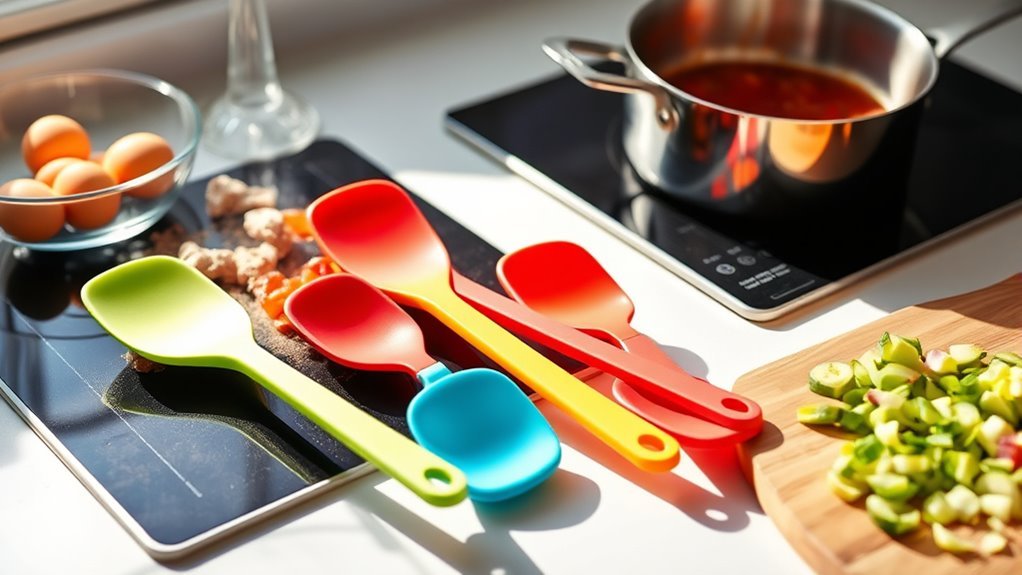
When considering silicone spatulas, it’s vital to assess their safety and materials. High-quality, food-grade silicone can be a reliable choice in your kitchen, but not all options are created equal. Understanding their heat resistance and potential chemical leaching is essential for informed cooking. As you explore this topic further, you’ll uncover important insights that could impact your culinary choices and kitchen safety.
What Are Silicone Spatulas Made Of?

Silicone spatulas are crafted from food-grade silicone, a synthetic polymer that combines silicon, oxygen, carbon, and hydrogen. This material is prized for its durability and flexibility, making it an ideal tool for scraping and flipping without scratching your nonstick cookware.
High-quality spatulas are often 100% platinum-cured, ensuring they’re free from harmful fillers and additives, which contributes to their non-toxic silicone classification.
One of silicone’s standout features is its ability to withstand high temperatures, typically up to 450°F, without degrading or leaching chemicals into your food. This heat resistance is essential for various cooking techniques, allowing you to use these spatulas confidently in high-heat environments.
Additionally, silicone is nonreactive, meaning it poses no risk when used with acidic foods. Understanding what silicone spatulas are made of empowers you to choose safe, effective, and liberating kitchen tools.
Are Silicone Spatulas Safe for Cooking?
When considering kitchen tools, the safety of silicone spatulas for cooking is a common concern. High-quality, food-grade silicone spatulas, particularly those that are FDA-approved, stand out as nontoxic utensils.
High-quality, FDA-approved silicone spatulas ensure safety and nontoxicity in your kitchen, making them a smart cooking choice.
They can endure temperatures up to 450°F without degrading or leaching harmful substances, making them ideal for various cooking tasks. Unlike metal utensils, silicone doesn’t react with acidic ingredients, guaranteeing your dishes maintain their intended flavors.
Additionally, their dishwasher-safe nature simplifies cleaning, effectively preventing bacterial buildup in your kitchen. To guarantee exceptional safety and performance, always opt for 100% platinum-cured silicone spatulas; lower-quality options may contain harmful fillers.
Fundamentally, when you choose silicone spatulas crafted from the best material, you’re not just investing in safety but also enhancing your cooking experience.
Top Reasons to Choose Silicone Spatulas
When you choose silicone spatulas, you’re opting for heat resistance that can handle temperatures up to 450°F without warping.
Their non-stick surface not only protects your cookware but also simplifies the cleanup process.
This combination makes them an excellent choice for versatile and safe cooking.
Heat Resistance Benefits
Choosing silicone spatulas for your kitchen can greatly enhance your cooking experience, especially due to their impressive heat resistance. They withstand temperatures up to 450°F, ensuring you can cook at high heats without worrying about melting or deforming.
Their non-reactive nature means they won’t leach harmful chemicals into your food, which is especially crucial when working with acidic ingredients. Unlike metal utensils, silicone spatulas are gentle on nonstick cookware, preventing scratches and prolonging the life of your pots and pans.
Plus, they’re dishwasher-safe, making cleanup effortless and safe to use with harsh detergents. With their flexibility, these spatulas offer efficient scraping and flipping, making your cooking tasks not only easier but also more enjoyable.
Non-Stick Surface Advantage
One of the standout features of silicone spatulas is their non-stick surface, which greatly simplifies both cooking and cleanup.
These versatile silicone utensils enhance your kitchen experience in several ways:
- Preserves Nonstick Cookware: Unlike metal spatulas, silicone won’t scratch or damage nonstick coatings, ensuring your cookware lasts longer.
- Ideal for Delicate Foods: Their flexibility allows you to flip delicate foods without tearing, making meal prep smoother.
- Easy Cleanup: Many silicone spatulas are dishwasher-safe, maintaining their non-stick properties while saving you time.
With heat resistance up to 450°F, these spatulas hold their shape and functionality, making them indispensable tools in your culinary arsenal.
Embracing silicone spatulas means embracing convenience and care for your kitchen tools.
Do Silicone Spatulas Leach Chemicals: Safety Considerations?
When considering whether silicone spatulas leach chemicals, temperature plays a vital role.
Using them at temperatures above 300°F, especially with high-fat foods, can increase the risk of harmful substances like siloxanes being released.
To guarantee safety, it’s essential to choose high-quality, food-grade silicone products and monitor cooking temperatures.
Temperature Effects on Leaching
Although silicone spatulas are popular for their versatility in cooking, understanding the temperature effects on leaching is essential for ensuring their safety.
High heat can lead to leaching of chemicals, particularly when silicone isn’t food-grade. To safeguard your health, consider these points:
- Temperature Limits: Avoid exceeding 300°F, especially with fatty foods, to minimize chemical release.
- Prolonged Exposure: Extended use above 400°F considerably raises the risk of leaching harmful substances like siloxanes.
- Usage Recommendations: Opt for silicone spatulas in non-hot applications or brief interactions with hot items.
Quality of Silicone Materials
Understanding the quality of silicone materials is essential to guaranteeing the safety of your cooking tools. High-quality, non-toxic silicone spatulas are typically FDA-approved, which minimizes the risk of harmful substances leaching into your food.
However, be cautious: studies show that silicone can leach siloxanes at temperatures above 300°F, especially with fatty foods. To guarantee safety, always choose spatulas labeled as “100% food-grade” or “platinum-cured,” as these meet stricter standards.
Additionally, you can perform the pinch test; if the silicone changes color or shows white streaks when squeezed, it may contain non-food-grade fillers. By prioritizing the quality of silicone materials, you can confidently use your spatulas without compromising your health.
What Are the Drawbacks of Using Silicone Spatulas?
While silicone spatulas are popular for their versatility, there are notable drawbacks that you should consider. Understanding these limitations can help you make informed choices in the kitchen.
- Heat Resistance Limitations: While many silicone spatulas are heat-resistant up to 450°F, prolonged exposure to extreme temperatures may lead to degradation and leaching of siloxanes, potentially impacting your hormonal balance.
- Odor Retention: Silicone materials can sometimes retain odors from strong-smelling foods. This retention can affect the taste of future dishes, which is something to keep in mind when using them for diverse recipes.
- Durability Concerns: Lower-quality silicone spatulas may degrade over time, leading to cracking or tearing. This compromises their effectiveness, making it essential to choose high-quality, food-grade options to mitigate health risks.
Being aware of these drawbacks allows you to navigate your cooking experience with greater freedom.
How to Identify Quality Silicone Utensils?
When identifying quality silicone utensils, focus on key material indicators and certification standards.
Look for products labeled as “100% food-grade” and check for FDA approval or LFGB certification to guarantee safety.
Additionally, perform the pinch test to confirm that the silicone doesn’t contain harmful fillers, and opt for heat-resistant options to withstand cooking temperatures.
Key Material Indicators
To guarantee you’re choosing high-quality silicone utensils, look for certain key material indicators that signify safety and durability. Here are three essential characteristics to take into account:
- Food-grade silicone: Confirm the labeling states it meets safety standards and is free from harmful additives.
- 100% platinum-cured: This indicates a safer manufacturing process without fillers, enhancing durability.
- FDA-approved: Verify the silicone is marked as compliant with FDA or LFGB standards, confirming it’s safe for food contact.
Additionally, quality silicone is nonporous, preventing bacteria buildup and resisting odors or flavors over time.
Certification and Testing Standards
Identifying quality silicone utensils requires careful scrutiny of certification and testing standards, as these indicators guarantee you of their safety and reliability.
Look for products labeled “100% food-grade silicone,” confirming they meet safety standards and lack harmful fillers.
Verify your silicone utensils comply with FDA regulations, which indicate they’ve been tested for safe food contact. The LFGB certification from Germany is another rigorous standard evaluating silicone’s safety for food use.
Additionally, check for certifications that demonstrate testing for leaching at high temperatures, confirming safety during cooking.
Finally, use the pinch test: high-quality silicone won’t change color or show white streaks when twisted or squeezed, providing further assurance of its integrity and durability.
Caring for Your Silicone Utensils With Tips and Tricks
Caring for your silicone utensils is essential for guaranteeing their longevity and performance in the kitchen. Here are some care tips to keep them in top shape:
- Avoid Sharp Objects: Don’t use knives or other sharp utensils on silicone. Scratches can lead to leaching of materials, compromising safety.
- Washing Method: While silicone utensils are generally dishwasher-safe, hand-washing with warm, soapy water is preferable. This helps prevent discoloration and maintains their integrity over time.
- Proper Storage: Store your silicone utensils in a well-ventilated area to avoid moisture buildup, which can cause mold or unpleasant odors.
Regularly inspect your silicone utensils for signs of wear, such as brittleness or discoloration, and replace them if you notice any degradation.
Finally, avoid exposing them to temperatures exceeding 450°F during high-heat cooking to prevent degradation and guarantee safety.
How Do Silicone Spatulas Compare to Other Materials?
When you choose kitchen utensils, understanding how silicone spatulas stack up against other materials is essential for making informed decisions.
Silicone spatulas are heat-resistant up to 450°F, making them safer for high-temperature cooking than plastic spatulas, which can warp or melt. Unlike metal spatulas, silicone spatulas are non-reactive and won’t scratch nonstick or ceramic cooking surfaces, helping you maintain their integrity.
Food-grade silicone is non-toxic, but be cautious of low-quality options that may contain harmful fillers. Additionally, silicone spatulas are easy to clean—you can toss them in the dishwasher—reducing the risk of bacteria buildup compared to wooden utensils that require more maintenance.
When compared to stainless steel spatulas, silicone spatulas offer greater flexibility, making them ideal for delicate tasks like flipping pancakes or scraping batter without damage.
Choosing the Right Silicone Spatula for Your Needs
Choosing the right silicone spatula can greatly enhance your cooking experience, especially if you prioritize safety and functionality. Here are three key factors to take into account:
- Material: Always opt for a spatula made from 100% food-grade silicone. This guarantees safety and durability during high-temperature cooking tasks.
- Heat Resistance: Look for silicone spatulas with a heat resistance of at least 450°F. This prevents melting and leaching, making them versatile for various cooking methods.
- Ergonomically Designed Handles: Choose spatulas with comfortable grips to enhance control and minimize hand fatigue during extended cooking sessions.
Additionally, selecting spatulas with a sturdy nylon core adds strength, preventing bending or breaking.
Finally, check for dishwasher-safe labels to guarantee easy cleanup and long-lasting performance.
FAQs About Silicone Spatulas and Safety?
What should you know about the safety of silicone spatulas? High-quality, food-grade silicone spatulas are non-toxic and FDA-approved, guaranteeing they won’t leach harmful substances into your food. They can typically withstand temperatures up to 450°F, making them ideal for various cooking tasks.
However, regular use in high-heat situations, especially above 400°F, may lead to the potential leaching of siloxanes, which the European Union classifies as endocrine disruptors.
To promote safety, always opt for 100% platinum-cured silicone; cheaper alternatives may contain fillers that compromise quality.
Proper care is vital; avoid using metal scrubbers and exposing your spatulas to excessive heat to prolong their lifespan.
Frequently Asked Questions
What Is the Healthiest Material for a Spatula?
The healthiest material for a spatula is stainless steel, thanks to its durability and resistance to bacteria.
Bamboo offers advantages too, as it’s a natural, non-toxic option that’s gentle on cookware.
If you’re considering nylon alternatives, remember they can melt at high temperatures, which might compromise safety.
Each material has its strengths, but for longevity and safety, stainless steel and bamboo stand out as top choices for your kitchen.
Does Silicone Release Toxins When Heated?
Surprisingly, silicone doesn’t release a toxic cloud when heated, as long as you’re mindful of its durability and heat resistance.
Stick to temperatures below 450°F, and you’ll keep your cooking safe. Using proper cleaning methods guarantees your spatula lasts longer, maintaining its integrity.
Just remember, while high-quality silicone is generally safe, lower-quality options could pose risks. So, choose wisely and enjoy liberating your culinary creations without worry!
What Are the Downsides of Using Silicone Spatulas?
Using silicone spatulas comes with some downsides. You’ll face durability concerns, especially when they encounter sharp objects, which can lead to cuts that harbor bacteria.
Their heat resistance is decent but can falter at high temperatures, risking leaching. Additionally, cleaning challenges arise as they may retain odors over time, affecting the flavor of your food.
If you want longevity and safety, consider mixing in wooden or stainless steel utensils for certain tasks.
Does Silicone Give off Microplastics?
No, silicone doesn’t give off microplastics. Its durable properties guarantee stability under heat, unlike lower-quality plastics that break down.
When you choose 100% platinum-cured silicone, you’re opting for a product that’s nonporous and resistant to bacteria, minimizing environmental impact.
This durability comparison highlights silicone’s reliability in your kitchen, allowing you to cook with confidence without worrying about harmful particles contaminating your food or the environment.
Conclusion
To sum up, silicone spatulas are a safe and versatile choice for your kitchen, provided you opt for high-quality, food-grade options. Think of them as the reliable workhorse in your culinary toolkit; they handle heat and flavors without fuss. By following proper care tips and being mindful of their limitations, you can enjoy their benefits for years. Ultimately, investing in a good silicone spatula is like investing in your cooking’s success—practical and dependable.
