
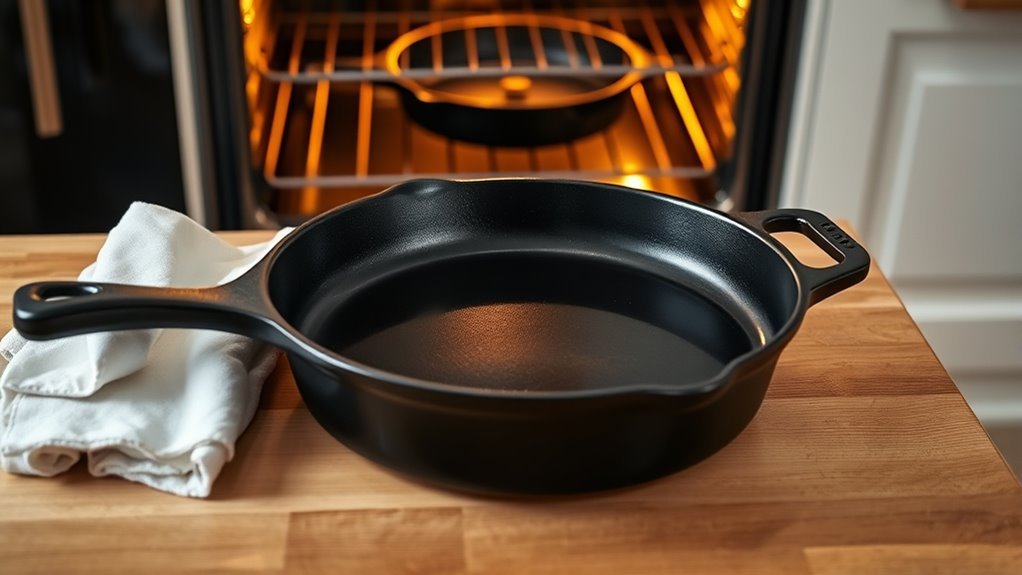
Seasoning your Le Creuset cast iron skillet is essential for enhancing its non-stick surface and protecting it from rust. You’ll need to prepare your skillet properly before applying oil and heat. This process not only improves cooking performance but also extends the life of your cookware. Ready to discover the precise steps and common pitfalls to avoid? Let’s get into the details of achieving the perfect seasoning for your skillet.
Why Seasoning Your Skillet Matters
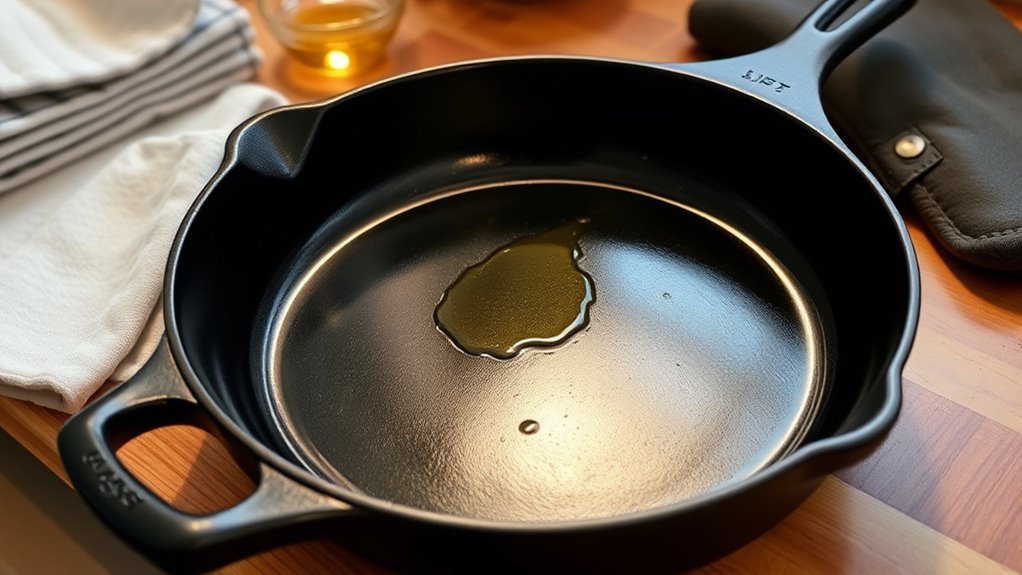
Seasoning your cast iron skillet is important for its performance and longevity. This process creates a protective layer that enhances the skillet’s nonstick properties, making cooking and cleanup a breeze.
During seasoning, the oil undergoes polymerization, forming a hard, durable surface that becomes even better with regular use. A well-seasoned skillet can handle acidic foods without damaging the coating, allowing you to explore a versatile range of recipes.
During seasoning, oil transforms into a robust surface, enhancing your skillet’s resilience and versatility for various recipes.
Regular seasoning sessions are essential for maintaining that slick, black surface, which not only looks great but also improves your cooking experience over time.
By investing a little effort into seasoning, you guarantee your skillet lasts for years, providing consistent performance and preventing rust. This commitment to care liberates you from the frustration of inferior cookware, empowering you to create delicious meals with confidence.
Preparing Your Le Creuset Skillet for Seasoning
Before you start seasoning, make certain your Le Creuset skillet is spotless by washing it with warm, soapy water and drying it thoroughly.
Choosing the right oil is essential, as it affects the seasoning process and your skillet’s performance.
Finally, set your oven to the appropriate temperature to guarantee even seasoning, enhancing your cooking experience.
Essential Cleaning Steps
To prepare your Le Creuset skillet for seasoning, start by washing it with warm, soapy water. This step removes any residue or manufacturing oils that could interfere with the seasoning process.
Rinse thoroughly to guarantee no soap lingers, as even small amounts can impact the quality of your seasoning.
Once rinsed, dry the skillet completely with a lint-free cloth or paper towel to prevent rust. For extra confidence, place the skillet on the stovetop over low heat for a few minutes to eliminate any remaining moisture.
With a clean and dry surface, you’re ready to apply oil for seasoning, assuring ideal results and a beautifully seasoned cast iron skillet that will serve you well for years to come.
Oil Selection Tips
Choosing the right oil is essential for successfully seasoning your Le Creuset skillet. Opt for oils with high smoke points, like vegetable, canola, or grapeseed oil, as they support effective polymerization during the heating process.
Avoid olive oil and butter; their lower smoke points can leave a sticky residue instead of a smooth, hard finish. When applying oil, make certain it’s in a thin layer to prevent pooling, which can create a tacky surface that hinders the seasoning process.
Consider using a seasoning spray specifically designed for cast iron; it offers a convenient, even application without excess oil.
Always check the oil’s refinement; refined oils have fewer impurities, promoting better bonding for a durable seasoning layer.
Proper Oven Settings
Getting the oven settings right is essential for effectively seasoning your Le Creuset skillet. Start by preheating your oven to 450°F (230°C). This temperature creates the ideal environment for the seasoning process.
Confirm your skillet is clean and dry before applying oil; any moisture can disrupt the seasoning. Place a baking sheet on the lower rack to catch any drips from the oiled skillet.
Position the skillet upside down in the oven to promote even heat distribution and prevent oil pooling. After 30 minutes, allow the skillet to cool down in the oven.
This final step solidifies the seasoning layer, confirming your skillet is ready for future culinary adventures. Enjoy your beautifully seasoned cookware!
Step-by-Step Guide to Seasoning Your Skillet
Although Le Creuset cast iron skillets come pre-seasoned, enhancing their nonstick properties and longevity through additional seasoning is a worthwhile endeavor.
Start by washing your skillet with warm, soapy water to remove any residue, then thoroughly dry it. Next, apply a thin layer of high smoke point oil, like vegetable or canola, over the entire surface, including the handle. Buff off any excess oil to guarantee an even coating.
Preheat your oven to 450°F (230°C) and place the oiled skillet upside down on a baking sheet to catch any drips. Bake for 30 minutes; this allows the oil to undergo polymerization, creating a durable seasoning layer.
For best results, repeat the oiling and baking process three to four times. This will greatly improve your skillet’s cooking performance and rust resistance, giving you a reliable tool for all your culinary adventures.
Top Mistakes to Avoid in Skillet Seasoning
When seasoning your cast iron skillet, avoid over-oiling, as a thin layer is all you need to create a smooth, non-sticky surface.
Skipping the preheat steps can lead to uneven seasoning, so always confirm your oven is at the right temperature.
Paying attention to these details will help maintain the skillet’s durability and performance.
Over-Oiling The Pan
Over-oiling your cast iron skillet can sabotage your seasoning efforts, leading to a sticky surface that’s far from satisfactory. To achieve a durable, nonstick surface, apply only a thin layer of oil. Buff it until the skillet looks non-greasy, preventing excess oil from pooling during the seasoning process.
If you over-oil, you risk flaking or peeling, compromising the effectiveness of the seasoning. For best results, choose oils with high smoke points, like vegetable or canola oil, as they polymerize effectively without leaving a residue.
After each use, regularly check the seasoning and reapply a thin layer of oil when necessary, steering clear of over-oiling to maintain your skillet’s integrity and performance.
Skipping Preheat Steps
Skipping the preheating step can greatly undermine your seasoning efforts, as a cold skillet won’t allow the oil to properly polymerize and bond to the surface.
Without preheating, you’ll likely face uneven seasoning and sticky residues, since the oil may pool instead of forming that smooth, hard layer you want. Always preheat your oven to 450°F (230°C) for effective seasoning.
Remember, ensuring your skillet is completely dry and free from moisture is crucial before applying oil; any water can interfere with the seasoning process.
Also, use a baking sheet to catch any drips during preheating—this keeps your oven clean and makes your seasoning journey smoother.
Don’t skip this essential step for a perfectly seasoned skillet!
Maintaining Your Seasoned Skillet
To keep your seasoned Le Creuset skillet in top shape, proper maintenance is crucial. After each use, clean your skillet with warm water and a soft sponge—steer clear of harsh soaps or metal sponges that can damage the seasoning.
Once clean, dry your skillet thoroughly right away to prevent rust and moisture buildup.
Reapply a thin layer of vegetable oil or seasoning oil to maintain its nonstick surface and enhance its longevity. Regularly cooking with fats or oils will naturally build up the skillet’s seasoning, improving its performance over time.
When it’s time to store your skillet, choose a dry place. Placing a paper towel inside can help absorb any lingering moisture and protect the cooking surface.
What to Do If Your Skillet Starts to Rust?
If you notice rust on your Le Creuset cast iron skillet, don’t panic; you can easily restore it to its former glory. Start by scrubbing the rusted areas with a stiff brush or steel wool. This cleaning step is essential to remove all traces of rust.
Next, wash the skillet with warm, soapy water, ensuring you dry it thoroughly to prevent any further moisture exposure.
Wash your skillet with warm, soapy water, and be sure to dry it thoroughly to prevent future moisture exposure.
Once clean, apply a thin layer of vegetable oil or a suitable seasoning oil over the entire surface, including the handle. Preheat your oven to 450°F (230°C) and place the skillet upside down for about 30 minutes. This allows the oil to polymerize, forming a protective layer that guards against future rust.
To maintain your skillet’s durability, repeat this seasoning process every few months, ensuring your beloved cookware remains in prime condition.
Benefits of a Well-Seasoned Le Creuset Skillet
A well-seasoned Le Creuset skillet not only elevates your cooking experience but also guarantees lasting durability. The seasoning process enhances the skillet’s nonstick properties, allowing you to cook sticky foods without worry. This protective layer defends against moisture, markedly reducing rust formation and extending the life of your cast iron.
| Benefit | Description |
|---|---|
| Nonstick Properties | Easier cooking with minimal sticking |
| Rust Protection | Shields against moisture and corrosion |
| Durable Coating | Hard surface withstands high temperatures |
| Heat Retention | Even heat distribution for perfect meals |
| Aesthetic Appeal | Maintains and enhances natural finish |
Regular seasoning maintenance not only restores your skillet’s look but also boosts its functionality. With a well-seasoned skillet, you can embrace various cooking methods, from frying to baking, with confidence.
When to Reseason Your Skillet?
When should you consider reseasoning your Le Creuset skillet? If you notice a dull or uneven surface, that’s a clear sign the seasoning layer is wearing off. Likewise, if food starts sticking to the surface after cooking, it’s time to refresh that seasoning.
Regular use, particularly with fatty foods, can maintain your skillet’s nonstick properties, but consider reseasoning every few months for peak performance.
If you spot rust forming, it’s essential to reseason immediately to protect your cast iron from further damage.
After cleaning your skillet, if the surface feels dry or rough, applying a thin layer of oil and reseasoning will restore its nonstick properties.
Staying proactive about reseasoning not only enhances your cooking experience but also extends the life of your beloved cast iron skillet.
Keep an eye on these signs to guarantee your skillet remains in prime condition!
Final Tips for Perfectly Seasoned Cast Iron Cookware
Maintaining a perfectly seasoned cast iron skillet is key to maximizing its cooking potential. To achieve this, always start with a clean and dry skillet. Apply a thin layer of high smoke point oils, like vegetable or canola oil, which help create a durable, nonstick surface. Heat your skillet upside down in a preheated oven at 450°F (230°C) for 30 minutes to allow the oil to polymerize effectively.
Repeat this oiling and heating process 3 to 4 times to build a robust seasoning layer. Regular maintenance is essential; reapply oil after cleaning and use to guarantee your seasoning continues to improve.
| Tip | Description |
|---|---|
| Clean & Dry | Confirm skillet is spotless before oiling. |
| Use High Smoke Oils | Choose oils like canola for durability. |
| Reapply Regularly | Maintain seasoning with frequent oiling. |
Frequently Asked Questions
Does Le Creuset Cast Iron Need Seasoning?
No, Le Creuset cast iron doesn’t need seasoning due to its durable enamel coating. This means you can enjoy the cast iron benefits without worrying about seasoning frequency.
Simply use mild soap and non-abrasive sponges for cleaning. For peak performance, focus on proper cooking techniques and maintenance tips, like avoiding high heat with acidic foods.
While seasoning isn’t necessary, keeping it clean enhances its longevity and cooking efficiency.
What Ruins Cast Iron Seasoning?
Rust can quickly ruin your cast iron seasoning, so keep it dry!
Avoid soap during proper cleaning; hot water and a stiff brush work best.
Be mindful of oil types when seasoning; choose oils with higher smoke points.
Cooking techniques matter too—stay away from high heat and acidic foods that break down seasoning.
Finally, practice heat management and use wooden or silicone utensils to maintain your skillet’s integrity and longevity.
Should I Season Cast Iron at 350 or 450?
You should season cast iron at 450°F for ideal heat. This higher temperature guarantees the oil bonds effectively, creating a durable nonstick surface.
While 350°F works, it won’t yield the same results. Choose an oil with a high smoke point, like flaxseed or grapeseed.
For best maintenance, season regularly and use proper cooking techniques to protect your skillet.
What Not to Use on Le Creuset?
You shouldn’t use metal utensils, abrasive cleaners, or high-acid foods on your Le Creuset.
Opt for non-stick alternatives when cooking, and choose gentle cleaning methods to preserve the enamel.
Stick to oils that suit your cooking techniques, avoiding those that might degrade the finish.
Maintain temperature management to prevent thermal shock, and remember to regularly check for wear to guarantee your cookware remains in great shape.
Enjoy liberating cooking experiences!
Conclusion
To sum up, seasoning your Le Creuset cast iron skillet isn’t just a chore; it’s an epic quest for culinary greatness! With a well-seasoned skillet, you’re not just cooking; you’re releasing a flavor explosion that’ll make your dishes sing and dance! So, embrace the process, repeat it like a ritual, and watch as your skillet transforms into a legendary cooking companion. Keep it pristine, and it’ll reward you with meals that could make even the gods envious!
