
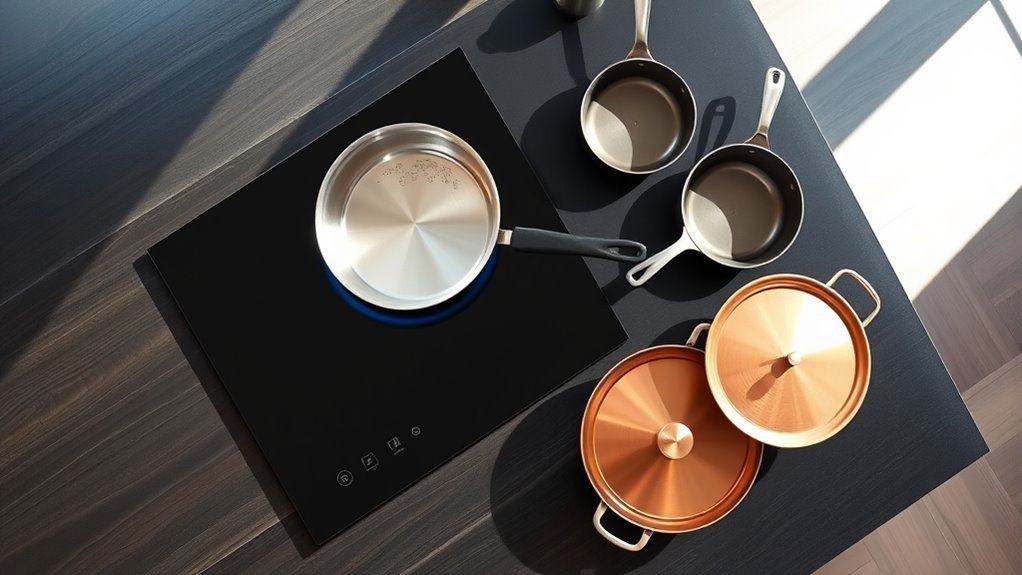
Did you know that over 30% of new kitchens now feature induction cooktops? These efficient burners require specific cookware to perform their best. If you’re unsure whether your pots and pans will work, understanding compatible materials is essential. From magnetic stainless steel to cast iron, the choices can be overwhelming. Let’s explore what makes cookware induction-friendly and discover the top options available for your kitchen.
What Makes Cookware Induction-Compatible?
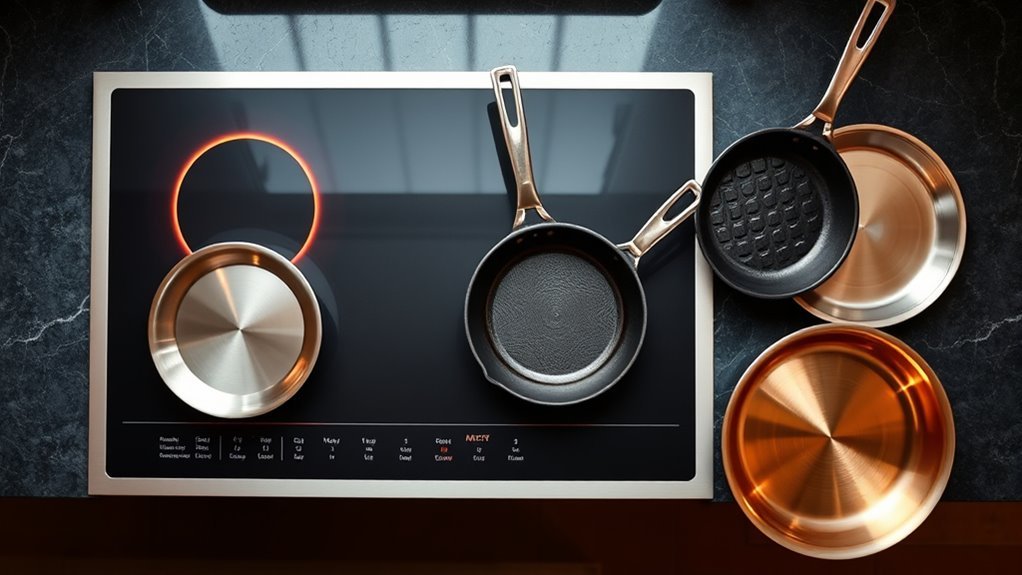
When you’re choosing cookware for your induction burner, it’s crucial to understand what makes it compatible. Induction-compatible cookware must have a magnetic base, typically crafted from ferrous materials like cast iron or magnetic-grade stainless steel. This allows it to interact effectively with the electromagnetic energy generated by your cooktop.
Choosing the right cookware for your induction burner is essential; it must have a magnetic base for optimal performance.
A simple magnet test can help you determine compatibility; if a magnet sticks firmly to the bottom, you’re good to go.
You’ll also want cookware with a flat bottom to guarantee ideal contact with the cooking surface, which enhances even heat distribution. Avoid non-magnetic materials like pure aluminum, pure copper, and glass, as they won’t generate the necessary magnetic field.
Finally, verify your cookware size matches or slightly exceeds the induction zone diameter for the best heating and cooking performance. Embracing these guidelines liberates you to cook with confidence on your induction burner!
Best Materials for Induction Cookware
Choosing the right materials for induction cookware can greatly impact your cooking experience. For ideal performance, look for ferromagnetic materials like cast iron and magnetic-grade stainless steel. These are essential for energy-efficient cooking on induction burners. If you prefer aluminum or copper, verify they have a magnetic base, as pure forms are incompatible.
To enhance heating efficiency, select cookware with a flat bottom that matches your induction zone, typically between 4.75 inches and 10.25 inches. Non-stick ceramic options can also be suitable if they’re labeled as induction compatible.
Here’s a quick overview of materials you might consider:
| Material | Compatibility |
|---|---|
| Cast Iron | Yes |
| Magnetic Stainless Steel | Yes |
| Aluminum (with magnetic base) | Yes |
Essential Features for Induction-Compatible Cookware
To achieve ideal performance with induction cooking, understanding the essential features of induction-compatible cookware is crucial.
First, look for a magnetic base, typically crafted from stainless steel or cast iron, to guarantee effective energy transfer efficiency. You can easily confirm induction compatibility with a magnet test; if it sticks firmly, you’re good to go.
Look for cookware with a magnetic base; a simple magnet test will confirm its induction compatibility.
Next, choose cookware with a flat and smooth bottom. This maximizes contact with the induction surface, promoting even heat distribution and preventing frustrating hot spots.
Opting for high-quality induction cookware made from durable materials, like non-toxic ceramic, enhances longevity and consistent cooking results.
Lastly, verify the size of your cookware matches or slightly exceeds the diameter of the induction cooking zone. This simple detail boosts energy transfer efficiency, making your cooking experience not only enjoyable but liberating.
Choose wisely and elevate your culinary adventures!
Cookware Sizes That Maximize Induction Efficiency
To get the most out of your induction cooktop, it’s essential to match your cookware size to the heating zone.
Choose pots and pans with a base diameter between 4.75 inches and 10.25 inches for best energy transfer.
Mismatched sizes can lead to uneven cooking and wasted energy, so make sure your cookware fits perfectly.
Optimal Cookware Diameter
When it comes to maximizing induction efficiency, matching the diameter of your cookware to the induction zone is essential. For ideal cookware diameter, aim for a size range between 4.75 inches and 10.25 inches.
Using flat-bottomed cookware guarantees proper contact with the induction surface, which leads to improved heat distribution and even cooking. If your pan slightly exceeds the induction cooking zone, you’ll enhance energy transfer, but be cautious—too small a pan can result in hot spots and inefficient heating.
Look for pans specifically labeled as induction-compatible to confirm they work seamlessly on induction cooktops. By choosing the right sizes, you’ll not only boost performance but also enjoy a more liberating cooking experience.
Matching Induction Zones
Matching the right cookware size to your induction zones is crucial for achieving ideal cooking performance. For optimal performance, your pans should have a flat base diameter that matches or slightly exceeds the induction zone, typically ranging from 4.75 to 10.25 inches.
Using properly sized cookware enhances energy efficiency by maximizing contact with the induction zone, leading to faster cooking times and better heat distribution. If your pans are too small, you may experience uneven heating, while oversized options can fail to activate the cooktop altogether.
Confirm your cookware has a magnetic base, as non-compatible materials won’t work at all. Choosing the right size not only prevents errors but also elevates your cooking experience to new heights.
Avoiding Size Mismatches
Choosing the right cookware size for your induction cooktop is crucial if you want to maximize efficiency and achieve consistent results.
Using pans that match the ideal diameter—between 4.75 inches and 10.25 inches—guarantees proper size alignment with the induction burner. Smaller pans on larger zones lead to uneven cooking, wasting energy and extending cooking times.
To enhance heat transfer efficiency, select cookware brands that slightly exceed the cooking zone diameter. This guarantees even contact and maximum heat transfer, preventing hot spots.
Remember, mismatched sizes can hinder energy transfer, so prioritize compatible materials and sizes for the best cooking experience.
Your culinary liberation starts with the right tools!
Avoid These Cookware Types on Induction Cooktops
When using induction cooktops, it’s essential to avoid non-magnetic materials like pure aluminum and copper, as they won’t heat effectively.
Thin-base cookware can lead to uneven cooking due to hot spots, so opt for sturdy options instead.
Choosing the right materials guarantees you get the best performance from your induction burner.
Non-Magnetic Materials
If you’re planning to use an induction cooktop, it’s crucial to avoid non-magnetic materials that can’t generate the necessary heat.
Cookware made from pure aluminum, pure copper, glass, ceramic, or stone lacks the ferrous base required for induction compatibility. Using these non-magnetic materials can lead to uneven cooking and inefficient heating, leaving you frustrated with hot spots in your meals.
Additionally, warped pans can disrupt the cooking process, further diminishing performance.
To guarantee your cookware works effectively on induction burners, always check for induction compatibility labels or conduct a magnet test. This simple step can save you from a disappointing cooking experience and help you make the most of your induction cooktop.
Thin-Base Cookware
Thin-base cookware can create significant challenges when using induction cooktops. These pans often lead to uneven cooking due to poor heat distribution, which can result in frustrating culinary experiences.
If your cookware lacks a sturdy magnetic base, it won’t trigger the induction heating mechanism, rendering it ineffective. Warped or uneven-bottomed pans also contribute to poor contact with the cooktop surface, compromising energy transfer and cooking performance.
To guarantee ideal results, choose cookware with a flat bottom that matches the size of the induction zone. This attention to cookware compatibility not only enhances efficiency but also liberates you from the hassle of hot spots and cooking failures, allowing your culinary skills to shine.
Top Nonstick Cookware for Induction
Looking for the best nonstick cookware for your induction stove? You’ll want to prioritize options with a magnetic base, like stainless steel or cast iron, to guarantee compatibility with induction burners.
The Ciarra Gadgets Ceramic Nonstick Mini Duo Cookware Set stands out, featuring an aluminum core and a ceramic coating that delivers excellent nonstick performance. Plus, it’s free from harmful chemicals like PTFE and PFOA, promoting a healthier cooking environment.
The Ciarra Gadgets Ceramic Nonstick Mini Duo Cookware Set offers superior nonstick performance with a safe, chemical-free ceramic coating.
When selecting nonstick cookware, look for features such as scratch resistance and easy cleaning, often found in high-quality sets.
Confirm your pans match or slightly exceed the diameter of your induction cooking zone for ideal heat retention.
With the right cookware set, you can enjoy smooth cooking experiences, all while keeping your kitchen safe and clean. Embrace the freedom of cooking with confidence!
Best Brands for Induction Cookware
When it comes to selecting the best brands for induction cookware, you’ll find that quality and compatibility play essential roles. Leading brands like Ciarra Gadgets and CAROTE offer a variety of induction-compatible cookware sets featuring non-toxic ceramic coatings, ensuring you’re free from harmful chemicals.
GreenPan stands out with its durable nonstick technology, promoting even heat distribution for effective cooking. If you need fast heating, Farberware’s forged aluminum options cater to diverse culinary needs while emphasizing longevity.
EWFEN specializes in induction-compatible cookware with stainless bases and ultra-smooth granite nonstick coatings, perfect for health-conscious cooking. Plus, brands like Carote provide extensive cookware sets with removable handles, making storage a breeze and offering versatility across induction, gas, and electric stoves.
With these brands, you can confidently embrace a healthier cooking experience without compromising on performance.
How to Test Your Cookware for Induction Compatibility?
Before you start using your cookware on an induction burner, it’s essential to verify it’s compatible. To do this, you can easily test your cookware using a magnet. If the magnet sticks firmly to the bottom, your cookware has a ferrous base and is suitable for induction cooking.
Ensure your cookware is induction compatible by testing it with a magnet; a strong hold means you’re good to go!
Make certain to conduct the magnet test for at least 10 seconds; if it slides off easily, it’s not compatible.
Also, check that the base of your cookware is flat and smooth. Warped surfaces can lead to ineffective heating on induction burners.
While many stainless steel options exist, not all are guaranteed to work. Always look for labels indicating “induction compatible” to confirm you’re using compatible materials.
This simple test will save you time and frustration, allowing you to enjoy the efficiency of induction cooking without hassle.
Frequently Asked Questions
What Happens if You Use a Regular Pan on an Induction Stove?
Using a regular pan on an induction stove won’t work because it lacks the necessary magnetic properties. You’ll experience poor heat distribution, leading to longer cooking times and frustration.
Induction heating effects rely on compatible cookware materials, enhancing energy efficiency and safety features. If your pan isn’t designed for induction cooking, you risk damaging both the pan and the stove, ultimately affecting pan longevity.
Always check for magnetic compatibility before cooking.
How Do I Know if My Pan Is Induction Compatible?
To know if your pan’s induction compatible, grab a magnet! If it sticks, you’re good to go.
Check cookware labeling standards for “induction safe materials.” Use a pan compatibility guide to confirm it meets thickness requirements for ideal heat distribution properties.
Remember, induction stoves offer energy efficiency compared to traditional methods, so you’ll enjoy faster cooking and lower bills.
Keep your kitchen liberated with the right tools for the job!
What Pans Cannot Be Used With Induction?
You can’t use aluminum pans, copper cookware, or glass pots on induction burners since they lack the necessary magnetic properties.
Even ceramic dishes and non-stick surfaces often fall short if they’re not specifically labeled as induction-compatible.
Cast iron and stainless steel need to be magnetic to work, so check before cooking.
For iron skillets, verify they’re flat and even.
Always conduct an induction testing to confirm compatibility for peak performance.
What Kind of Pans Are Compatible With Induction Cooktops?
Imagine harnessing the power of a magnet—your induction cooktop thrives on it!
For ideal performance, choose magnetic cookware options like cast iron and stainless steel. These materials guarantee excellent heat distribution and efficiency.
While copper cookware has its limitations, non-stick induction pans are also available; just look for those induction-ready labels.
Understanding cookware material differences can enhance your cooking experience and reveal the full benefits of induction cooking.
Conclusion
To sum up, choosing the right cookware for your induction burner is like picking the right tools for a masterpiece. Just as an artist needs the right brushes to create, you need induction-compatible pots and pans to cook efficiently. Remember, a simple magnet can reveal whether your cookware is suitable, ensuring you get the most out of your cooking experience. So, gear up with the right materials, and let your culinary creativity flow!

