
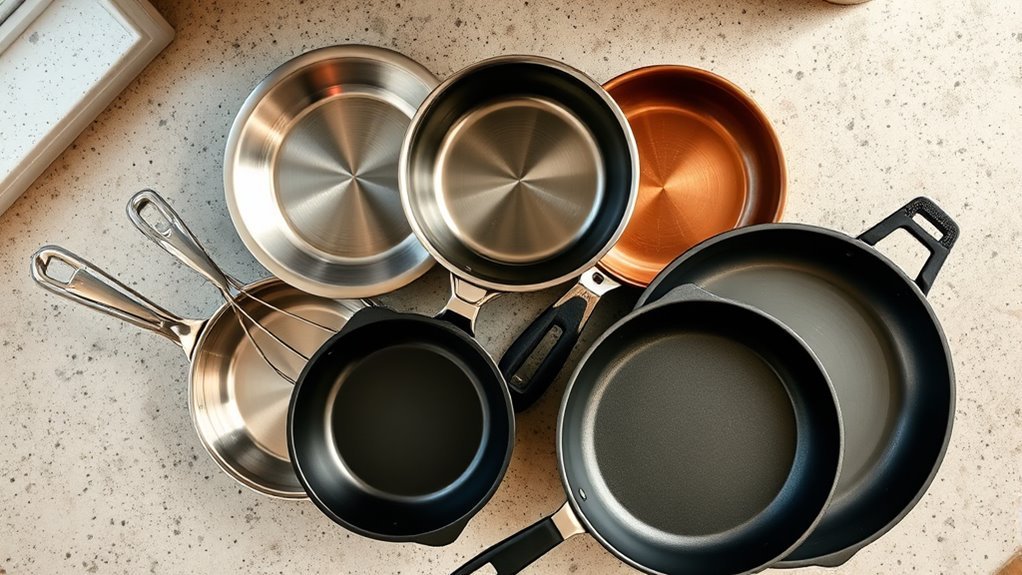
Did you know that the right pan can enhance cooking efficiency by up to 30%? Understanding the various materials used in cookware is essential for achieving ideal results in the kitchen. Each material—whether stainless steel, cast iron, or non-stick—offers distinct advantages and limitations. So, how do you determine which pan is best suited for your culinary tasks? Let’s explore the nuances of these materials and their construction to make informed choices for your cooking style.
Essential Cookware Materials: What You Need to Know
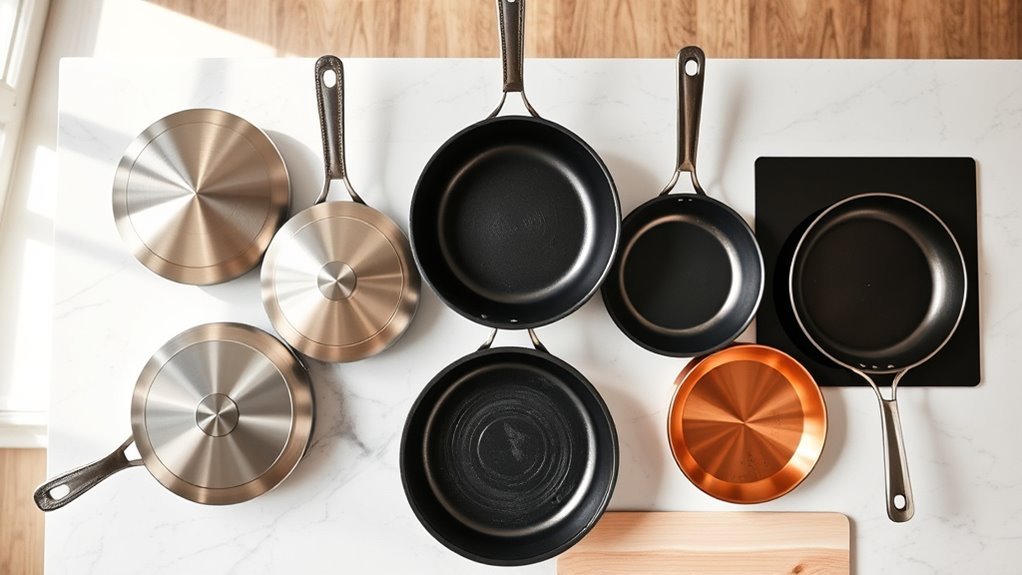
When selecting cookware, understanding the various materials is essential for achieving the best cooking results.
Stainless steel cookware is renowned for its durability and resistance to corrosion, often featuring multi-layer designs that enhance heat distribution, making it ideal for browning proteins.
Stainless steel cookware combines durability and excellent heat distribution, making it perfect for achieving perfectly browned proteins.
Cast iron cookware excels in heat retention and develops a natural non-stick surface when properly seasoned, although it requires regular maintenance to prevent rust.
Non-stick coatings, like PTFE and ceramic, simplify food release and cleanup but can degrade over time, necessitating careful handling to maintain their effectiveness.
Each material offers distinct benefits: aluminum is lightweight and conducts heat well, while copper provides superior thermal control.
PTFE vs. Ceramic: Non-Stick Coatings Compared
Understanding the differences between non-stick coatings can greatly impact your cooking experience.
PTFE (Polytetrafluoroethylene) is a synthetic non-stick coating known for its durability and excellent food release, but it degrades at temperatures above 260 °C (500 °F), risking harmful fumes.
In contrast, ceramic coatings, made from a silica-based gel, are free from PFAS and offer a non-toxic option; however, they generally have a shorter lifespan and can chip easily.
Ceramic coatings can withstand temperatures up to ~370 °C (700 °F), making them suitable for medium-heat cooking, while PTFE excels in low to medium-heat applications.
Maintenance varies; PTFE requires non-metal utensils to avoid scratches, while ceramic needs gentle handling to prevent chipping.
Cleaning is straightforward for both, but PTFE often allows for simpler food release with less oil usage, whereas maintaining ceramic’s non-stick properties may demand more effort over time.
Metal Cookware Essentials: Aluminum, Stainless Steel, and Copper Explained
When choosing metal cookware, consider the distinct benefits of aluminum, stainless steel, and copper.
Aluminum offers lightweight handling and excellent heat conduction, while stainless steel provides versatility and durability.
Copper stands out for its superior heat conductivity, making it ideal for tasks requiring precise temperature control.
Aluminum Cookware Benefits
Aluminum cookware stands out in the kitchen due to its lightweight nature, making it easy to maneuver during cooking. It offers exceptional heat conductivity, ensuring even cooking and quick temperature adjustments, which is ideal for various techniques. This responsiveness enhances your culinary precision.
Hard-anodized aluminum cookware, being twice as strong as regular aluminum, provides enhanced durability and scratch resistance, making it suitable for nonstick coatings. The nonstick feature not only simplifies cleanup but also prevents reactions with acidic foods, ensuring safe and flavorful cooking without altering your dish’s taste.
Additionally, aluminum is affordable and widely available, making it a popular choice for both home cooks and professional chefs alike, empowering you to create with confidence.
2. Stainless Steel Versatility
Stainless steel cookware offers unparalleled versatility in the kitchen, allowing you to tackle a wide array of culinary tasks with ease. Its durability and resistance to corrosion stem from a blend of chromium and nickel, ensuring long-lasting performance.
While stainless steel isn’t the best heat conductor on its own, it’s often bonded with aluminum or copper to enhance heat distribution, resulting in even cooking. This versatility allows you to safely prepare both acidic and alkaline foods, preserving their flavors.
Many stainless steel options are dishwasher safe, simplifying cleanup. Multi-layer designs, like 3-ply or 5-ply constructions, further enhance thermal performance and stability, making these pans suitable for both amateur and professional chefs alike.
3. Copper Heat Conductivity
Copper cookware stands out for its unparalleled thermal conductivity, making it a top choice for chefs who demand precise temperature control. Its thermal conductivity is about 20 times greater than stainless steel, allowing for rapid and even heating.
Here’s what you need to know:
- Temperature Control: Quick adjustments in heat are seamless, ideal for delicate sauces or searing meats.
- Reactivity: Copper reacts with acidic foods, so it’s typically lined with non-reactive materials like stainless steel or tin to prevent flavor changes.
- Maintenance: Expect more upkeep; exposed copper tarnishes and requires periodic polishing to maintain its shine.
While copper cookware can be pricier, the performance benefits often justify the investment for serious chefs and home cooks alike.
Cast Iron Cookware: Benefits and Drawbacks
Cast iron cookware offers exceptional durability and longevity, often lasting a lifetime with proper care.
Its superior heat retention efficiency makes it perfect for both high-temperature cooking and slow braising.
However, you’ll need to take into account the weight and handling requirements, as well as the maintenance involved to keep it performing at its best.
Durability And Longevity
When considering cookware options, few materials rival cast iron for durability and longevity.
Cast iron pans, when properly cared for, can last a lifetime, often becoming cherished family heirlooms. However, they do require specific maintenance to maximize their lifespan.
Consider the following factors:
- Seasoning: Regularly seasoning your cast iron prevents rust and maintains its non-stick surface.
- Handling: While durable, avoid dropping the pans, as they can chip or crack under thermal shock.
- Weight: The heavy weight of cast iron offers stability but can be cumbersome for some users.
Heat Retention Efficiency
Heat retention efficiency is a defining characteristic of cast iron cookware, making it a top choice for chefs and home cooks alike. Its ability to maintain high temperatures for long periods excels in searing and frying. The dense material guarantees even heat distribution, minimizing hot spots and promoting uniform cooking. While cast iron pans take longer to heat up, they shine in slow cooking due to their exceptional heat retention.
| Feature | Benefits | Drawbacks |
|---|---|---|
| Heat Retention | Maintains high temperatures | Takes longer to heat |
| Even Heat Distribution | Reduces uneven cooking | Requires careful maintenance |
| Non-stick Surface | Eases cooking and cleanup | Heavy and requires seasoning |
Specialty Cookware: Unique Pans for Specific Cooking Needs
Specialty cookware offers a range of unique pans tailored to specific cooking methods, enhancing both efficiency and results in the kitchen. Understanding these pans can elevate your culinary skills.
- Woks: Ideal for high-heat stir-frying, these are often made from carbon steel or non-stick materials for quick food release.
- Dutch Ovens: Heavy and deep, these pots are perfect for slow cooking and stews, typically constructed from cast iron or enameled cast iron for excellent heat retention.
- Griddle Pans: With a flat surface, these pans excel at cooking pancakes or searing meats, commonly made from cast iron or non-stick aluminum for even heating.
Each of these specialty cookware options serves a distinct purpose, ensuring that your cooking is both efficient and effective.
How to Choose the Right Pan for Your Cooking Style?
Choosing the right pan for your cooking style can considerably impact your culinary outcomes. Start by considering the type of food you’ll prepare. A stainless steel pan excels at high-heat searing and creating sauces, while nonstick materials are ideal for delicate items like eggs and pancakes.
Weight matters too; cast iron pans provide excellent heat retention but can be heavy, whereas lightweight aluminum heats quickly and is easier to manage.
Weight plays a crucial role in pan selection; cast iron retains heat but is heavy, while aluminum offers quick heating and easy handling.
Next, assess compatibility with your cooktop. Not all pans work on induction stovetops unless they’ve a magnetic base.
Maintenance is another key factor; stainless steel and cast iron require more care for longevity, while nonstick options offer easier cleanup but may wear out faster.
Finally, look for specific features: a sauté pan with high sides is perfect for saucy dishes, while a skillet with a wide surface area is best for browning and frying.
Frequently Asked Questions
What Is the Healthiest Material for Pans?
The healthiest material for pans is cast iron, thanks to its ability to impart beneficial iron into your food, especially if you have deficiencies.
Stainless steel offers safety, as it won’t leach harmful chemicals.
If you’re looking for excellent heat conductivity, consider copper, though it requires careful maintenance.
Ultimately, choosing cast iron balances health benefits with durability, while stainless steel guarantees safety in your cooking endeavors.
Is a Nonstick Pan Unhealthy?
They say, “A stitch in time saves nine.” Nonstick pans can be safe if you use them wisely.
Focus on nonstick safety by choosing coatings free from PTFE and PFOA, ensuring coating durability.
Remember, overheating your pan compromises heat resistance, releasing harmful fumes.
Regularly check for scratches; a damaged surface might raise concerns, but properly maintained, these pans can still deliver a healthy cooking experience.
Prioritize your kitchen tools for peace of mind.
What Cookware Is 100% Non-Toxic?
To guarantee you’re using 100% non-toxic cookware, consider eco-friendly options like ceramic, enameled cast iron, and natural stone.
These materials provide safe cooking surfaces without harmful chemicals. When comparing materials, look for certifications that confirm the absence of PFOA or PTFE, which can leach into food.
By choosing these alternatives, you not only enhance your culinary experience but also contribute to a healthier kitchen environment.
Prioritize safety and sustainability for your cooking needs.
Is My Pan Ceramic or Teflon?
Determining if your pan’s ceramic or Teflon is like identifying a vintage wine; it takes a discerning eye.
Check the surface: if it’s smooth and shiny with ceramic coatings, you likely have a ceramic pan. Conversely, if it feels slick and offers Teflon durability, it’s probably Teflon.
Also, consider heat resistance—ceramic withstands higher temps without degrading, while Teflon can release harmful substances when overheated.
Your choice influences both cooking and health.
Conclusion
Choosing the right pan is like selecting the perfect brush for a masterpiece. Each material paints a different culinary landscape—stainless steel for precision, cast iron for hearty flavors, and non-stick for effortless releases. Picture sautéing vibrant vegetables in a gleaming stainless pan or baking cornbread in a seasoned cast iron skillet, where flavors meld and memories are made. By understanding these materials, you can elevate your cooking, turning everyday meals into artful creations that delight the senses.

