
Hori Hori knives remain a practical choice for gardeners who want one tool for digging, weeding, and planting. In 2027, the top models stand out for sharper blades, stronger handles, and added features like sheaths and depth markings. Some are built for precision, while others focus on durability and comfort. A few familiar names keep appearing, but the differences between them may matter more than expected.
PERWIN Hori Hori Garden Knife with Sheath
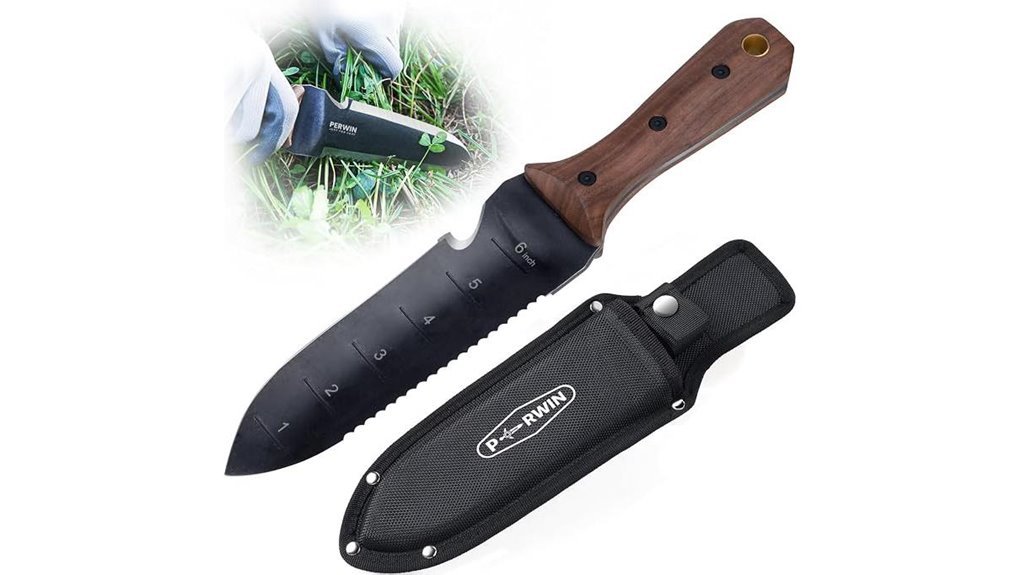
The PERWIN Hori Hori Garden Knife with Sheath is a strong choice for gardeners who want a versatile, all-purpose tool with a durable feel. Its 7-inch high-grade stainless steel blade resists rust and combines a sharp edge, serrations, and a curved profile for digging, slicing roots, and setting plant depth. The walnut full-tang handle offers a secure grip and added strength through three metal rivets. A protective sheath with belt loop improves access, while the hanging hole supports storage. It also suits fishing and camping, and requires hand washing only.
Best For: Gardeners, campers, and anglers who want a durable, multi-use hori hori knife for digging, weeding, planting, and cutting.
Pros:
- Versatile blade with sharp, serrated, and curved edges for a wide range of garden tasks
- Full-tang walnut handle with three rivets provides a sturdy, comfortable grip
- Comes with a protective sheath and belt loop for easy carrying and storage
Cons:
- Hand wash only, so it requires extra care after use
- 7-inch blade may be too large for very fine or delicate gardening work
- Walnut handle, while attractive, may need more maintenance than synthetic handles
NISAKU Hori Hori Stainless Steel Weeding Knife
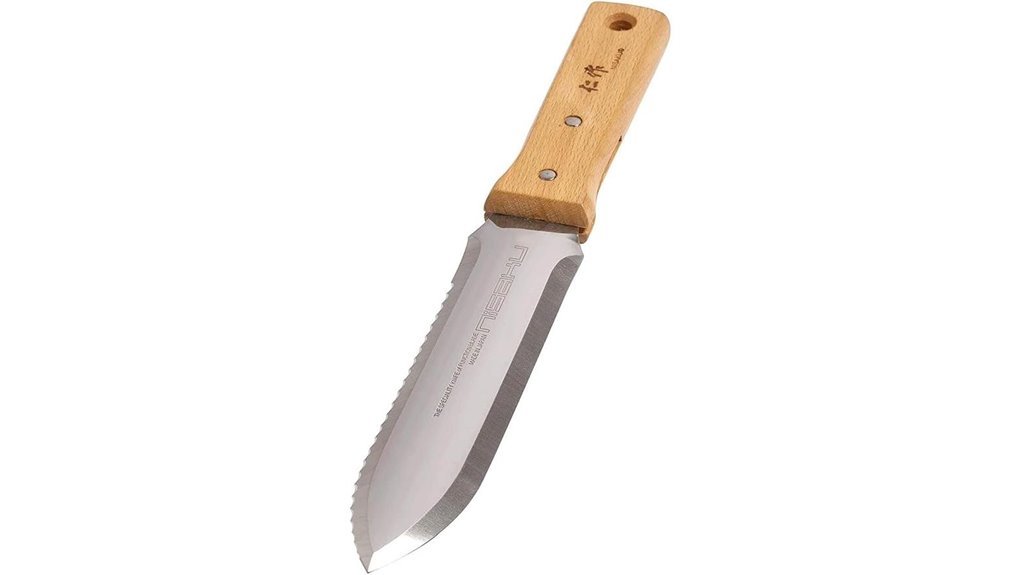
Nisaku’s NJP650 suits gardeners who want a dependable, all-around digging and cutting tool. Made in Japan by Nisaku/Tomita, it pairs a 7.25-inch stainless steel blade with a 5.25-inch wooden handle for balanced control. The dual-edge design combines serrated and straight edges, helping it cut roots, loosen soil, and handle varied ground conditions. Inch markings aid accurate planting depth, while the 10-ounce weight keeps it manageable. A faux leather sheath is included for storage. It is suitable for gardening, landscaping, and camping, and requires hand washing to preserve longevity.
Best For: Gardeners, landscapers, and campers who want a durable, versatile digging and cutting tool with a comfortable wooden handle.
Pros:
- Dual-edge blade with serrated and straight sides handles roots, soil, and varied ground conditions well.
- Inch markings help with accurate planting depth.
- Includes a faux leather sheath for safe storage and transport.
Cons:
- Requires hand washing, so it is not dishwasher safe.
- Wooden handle may need more care than synthetic alternatives.
- At 10 oz, it may feel a bit heavy for some users during extended use.
Black Iron Hori Hori Garden Knife with Sheath
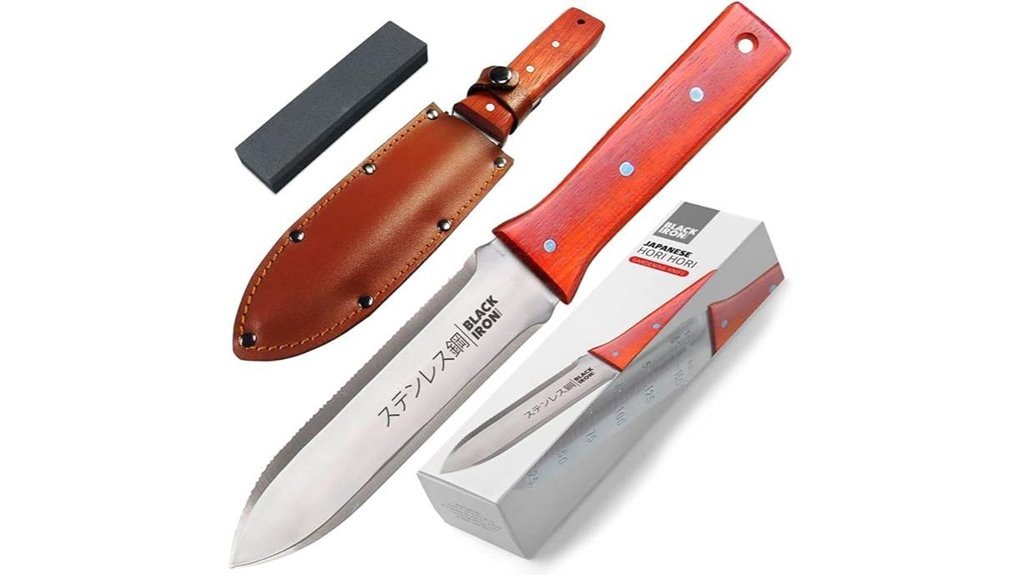
Built for gardeners who value versatility, this Black Iron hori hori pairs a 7-inch stainless steel blade with a sturdy hardwood handle. Its Japanese steel construction resists rust, while the full tang adds strength for repeated digging and cutting. A beveled edge handles slicing, and the serrated side tackles stubborn roots. Depth markings in millimeters and inches support accurate planting. It works well for weeding, pruning, and bulb placement. The heavy-duty leather sheath protects the blade, and the included sharpening stone helps preserve performance over time.
Best For: Gardeners who want a versatile, durable hand tool for digging, cutting, weeding, pruning, and precise bulb planting.
Pros:
- Rust-resistant Japanese stainless steel blade with full tang for strength and durability
- Beveled and serrated edges handle both slicing and tough roots
- Depth markings, leather sheath, and sharpening stone add convenience and long-term value
Cons:
- 7-inch blade may feel small for larger digging or heavy-duty landscaping tasks
- Hardwood handle may not provide the same cushioning as ergonomic or padded grips
- Requires periodic sharpening to maintain peak cutting performance
TONMA Hori Hori Garden Knife, Made in Japan, Garden Trowel, TGK-2
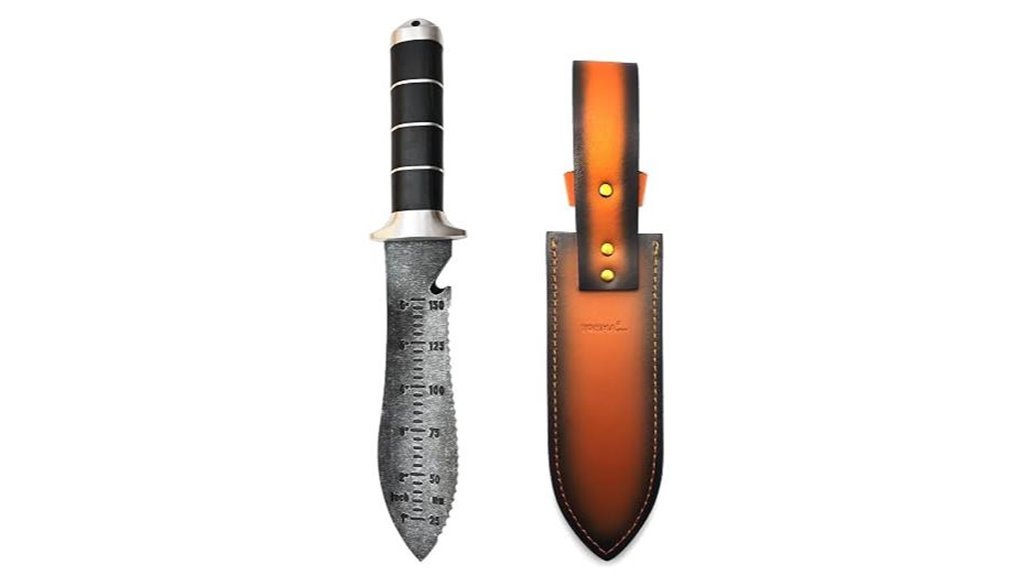
Made in Japan, the TONMA TGK-2 suits gardeners who value precision and durability. Its 7.2-inch AUS-8 stainless steel blade is concave, with one sharp beveled edge and one serrated edge for cutting roots and branches. Engraved inch markers help measure planting depth accurately. The pakkawood handle adds strength, grip, and corrosion resistance. Designed for weeding, seeding, transplanting, digging, sawing, and scooping, it also suits camping and outdoor tasks. The rust-proof, break-resistant build includes a split cowhide leather sheath. Hand washing preserves performance, and TONMA backs the tool with lifetime service and support.
Best For: Gardeners, landscapers, and outdoor enthusiasts who want a durable, precise, and versatile digging and cutting tool for planting, weeding, and campsite tasks.
Pros:
- Sharp 7.2-inch AUS-8 stainless steel blade with both beveled and serrated edges for versatile cutting and digging
- Engraved inch markers and a concave shape make planting and transplanting more precise
- Durable pakkawood handle, rust-proof construction, sheath included, and lifetime support
Cons:
- Hand wash only, so it requires more care than low-maintenance tools
- The premium build may be more expensive than basic garden knives
- Its specialized design may be more tool than casual gardeners need
Hori Hori Garden Knife with Sheath
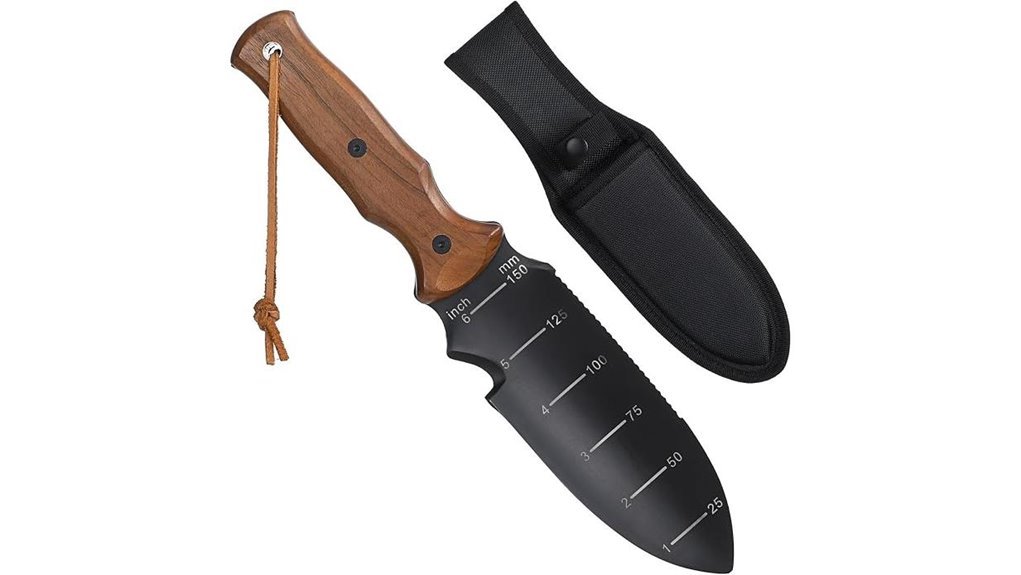
With its sheath and belt loop, this Hori Hori knife suits gardeners who value safe, quick access. It functions as a hand trowel, small spade, and weed puller, handling digging, bulb planting, root cutting, and transplanting with ease. The sharp edge slices vegetables, ropes, and twigs, while the serrated edge tackles thicker roots and compact soil. A curved blade improves control and reduces effort. Inch and millimeter markings aid depth checks. Its ergonomic wood handle, 7-inch stainless steel blade, rust resistance, hanging hole, and limited lifetime warranty add practical durability.
Best For: Gardeners of all skill levels who want a versatile, durable Hori Hori knife for digging, planting, weeding, and cutting tasks with safe storage.
Pros:
- Versatile tool that works as a hand trowel, small spade, and weed puller
- Sharp and serrated edges handle roots, soil, vegetables, ropes, and twigs
- Includes useful extras like inch/mm markings, sheath with belt loop, and ergonomic wood handle
Cons:
- Stainless steel blade may still require care to maintain rust resistance over time
- 7-inch blade may be too small for larger digging jobs
- Limited lifetime warranty excludes incidental damages or injuries
Factors to Consider When Choosing Hori Hori Knives for Digging, Weeding, and Planting in 2026
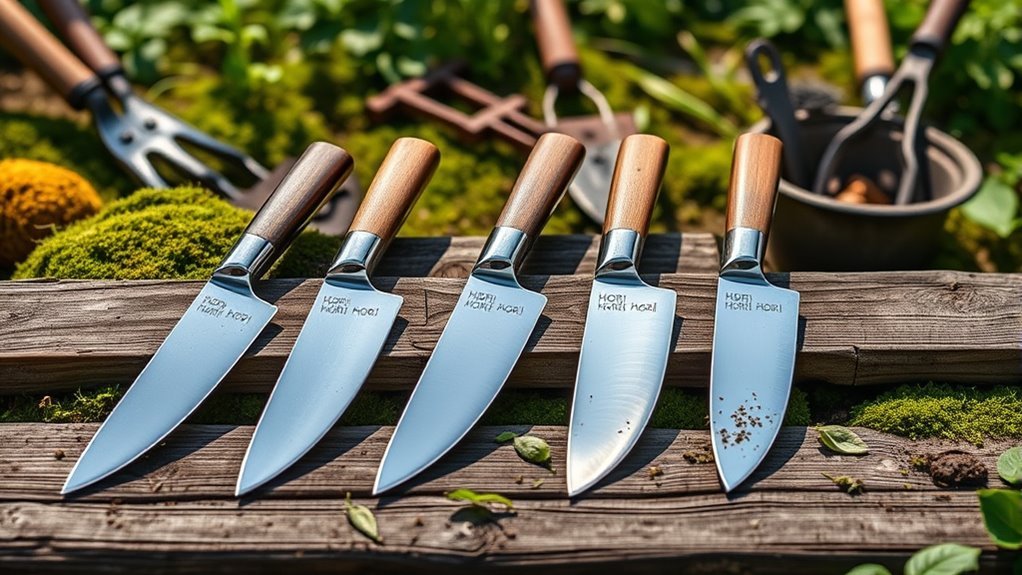
When selecting a hori hori knife for digging, weeding, and planting in 2026, blade length and edge versatility are key features that affect both reach and cutting performance. Handle comfort and clear depth markings also matter, since they influence control and planting accuracy during longer use. Sheath protection should not be overlooked, as it supports safe storage and easier transport.
Blade Length
Blade length is one of the most important factors to evaluate, since most hori hori knives fall in the 7 to 7.25 inch range, offering a practical balance between control and cutting power. This size generally supports maneuverability while still giving enough reach for digging, transplanting, and cutting through compact soil. Longer blades can improve penetration for deeper work and tougher roots, though they also add weight that may increase fatigue during extended sessions. Shorter blades tend to feel lighter and allow more precise handling for delicate planting tasks. Many models include inch and millimeter markings on the blade, which help measure planting depth for bulbs and seedlings accurately. Selecting the right length depends on the intended gardening tasks and desired level of control.
Edge Versatility
Edge versatility is a defining feature of many hori hori knives, since most pair a sharp cutting edge with a serrated side for slicing through roots, compact soil, and stubborn weeds. This dual-edge layout gives the tool a broader range of uses during digging, weeding, and planting. Curved blades add another advantage, helping with depth checks and more controlled soil removal. Some designs go further by including a cord-cutting edge or bottle opener, which increases usefulness beyond routine gardening. Stainless steel construction supports this versatility by resisting rust and preserving edge quality over time. When comparing models, edge design matters as much as blade length, because a well-balanced profile can improve precision, efficiency, and adaptability across different outdoor tasks.
Handle Comfort
Handle comfort plays a major role in how effectively a hori hori knife performs during long digging, weeding, and planting sessions. Ergonomic contours can reduce hand fatigue, helping the user maintain control through repeated work. Materials such as walnut wood, Pakkawood, and high-strength composites offer a balanced mix of durability and a pleasant grip, which matters during extended use. Handle length also affects comfort; models around 5 to 5.25 inches often suit a range of hand sizes better. Full-tang construction with reinforced rivets adds stability and strength, keeping the handle secure under pressure. Textured or contoured surfaces further improve grip security, lowering the chance of slipping when soil is wet or tasks become more demanding.
Depth Markings
Clear depth markings can make a hori hori knife far more useful for planting and transplanting, since they give gardeners a reliable reference for setting bulbs and seedlings at the correct depth. Many blades include inch and millimeter scales, which help match planting depth to the needs of different crops. When the measurements are engraved or printed directly on the blade, they remain visible and durable even in damp, compacted, or loose soil. Markings running along the blade also provide quick visual guidance during digging, division, and transplanting. By reducing guesswork, they support more consistent placement and can help encourage healthy root development. Both beginners and experienced gardeners benefit from the added precision, especially when working with plants that require exact burial depth for reliable growth.
Sheath Protection
Sheath protection is another important factor when choosing a hori hori knife for digging, weeding, and planting in 2026. A well-made sheath shields the blade from accidental contact, reducing the risk of cuts when the tool is stored or carried. Durable leather or synthetic fabric models tend to last longer and resist everyday wear better than flimsy options. Practical design also matters, since belt loops and hanging holes make the knife easier to keep close at hand in sheds, garages, or while moving around the garden. Storing the tool in its sheath can help preserve sharpness and limit rust, supporting reliable performance. Some sheaths even include sharpening stones, adding convenience for maintaining the edge over time.
Steel Durability
Steel durability is a major factor in choosing a hori hori knife for digging, weeding, and planting in 2026. Higher-grade stainless steel usually offers better resistance to rust and corrosion, helping the blade last through wet soil and repeated outdoor use. Hardness also matters; a Rockwell rating such as HRC 58±1 can preserve sharpness while keeping enough flexibility for demanding tasks. Full-tang construction adds strength by improving force transfer during digging and cutting. Serrated edges can extend usefulness and reduce wear when handling tougher roots or compacted material. Even strong steel needs care. Hand washing after use and regular sharpening help prevent deterioration, maintain performance, and extend the knife’s service life.
Frequently Asked Questions
How Do I Sharpen a Hori Hori Knife Safely?
A hori hori knife should be sharpened safely by clamping the blade securely, wearing cut-resistant gloves, and using a fine whetstone or file at the original bevel angle. The edge should be moved away from the body in controlled strokes, then honed lightly. The serrated side, if present, can be touched up with a tapered file. Afterward, the blade should be wiped clean, dried, and lightly oiled before storage.
Can Hori Hori Knives Cut Through Tough Roots?
Yes, hori hori knives can cut through tough roots, but only moderately thick ones and with care. Their serrated edge and strong blade make them effective for slicing fibrous roots during digging or weeding. Very woody or large roots usually resist them and may damage the blade. For harder jobs, a pruning saw or loppers is safer and more efficient. Proper sharpening and controlled pressure improve performance.
Are Hori Hori Knives Legal for Camping Use?
Hori hori knives are generally legal for camping use, but laws vary by country, state, and park rules. Their dual-edged blade can trigger restrictions in some places, especially where fixed-blade knives are regulated. A camper should check local laws before carrying one. Stored in a pack and used for gardening tasks, it is usually acceptable. Open carry or concealed carry may be treated differently.
What’s the Best Way to Clean Rust off One?
The best way is to use a little oil, fine steel wool, or a nylon scrub pad, then wipe the blade dry and recoat it lightly. In one workshop tale, a tool left overnight in damp grass returned speckled like old coins; a quick scrub restored it. Rust is usually surface-deep, so patience works best. After cleaning, storing it dry prevents the problem from returning.
Can a Hori Hori Replace a Traditional Hand Trowel?
Yes, a hori hori can replace a traditional hand trowel for many gardening tasks. Its serrated edge, narrow blade, and measuring marks make it useful for digging, cutting roots, transplanting, and weeding. However, it is less ideal for moving large amounts of soil or scooping loose material. A hand trowel may still be preferable for broader, shallower work where comfort and control matter more.
Conclusion
In the end, the humble hori hori proves that gardening’s most reliable hero is not the flashiest one. A blade meant for digging, weeding, cutting, and measuring somehow does more than many specialized tools ever manage. Whether it comes from PERWIN, NISAKU, Black Iron, TONMA, or another sturdy contender, the best choice is simply the one that keeps showing up. Ironically, in gardening, versatility is the closest thing to perfection.

