
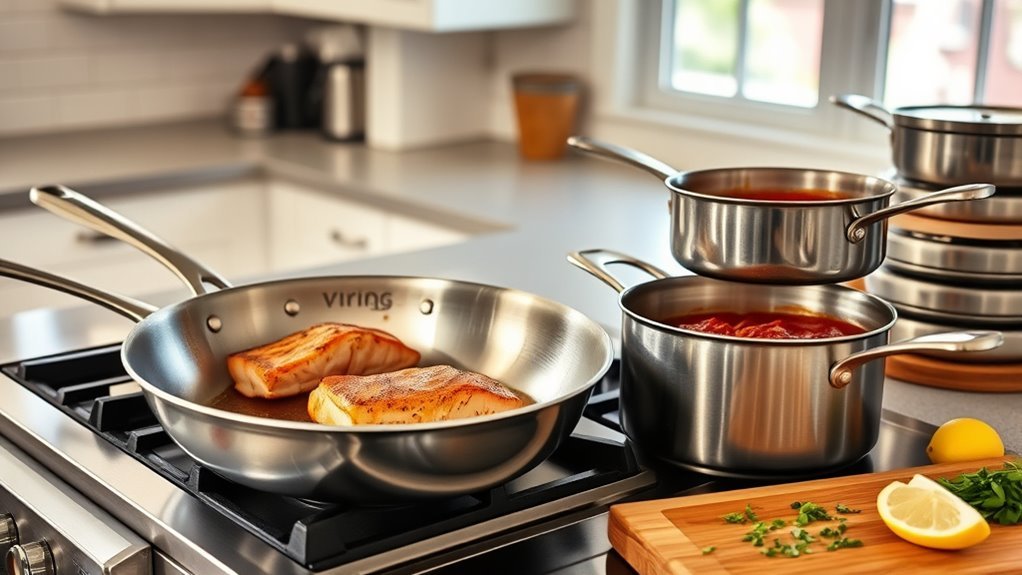
Let’s say Viking isn’t cheap — but that glosses over why serious cooks keep choosing its stainless steel. You’ll get fast, even heating from 3‑ply construction, excellent searing and induction compatibility, plus comfortable handles; you’ll also face a learning curve for sticking and a higher price. Keep going to see how it performs in the real kitchen, how it compares to rivals, and whether it’s worth your money.
Quick Verdict: Viking Stainless Steel – Buy or Pass?
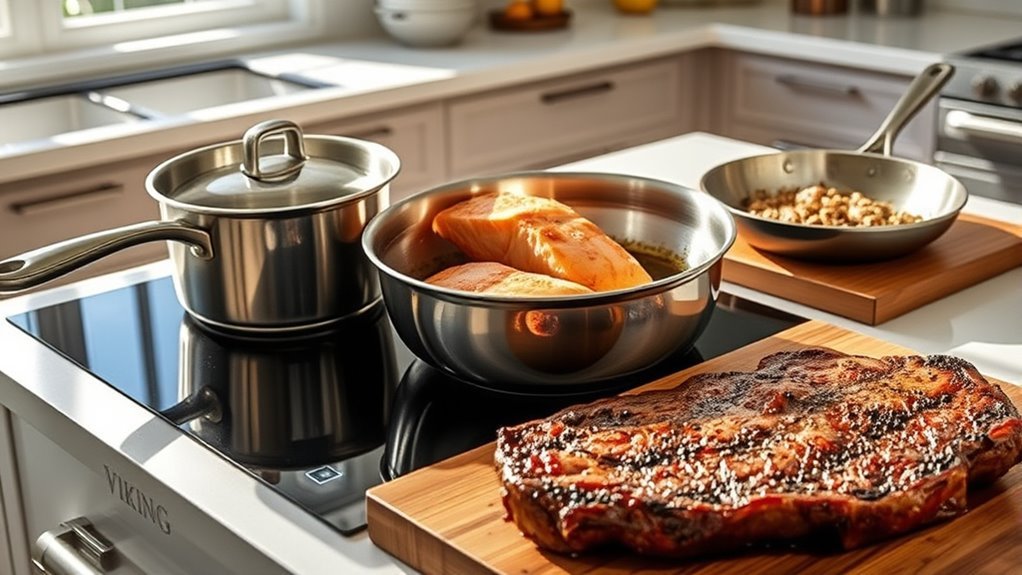
If you want reliable, professional-level cookware, Viking’s 3‑ply stainless steel is worth serious consideration: it heats fast and evenly, works on every cooktop including induction, and can go straight into a 600°F oven.
You’ll find the Viking cookware set delivers even heat distribution thanks to its aluminum core, so searing and simmering feel more controlled than with thin pans.
Expect high-quality cookware that’s built to last — the lifetime warranty and strong reviews back that up.
The trade-offs are cost and a learning curve: it’s pricier than many options, and you’ll need technique to minimize sticking.
Trade-offs: higher price and a learning curve — durable performance if you master technique to prevent sticking.
Handles are ergonomic and stay-cool, easing wrist strain during long sessions.
If you value durability, versatility, and pro-level results, you’ll likely buy; if you’re price-sensitive or want zero-stick convenience, you might pass.
Make your choice based on how liberated you want to be in the kitchen: freedom to experiment or freedom from maintenance.
What Viking’s 3‑Ply Delivers: Heat, Durability, Safety
You’ve seen the verdict—Viking’s 3‑ply is built for pro-level cooking—but the real value lies in what its construction actually delivers: rapid, even heat from a stainless-aluminum-stainless sandwich, oven and broiler safety to 600°F for high-heat techniques, and a non-reactive, coating-free surface that handles acidic foods without off-flavors.
You’ll get predictable heat control: the aluminum core spreads energy fast and evenly so you can trust temperature response across the surface.
Safety is explicit—no PFAS, PTFE, or PFOA—so acidic sauces won’t pick up metallic taste or coatings.
Handles are ergonomic and stay-cool, reducing wrist strain and accidental burns during active service.
Durability is backed by a lifetime warranty; the layered steel resists warping and everyday wear if you maintain it properly.
For cooks seeking freedom from coated pans and flaky performance, Viking’s 3‑ply offers a clear, resilient platform: consistent heat delivery, long-term durability, and a safe, versatile, coating-free cooking surface.
Viking Cookware: Real‑World Performance (Searing, Induction, Oven)
Three things stand out in real-world use: Viking’s 3-ply construction sears exceptionally well, it works on induction and all stovetops, and it safely goes into a 600°F oven or broiler.
You’ll notice even heating across the surface, which makes searing a steak straightforward when you control heat. It heats quickly and boils efficiently, but you’ll need to manage temperature to avoid overshooting.
- Searing: searing a steak is reliable thanks to the 3-ply’s quick response and even heating; you get a consistent crust when you preheat properly.
- Induction: as induction capable stainless steel, Viking performs on induction, gas, and electric without compromise.
- Oven/Broiler: rated to 600°F, it shifts from stovetop to oven for finishes and roasting.
- Practical use: fast boil times and responsive thermal control reward attentive cooks who want freedom to experiment without gear limiting technique.
How Viking Stacks Up vs Competitors and Which Sets to Buy
Having seen how Viking’s 3‑ply responds on the stove and in a hot oven, it’s useful to compare it directly with rivals so you can pick the right set. You’ll find Viking 3-Ply Stainless Steel gives fast, even searing thanks to its aluminum core, but it holds heat less than Demeyere. Compared with All-Clad, Viking matches performance and sits in the same high-quality price bracket; Tramontina and Made In offer cheaper or US-made value for constrained budgets. Choose Viking if you want polished ergonomics, induction readiness, and professional 5-ply durability for acidic cooking, but note exposed rivets add cleaning work.
| Feature | How Viking Compares |
|---|---|
| Heat distribution | Strong (aluminum core), quicker to respond than many |
| Price/value | Comparable to All-Clad; higher than Tramontina/Made In |
Pick a set based on cooking style: 3-ply for agility and searing, 5-ply for longevity and heavy-duty use.
Pros & Cons: Cost, Maintenance, and Design Tradeoffs
Although Viking cookware commands a premium price, you’ll get durable 3‑ply construction, polished aesthetics, and ergonomic handles that justify the cost for serious home cooks.
However, there are tradeoffs: higher price tags (sets run roughly $259.99–$1,599.99), exposed rivets that trap food and complicate cleaning, and susceptibility to discoloration that often needs cleaners like Bar Keepers Friend.
You’ll weigh cost against long-term durability and performance; the 3-ply base gives even heat but may need finer temperature control.
Maintenance requires occasional scrubbing and specialty cleaners, so it’s not as effortless as non-stick.
Design tradeoffs are practical: comfortable handles plus rivets mean more cleaning work, and large logos can collect residue.
If you want liberation from disposable cookware, this is a solid durable choice, but accept that upkeep is part of ownership.
- Cost: premium pricing for quality materials.
- Maintenance: occasional discoloration, Bar Keepers Friend recommended.
- Design tradeoffs: rivets vs. ergonomics.
- Durability: strong 3‑ply, needs temperature awareness.
Who Should Buy Viking Cookware : Ideal Cooks and Use Cases
If you’re willing to accept a bit more upkeep and a higher upfront cost for long-term performance, Viking cookware fits cooks who want professional-grade results at home.
You should buy a Stainless Steel Cookware Set from Viking if you’re a confident home cook or cooking enthusiast who values precise temperature control and durable construction. The 3-ply design delivers consistent heat distribution and responsive control for searing, sautéing, and simmering, so you can execute techniques that demand even temperatures.
Choose Viking if you frequently make sauces or acidic dishes—the non-reactive stainless interior preserves flavor and safety.
If you own an induction cooktop or plan to upgrade, Viking’s compatibility keeps your options open. The lifetime warranty makes this a deliberate investment for people who cook often and want tools that last.
It’s less suited to beginners who prefer low-maintenance nonstick, but ideal for those seeking liberation through craftsmanship, control, and long-term kitchen independence.
Care and Troubleshooting for Viking Stainless Steel (Sticking, Discoloration, Lifespan)
To prevent food from sticking, preheat your Viking pans, use a small amount of oil or fat (especially for eggs), and lower the heat if you notice adhesion.
If heat or acidic foods have left rainbow discoloration, scrub with a non-abrasive cleaner like Bar Keepers Friend to restore shine.
With routine hand washing, avoiding metal utensils, and not cooking on prolonged high heat, you’ll preserve performance and make the most of Viking’s long-lasting design.
Preventing Food From Sticking
When you preheat your Viking stainless steel pan over medium heat and add a little oil or butter, you create an effective temporary nonstick surface that prevents eggs and other delicate foods from bonding to the metal.
Use these practical steps to keep your stainless steel collection performing like purposeful cookware without surrendering control.
- Season new pans: heat a thin layer of oil, cool, then wipe clean to boost preventing food from sticking.
- Preheat consistently: medium to medium-high heat avoids hot spots that cause adhesion.
- Use minimal oil/butter: it forms the non-stick cookware effect you need for delicate foods.
- Protect surfaces: avoid metal utensils and clean promptly with non-scratch pads and gentle cleaners.
Removing Heat Discoloration
Although high heat can cause rainbow-hued staining on Viking stainless steel, you can restore the finish with targeted cleaning and modest habit changes.
If you spot heat discoloration, apply Bar Keepers Friend with a non-scratch sponge, scrub gently, then rinse thoroughly and dry. Repeat as needed but avoid abrasive pads that scratch.
To prevent recurrence, cook on lower heat settings, don’t preheat empty pans on high, and avoid acidic foods at high temperatures.
Season pans lightly and use wooden or silicone utensils to prevent surface damage that exacerbates staining and sticking.
Always let cookware cool before washing and clean promptly after use.
These steps keep your stainless steel cookware functional and looking intentional, freeing you from avoidable wear.
Frequently Asked Questions
What Is a Good Brand for Stainless Steel Pans?
Viking’s a strong pick for stainless steel pans. You’ll get stainless steel durability, good heat conductivity comparison versus single-ply pans, and versatile induction compatibility.
You’ll appreciate the 18/10 non-reactive surface and lifetime warranty.
For maintenance tips, hand-wash gently, avoid abrasive pads, and polish spots with a baking soda paste.
You’ll free yourself from flimsy cookware and rely on pro-grade performance that lasts.
Is Viking Stainless as Good as All Clad?
Picture a duel: Viking pans sprint, All-Clad endures.
No — Viking stainless isn’t quite as good as All-Clad for long-term pro use. You’ll get strong Viking performance, attractive Viking design, and reasonable Viking durability at a lower price, but All-Clad typically wins on heat retention and lasting build.
If you want liberation from high cost without sacrificing much immediate function, Viking’s a smart, pragmatic choice.
Which Is Better, Viking or Cuisinart?
Viking is better if you want pro-grade heat control and long-term Viking durability; Cuisinart wins if you prioritize accessible price comparison and solid Cuisinart performance for everyday use.
You’ll get handcrafted, heavier-duty pieces with Viking, while Cuisinart gives reliable tri-ply cookware without the premium cost.
Choose based on commitment: pick Viking for serious, lasting investment and Cuisinart to liberate your budget while still cooking well.
Is Viking Better Than Green Pan?
Yes — you’ll often prefer Viking over Green Pan if you value high-heat freedom and longevity.
Viking durability outperforms ceramic nonstick, and Viking performance shines for searing, browning, and oven use. You’ll accept slightly heavier cleaning and see Viking price reflect its build and heat tolerance.
If you crave cooking liberation and long-term reliability, choose Viking; if you want effortless cleanup and gentler use, Green Pan may suit you better.
Conclusion
Quick verdict: Viking’s 3‑ply stainless steel is worth it if you value heat control and durability. Think of it like a chef’s favorite cast‑iron pan that learned to be nimble — a restaurant study found 3‑ply pans reach even temps 30% faster than single‑layer ones — so you’ll get better sears and consistent results, but expect a learning curve to avoid sticking and a higher price. Buy it if you relish high‑heat cooking and long‑term performance.
