
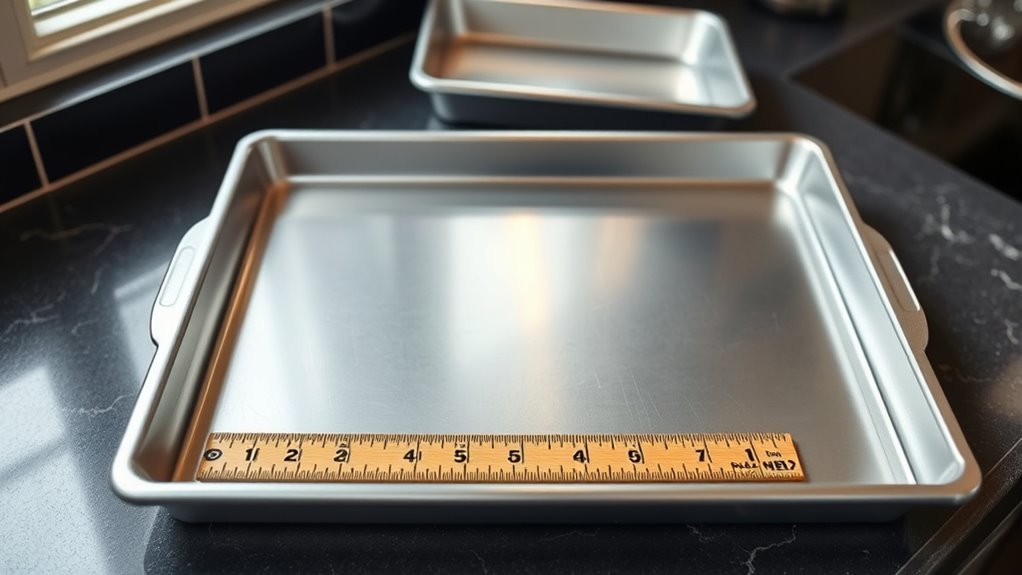
A full sheet pan is useful for large batches of cookies, roasted food, and party desserts. But a full sheet pan size is not always the same as a bakery’s full sheet cake size. Knowing the difference helps you choose a pan that fits your oven and feeds your guests.
Quick Answer
A standard commercial full sheet pan measures about 18 x 26 inches, while a half sheet is about 13 x 18 inches. Full sheet cakes may use different finished dimensions. For a party, choose by slice size and guest count first, then check your oven’s interior clearance before buying a pan.
Key Takeaways
- Pan dimensions are usually outside measurements; the flat baking area is smaller because of the rim and sloped sides.
- Two 12 x 18-inch cakes can be joined to create an 18 x 24-inch cake footprint.
- A shallow cookie sheet is not always deep enough for a tall sheet cake.
- For home ovens, two half sheets are often more practical than one full sheet.
Quick Decision: Which Full-Sheet Size Should I Get?
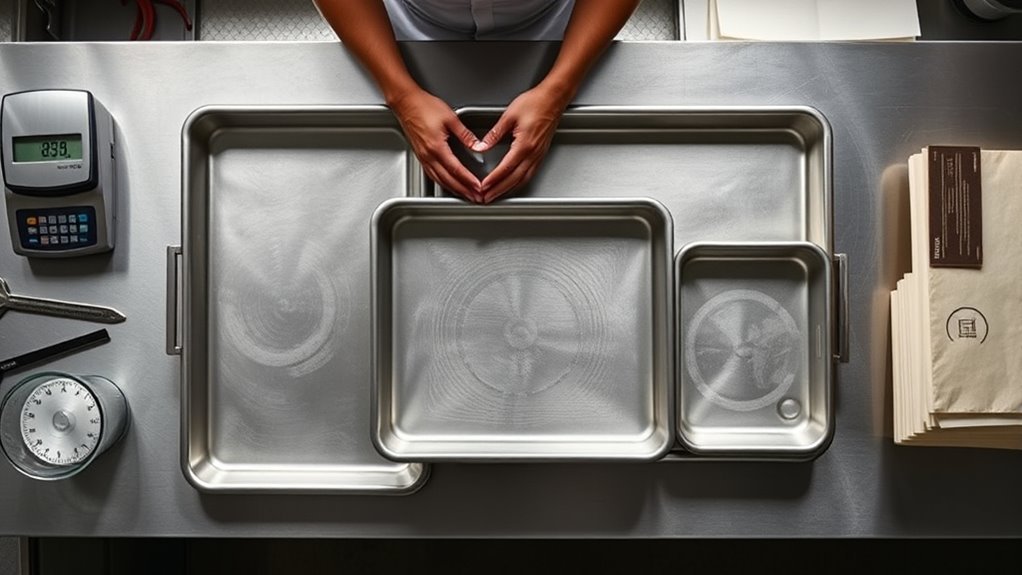
Choose an 18 x 26-inch full sheet pan for a commercial oven and large batches of cookies or roasted food. If you bake at home, start with a 13 x 18-inch half sheet. It is easier to handle and fits many residential ovens.
For a celebration cake, ask about the finished cake dimensions, not just the name “full sheet.” If you need around 75 small squares, a 15 x 22-inch cake can work. For about 100, an 18 x 24-inch cake offers more room. Both estimates depend on how you cut it.
A full sheet names a pan size, but “full sheet cake” may describe a different finished footprint. Always confirm the inches.
Also consider decorations and dietary needs. A large message or design needs open frosting space. If you need gluten-free or vegan servings, you may prefer separate, clearly labeled cakes made with suitable ingredients and tools.
Full Sheet Pan Size vs. Half and Quarter Sheets
Commercial sheet-pan names describe a family of sizes. A full sheet is roughly twice the area of a half sheet, and a quarter sheet is roughly half the area of a half sheet. The actual measurements can vary slightly by manufacturer.
| Pan type | Approximate outside size | Nominal area | Common use |
|---|---|---|---|
| Full sheet | 18 x 26 in. | 468 sq. in. | Commercial batch baking |
| Half sheet | 13 x 18 in. | 234 sq. in. | Home baking and roasting |
| Quarter sheet | About 9–9.5 x 13 in. | About 117–124 sq. in. | Small batches and side dishes |
These are nominal outside dimensions. For example, Vollrath lists a full sheet at 26 x 18 inches but gives its usable inside width and depth as 25.3 x 17.4 inches. Check the Vollrath full-sheet pan specifications and its quarter-sheet measurements if exact fit matters.
The original estimate of 10–12 dozen cookies per full tray is not a reliable single-batch figure. Cookie size and spacing change the count sharply. For example, Aspire Bakeries’ commercial cookie placement guide specifies 15 large cookies, 24 medium cookies, or up to 35 smaller cookies on an 18 x 26-inch sheet for its dough portions. Your recipe may need a different arrangement.
Matching Full Sheet Cake Sizes to 75 or 100 Servings
A sheet cake’s serving count depends on its finished footprint, height, and slice size. If you serve pieces measuring 2 x 2 inches, a 15 x 22-inch cake can provide roughly 75 servings. An 18 x 24-inch cake can provide 108, enough for around 100 guests with a small buffer.
| Cake Footprint | Approximate 2 x 2-Inch Pieces | Equivalent Cake Pans |
|---|---|---|
| 15 x 22 inches | 77 pieces, before trimming | Two 11 x 15-inch cakes, joined |
| 18 x 24 inches | 108 pieces, before trimming | Two 12 x 18-inch cakes, joined |
These are cutting estimates for cakes of the stated dimensions, not a promise from every bakery. Trimming uneven edges or making larger slices reduces the total. A cake with two layers produces taller slices, but its footprint alone does not increase.
Serving charts also use different portion standards. For comparison, Wilton’s cake serving chart lists 72 party portions or 98 smaller wedding portions for a 12 x 18-inch sheet cake under its stated cake-height assumptions. Agree on slice size before ordering, decorating, or cutting.
How Pan Size Changes Recipes and Batch Yields
To move a recipe between sheet pans, scale the ingredients by the usable baking area if you want the same batter depth. A bigger pan spreads the same batter more thinly, which can change texture and baking time. Pan depth matters for cakes, too.
Use this method for a rectangular cake or bar recipe:
- Multiply the original pan’s inside length by its inside width.
- Calculate the same area for the new pan.
- Divide the new area by the old area to get the recipe multiplier.
- Multiply ingredient quantities by that number, keeping a similar batter depth.
- Check doneness early and adjust baking time from the recipe’s instructions, not from pan area alone.
For example, a 13 x 18-inch half sheet has half the nominal area of an 18 x 26-inch full sheet. For a recipe designed to fill a half sheet at a certain depth, you would start with about twice the batter to cover a full sheet to the same depth. King Arthur Baking explains this area-based conversion method.
Do not pour a deep cake recipe into a shallow baking tray without checking its fill level. A standard full baking sheet often has a rim only about 1 inch high. Use an appropriately deep cake pan for a taller cake, and bake separate layers if necessary.
Pan Materials: Aluminum, Steel, and Nonstick: What to Choose
Uncoated aluminum is a practical all-around choice because it transfers heat quickly and evenly. Steel pans can be rigid and durable, but their heat response differs. Nonstick is a finish, not a separate base metal, and it makes baked goods easier to release.
- Aluminum: Good for cookies, cakes, and roasting. Choose a sturdy, reinforced rim to help the tray resist warping.
- Steel or aluminized steel: Often sturdy for frequent use. Coating, thickness, and color can affect browning, so follow the pan maker’s directions.
- Nonstick-coated pans: Convenient for sticky foods and cleanup, but the coating requires gentler utensils and has its own temperature limit.
Choose a tray for its thickness, finish, and oven rating, not simply the metal named on the label.
Pan color also matters. A dark finish can brown cookie bottoms faster than a light finish. King Arthur’s baking-pan guide explains heat conduction, dark finishes, and why a baking sheet needs enough room for air circulation.
Alternatives When You Don’t Have a Full Sheet Pan
You can match a full sheet’s nominal baking area with smaller pans, even if you cannot fit one large tray in your oven. This is useful for home bakers preparing a crowd-sized cake or several batches of food. Keep track of each pan’s size and baking time.
Use Two Half Sheets
Two 13 x 18-inch half sheets have the same nominal area as one 18 x 26-inch full sheet. Bake on separate trays, either together if your oven allows enough airflow or in consecutive batches. Rotate trays only as your oven and recipe require.
For cakes, two smaller layers can be assembled on a sturdy board. They will have a seam, so level the tops and plan your frosting and decorations to cover it. The serving yield depends on the cake dimensions and slice size, not on the number of trays.
Combine Multiple Pans
Four 9 x 13-inch rectangles have a combined nominal area of 468 square inches, the same as an 18 x 26-inch full sheet. Two 12 x 18-inch rectangles make an 18 x 24-inch layout, while two 11 x 15-inch rectangles make a 15 x 22-inch layout.
These comparisons work for planning ingredients and finished cake layouts. They do not mean four baking dishes physically fit inside one rimmed tray. Allow for sloped sides, edge trimming, pan depth, and the board needed to join the cakes.
Rent or Borrow Pans
If you need a full sheet only for one event, ask a baking-supply shop or equipment-rental company whether it has one available. You can also ask friends, family, a local bakery, or a community kitchen about borrowing a suitable tray.
Check the pan’s condition and exact dimensions before collecting it. You will also need an oven that fits it, a safe way to carry it, and space to cool the baked goods. If those are missing, smaller pans are the simpler option.
Care and Accessories: Liners, Racks, and Oven Fit
A good sheet pan works better when its liners and cooling racks fit and the oven has room for airflow. Buy or cut accessories to match the pan’s usable interior, not just its advertised outside dimensions. Proper cleaning also helps protect the surface.
For oven fit: Measure your oven’s rack width and depth, then allow room around the tray. King Arthur recommends about 2 inches of clearance on all sides for good heat circulation. Check that the pan can pass through the oven door without tilting.
Warning: Never force a full sheet pan into an oven or let parchment touch a heating element. Reynolds Kitchens says its parchment is oven-safe up to 425°F and should not be used under a broiler. Follow the temperature limits printed on your own liners and coated pans.
For liners: Parchment helps prevent sticking and speeds cleanup. Reynolds Kitchens’ parchment instructions give the heat limit and placement precautions. Silicone mats also work, provided they fit the tray and are rated for your baking temperature.
For cooling and care: Move finished cookies to a fitted wire rack so steam can escape. Wash pans as the manufacturer directs, then dry them well. Nordic Ware’s natural-aluminum care guide recommends handwashing and notes that dishwasher detergent can discolor aluminum. Avoid abrasive tools that scratch a finish.
Quick Checklist: Pick the Right Full Sheet Pan for Your Event
Before you buy or borrow a pan, match the intended food, portions, and available oven space. Then plan what happens after baking, especially if you must transport a large cake. This short checklist covers the points most likely to cause problems.
- Food: Choose a shallow rimmed sheet for cookies or roasting, and suitable depth for cake batter.
- Size: Confirm outside dimensions and usable baking area.
- Servings: Agree on slice dimensions before estimating cake portions.
- Oven: Measure rack space, door opening, and airflow clearance.
- Material: Match pan finish and temperature rating to the recipe.
- Supplies: Prepare liners, cooling racks, a cake board, and a carrier if needed.
- Venue: Confirm food-service rules and whether suitable baking equipment is available.
Frequently Asked Questions
Will a full-size sheet pan fit in a regular oven?
Usually not. An 18 x 26-inch full sheet is designed mainly for commercial ovens. Measure your oven’s interior and check airflow clearance before buying. A 13 x 18-inch half sheet is a more practical starting point for most home kitchens.
How many 9 x 13-inch pans equal one full sheet?
Four 9 x 13-inch rectangles equal the nominal area of one 18 x 26-inch full sheet: 468 square inches. This is an area comparison, not a claim that four rimmed pans will nest inside another pan. Cake depth and inside dimensions still matter.
What is the difference between a half sheet pan and a full sheet pan?
A half sheet is about 13 x 18 inches, while a full sheet is about 18 x 26 inches. A full sheet has twice the nominal surface area. Half sheets are easier to store and fit into many residential ovens; full sheets suit larger commercial batches.
What size pan should I use for a full sheet cake?
Use a cake pan that produces the finished size and depth you need. For an 18 x 24-inch cake, you can bake two 12 x 18-inch cakes and join them on a board. A commercial 18 x 26-inch sheet pan is another option for a thin cake layer if its rim and your oven are suitable.
Conclusion
For commercial baking, a full sheet pan is about 18 x 26 inches. For a party cake, the finished size and your planned slices matter more than the label. Measure your oven, confirm the cake portions, and use two smaller pans when a full sheet will not fit.
Sources
- Vollrath full-size sheet pan specifications: nominal and usable dimensions, material, and rim depth.
- Vollrath quarter-size sheet pan specifications: commercial quarter-sheet dimensions.
- Aspire Bakeries cookie specification sheet: commercial 18 x 26-inch tray cookie placement examples.
- Wilton cake serving guide: sheet cake servings and portion assumptions.
- King Arthur Baking recipe conversion guide: scaling recipes by pan area.
- King Arthur Baking pan guide: sheet pan sizing, oven clearance, and browning.
- Reynolds Kitchens parchment instructions: parchment temperature and placement limits.
- Nordic Ware aluminum pan care: cleaning and finish care.
