
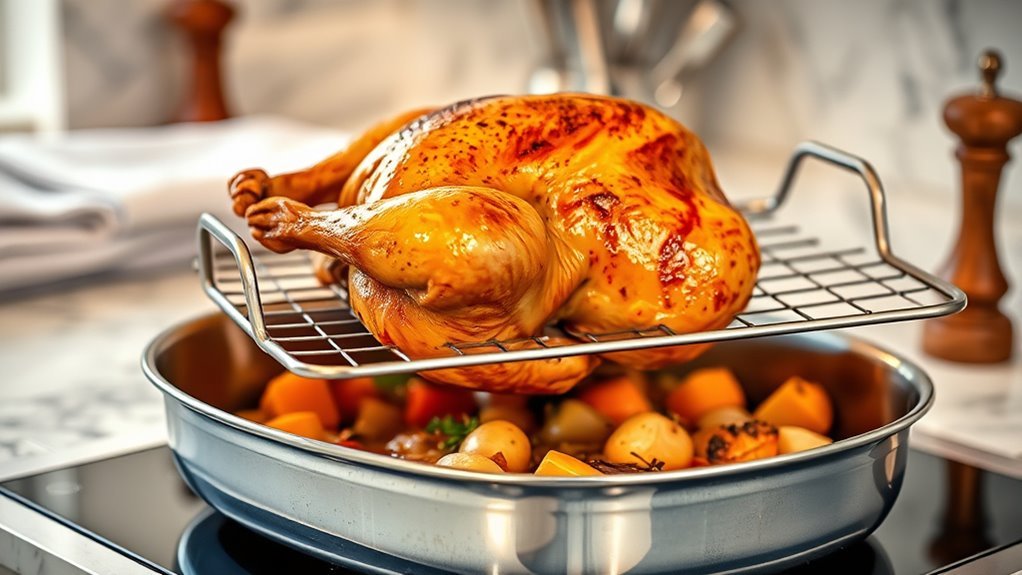
Did you know that using a roasting rack can boost your meat’s juiciness by up to 30%? This essential kitchen tool elevates your roast, allowing for even cooking and ideal air circulation. It not only promotes crispy skin but also collects flavorful drippings for sauces. Curious about the best meats to roast and tips to enhance your cooking? Let’s explore the many uses and secrets of the roasting rack.
What Is a Roasting Rack and Why Use One?
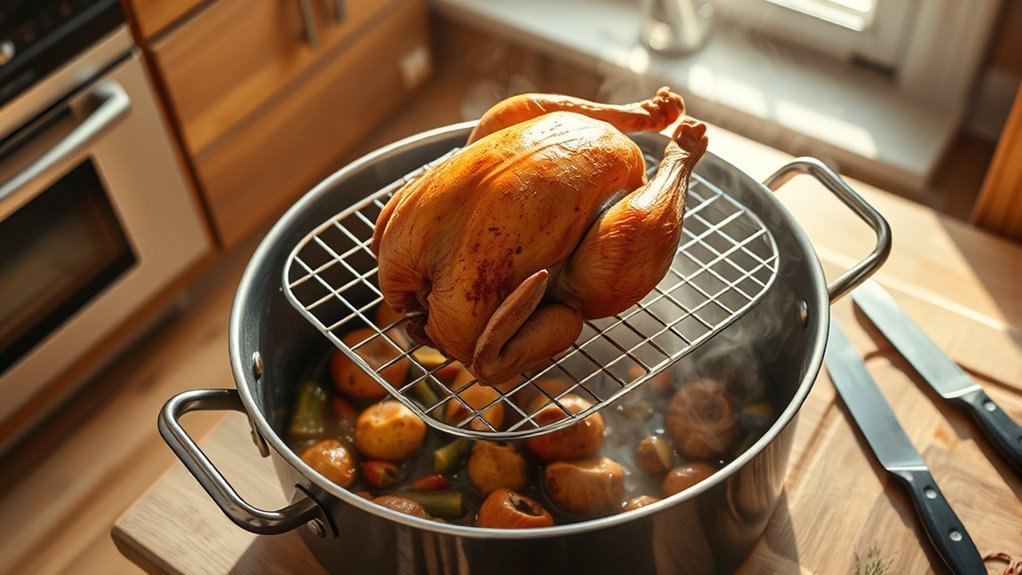
A roasting rack is your secret weapon for achieving perfectly cooked meats. This elevated surface, often crafted from metal, holds your meat above the bottom of the roasting pan, promoting even cooking and ideal air circulation.
As the heat envelops your roast, it helps render fat away, resulting in that coveted crispy skin while contributing to healthier dishes.
Whether you’re roasting a whole turkey or a smaller cut, an adjustable or foldable roasting rack adapts to your needs. The magic doesn’t stop there; it also enhances flavor.
An adjustable roasting rack is versatile for any size meat, enhancing flavor while ensuring perfect cooking.
As drippings collect in the pan, you can use them for basting or creating rich sauces, maximizing your dish’s taste.
Benefits of Using a Roasting Rack for Cooking
Using a roasting rack can transform your cooking experience, ensuring meats turn out perfectly cooked and irresistibly crispy. This versatile kitchen tool elevates your meat, allowing for ideal air circulation and even cooking.
Here are some key benefits:
- Crisp Exterior: Enjoy a beautifully browned skin on poultry, enhancing texture while keeping the meat juicy.
- Healthier Meats: Excess fat drains away during roasting, resulting in leaner, less greasy dishes.
- Maximize Space: Many racks fit into standard roasting pans, making it easy to cook large cuts or multiple items simultaneously.
- Dual Purpose: When you’re not roasting, these racks can double as cooling racks for baked goods.
Embrace the liberation of cooking with a roasting rack, and elevate your culinary creations to new heights.
Your taste buds—and your guests—will thank you!
Best Types of Meats to Roast on a Rack
Roasting on a rack opens up a world of possibilities for achieving mouthwatering results with various meats. When you roast large cuts of meat, like a whole turkey or prime rib, the roasting rack elevates them, allowing hot air to circulate for even cooking and a beautifully browned exterior.
For pork loin or shoulder, the rack helps excess fat drain away, giving you healthier options with crispy skin. Leg of lamb shines on a rack, with even heat distribution enhancing its flavor and keeping it juicy.
Roasting chicken this way not only guarantees a delectable crispy skin but also collects flavorful drippings perfect for sauces. And don’t forget beef tenderloin; using a rack prevents steaming and guarantees that stunning crust you crave.
Embrace the freedom of roasting on a rack, and watch your meats transform into culinary masterpieces!
Top Tips for Cooking With a Roasting Rack
When you use a roasting rack, you maximize airflow around your meat, ensuring it cooks evenly and achieves that perfect golden-brown crust.
This elevated position not only enhances flavor development by allowing fat to drain away but also gives your dish more depth with the drippings collecting below.
To get the most out of your roasting rack, follow a few simple tips for an effortless cooking experience.
Maximizing Airflow Benefits
To achieve perfectly cooked meat, elevating it with a roasting rack is essential. By promoting airflow, the rack guarantees even cooking and a beautifully browned, crispy exterior while maintaining moisture retention for juicy results.
Here are some top tips for maximizing airflow benefits:
- Choose the right size: Make sure your roasting rack fits securely in the pan for stability and ideal airflow.
- Position meat wisely: Place larger cuts on the rack to allow drippings to drain, creating a healthier dish.
- Elevate vegetables: When roasting veggies alongside, keep them above drippings to prevent sogginess and guarantee even cooking.
- Monitor cooking times: With better airflow, dishes may cook faster—keep an eye on them for perfect results.
Embrace the liberation of flavorful, perfectly cooked meals!
Enhancing Flavor Development
While you might think a roasting rack is just for elevating meat, it’s actually a game-changer for flavor development. By lifting your protein above the drippings, the roasting rack promotes even cooking, ensuring juicy interiors that are full of flavor.
Plus, as excess fat drains away, you’re left with healthier options without sacrificing taste.
To really enhance flavor, consider placing aromatics like herbs or citrus underneath the rack. Their essence infuses the meat as it cooks, adding depth to every bite.
When roasting vegetables, the rack allows them to caramelize beautifully, enhancing their natural sweetness by preventing moisture from pooling.
With improved heat distribution, you’ll achieve that perfect balance of crispy skin and succulent meat.
Common Mistakes When Using a Roasting Rack
When using a roasting rack, you might be making some common mistakes that can affect your cooking results.
Improper rack placement, overcrowding, and ignoring temperature guidelines can lead to uneven cooking and disappointing textures.
Let’s explore these pitfalls to guarantee your roasting experience is both successful and delicious.
Improper Rack Placement
Improper placement of your roasting rack can drastically affect the outcome of your meal. A few common mistakes can lead to disappointing results:
- Placing the rack too low, causing soggy skin.
- Obstructing airflow, preventing even cooking.
- Using a rack that’s too small for your roasting pan.
- Failing to guarantee the rack is stable, risking spills.
For ideal heat distribution, always position the rack in the center of the pan. This guarantees proper airflow around your meat, allowing for that perfect crispy exterior.
Don’t forget to preheat your oven; starting with the right temperature maximizes the rack’s effectiveness. With proper placement, you’ll elevate your roasting game and achieve delicious, evenly cooked meals.
Overcrowding The Rack
A common pitfall in roasting is overcrowding the rack, which can seriously hinder your meal’s success. When you cram too much onto your roasting rack, you restrict air circulation, preventing even cooking and that delightful browning.
Aim to leave at least one inch of space between each piece of meat; this allows hot air to flow freely. If you’re roasting vegetables with your meat, don’t pile them high, as this traps moisture and stifles ideal caramelization.
A snug-fitting rack within your roasting pan is essential; a loose one can lead to uneven cooking. For the best results, consider roasting in batches, ensuring each piece has enough space for proper heat exposure and flavor development.
Ignoring Temperature Guidelines
Ignoring temperature guidelines can derail even the best roasting efforts, leading to disappointing results. A roasting rack is only as effective as the temperature you set.
Follow these tips to guarantee success:
- Always preheat your oven to the proper temperature.
- Monitor the internal temperature of your meat regularly.
- Understand that a roasting rack enhances heat circulation but won’t assure even cooking on its own.
- Aim for meat that’s evenly browned and juicy, not overcooked or undercooked.
How to Clean and Maintain Your Roasting Rack?
Cleaning and maintaining your roasting rack is essential for ensuring its longevity and ideal performance. Start right after use by washing it with warm, soapy water. This simple step prevents food from drying and sticking.
For stubborn stuck-on food, soak the rack briefly before scrubbing gently with a non-abrasive sponge to avoid scratches. Remember, harsh cleaners or steel wool can damage the surface, especially if it’s nonstick.
Once cleaned, make sure your roasting rack is completely dry before storing it. This helps prevent rust and maintain its integrity over time.
Additionally, regularly check for any warping or damage; a warped rack can disrupt cooking performance and airflow. By following these cleaning tips, you’ll keep your roasting rack in top shape, ready for your next culinary adventure!
Versatile Uses for Roasting Racks
While you might think of roasting racks solely for meat, their versatility extends far beyond that. These handy tools can elevate your cooking game, allowing for even cooking and crispy skin while promoting air circulation.
Here’s how you can make the most of your roasting rack:
Discover the versatility of your roasting rack for perfect cooking, from roasting vegetables to cooling baked goods.
- Roast Vegetables: Place veggies alongside meat to soak up those flavorful drippings and achieve perfect caramelization.
- Cool Baked Goods: Use the rack to elevate cookies or cakes, ensuring even cooling and preventing sogginess.
- Serve in Style: Elevate your presentation, making your dishes more appealing when served.
- Drain Away Excess Fat: Enjoy healthier dishes as excess fat drips away into the pan, simplifying cleanup.
With a roasting rack, you’re not just roasting; you’re embracing versatile cooking that enhances flavor and health in every meal.
Recommended Roasting Racks for Home Cooks
When it comes to selecting the right roasting rack for your kitchen, there are several excellent options that cater to different cooking needs and preferences. A well-chosen roasting rack elevates your meats and vegetables, ensuring even cooking and improved air circulation for that perfect crispy skin and juicy interior.
Here are some recommended roasting racks:
| Type | Material | Features |
|---|---|---|
| Wire Roasting Rack | Stainless Steel | Fits standard roasting pans |
| Nonstick Rack | Nonstick | Easy food release |
| Adjustable Rack | Stainless Steel | Versatile height options |
| Heavy-Duty Rack | Stainless Steel | Durable for large roasts |
Frequently Asked Questions
What Do I Use if I Don’t Have a Roasting Rack?
If you don’t have a roasting rack, try using a cooling rack placed inside a baking sheet for great airflow.
You can also create makeshift racks with upside down bowls or rolled aluminum foil balls.
For added flavor, place vegetables like carrots or onions underneath.
An oven-safe casserole dish works well too, ensuring even cooking.
These alternative methods keep your meat elevated, making your meal delicious and freeing you from kitchen constraints!
What to Cook in a Roasting Pan With Rack?
In a roasting pan with a rack, you can cook whole chickens, beef roasts, or root vegetables. For ideal roasting temperatures, aim for around 325°F.
Use seasoning tips to enhance flavors, and check meat resting times for the juiciest results.
Try vegetable roasting techniques by placing them beneath the meat to absorb drippings.
After cooking, use the pan drippings for gravy preparation.
For cleaning, soak the pan to easily remove residue.
Enjoy liberating your culinary skills!
What if My Roasting Pan Does Not Have a Rack?
If your roasting pan lacks a rack, don’t worry—there are plenty of alternative methods! You can use a cooling rack or improvise with crumpled aluminum foil.
Elevating your meat with vegetables like carrots or potatoes not only enhances heat circulation but also adds flavor. Just remember, cooking times might vary.
Consider using oven-safe dishes or rimmed baking sheets for effective cleanup and to catch drippings while perfecting your roasting techniques.
Does a Chicken Need to Be Roasted on a Rack?
Roasting a chicken on a rack isn’t strictly necessary, but it offers significant chicken roasting benefits. A rack enhances heat circulation, ensuring even cooking and crispy skin.
If you lack a rack, consider using vegetables or crumpled foil as alternatives. Just adjust your cooking time and keep moisture retention in mind.
For flavor enhancement, season well and use techniques like basting. Embrace these methods for a delicious, liberating roast!
Conclusion
Incorporating a roasting rack into your cooking routine is like adding a secret ingredient to your favorite dish. It elevates not just your meat, but your culinary game, ensuring crispy skin and juicy flavor. With the right techniques and a bit of care, you’ll transform ordinary meals into extraordinary feasts. So, embrace the power of the roasting rack, and watch as your kitchen creations soar to new heights, delighting both your palate and your guests.
