
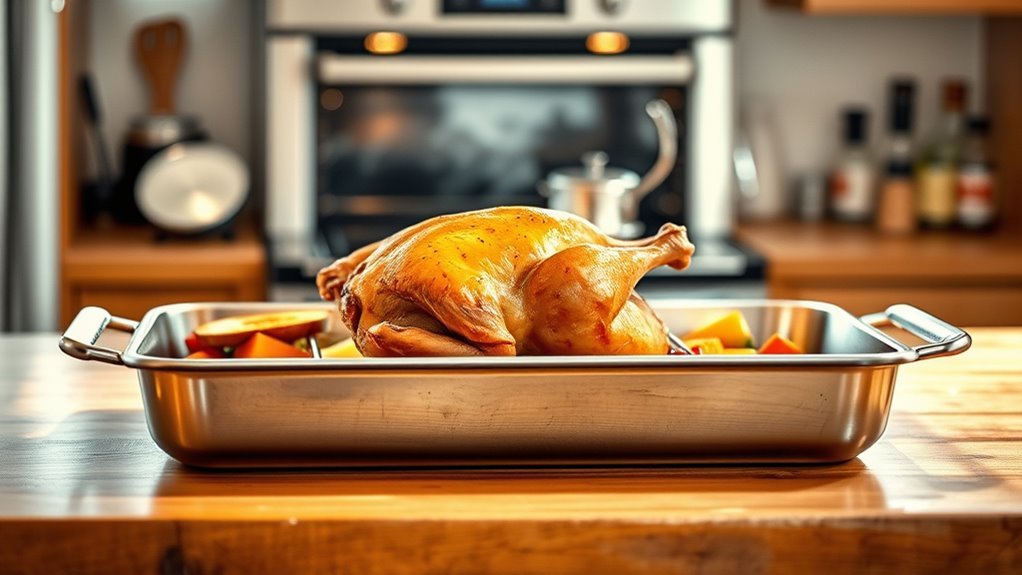
Did you know that nearly 70% of home cooks use a roasting tray at least once a week? This versatile kitchen essential isn’t just for meats; it’s perfect for veggies and even baked goods. Understanding its features and how to maximize its use can elevate your cooking game. But what exactly makes a roasting tray a must-have in your kitchen arsenal? Let’s explore its meaning, uses, and key facts that every cook should know.
Getting to Know Your Roasting Tray
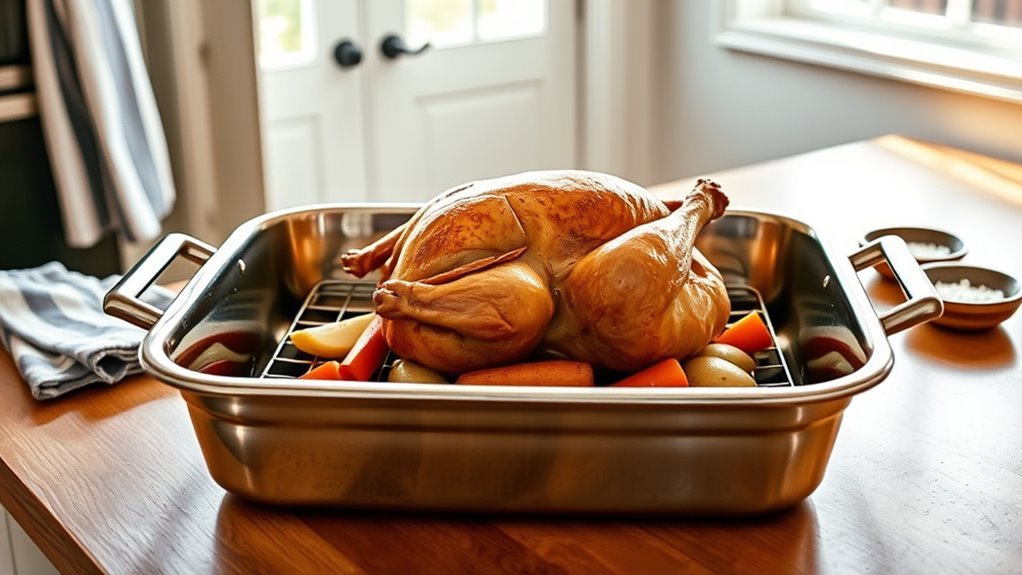
When you pull a gleaming roasting tray from your cabinet, you’re holding a versatile kitchen companion that elevates your cooking game. Made from durable materials like stainless steel or nonstick coatings, this tray is designed for maximum roasting, baking, and broiling.
Its large, shallow shape promotes even heating, ensuring your meats and vegetables brown beautifully.
For best results, use a stainless steel wire rack within the tray to elevate your food, enhancing air circulation and preventing steaming. This simple trick can transform your dishes into culinary masterpieces.
Most trays can withstand high oven temperatures up to 450°F (230°C), making them ideal for a variety of cooking methods.
To keep your roasting tray in top shape, regular maintenance—like hand washing and proper storage—is key.
Embrace this essential tool, and watch your cooking skills flourish!
Materials Used in Roasting Trays: Pros and Cons
Choosing the right material for your roasting tray can greatly impact your cooking experience. Each option has its unique benefits and drawbacks, so understanding them is key to achieving culinary liberation.
| Material | Pros | Cons |
|---|---|---|
| Stainless Steel | Durable, scratch-resistant, easy to clean | Can be heavier compared to others |
| Aluminum | Lightweight, excellent heat conduction | Can react with acidic foods |
| Non-Stick Coating | Easy food release, quick to clean | Coating may wear off over time |
| Glass | Non-reactive, monitor cooking easily | Heavier, prone to breakage |
| Cast Iron | Superior heat retention, great browning | Requires seasoning, maintenance |
Choosing the Right Size Roasting Tray
Selecting the right size roasting tray is essential for achieving perfectly cooked meals. Consider the capacity based on your cooking needs: a 19-inch rectangular roaster can hold up to 25 lbs of meat, making it perfect for large gatherings.
Confirm your tray fits comfortably in your oven, allowing proper air circulation; a standard size of about 13×16 inches works well for many home ovens. For smaller dishes, opt for trays around 9×13 inches.
If you’re cooking larger cuts of meat or vegetables, choose a tray with high sides to prevent spills and enhance moisture retention. Remember the weight of the tray, too—lighter options are easier to handle, but heavier trays offer better heat retention, essential for browning and crisping.
With the right size roasting tray, you’ll liberate your culinary creativity and enjoy delicious meals every time!
What Can You Cook in a Roasting Tray? Essential Dishes to Try
When you think about what to cook in a roasting tray, consider the mouthwatering possibilities of meat dishes and vegetable roasts.
Whether you’re preparing a succulent roast chicken or caramelized root vegetables, the even heat distribution guarantees everything turns out perfectly.
With a roasting tray, you can elevate your cooking game and impress your guests with rich flavors and beautiful presentations.
Meat Dishes
Roasting trays are perfect for crafting a variety of mouthwatering meat dishes that bring out rich flavors and satisfying textures.
Whether you’re using a turkey roasting pan or a cast iron pre-seasoned roaster, you’ll achieve even cooking for whole chickens with crispy skin and juicy meat.
Don’t forget succulent beef roasts—they sear beautifully while the tray collects drippings for a delicious gravy.
Pork tenderloin and ribs also shine in a roasting pan, browning evenly for that perfect bite.
For versatile cooking, consider roasting vegetables alongside your meats; the drippings enhance their flavor and promote caramelization.
Even classic lasagna can be made in a nonstick steel roaster, showcasing the true versatility of your roasting tray.
Vegetable Roasts
After mastering the art of roasting meats, it’s time to explore the vibrant world of vegetable roasts. A roasting tray is perfect for creating colorful side dishes that elevate any meal. You can caramelize root vegetables like carrots and potatoes at high temperatures, or toss together vegetable medleys for a flavorful twist. For a healthier option, try Brussels sprouts and cauliflower, achieving delightful crispness in a nonstick roasting tray. Don’t forget to experiment with dishes like ratatouille, layering seasonal vegetables for visual appeal and taste. Here’s a quick guide to inspire your next roasting adventure:
| Vegetable | Cooking Time |
|---|---|
| Root Vegetables | 30-40 mins |
| Brussels Sprouts | 20-25 mins |
| Cauliflower | 25-30 mins |
| Ratatouille | 40-50 mins |
| Seasonal Veggies | 25-35 mins |
Why a Roasting Tray Is Essential for Oven Cooking
Although you mightn’t realize it, a roasting tray is a game changer in your oven cooking arsenal. This versatile cookware is essential for creating perfectly roasted meals, whether you’re preparing a succulent turkey or vibrant root vegetables.
Designed for high temperatures up to 450°F, roasting trays are typically made from stainless steel or aluminum, ensuring durability and performance.
The even cooking surface promotes browning and flavor development, while the shallow shape allows for efficient heat distribution. Many trays include racks to elevate your food, enhancing air circulation and preventing steaming.
With proper care—think hand washing and drying—you can extend the lifespan of your roasting tray, making it a kitchen staple for years to come.
Embrace the liberation of effortless cooking, and let your roasting tray transform your culinary creations into delicious masterpieces!
Top Cooking Techniques for Using Your Roasting Tray
When you want to elevate your cooking, mastering techniques with your roasting tray can make all the difference.
You can achieve perfectly roasted vegetables, crispy meats, and even streamline one-pan meals with just a few simple tips.
Let’s explore how to make the most of this versatile kitchen tool!
Perfecting Roast Vegetables Technique
Master the art of roasting vegetables to elevate your meals effortlessly. Begin by cutting your veggies into uniform sizes, about 1 to 2 inches thick, guaranteeing even cooking. Preheat your roasting tray for 10 minutes at a high temperature of 425°F (220°C). This step creates a crispy texture that locks in moisture. Toss your vegetables in a light coating of oil and seasonings before placing them in the tray. Avoid overcrowding; space them out to allow hot air circulation, preventing steaming.
| Step | Purpose |
|---|---|
| Preheat the Roaster | Achieves crispy exterior |
| Cut to Uniform Sizes | Guarantees even cooking |
| Use High Temperature | Facilitates caramelization |
Enjoy the vibrant flavors!
Achieving Crispy Meat Results
To achieve perfectly crispy meat, preheating your roasting tray is essential; it not only sears the surface but also locks in moisture for a juicy interior.
Consider using a Roasting Pan with Rack to elevate the meat, allowing for better air circulation. This promotes even cooking and a golden-brown exterior.
Avoid overcrowding your Double Roasting Pan; give each piece room to breathe, preventing steam buildup.
Utilize high-temperature settings—up to 450°F (230°C)—to trigger the Maillard reaction, enhancing flavor and color.
Don’t forget to baste the meat periodically; this adds moisture and encourages caramelization, ensuring that crispy skin you crave.
With a Pre-Seasoned Roaster Pan or Nonstick Steel Roaster, you’ll master that perfect, crispy finish on your meats.
One-Pan Meal Efficiency Tips
While you might think cooking a one-pan meal is effortless, using your roasting tray effectively can elevate your dishes to a whole new level. Here are some tips to maximize your roasting experience:
- Preheat Your Roasting Tray for even cooking.
- Use a Rack for Air Circulation to enhance crispiness.
- Avoid Overcrowding to allow rich flavor development.
- Rotate for Uniform Cooking for perfectly browned results.
- Monitor Cooking Temperature with a meat thermometer for safety and juiciness.
Whether you’re using a nonstick steel roaster or a large nonstick porcelain enamel, these techniques guarantee your meals shine.
Embrace the freedom of cooking efficiently, and watch your one-pan meals transform into culinary masterpieces.
Common Mistakes to Avoid When Using a Roasting Tray
When using a roasting tray, three common mistakes can hinder your cooking success.
First, overcrowding your roasting pan can lead to uneven cooking, making your food steam instead of roast. This compromises texture and flavor.
Second, skipping preheating is a rookie error. Always preheat your oven and, if you’re using a nonstick steel roaster, the tray too. This step guarantees even cooking and prevents sticking.
Finally, neglecting airflow is essential. Confirm there’s ample space between food items; this promotes proper browning and crispiness.
Also, be mindful of the material of your oven roaster. Nonstick trays are dishwasher safe but may not handle high temperatures as well as metal.
And don’t ignore temperature guidelines—exceeding these can warp your tray, especially if it’s nonstick.
Cleaning and Maintaining Your Roasting Tray
Cleaning and maintaining your roasting tray is essential for ensuring its longevity and performance. To keep your tray in top shape, follow these key practices:
- Hand wash with mild soap and warm water; avoid the dishwasher to protect nonstick coatings.
- Soak the tray in warm soapy water for stuck food, making scrubbing easier.
- Thoroughly dry the tray after washing to prevent water spots and bacteria growth.
- Store it in a dry place, avoiding stacking with other cookware to prevent scratches.
- Apply a rust-inhibiting coating for metal trays to extend their lifespan.
Frequently Asked Questions About Roasting Trays?
Curious about roasting trays? These versatile kitchen tools are flat, shallow pans designed for roasting meat, vegetables, or even desserts in the oven. They guarantee excellent heat distribution, giving your food that perfect golden-brown finish.
Roasting trays come in various materials, including stainless steel, aluminum, and non-stick coatings, each boasting unique durability and heat retention benefits. You’ll find them in multiple sizes and shapes, whether you need a small tray for side dishes or a larger one for a whole roast.
Many trays feature racks that elevate your food, enhancing air circulation for even cooking. Plus, while many are dishwasher-safe, hand washing is often recommended—especially for non-stick and cast iron varieties—to prolong their lifespan.
Frequently Asked Questions
What Is the Difference Between a Roasting Tray and a Baking Tray?
A roasting tray differs from a baking tray primarily in size, design, and intended use.
Roasting trays are deeper, providing better heat distribution and allowing for even cooking of larger cuts of meat and vegetables. They often feature racks and are made from sturdy materials like stainless steel or cast iron for safety and durability.
While baking trays are for cookies, roasting trays excel at caramelization and can make gravies from delicious drippings.
Can You Use a Baking Tray as a Roasting Tray?
Yes, you can use a baking tray as a roasting tray, but keep a few things in mind.
Verify your tray materials can handle high heat for effective roasting techniques. Size variations matter; a shallower tray mightn’t brown food as well.
Avoid overcrowding for even heat distribution, and think about cooking times for different food types.
For easy meal preparation, line your tray for quick cleaning and always prioritize oven safety while roasting.
What Does a Roasting Tray Look Like?
A roasting tray usually has a rectangular or oval shape, crafted from materials like stainless steel or aluminum.
You’ll find various sizes, from small ones for two people to large ones for family feasts. Its low sides promote even cooking, while features like raised racks enhance air circulation.
Available in different colors and designs, these trays make cooking a joy. Plus, many brands offer easy maintenance options, ensuring you enjoy the benefits for years!
Can I Put a Roasting Tray on the Stove?
You can put a roasting tray on the stove, but choose the right materials like stainless steel or cast iron for effective heat distribution.
Remember, not all trays are stovetop safe; check your pan size and manufacturer’s guidelines. Use it for stovetop cooking only if you can maintain temperature control.
While cooking, monitor closely to avoid overheating.
For cleaning, stick to gentle methods to preserve your multi-use cookware and guarantee safe food preparation.
Conclusion
In conclusion, a roasting tray is your trusty sidekick in the kitchen, perfect for crafting mouthwatering meals. Whether you’re whipping up a succulent roast or crispy veggies, this versatile tool has your back. Just like a knight needs their sword, you need a roasting tray to elevate your cooking game. With the right techniques and care, you’ll transform every dish into a culinary masterpiece. So, grab your tray and release your inner chef!
