
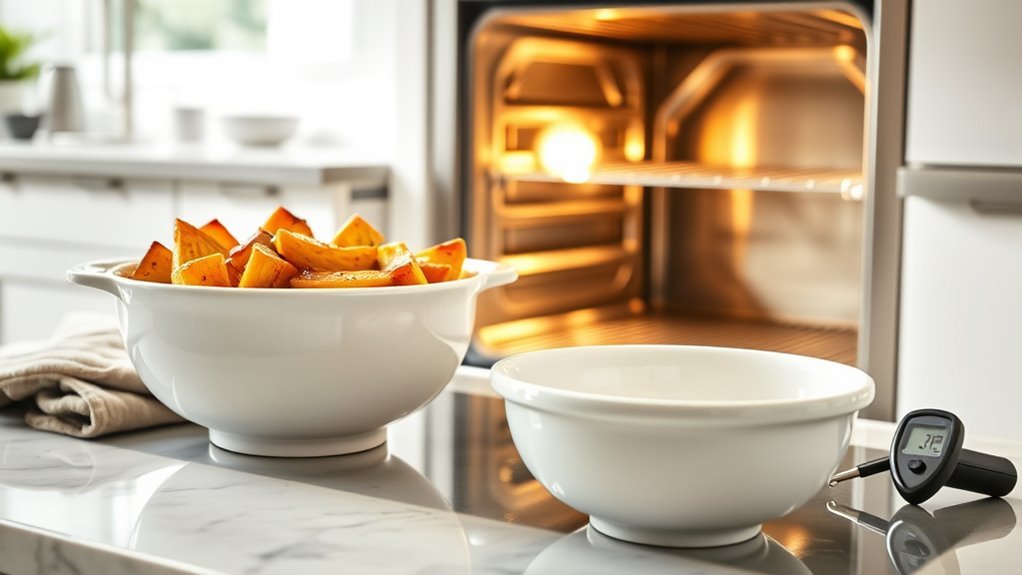
About 68% of home cooks say they’ve used ceramic dishes in the oven at least once. You can often do the same safely, but only if the bowl’s materials, glaze, and firing process are suitable. I’ll show you how to tell which pieces can handle heat, what temperatures to stick to, and simple precautions to avoid cracks or glazing failures—so you won’t risk ruined food or a shattered dish.
Are Ceramic Bowls Oven‑Safe? Quick Decision Rule
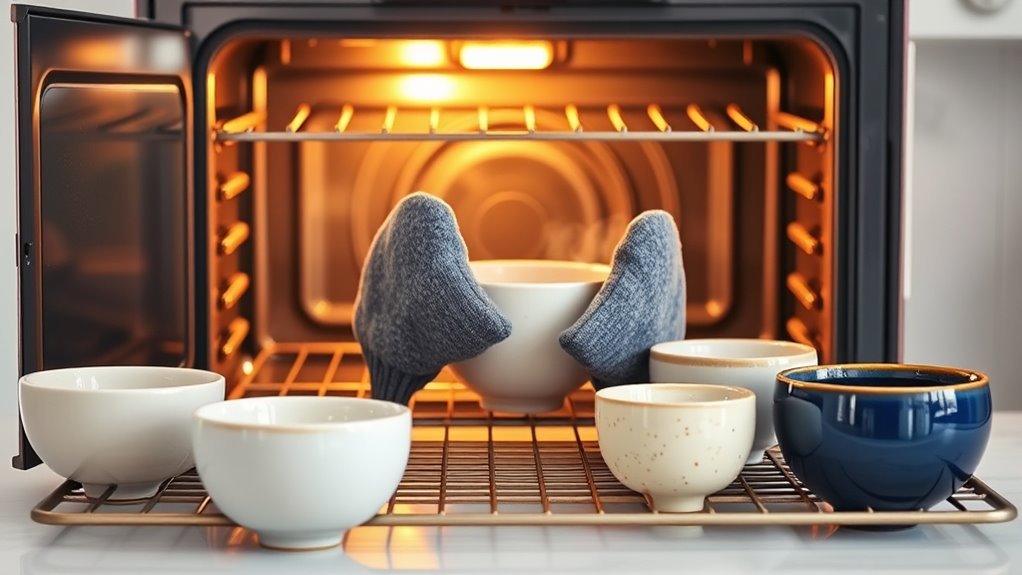
Wondering if your ceramic bowl can go in the oven? Start by checking for an oven-safe label or clear markings on the bottom; that’s your fastest, most reliable indicator. If you don’t see one, consult the manufacturer guidelines before using it.
Remember that many oven-safe ceramics tolerate up to about 500°F, but limits vary, so don’t guess.
Many oven-safe ceramics handle around 500°F, but limits differ—always verify before heating.
Avoid unglazed or decorative bowls not intended for cooking — they can crack or leach when heated.
Heat ceramic gradually: place it in a cool oven and let temperature rise with the air to reduce thermal shock risk. Likewise, don’t transfer a hot bowl to a cold surface or run it under cold water; sudden temperature changes cause fractures.
When in doubt, choose a verified oven-safe dish. That small extra check protects your food, your tools, and your freedom to cook boldly without risking breakage or harm.
What Makes a Ceramic Bowl Oven‑Safe? (Materials, Firing, Glaze)
Because oven safety depends on what the bowl’s made of and how it was processed, you should look for stoneware or porcelain that’s been high‑fired and finished with an oven‑safe glaze. Those materials are dense, resist thermal shock, and are often specifically designed to be used in the oven???I. Avoid pieces with metallic decoration; metal can react to heat and create hazards.
| Feature | Why it matters |
|---|---|
| Material (stoneware/porcelain) | High‑fired, dense, thermal shock resistant |
| Firing temperature | Higher firing = stronger, less porous body |
| Glaze labeled oven‑safe | Prevents cracking, leaching under heat |
| No metallic decoration | Avoids reactions and hot spots |
You should also recognize that not all ceramics are equal — anyone know whether a piece was meant for high heat? Look for clear manufacturer guidance. When you choose properly made, high‑fired, glazed bowls, you free yourself to cook confidently and safely, minimizing risk and maximizing liberation in the kitchen.
How to Check If Your Bowl Is Oven‑Safe (Marks, Manufacturer, Simple Tests)
If your ceramic bowl doesn’t say “oven‑safe” on the bottom, check the manufacturer’s website or care instructions first—those sources often list maximum temperatures and whether the piece tolerates direct oven heat.
Marking significance matters: stamps, labels, or etched symbols can tell you limits; absence of marks means you shouldn’t assume safety. Use manufacturer guidelines and look up model numbers or patterns if available.
Consider material types when evaluating unmarked pieces—stoneware and vitrified ceramics usually handle heat better than thin earthenware or heavily decorated ceramics.
Stoneware and vitrified ceramics generally withstand oven heat better than thin earthenware or heavily decorated pieces.
For a simple test, place the bowl in a cold oven and heat slowly to your target temperature, watching for hairline cracks or crazing; sudden failures indicate unsuitability.
Remember decorative glazes can break down at high heat. If uncertainty remains, choose cookware designed for ovens. This approach protects you, preserves your bowl, and supports the freedom to cook without unnecessary risk.
How to Use Ceramic Bowls in the Oven Safely (Temperatures, Preheat, Placement, Troubleshooting)
Before you put a ceramic bowl in the oven, confirm it’s marked oven‑safe and heat it gradually: preheat the oven slowly and avoid sudden temperature jumps to prevent thermal shock that causes cracking.
Treat ceramic bowl care as intentional resistance to fragility—use moderate temperatures (many oven‑safe ceramics handle 350–450°F, but check the maker). If unsure, test at about 200°F briefly before higher heat.
Place the bowl on the middle rack for even heat and to avoid direct exposure to the broiler or bottom elements. Don’t use pieces with metallic decoration; they can spark or hide that they’re not oven‑rated.
Practice temperature monitoring with an oven thermometer so you don’t exceed limits. If you see hairline cracks or glazing craze after heating, stop using the piece for oven cooking; those indicate weakened structure.
These safe baking practices protect your food, your tools, and your freedom to cook without fear—use care, verify markings, and act decisively when something looks compromised.
When Not to Use a Ceramic Bowl in the Oven : Safer Alternatives
While some ceramics handle oven heat fine, you shouldn’t assume every bowl is safe—check for an “oven‑safe” label or the manufacturer’s guidance before using one. If a bowl has metallic glaze, is thin or hairlined, or lacks clear heat ratings, don’t risk it. Thermal shock can crack fragile pieces; that limits your freedom in the kitchen.
| Risk factor | Why it matters | Safer swap |
|---|---|---|
| Metallic glaze | Can react or spark | Glass or stoneware |
| Thin/fragile | Prone to cracking | Thick stoneware |
| No label | Unknown heat limits | Cast iron |
Choose ceramic bowl alternatives like cast iron, tempered glass, or certified stoneware for predictable heat resistance comparison and reliable cooking material safety. Preheat gradually when you must use ceramic to reduce shock, but when freedom means consistent results, pick cookware rated for high heat. You’ll cook safer and stay liberated from surprise breakage.
Frequently Asked Questions
How Do I Know if My Ceramic Bowl Is Oven Safe?
Check the bottom for oven safe markings and follow manufacturer specs; if none, don’t assume it’s safe.
You’ll judge ceramic bowl characteristics like glaze, porosity, and thickness—stoneware and well-glazed pieces usually show higher heat resistance.
You can do gentle heat resistance testing only by consulting maker guidance or warming slowly from room temp; otherwise avoid oven use to prevent cracking.
Choose clearly labeled items to protect yourself and claim freedom from risk.
Can You Put Ceramic in the Oven at 350?
Yes — you can usually put a ceramic bowl in the oven at 350°F if it’s labeled oven-safe.
Picture a sturdy bowl absorbing warm light; that’s ceramic bowl durability and heat resistance factors at work.
Check markings and manufacturer limits, avoid thermal shock by warming gradually, and don’t transfer straight from fridge to oven.
Use practical cooking techniques tips: preheat the oven, place the bowl on a tray, and handle with oven mitts for safety.
What Are the Downsides of Using Ceramic Bowls?
You face ceramic durability concerns like cracking from drops or thermal shock.
You’ll encounter heat resistance issues—some ceramics aren’t made for high or rapid temperature changes, causing breaks or uneven cooking.
You should worry about glaze safety factors: low-quality glazes can leach lead or metals when heated.
You’ll also find porous pieces absorb moisture, affect texture, and limit versatility.
Choose labeled, tested ceramics to reclaim safe, dependable use.
How Can You Tell if a Bowl Is Ceramic or Porcelain?
You tell by look, by weight, by sound: examine ceramic types for matte or textured surfaces, note porcelain characteristics like smooth glaze and lighter weight, tap for a dull versus high-pitched tone.
Check manufacturer markings for clues and evaluate bowl durability by density and firing quality.
You’ll trust evidence over assumption, choose freedom over confusion, and pick bowls that match your needs with confidence and practical clarity.
Conclusion
You can use ceramic bowls in the oven only if they’re explicitly labeled oven‑safe or the maker confirms it—otherwise treat them like a fragile heirloom. When suitable, they handle moderate heat (about 350–450°F) best; avoid sudden temperature changes to prevent cracking. Think of oven‑safe ceramics like a well‑tempered pan—built for heat but needing respect. Always preheat, place bowls on the middle rack, and choose stoneware or porcelain over decorative or unglazed pieces.
