
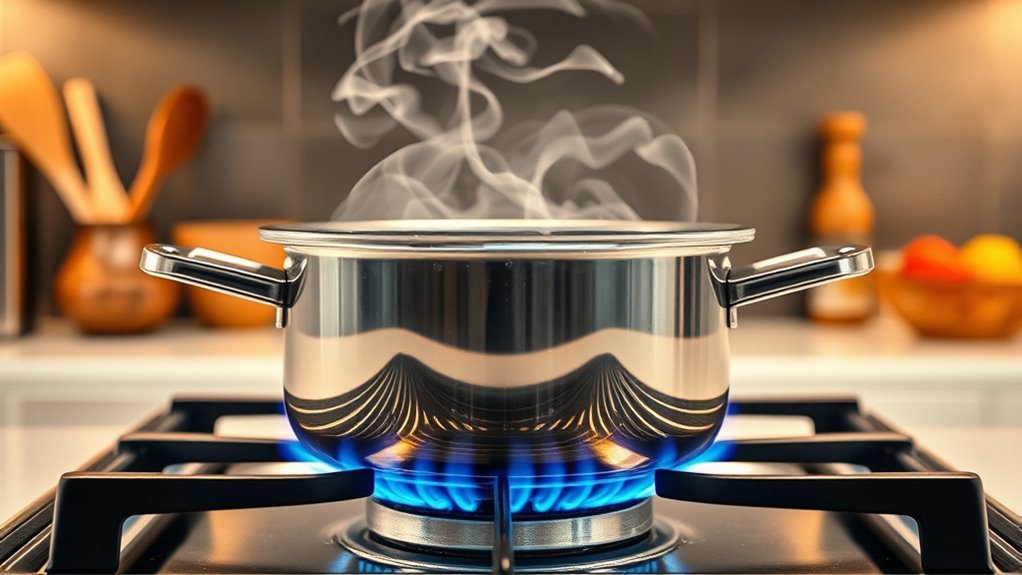
You’ll get the best results when you treat your stainless steel pot deliberately: pick the right size, start with cold water, and use medium-high heat with a lid to bring it to a boil quickly. Fill it about two-thirds to avoid spills, preheat briefly to prevent sticking, and lower the heat for simmering or gentle cooking. Follow a few simple care steps after use, and you’ll extend the pot’s life—here’s how to do each step.
How to Boil Water in a Stainless Steel Pot
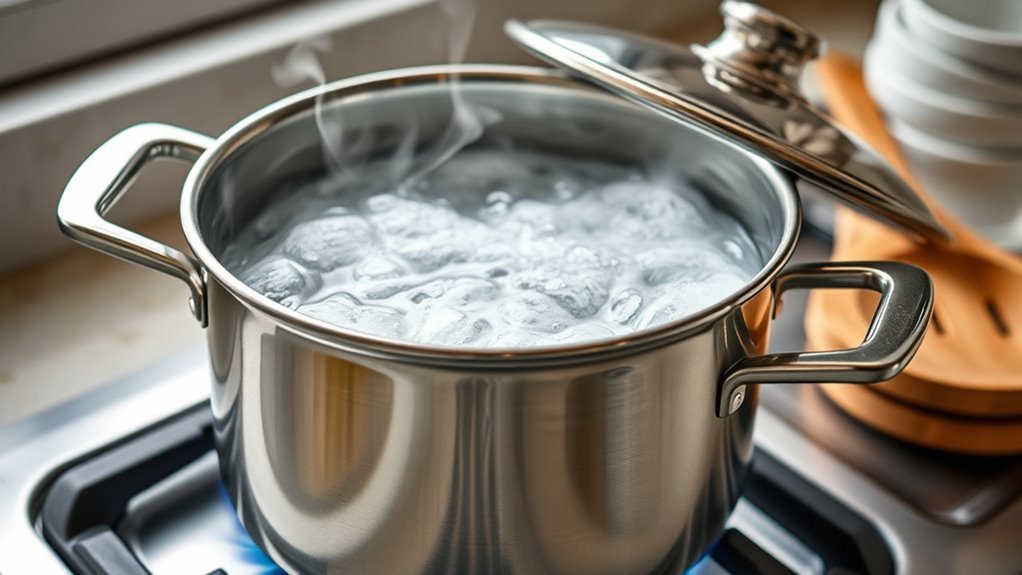
Begin with cold water in your stainless steel pot to guarantee even heating and prevent warping from sudden temperature changes; you’ll then set the burner to medium-high heat to bring it up steadily.
Cover the pot to accelerate the boiling process and trap heat, but don’t abandon it. Monitor the water as it approaches a boil so you can lower heat to maintain a rolling boil without allowing it to spill.
When you add pasta or vegetables, stir occasionally to avoid sticking and to sustain even heating across ingredients.
This disciplined routine keeps the stainless steel pot stable, preserves its finish, and simplifies cleanup. You’re claiming control over a basic cooking experience: measured heat, mindful observation, and timely stirring.
That control prevents boiling over, reduces kitchen mess, and frees you to focus on flavor and technique. Practice these steps and you’ll turn a simple act into a reliable, liberating skill.
Pick Pot Size and Fill Amount for Common Tasks
How much water should you use and which pot should you grab depends on the task: pick a pot that matches the volume of food you’re cooking—large (4–6 quarts per pound of pasta) for pasta, medium for batches of vegetables, and small for a few eggs—and fill it about two-thirds full to leave room for bubbling and prevent boil-overs.
Choose stainless steel for durability and predictable heat. For pasta, follow the 4–6 quarts per pound rule to achieve ideal cooking and even cooking throughout strands.
For vegetables, use a smaller pot with 1–2 quarts depending on quantity and type; blanching or steaming needs less water than fully boiling.
For eggs or single portions, a compact pot with conservative fill amount wastes less energy.
These cooking tips save time, fuel, and restraint: bring water to a full boil before adding food to lock in temperature and guarantee even cooking.
Match pot size and fill amount to purpose, and you’ll control results and free your kitchen practice.
Heat Settings and Timing: Boil, Simmer, and Low
When you need a rolling boil, set the burner to medium-high—this gets water boiling efficiently without overheating and risking damage to your stainless steel pot.
Start with cold water and use gradual heating so the metal avoids thermal shock; expect boiling water in roughly 5–10 minutes depending on volume. Once boiling, drop to maintain a gentle simmer for cooking or stocks.
- Use medium-high heat settings to reach boil, then lower to avoid high temperatures that stress the pot.
- Watch overcrowding: too much food plunges temperature and lengthens proper timing; leave space for circulation.
- For simmering, adjust to a steady, small bubble rhythm—this conserves energy and preserves flavors.
These cooking tips free you from cautious second-guessing: control intensity, respect gradual heating, and time changes precisely.
You’ll master boil, simmer, and low so your stainless steel pot serves reliably.
Protect Your Pot and Avoid Sticking
If you want to keep your stainless steel pot in top shape and stop food from sticking, start with cold water and preheat the empty pot briefly over medium heat before adding oil or ingredients.
You’ll preheat your pan to achieve even heating; that brief warm-up plus the water test tells you when the surface is ready. Use enough oil with a high smoke point—vegetable or peanut—to form a protective layer that will help prevent sticking during the cooking process.
Keep heat steady at medium heat to medium-high; don’t blast the pot, or you’ll risk sticking and warping. Don’t overcrowd the pot: give ingredients room so water circulates and contact with the metal is minimized.
Monitor temperature and adjust promptly; controlled heat preserves finish and performance. When you finish, cool gradually, avoid thermal shock, and clean promptly.
Treat your cookware like a tool for freedom—simple discipline extends its life and frees you from ruined meals.
Common Uses: Pasta, Blanching, and Stocks
When you boil water in a stainless steel pot, you’ll cook pasta evenly and prevent sticking by using plenty of water and a brief stir after adding the pasta.
You can quickly blanch vegetables to lock in color and nutrients, then shock them in ice water to halt cooking.
And for stocks, a steady simmer extracts deep flavor from bones and aromatics without stressing the pot—start at medium-high to reach boil, then reduce to maintain.
Boiling Pasta Efficiently
Bring a large stainless steel pot of water to a rolling boil—about 4–6 quarts per pound of pasta—then add 1–2 tablespoons of salt per gallon to season and help prevent sticking.
You’ll use medium-high heat to reach that boil, then add pasta and stir immediately to prevent clumping. Reduce heat slightly to maintain a steady boil without overflowing. Follow package instructions for timing—usually 8–12 minutes for desired firmness. A splash of olive oil is optional to further prevent sticking and improve texture.
- Use enough water so pasta moves freely and doesn’t stick.
- Stir early and occasionally to separate strands or shapes.
- Keep a watchful eye on boil intensity to avoid spills.
These cooking tips free you to control results confidently.
Quick Vegetable Blanching
Start by boiling a generous pot of salted water and have a bowl of ice water ready so you can shock vegetables immediately after their brief cook.
Use a roomy Stainless Steel stock pot over high heat so the water returns to boiling quickly when you add vegetables.
Add green beans, broccoli, or sliced carrots to the rolling boiling water; timing varies—typically 2–5 minutes based on thickness.
Salt enhances color and flavor while blanching preserves texture.
Scoop vegetables promptly and plunge them into the ice bath to quickly cool and stop cooking, which helps retain crispness.
Blanching before freezing locks in flavor and improves storage texture.
This method frees you to prepare vibrant, bold vegetables with control and confidence.
Building Flavorful Stocks
After blanching, save that flavorful water or reach for a fresh pot to build a proper stock that will elevate pastas, sauces, and future blanching batches.
Use stainless steel pots when cooking with stainless steel to control heat and maintain a neutral surface. Start with cold water and simmering bones, meat, or vegetables over low heat for hours to extract depth. Skim frequently to remove impurities and foam for a clear broth. Hold salt until the end so you can apply proper seasoning later.
- Add fresh ingredients—onion, carrot, celery, herbs—late to preserve brightness.
- Strain through a fine sieve or cheesecloth to yield a clean, flavorful liquid.
- Reduce gently to concentrate flavor without clouding the stock.
These cooking tips free your palate and enliven dishes.
Cleaning, Storage, and Post‑Boil Care
Let the pot cool to room temperature before you clean it to avoid warping from thermal shock; then wash with warm, soapy water and a soft sponge to preserve the finish and prevent scratches.
After regular cleaning, inspect for stubborn residue; simmer equal parts vinegar and water to loosen burnt bits, rinse, then wash again with warm, soapy water.
Dry thoroughly with a clean towel to remove water spots and eliminate moisture that can lead to rusting.
Stack cookware thoughtfully: use protectors or towels between pots to prevent scratches and keep surfaces bright.
Store the pot in a dry place where air circulates; avoid damp cabinets or basements.
If mineral scale appears from hard water, wipe with a diluted vinegar solution, rinse, and dry immediately.
Treat the pot as a tool for freedom—simple care preserves performance so you can cook without constraints.
Consistent cleaning and mindful storage extend life, maintain safety, and keep stainless steel ready for every boil.
Frequently Asked Questions
Is It Okay to Boil Water in a Stainless Steel Pot?
Yes — you can safely boil water in stainless steel. You’ll use proper pot selection and know stainless steel grades to guarantee cooking efficiency and good heat distribution.
Start with cold water, control water temperature, and apply boiling techniques to preserve flavor.
Follow pot maintenance and safety tips to avoid residue and warping.
For everyday uses, this gives reliable performance and lets you cook freely without compromising safety or taste.
What Should You Not Cook in Stainless Steel?
Don’t cook highly acidic foods like tomatoes or vinegar-based sauces in stainless steel—you’ll risk flavor changes despite stainless steel’s non reactive materials.
Avoid delicate proteins (eggs, fish) and high-sugar items (caramel) that stick; use non-stick instead.
Mind dairy at high heat to prevent scorching.
Use proper cooking techniques, temperature control, and pot maintenance to preserve flavor, food safety, heat distribution, and address durability concerns while you cook with freedom.
Does Stainless Steel Release Toxins When Heated?
No — stainless steel safety is solid: you won’t get harmful toxins when it’s heated.
You’ll benefit from cookware materials that resist food reactions and minimal metal leaching under normal use. Its heat conductivity and cooking performance are reliable, and durability concerns are low.
With proper maintenance tips you’ll extend life, reduce environmental impact, and enjoy health benefits.
Choose high-quality stainless steel and cook with confidence.
How Long Does It Take to Boil Water in a Stainless Steel Pot?
About 8 to 10 minutes on medium-high heat for a typical pot and moderate water volume.
Picture heat pooling like sunlight; adjust boiling techniques by starting with warmer water, using a lid, and matching heat source to pot thickness for faster cooking time and better energy efficiency.
You’ll monitor water temperature, practice pot maintenance, and follow safety tips to stay empowered and free in the kitchen while saving time and fuel.
Conclusion
You’ve got the basics down: choose the right pot, don’t overfill, and cover to speed things up. Use medium‑high heat for a rolling boil, drop to simmer when needed, and preheat briefly to avoid clingy messes. Treat your stainless steel kindly—clean promptly, dry thoroughly, and store upright. With these discreet little rituals, your pot will behave like a reliable ally, not a drama queen, delivering spotless, efficient results every time.
