
The best biochar soil amendments for 2027 include The Andersons HumiChar Organic Soil Amendment, The Andersons BioChar DG, Organic Inoculated Biochar, Old Potters Premium Biochar, Legigo Horticultural Charcoal, OLIVETTE Organic Biochar Activated Charcoal, and Char Bliss Organic Biochar. Each option can improve soil structure, moisture retention, and nutrient availability in different ways. Some work best for lawns, while others suit pots, orchids, or compost. The key differences become clearer with a closer look at their features.
The Andersons HumiChar Organic Soil Amendment (40 lb)
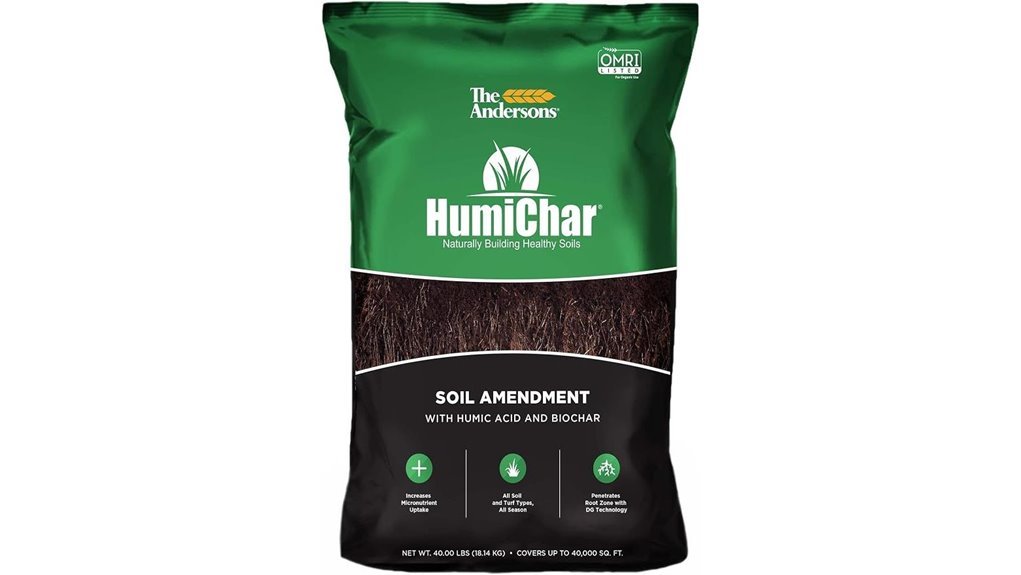
The Andersons HumiChar Organic Soil Amendment is best for gardeners and lawn care users seeking an OMRI-listed biochar product that combines fast-acting humic acid with long-lasting soil improvement. This 40 lb amendment uses spherical, low-dust DG granules for easy spreading and blending. Its formula includes 30% humic acid and 43% granulated biochar, supporting soil structure, plant vigor, and reduced fertilizer dependence. The humic component acts quickly, while biochar contributes decades of soil-building benefits. It fits organic programs, works alone or with fertilizers, and suits varied lawn and garden applications.
Best For: Gardeners and lawn care users who want an OMRI-listed, easy-to-spread organic soil amendment that combines fast-acting humic acid with long-term biochar benefits.
Pros:
- Contains 30% humic acid for quick soil and plant benefits.
- Includes 43% granulated biochar for long-lasting soil improvement.
- Low-dust DG granules are easy to spread and blend with fertilizers.
Cons:
- Not available for sale in California or Oregon.
- Bulk 40 lb bag may be more than some small home gardeners need.
- Biochar benefits are gradual, so results may not be immediate.
The Andersons BioChar DG Organic Soil Amendment
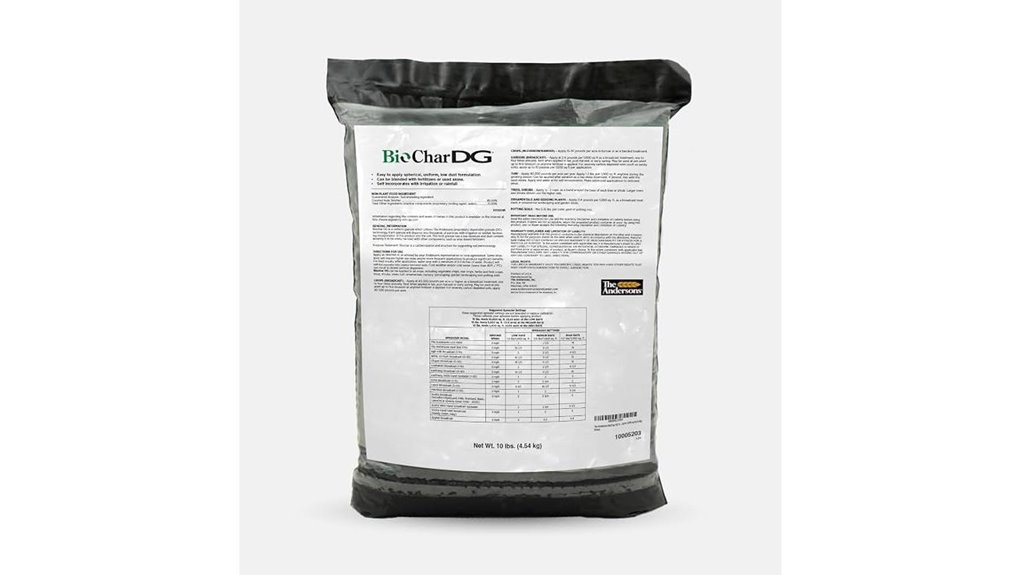
With dispersible granules and low dust, this amendment suits lawn care users seeking easy, even biochar coverage. The Andersons BioChar DG Organic Soil Amendment uses patented DG Technology to disperse quickly with water, helping carbon integrate uniformly into soil. Its spherical granules support cleaner spreading and up to 15,000 square feet of coverage per 30-pound bag. Intended for lawns, gardens, flower beds, potted plants, and composting, it can be applied alone or with fertilizer. It is also suitable for new seeding and may improve soil structure, nutrient access, microbial activity, and water retention over time.
Best For: Lawn and garden owners looking for an easy-to-spread organic biochar amendment that supports soil health, moisture retention, and nutrient availability over time.
Pros:
- Patented DG Technology disperses quickly with water for more even soil integration and lower dust.
- Versatile enough for lawns, gardens, flower beds, potted plants, composting, and new seeding.
- Can improve soil structure, microbial activity, and water retention while working over time.
Cons:
- Not available for purchase in California or Oregon.
- Benefits are gradual rather than immediate, so it’s not a quick fix.
- Only covers up to 15,000 sq ft per bag, which may require multiple bags for larger properties.
Organic Inoculated Biochar Soil Amendment (5G Pail)
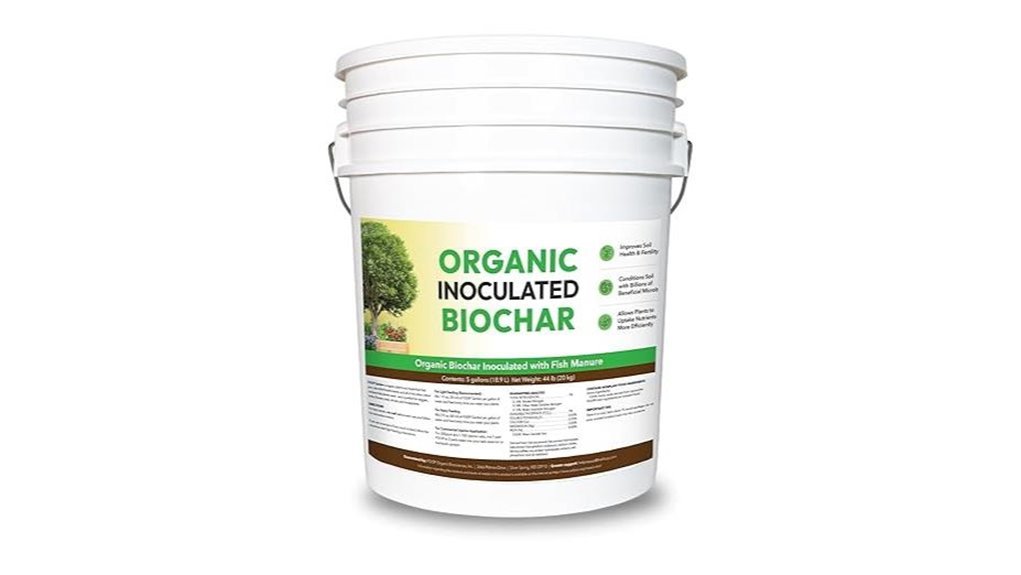
Organic Inoculated Biochar suits gardeners seeking a microbial boost in a 5-gallon soil amendment. FOOP Organic Biosciences supplies a 15-pound, USA-made pail loaded with millions of soil-enriching microorganisms and preloaded with billions of microbes. The organic blend, sourced from pine industry waste, is free of harmful chemicals and dusty particles. It absorbs excess moisture and nutrients, then releases them as plants require them. Suitable for gardens, flower beds, lawns, trees, shrubs, fields, and containers, it improves soil health and fertility while supporting efficient nutrient uptake. Each pail mixes into 7.5 to 15 cubic feet of soil.
Best For: Gardeners, landscapers, and growers looking to improve soil biology, nutrient retention, and moisture management with an organic biochar amendment.
Pros:
- Preloaded with billions of microbes to support healthier soil and better fertility.
- Helps retain excess moisture and nutrients, releasing them when plants need them.
- Organic, USA-made, and sourced from pine industry waste with no harmful chemicals or dusty particles.
Cons:
- The 5-gallon pail may be more product than casual home gardeners need for small projects.
- Requires mixing with existing soil, so it is not a standalone growing medium.
- Best results depend on proper application and soil conditions, which may vary by garden or landscape.
Old Potters Premium Biochar Soil Enhancer (24 Quarts)
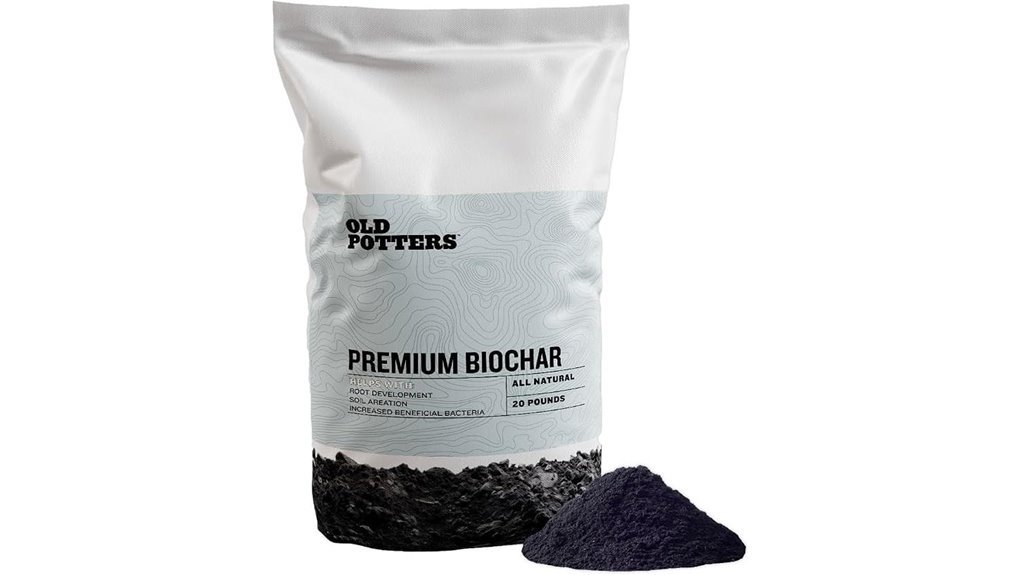
Old Potters Premium Biochar Soil Enhancer suits gardeners seeking a 100% organic, long-lasting soil boost. This 24-quart, 20-pound charcoal amendment is designed to improve aeration, moisture retention, and root development while supporting healthier soil structure. Its nutrient-rich composition can increase fertility, stimulate microbial activity, and encourage stronger growth with better yields. It also helps balance soil pH by reducing acidity and improving nutrient availability. Suitable for organic gardening, it mixes easily into beds, containers, and other planting systems. Stable carbon content makes it a durable amendment for sustained soil improvement.
Best For: Organic gardeners and home growers looking for a long-lasting, 100% organic soil amendment to improve soil structure, moisture retention, and plant growth.
Pros:
- Helps improve aeration, moisture retention, and root development
- Supports healthier soil fertility, microbial activity, and nutrient availability
- Stable, long-lasting biochar can provide sustained soil benefits
Cons:
- May require mixing into soil before benefits are fully realized
- 24-quart size may be more than needed for small-scale projects
- Results can vary depending on existing soil conditions and how it is applied
Legigo 2 QT Horticultural Charcoal- Natural Biochar Soil Amendment
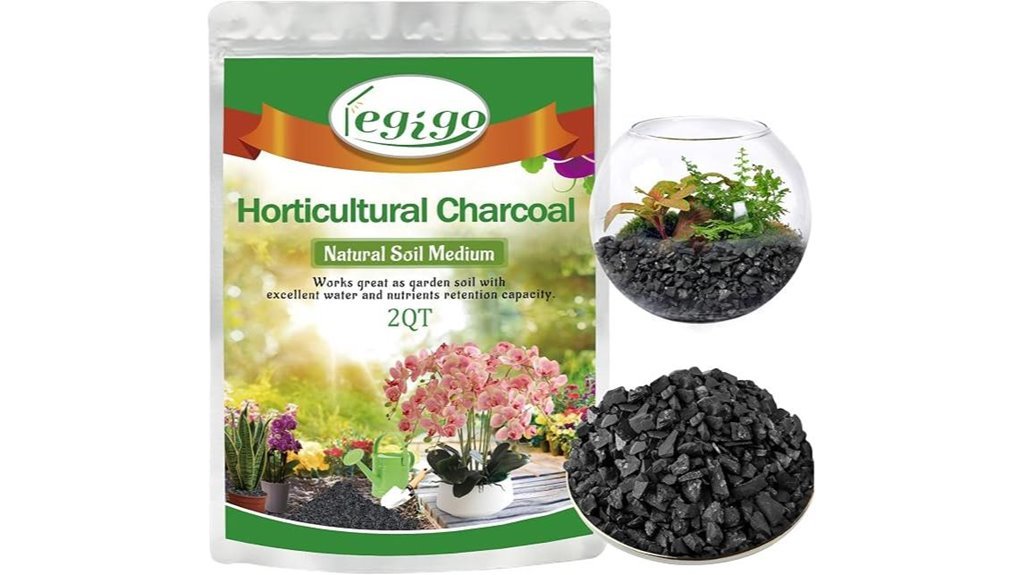
Legigo’s 2-quart horticultural charcoal suits growers who need fast drainage and better root airflow. This natural hardwood biochar amendment uses small to medium 3–7 mm particles that have been layer-screened and mesh-sieved for consistency. Its structure helps prevent compaction, supports moisture retention, and improves nutrient holding in mixes. The product is well suited to bonsai, orchid, succulent, and terrarium substrates. It is especially compatible with epiphytic orchids, including Cattleyas, Phalaenopsis, Dendrobiums, Paphiopedilums, and Oncidiums. Packaged at 17.64 ounces, it offers a compact option for targeted soil blending.
Best For: Growers, bonsai enthusiasts, orchid keepers, and succulent or terrarium hobbyists who want a natural charcoal amendment to improve drainage, aeration, and root health.
Pros:
- Improves soil drainage and airflow, helping prevent root compaction.
- Small 3–7 mm screened particles make it easy to blend into targeted mixes.
- Useful for a wide range of setups, including bonsai, orchids, succulents, and terrariums.
Cons:
- 2-quart size may be too small for larger projects or frequent repotting.
- Best used as a mix-in amendment, so it is not a complete growing medium by itself.
- Fine sizing may still require rinsing or handling care to minimize dust in some applications.
OLIVETTE Organic Biochar Activated Charcoal for Plants, 1 Bag
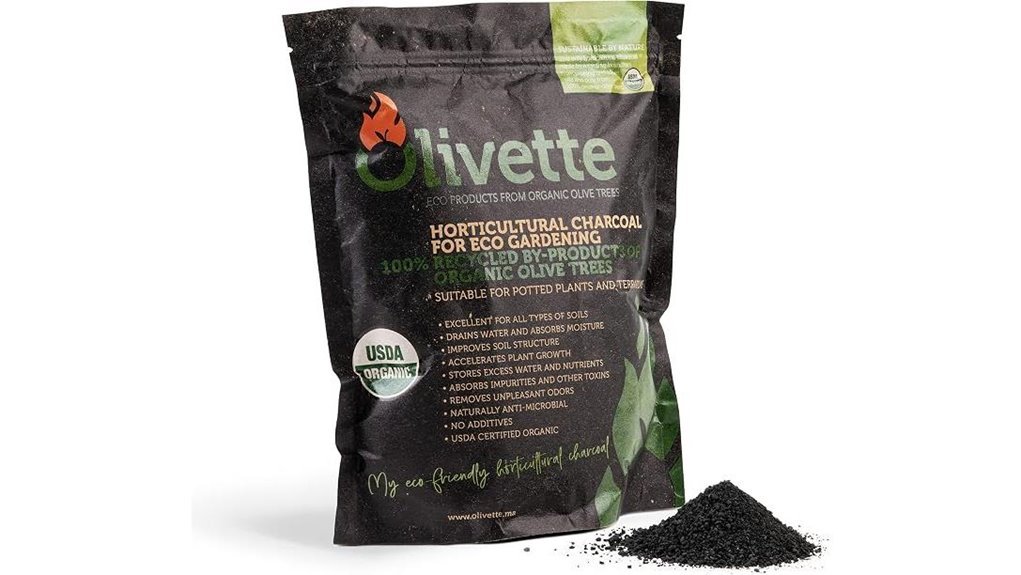
OLIVETTE’s biochar suits moisture-sensitive growers who need better drainage and nutrient retention. Made from recycled olive pits, pulp, and prunings, this USDA Organic Certified, carbon-neutral amendment comes in a 1-quart bag weighing 0.28 kg. It absorbs excess water, supports aeration, and helps reduce soil density while encouraging beneficial microorganisms. The result is stronger root development and healthier plants. It works well for orchids, succulents, bonsai, and terrariums, and can also help limit odors. Compared with ordinary amendments, it offers durable performance with a lighter environmental footprint.
Best For: Moisture-sensitive plant owners, such as orchid, succulent, bonsai, and terrarium growers, who want better drainage, nutrient retention, and an eco-friendly soil amendment.
Pros:
- Helps absorb excess water while still retaining nutrients for healthier plant growth.
- Improves aeration and reduces soil density, supporting stronger roots and beneficial microorganisms.
- USDA Organic Certified and carbon-neutral, made from recycled olive byproducts.
Cons:
- Best suited as a soil amendment, so it is not a standalone growing medium.
- The small 1-quart bag may not be enough for larger gardening projects.
- May be unnecessary for plants that already prefer drier, well-draining soil mixes.
Char Bliss (1 Qt) – Organic Biochar Soil Amendment for Plants & Gardening
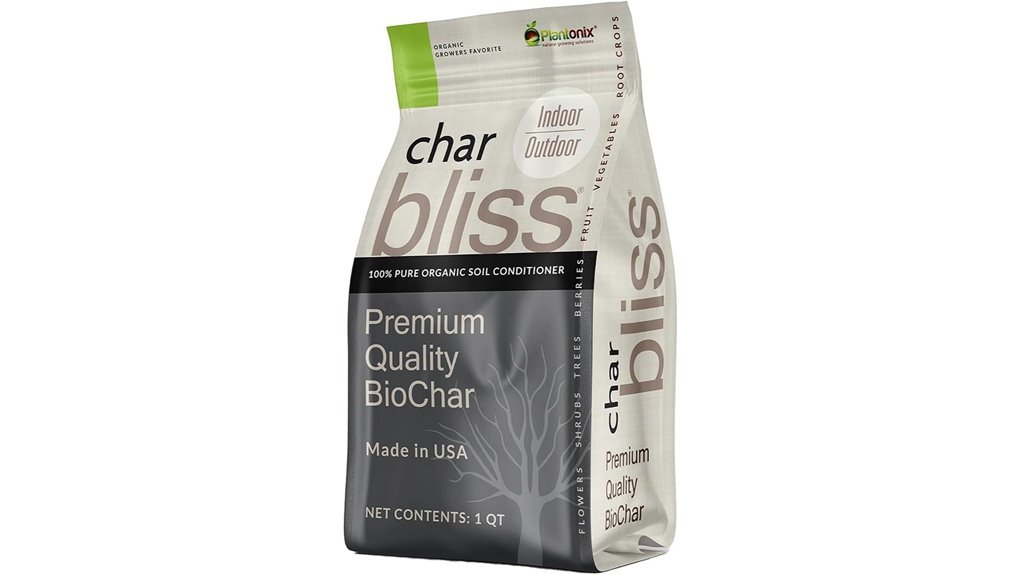
Char Bliss suits gardeners seeking an OMRI-listed, organic biochar boost. Plantonix offers this 1-quart amendment as a natural blend made from ethically harvested wood and tree trimmings. Its porous structure helps retain moisture, improve aeration, and loosen compacted soil for stronger root growth. It also absorbs nutrients, limiting runoff and reducing fertilizer demand while supporting healthier uptake. Suitable for garden beds, pots, lawns, turf, containers, and terraces, it contains no synthetic additives. By storing carbon in soil, it also supports sustainable gardening and climate-minded soil management.
Best For: Organic gardeners and home growers who want an OMRI-listed biochar amendment to improve soil structure, moisture retention, and nutrient efficiency.
Pros:
- Helps retain moisture and improve drought tolerance
- Boosts soil aeration and loosens compacted soil
- Absorbs nutrients to reduce runoff and fertilizer use
Cons:
- Best results may require mixing with existing soil or compost
- A 1-quart size may be too small for larger garden projects
- Biochar benefits can vary depending on soil type and application method
Factors to Consider When Choosing Biochar Soil Amendments in 2026
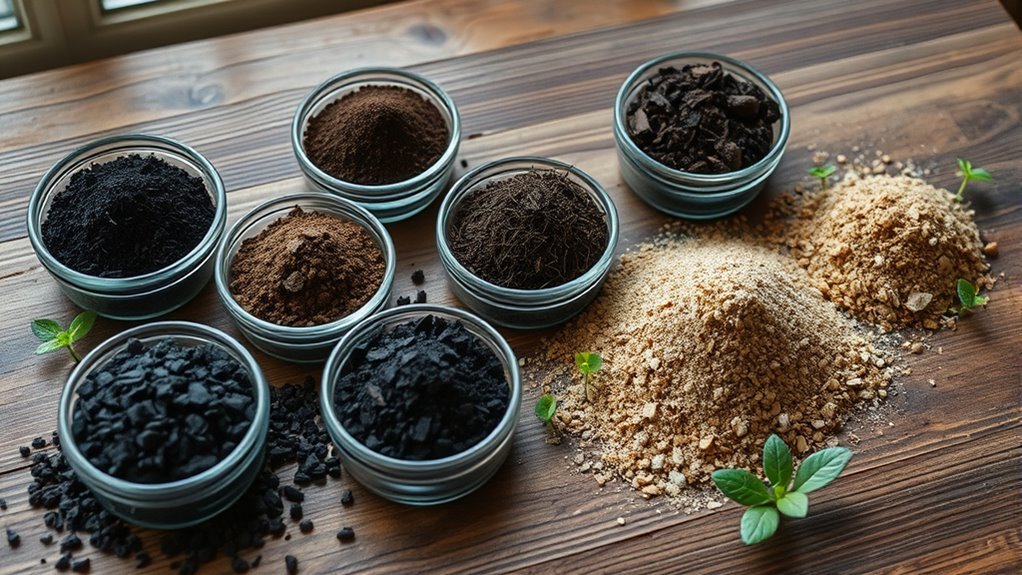
When choosing biochar soil amendments in 2026, attention should center on source quality, since feedstock and production methods can affect consistency and safety. Granule size and form also matter, because they influence nutrient retention, moisture management, and how easily the material integrates into soil. Organic certification status remains important for growers seeking verified inputs that align with certified production standards.
Biochar Source Quality
Biochar quality begins with its source material, since hardwoods and agricultural byproducts often produce higher carbon content and better nutrient retention than lower-grade feedstocks. Waste-based feedstocks can also support sustainability by turning discarded biomass into a soil amendment rather than adding to landfill streams. Source material influences more than carbon density: it affects microbial activity, which can improve nutrient availability and strengthen soil biology. It also shapes pore structure, with softer woods tending toward larger pores and hardwoods toward denser matrices, altering water retention and aeration. Production conditions matter as well. Pyrolysis temperature and duration interact with the feedstock to determine chemical stability and nutrient behavior. Choosing biochar consequently requires evaluating both the original material and the process used to convert it into a finished amendment.
Granule Size And Form
Particle form often determines how effectively a biochar amendment performs in soil. Granule size influences aeration and water movement: smaller particles tend to improve moisture retention, while larger particles can increase drainage. A uniform size range also supports even distribution, helping soil structure improve more consistently across treated areas. In addition, well-balanced granules offer ample surface area for microbial colonization and nutrient exchange, which can aid biological activity within the soil ecosystem. Form matters as well. Spherical granules usually generate less dust, making handling and application cleaner and safer. Dispersible granules add another advantage by breaking down quickly in water, allowing faster incorporation into the soil and more complete contact with the root zone.
Nutrient Retention Ability
Nutrient retention is one of the most important measures of biochar performance, because its porous structure creates space to hold both water and nutrients where roots can access them more effectively. Its high surface area helps capture nutrients and slow their loss through leaching, keeping key elements available over time. Biochar can also raise cation exchange capacity, which improves the soil’s ability to retain potassium, calcium, and magnesium. By stabilizing organic matter, it supports lasting fertility and can reduce dependence on chemical fertilizers. Added biochar may also encourage microbial activity, which strengthens nutrient cycling within the soil ecosystem. For growers comparing products, retention capacity is a practical indicator of how well a biochar amendment can support sustained plant nutrition.
Moisture Management Needs
Moisture balance is a key factor when selecting a biochar soil amendment in 2026, since its porous structure can hold water and nutrients while improving overall soil performance. Its high absorption capacity helps soils retain usable moisture longer, which can reduce irrigation frequency and support plants during dry periods. At the same time, biochar improves permeability and aeration, limiting compaction and helping roots access both air and water. By absorbing excess moisture, it also lowers the risk of waterlogging, a common cause of poor root development. These combined effects make biochar valuable in soils that swing between drought stress and saturation, offering steadier hydration and more efficient water management across varying growing conditions.
Organic Certification Status
Beyond water retention and drainage performance, organic certification status is another important factor when selecting a biochar soil amendment in 2026. Certification indicates that the product was produced without synthetic chemicals or harmful additives, which supports safer use in gardens and farms. It also helps confirm that the amendment aligns with sustainable agricultural practices and can contribute to healthier soil fertility over time. USDA Organic Certification offers a widely recognized benchmark for verifying organic integrity, while OMRI listings provide added confidence for organic gardening and farming. These labels improve transparency and consumer trust. Certified organic biochar may also support carbon sequestration goals, giving the product environmental value beyond soil improvement. For buyers seeking compliant, responsible inputs, certification remains a practical screening criterion.
Application Versatility
Versatility is a key advantage of biochar soil amendments, as many products can be used across lawns, flower beds, potted plants, and compost systems. This broad applicability makes them practical for gardeners and landscapers managing different spaces. Many formulations also integrate smoothly with existing fertilizer programs, reducing the need to change established routines. Because biochar can be applied during much of the growing season, timing is flexible. Some products are engineered to blend readily with soil, helping improve structure, increase nutrient retention, and support microbial activity. Others target specific plant requirements, such as moisture retention for succulents or better drainage for orchids. This range of uses allows biochar to serve both general soil improvement goals and more specialized plant care needs.
Frequently Asked Questions
How Long Does Biochar Remain Effective in Soil?
Biochar can remain effective in soil for decades to centuries, depending on feedstock, pyrolysis quality, and soil conditions. Its stable carbon structure resists decomposition, while benefits may gradually diminish without replenishment or proper management.
Can Biochar Replace Compost Completely?
No—biochar cannot replace compost completely; it improves retention, it enhances structure, it supports microbes. Yet it lacks compost’s nutrients, biology, and readily available organic matter, so the two function best as complementary amendments.
What Crops Benefit Most From Biochar Use?
Crops benefiting most from biochar are typically vegetables, berries, maize, and legumes, especially in poor or acidic soils. Yield gains often appear strongest where moisture retention, nutrient availability, and microbial activity need improvement.
Does Biochar Affect Soil pH Significantly?
Like a quiet keystone, biochar can shift soil pH, usually nudging acidic soils upward. Its effect is often modest but meaningful, depending on feedstock, ash content, and application rate, rather than universally dramatic.
How Should Biochar Be Recharged Before Application?
Biochar should be recharged by soaking it in compost tea, diluted fertilizer, or nutrient-rich compost before application. This allows pores to fill with microbes and nutrients, reducing temporary nitrogen tie-up and improving soil performance.
Conclusion
To conclude, the best biochar soil amendments balance porosity, nutrient retention, and ease of application, making them useful for gardeners seeking healthier soil in 2027. One significant statistic often cited in soil studies is that biochar can increase water-holding capacity by up to 30%, depending on the soil and product used. That kind of improvement helps explain its growing popularity. Ultimately, product selection should be guided by plant needs, soil type, and amendment quality.
