
Philips water dispensers on Amazon in this category are countertop reverse osmosis (RO) systems: plug-in units you fill with tap water, with no plumbing or installation. This guide compares two Philips models, an instant hot and cold RO dispenser and a slimmer installation-free RO unit, based on the manufacturer and Amazon listings.
As an Amazon Associate, Casabux may earn from qualifying purchases. This does not change the price you pay. We have not hands-on tested these products; the notes below are based on listing specifications and should be confirmed on the current product page.
Philips Water Dispensers at a Glance
| Model | Filtration | Listed temperatures | Footprint |
|---|---|---|---|
| Philips Countertop RO, Instant Hot and Cold | 6-stage RO with Aquaporin Inside | About 40 F cold, 203 F hot | 9.1 x 16.9 x 17.5 in |
| Philips Countertop RO, Installation-Free | 5-stage RO with Aquaporin Inside | Check the listing | 5 x 13 x 14 in |
Details come from the listings and may differ by version.
Philips Countertop RO Water Filter, Instant Hot and Cold Dispenser
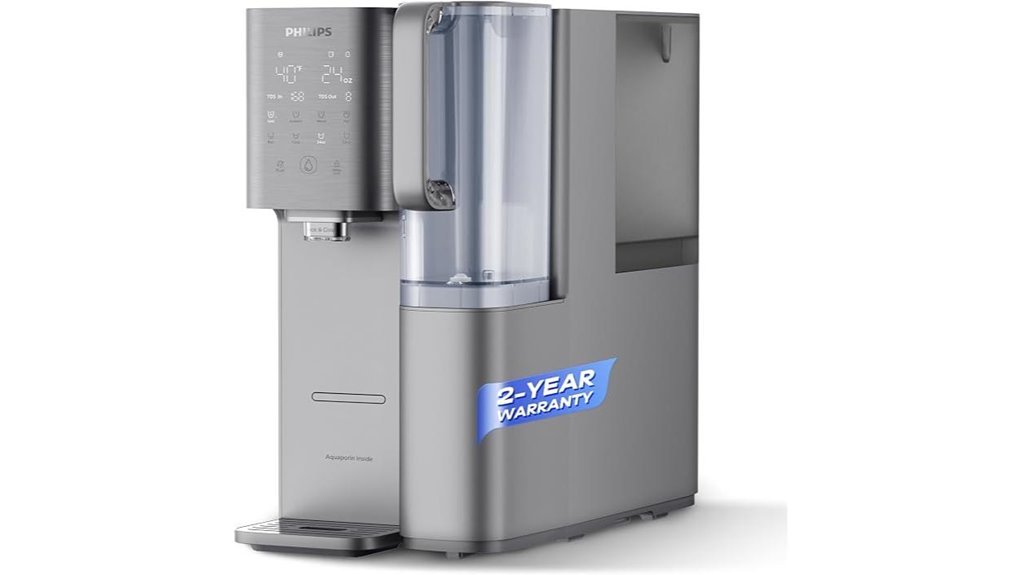
This Philips unit pairs reverse osmosis with instant hot and cold dispensing. The listing describes six-stage Aquaporin Inside filtration, a final mineralizing stage, about 40 degrees F cold and 203 degrees F hot water, a real-time TDS display, a self-cleaning mode, a 12-month filter and a two-year warranty. It suits two to five people, according to the listing.
Best for: small to medium households that want RO water at hot and cold temperatures without installation.
Pros
- Instant hot and cold dispensing
- Real-time TDS display
- Self-cleaning mode and a 12-month filter per the listing
Cons
- Daily source tank refill and monthly cleaning
- Not aimed at very large households
- Needs counter space for a 9 by 17 inch footprint
Check the Philips Countertop RO Instant Hot and Cold Dispenser on Amazon
Philips Countertop Reverse Osmosis Water Filter, Installation-Free
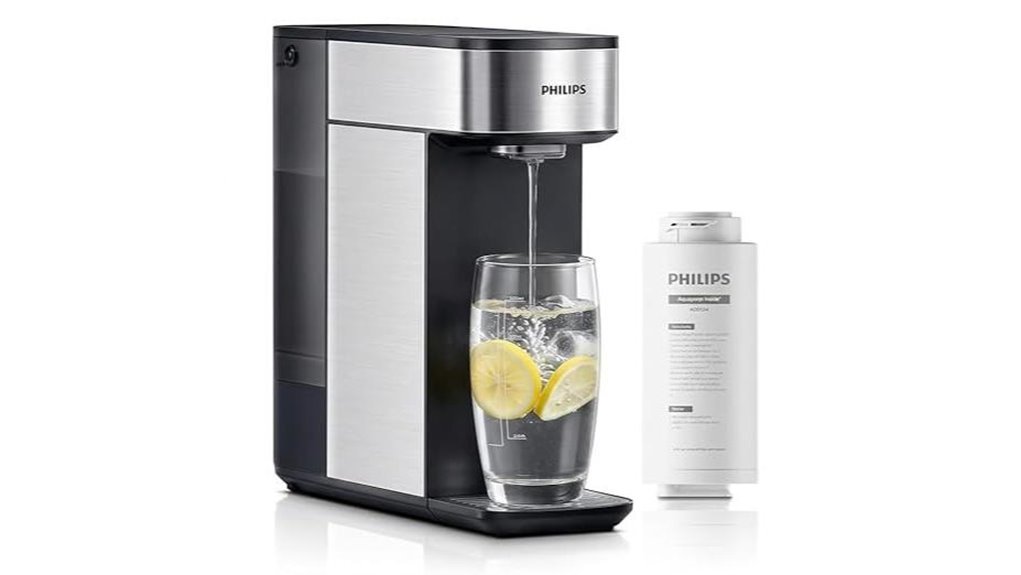
This is the slimmer Philips RO option. The listing describes five-stage RO with Aquaporin Inside, NSF/ANSI/CAN 372 and NSF/ANSI 58 certification, a slim footprint of about 5 by 13 by 14 inches and a flow rate of about 9 oz per minute. It uses tap water, with daily refills, monthly self-cleaning and refrigerated storage of the filter when not in use per the listing.
Best for: renters, small households, dorms, RVs and offices that want a compact RO countertop unit.
Pros
- Compact, plug-and-play design
- Certifications listed (NSF/ANSI 372 and 58)
- Faster flow rate than the first model per the listings
Cons
- Intended for tap water, not very cloudy or heavily contaminated sources
- Daily refills, monthly cleaning and filter storage
- Filter replacements are not covered by the machine warranty per the listing
Check the Philips Installation-Free Countertop RO on Amazon
How to Choose a Philips Water Dispenser
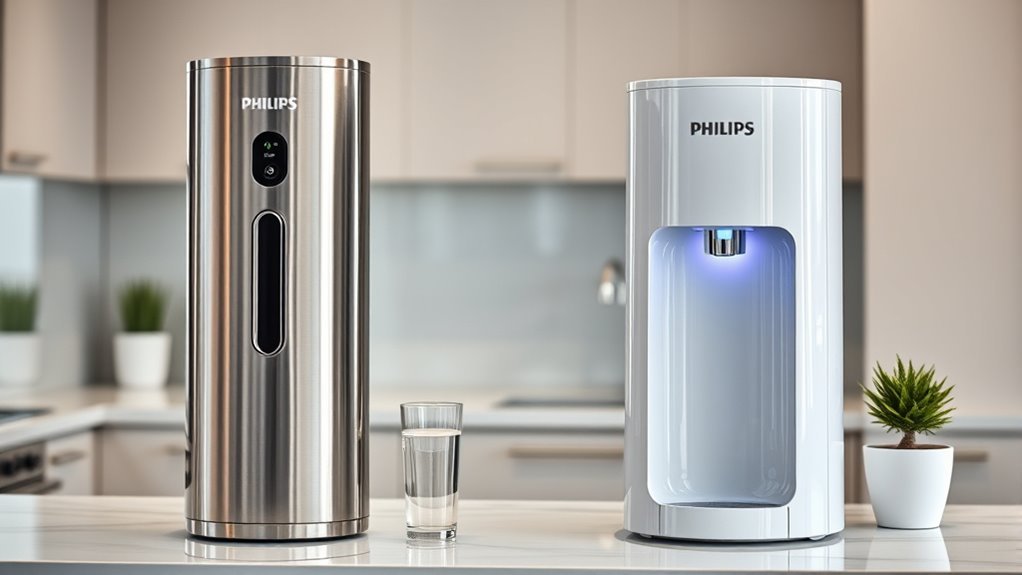
Both models use RO, so the decision comes down to hot water, size, flow and upkeep.
Hot and cold versus compact
If you want instant hot water for tea or instant meals, the hot and cold model is the one to look at. If counter space or portability matters, the slimmer unit is easier to place in a dorm, RV or small kitchen.
What RO does
Reverse osmosis pushes water through a very fine membrane to reduce dissolved solids, so it can lower TDS. A TDS display lets you see changes, but it is only an indicator, not a full safety test. Some RO units add minerals back for taste, which the first model lists.
Certifications
NSF/ANSI 58 covers reverse osmosis drinking water systems and NSF/ANSI 372 covers lead content of materials. Read the listing and the certification database entry for the exact model to see what was actually certified.
Upkeep
Plan for daily fresh water in the source tank, a monthly self-clean and a yearly filter change. RO systems also send some water to waste, so factor that in.
Related Guides
- Best water dispensers for home and office for the full range of options
- Waterdrop water dispensers and iSpring water dispensers for other RO and filter brands
- Energy Star water dispensers if running cost matters
Frequently Asked Questions
Do these Philips countertop RO dispensers need installation?
No. Both listings describe countertop units that need only tap water and a power outlet, with no plumbing or under-sink connection. You fill the source tank, plug it in and let the system run through its setup steps. Check the quick-start guide for any first-use flushing or cleaning cycle.
How often should I refill the source tank and clean the unit?
The listings describe replacing the source tank water daily and running a self-cleaning cycle about once a month. Following the manual’s cleaning schedule helps keep water tasting fresh. If you will not use the unit for a while, the listings advise emptying it and storing the filter as the manual describes.
Do Philips countertop RO dispensers work with well water?
They are described for use with tap water. Well water can contain sediment, iron or bacteria that a countertop RO is not designed for, so test your water and check the manufacturer’s guidance before using it. A pre-filter or other treatment may be needed.
Does the filter replacement fall under the warranty?
The listings suggest filters are consumables and not covered by the machine warranty. Check the warranty terms on the specific listing for the unit you pick, and note the filter replacement interval in the manual or on the TDS or filter indicator.
Conclusion
Choose the hot and cold Philips model if you want instant hot water and a TDS display, or the installation-free model if space and portability matter more. Check the current listings for filter intervals, certification details and price.
