
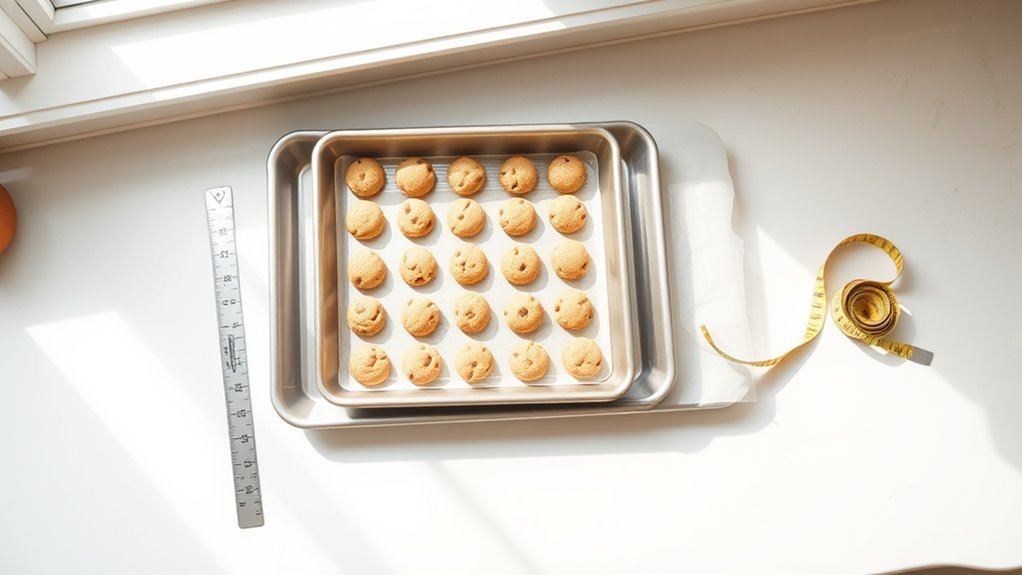
Think of baking-sheet sizes as friendly guidelines rather than strict rules—they tell you what fits and what works best in your oven. You’ll want to know the common dimensions like quarter, half, and full sheets, plus cookie-sheet sizes and how material or rim type changes capacity and results. That knowledge will help you pick the right pan for cookies, roasting, or batch cooking—and avoid surprises when you slide it into the oven.
Which Baking-Sheet Size Should You Choose?
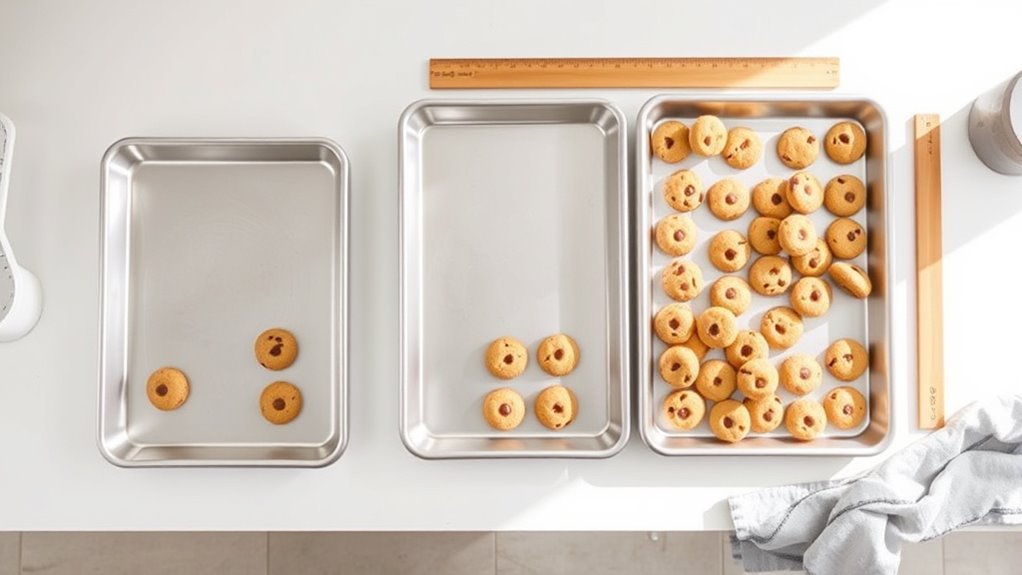
Which baking-sheet size should you choose? You’ll pick the Size Baking Sheet that matches your goals: freedom in the kitchen and efficient use of space.
If you bake for one or two, a quarter sheet (9 x 13 inches, 2-inch depth) gives you control and minimizes waste. You’ll use it for sides, small roasts, or compact batches without dominating oven real estate.
For one or two, a quarter sheet (9×13, 2″ depth) offers control—perfect for sides, small roasts, and compact batches.
If you make cookies, roast vegetables, or want batch flexibility, a half sheet (18 x 13 inches) balances surface area and home-oven fit, letting you bake more at once while still fitting on racks.
If you run large events or a commercial kitchen, a full sheet (26 x 18 inches) delivers maximum output but demands commercial ovens or roomy racks.
Always consider your oven dimensions and whether you’ll stack multiple pans. Choose the Size Baking Sheet that liberates your cooking—don’t force big pans into small ovens or limit yourself with too-small tools.
Common Sheet Sizes and What They Hold
Now that you’ve matched a sheet size to your cooking goals, let’s look at the common pan dimensions and how much they actually hold.
You’ll move confidently when you know the numbers: a full sheet (26 x 18 inches) is the workhorse in commercial spaces, holding roughly 6–8 quarts for big bakes or batch roasting.
The standard half sheet (18 x 13 inches) fits most home ovens and holds about 3–4 quarts — perfect for cookies or a roast of vegetables.
Quarter sheets (9 x 13 inches) are your compact allies for side dishes and small portions, holding about 1–2 quarts.
Cookie sheets, around 15 x 12 inches, are tuned for even cookie spacing and often include shallow edges to control spreading.
When you choose among these sheet sizes, consider baking capacities and common materials to match performance to purpose — pick the pan that frees you to bake boldly and efficiently.
How Material, Thickness, and Color Affect Baking
You’ll want to match sheet material to the job: aluminum conducts heat quickly for even cooking, while nonstick or silicone changes how heat transfers and how items release.
Thickness matters for browning—thin sheets heat and cool faster, giving crisper edges on cookies and delicate items, while thicker pans brown more slowly and evenly.
Also note color: light sheets reflect heat for steadier results, whereas dark pans tend to absorb heat and can brown or overcook faster.
Material And Heat Conductivity
Material matters: the metal, thickness, and color of your baking sheet directly change how heat moves and how your bakes turn out. You’ll learn that aluminum offers excellent heat distribution and predictable heat retention properties, while dark pans absorb more heat and can speed browning. Choose baking surface types—Teflon, parchment, silicone—based on sticking prevention and the impact on textures, especially for delicate items like macarons. Experiment to find what frees your baking.
| Surface | Effect |
|---|---|
| Aluminum | Even heat, good for crisp edges |
| Dark metal | Faster browning, risk of unevenness |
| Light metal | Reflects heat, steadier bake |
| Silicone | Insulates, softer bottoms |
| Parchment/Teflon | Prevents sticking, preserves shape |
Thickness And Browning Effects
Having covered how metals and surface coatings affect heat, let’s look at how thickness and color of the sheet itself change browning and bake speed.
You’ll find baking sheet thickness directly alters heat conduction effects: thinner sheets heat and brown faster and more evenly, great for cookies and pastries.
Dark-colored pans absorb extra heat and speed browning, risking overcooked bottoms on delicate items. Light-colored sheets reflect heat, yielding steadier, safer results for even bakes.
Material still matters—aluminum conducts best—so pair appropriate thickness with your metal choice.
Use parchment or silicone to moderate surface contact and reduce sticking, but test since they change browning.
Adopt these ideal browning techniques to control outcomes and reclaim power in your kitchen decisions.
Perforated, Rimmed, and Nonstick Pans : When to Use
Pick the right pan and you’ll get better results: perforated sheets boost airflow for crisp crusts on pizza and bread, rimmed sheets keep sauces and juices contained when roasting, and nonstick pans release delicate cookies and pastries with minimal sticking.
You’ll appreciate the perforated benefits when you want even browning and a crunchy base; they speed moisture escape and concentrate heat at the surface.
Choose rimmed versatility for roasting vegetables, sheet-pan dinners, or anything that might spill—raised edges protect your oven and let you move juicy pans without worrying.
Reach for nonstick convenience when you bake fragile items or aim to skip parchment; a silicone-coated or well-seasoned surface minimizes sticking and simplifies release.
Match pan type to task and to sheet size—standard 18×13-inch or quarter 9×13-inch—so you don’t crowd food or impede airflow.
Consider material too: aluminum conducts heat for even results, while silicone coatings add release and easier cleanup.
Care, Storage, and Oven-Fit Tips
Start by cleaning cooled sheets with mild soap and a soft sponge to avoid warping and preserve the finish.
Store pans vertically or use dividers to prevent scratches and make them easy to grab.
Measure your oven’s interior before buying larger sizes so sheets fit snugly and heat evenly.
Proper Cleaning Methods
One simple routine will keep your baking sheets performing well and lasting longer: hand wash with warm, soapy water, rinse, and dry thoroughly.
You’ll avoid dishwasher-induced warping and degradation by choosing gentle cleaning techniques that honor surface protection and longevity. Use maintenance tips like lining with parchment or a silicone mat to cut cleanup time and prevent baked-on residue.
- Rinse hot, soak briefly, then wash with a soft sponge and mild detergent.
- Skip abrasive cleaners and scouring pads to preserve nonstick coatings and prevent scratches.
- Dry immediately and store in a cool, dry spot to prevent rust or corrosion on metal sheets.
- Verify sheet fits your oven with room for airflow to guarantee even cooking and safer handling.
Efficient Storage Solutions
Three smart storage habits will keep your baking sheets ready and extend their life: stack them vertically or use a dedicated organizer to save cabinet space, store them in a cool, dry spot to prevent warping and corrosion, and choose rimmed sheets that fit your oven’s interior dimensions so you don’t damage them or block airflow.
Adopt space saving techniques like vertical stacking to reclaim cabinet real estate and avoid scratches from nesting.
Pick organizer options—slotted racks, pull-out trays, or tension dividers—that match your cabinet depth and sheet sizes (half-sheet and quarter-sheet are common).
Keep sheets dry and flat when stored, and favor rimmed models for spill control and easier handling.
These steps give you freedom and durability in the kitchen.
Measuring Oven Clearance
When you measure oven clearance, check both the oven’s interior width and the height between racks so your baking sheet fits without scraping or blocking airflow. For example, confirm a half-sheet (about 18″ x 13″) or quarter-sheet (9″ x 13″) will slide in easily and leave room on all sides for circulation.
Measure oven dimensions and rack height before buying pans. Leave clearance for air circulation and taller cookware. Store sheets flat to prevent warping.
- Measure interior width and depth to match standard sheet sizes.
- Check rack height for taller pans, roasting, or broiling.
- Allow 1–2 inches around pans to preserve air circulation and even cooking.
- Stack or store flat so sheets remain true to size and ready to fit your oven.
Quick Buying Checklist (What to Look For)
Start with the essentials: check size, material, depth, and oven compatibility before you buy. Choose baking sheet types that fit your work — half-sheet (18 x 13″) for trays and batch baking, quarter-sheet (9.5 x 13″) for small tasks.
Prefer premium-grade aluminum with perforation for superior heat distribution; it’s lighter, faster, and more even than cheap steel. Match depth to purpose: 0.5–2″ pans handle anything from cookies to sheet-pan dinners. Verify oven clearance and whether the pan suits countertop convection ovens if you roast larger items like a whole chicken.
Prefer premium perforated aluminum for even, fast heat; choose 0.5–2″ depth and confirm oven clearance for larger roasts.
Look for nonstick finishes and raised rims to aid food release and contain juices. Check construction: single-piece rims resist warping, and reinforced edges last longer.
Consider weight and ease of cleaning — lighter pans free you to cook more, durable ones free you from replacing gear. Buy intentionally: pick a sheet that expands what you can cook, not one that limits you.
Frequently Asked Questions
Is a 9×13 Pan a Cookie Sheet?
No — a 9×13 pan isn’t a cookie sheet. You’ll want a flat cookie sheet for even spreading; 9×13 dishes are deeper and make thicker, cake-like cookies.
Consider baking sheet alternatives like rimless sheets or heavy-gauge aluminum for better airflow. Use cookie sheet materials that conduct heat well, avoid trapping moisture, and follow cookie baking tips: chill dough, space cookies, and rotate pans for consistent results and liberated baking outcomes.
Do Full-Size Baking Sheets Fit in a Regular Oven?
About 80% of standard ovens will accommodate a full-size baking sheet, so yes, most regular ovens fit them.
You’ll still check oven rack placement and depth before sliding one in, and consider baking sheet materials for heat and weight.
If yours won’t take a full sheet, choose baking sheet alternatives like half-sheet pans or rimmed trays to reclaim freedom in your kitchen and keep baking simple, efficient, and bold.
How to Measure Baking Sheet Size?
Use a ruler or tape to measure the baking sheet length and width edge-to-edge, and measure depth from bottom to rim.
Note measuring techniques for irregular rims and include material thickness if baking sheet materials affect fit.
Compare sizes to cookie sheet alternatives and your oven clearance.
You’ll liberate your baking choices by choosing the right capacity and shape, so measure carefully and pick materials and alternatives that serve your needs.
What Is Considered a Baking Sheet?
A baking sheet is a flat, rimmed pan you’ll use for roasting, baking, and sheet-pan meals.
You’ll choose between baking sheet types like half and quarter sheets, and pick baking sheet materials such as aluminum, stainless steel, or nonstick to suit heat and durability needs.
You’ll rely on its raised edges for spills and even cooking, and its versatility empowers you to liberate your cooking—one pan, many uses.
Conclusion
Now that you know the common baking-sheet sizes and what they hold, pick the one that matches your usual batches and oven space so you won’t be juggling trays like a medieval juggler. Remember material, thickness, and color affect browning, and choose rimmed, perforated, or nonstick based on what you bake most. Store flat, check oven fit, and follow care directions—these simple choices will save time and give you consistent, reliable results.
