
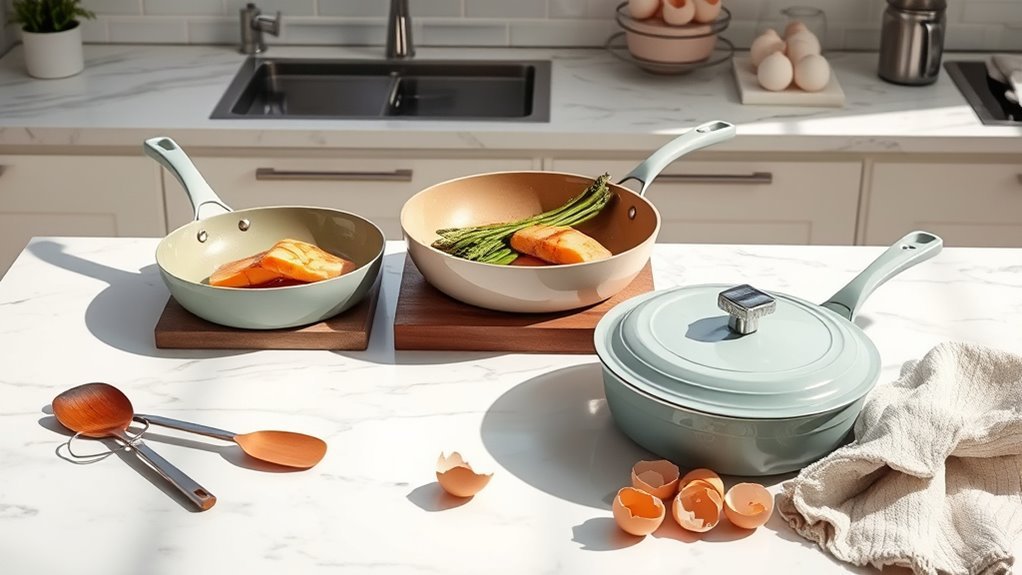
Like a polished tool in a calm kitchen, Caraway pans promise cleaner cooking but ask for careful handling. You’ll appreciate the non-toxic ceramic coating and even heat, yet pay more and avoid high heat or metal utensils. If you want healthy, easy sautéing and gentle simmering, they’re tempting—but you’ll need to commit to hand-washing and mindful use to keep them performing. Want to know where they shine and where they fall short?
Quick Verdict: Are Caraway Pans Worth It?
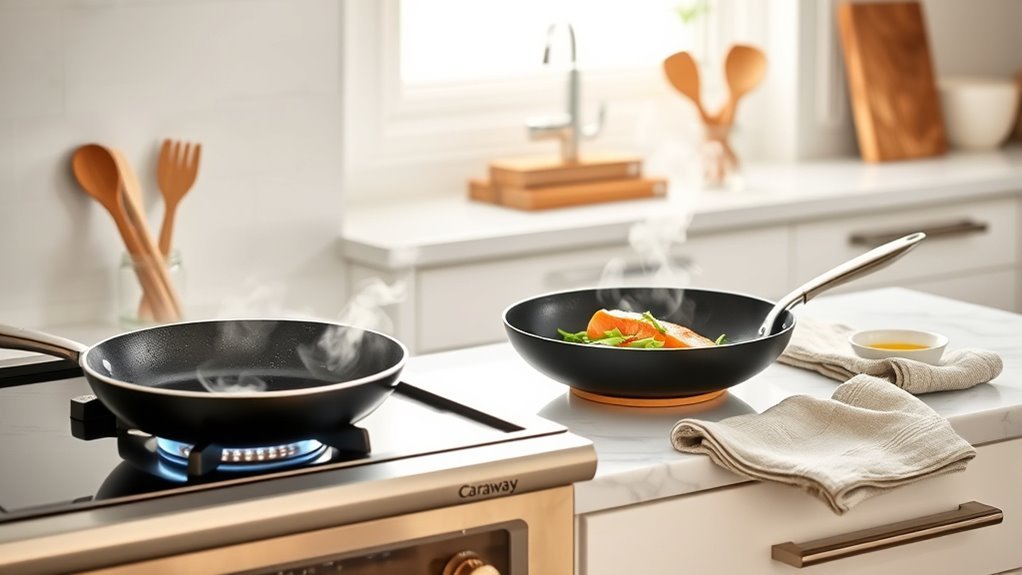
Wondering if Caraway pans are worth the price? You get a premium 12-piece set at $635 that prioritizes design, function, and a healthier cookspace.
If you want cookware that aligns with a liberated lifestyle—choosing less-toxic tools and investing in longevity—Caraway pans deliver. The non-toxic ceramic surface skips PTFE and PFOA, so you’re not trading safety for slick release.
An aluminum core gives even heat distribution, so meals turn out consistent without constant babysitting. Expect easy cleanup and high customer satisfaction, but plan to hand-wash and avoid metal utensils to protect the coating.
An aluminum core ensures even cooking and easy cleanup—just hand-wash and skip metal utensils to protect the coating.
That maintenance is a reasonable trade if you value durable performance and fast cleanup over disposable bargains. For you, the key question is whether $635 fits your priorities: aesthetics, health-forward materials, and long-term use.
If those matter more than immediate savings, these pans are a defensible, empowering buy.
Caraway’s Claims vs. What’s Inside
Although Caraway promotes its cookware as “non-toxic” and free from hundreds of PFAS and dozens of heavy metals, the company doesn’t disclose the exact composition of its mineral-based ceramic coating, so you can’t independently verify those claims.
You’ll appreciate Caraway’s clear marketing and PTFE-free stance, but the lack of material transparency limits your ability to fully trust safety assertions.
The ceramic non-stick finish performs well for many users, yet there’s no conclusive proof it’s inherently safer than alternatives. Reviews show you can get excellent cooking results, though some users warn the non-stick surface needs gentle care to last.
Competitors like GreenPan and Gotham Steel sometimes match performance at lower prices, so you’ll want to weigh value against brand promises.
If liberation for you means informed purchases, demand ingredient disclosure or choose a brand that publishes full coating data. That lets you move beyond marketing and control your cookware choices.
Health & Safety : PFAS, Coatings, and Certifications Explained
You’ll want to weigh PFAS health risks against Caraway’s claim of a mineral-based ceramic coating that’s free from over 200 PFAS and 20+ heavy metals.
Ask how transparent the company is about the coating’s exact composition and whether that uncertainty matters to you.
Finally, check the SGS and California Prop 65 test results to confirm third‑party verification rather than taking marketing at face value.
PFAS And Health Risks
Because PFAS have been tied to cancers, thyroid problems, and immune dysfunction, you should treat cookware claims about being “non-toxic” with caution.
PFAS, potentially harmful across decades-long exposure, demand scrutiny when brands promise safety. Caraway says it’s free from over 200 PFAS and 20+ heavy metals, which is encouraging, but it doesn’t disclose the exact chemicals in its ceramic coating.
That opacity matters: PTFE-free alternatives can still use synthetic compounds that pose risks. You’ll want verification—third-party testing results or full material disclosures—before assuming lower health risk.
If you’re trying to liberate your kitchen from hidden toxins, prioritize brands that publish lab reports and transparent ingredient lists rather than marketing assurances alone.
Ceramic Coating Composition
After noting PFAS risks, it’s worth looking specifically at what makes Caraway’s ceramic coating tick and whether their safety claims hold up. You’ll like that their ceramic coating uses 100% inorganic, FDA‑approved natural ingredients, aiming to deliver non-toxic cookware free of PTFE/PFOA. Third‑party tests report absence of 200+ PFAS and 20+ heavy metals, which supports safer everyday cooking. Critics note limited ingredient transparency, so you should weigh trust versus demand for full disclosure.
| Feature | Claim | Practical impact |
|---|---|---|
| Composition | Inorganic minerals | Reduced toxic risk |
| Testing | SGS, Prop 65 screened | External validation |
| Non-stick | PTFE/PFOA‑free | Easier, cleaner cooking |
Third‑Party Certifications Explained
Third-party certifications give you a clearer picture of safety claims by showing what tests a product actually passed rather than just what the company says.
Caraway’s SGS certification and Prop 65 testing mean independent labs checked for contaminants and compliance, supporting its claim of being free from 200+ PFAS and 20+ heavy metals.
The ceramic non-stick uses FDA-approved inorganic ingredients, reinforcing its non-toxic cookware position.
That said, you’d rightly demand full transparency: Caraway’s mineral-based coating lacks detailed disclosure, which keeps some safety questions open.
Use the certifications as strong evidence, not the final word. If you want liberation from hidden risks, prioritize brands that publish full test reports and ingredient breakdowns alongside their third-party certifications.
Performance: Heat, Nonstick Results, and Handle Design
You’ll appreciate the aluminum core for its even heat distribution, which helps eliminate hot spots and give consistent results across pans.
Expect strong ceramic nonstick performance that makes food release and cleanup easy, but keep heat at medium to preserve the coating’s longevity.
The stainless steel handles feel comfortable and include a heat-warning notch to help prevent burns during use.
Heat Distribution Evenness
Although Caraway’s aluminum core spreads heat very evenly, you should still cook on medium to get the best nonstick performance and avoid hot spots. You’ll notice reliable heat distribution evenness across the pan’s surface, so your food cooks uniformly and you’re less tethered to constant stirring. The ceramic finish releases food cleanly at moderate temperatures, and the stainless handles with a heat-notch add safety and freedom at the stove. Hand-washing preserves the surface, so plan for that small care ritual.
| Feature | Effect |
|---|---|
| aluminum core | Even heat across pan |
| Ceramic surface | Clean food release |
| Medium heat advice | Best nonstick results |
| Handle design | Safer grip, heat notch |
| Hand-wash only | Preserves coating |
Nonstick Performance Longevity
One key factor for getting lasting nonstick performance from Caraway pans is how you cook and care for them: stick to medium heat, skip metal utensils, and hand-wash to protect the ceramic coating.
You’ll appreciate the PTFE- and PFOA-free non-stick performance that releases food cleanly and reduces oil use, and the aluminum core keeps heat even so you don’t overwork the surface.
To preserve longevity, avoid high heat and metal tools that abrade the non-stick coating; those are the usual culprits if performance fades.
Treat the set deliberately and it rewards you with consistent results.
If you want freedom from toxic coatings and easy cleanup, these pans perform well — provided you follow care basics.
Handle Comfort And Safety
Having cared for the ceramic surface to keep food from sticking, you’ll want handles that match that reliability — and Caraway mostly delivers. You get stainless steel handles with a heat warning notch, so you won’t guess whether a pan is safe to grab.
The aluminum core spreads heat evenly, so hot spots don’t creep into the grip area. Users report handles stay cool to the touch during normal cooking, which boosts handle comfort and reduces burn risk. The design gives a secure, ergonomic hold that minimizes slips when sautéing or serving.
That said, “mostly” matters: very high-heat oven use or long stovetop searing can warm the metal, so use mitts for full freedom without injury.
Everyday Use: Recipes, Heat Settings, and Utensil Tips
When you want fuss-free weeknight dinners, Caraway pans shine—use them for one-pan meals, lasagna, enchiladas, and other sticky or saucy dishes knowing food releases easily without added oil.
For fuss-free weeknight dinners, Caraway pans shine—one-pan meals, lasagna, enchiladas release easily without added oil.
For everyday use you’ll find the non-stick surface makes cooking freeing: less scrubbing, less grease, more time to enjoy life. Stick to medium heat — that balance preserves the ceramic coating and gives even cooking without warping or hotspots.
Choose silicone or wooden utensils so you don’t scratch the finish; metal will degrade performance and shorten the pan’s effective life.
The pans are lightweight, so you can lift, toss, and plate without strain, which supports confident, liberated cooking. Sauces and baked layers wipe off with minimal effort, so cleanup feels like a small task, not a chore.
Care & Storage: Hand-Wash Rules, Racks, and Longevity
Because Caraway’s ceramic finish is sensitive to harsh treatment, you should hand-wash the pans with mild soap and a soft sponge to keep the non-stick surface performing and lasting longer.
Treating them deliberately preserves the coating and keeps you from re-buying cookware you outgrow. Don’t use the dishwasher or metal scrubbers; avoid metal utensils and high heat. Cook on medium, as users report that it protects the finish and maintains release.
For care & storage, take advantage of the included magnetic pan racks for vertical storage—they prevent scratching, save space, and help keep your kitchen uncluttered.
Use the canvas lid holder to keep lids organized and accessible without stacking chaos. Store pans dry and separated when possible; a soft cloth between pieces reduces friction.
If you want liberation from constant replacement, adopt these habits: hand-wash, moderate heat, gentle tools, and thoughtful storage. That regimen extends longevity and keeps your non-stick cookware honest and ready for real cooking.
Caraway vs. Alternatives: Cast Iron, GreenPan, and Price Tradeoffs
If you’re weighing Caraway against cast iron, GreenPan, or budget ceramic alternatives, think about tradeoffs in price, care, and lifespan:
Caraway’s 12-piece cookware set costs about $635, so you’re paying for design, non-toxic branding, and convenience.
GreenPan often undercuts that price with similar ceramic non-stick performance and generally transparent material safety claims, so it’s a solid middle ground if cost matters.
Cast iron demands more maintenance and weight tolerance, but it wins on durability and chemical-free longevity — it becomes naturally non-stick and can last generations.
Budget ceramic or titanium-based options like Gotham Steel can be cheaper up front, but you may trade lifespan and consistent coating performance.
Choose based on values: if you want low maintenance and heirloom durability, pick cast iron; if you prioritize aesthetics and a modern, non-toxic cookware set with lighter upkeep, Caraway or GreenPan suit you — just accept potential coating replacement over time.
Frequently Asked Questions
Why Is Caraway Cookware Being Sued?
They’re being sued because plaintiffs filed class action claims over consumer concerns that Caraway’s marketing misled buyers about its non-toxic, safe ceramic coating.
You want transparency and safety, and you’re arguing the pans may not meet advertised chemical-free standards or durability expectations.
You’re seeking accountability for potential health risks and poor performance, and the suits aim to force clearer disclosure, refunds or remedies that protect consumers’ rights and wellbeing.
What’s Better, Hexclad or Caraway?
HexClad is generally better if you want durability comparison favoring metal-tolerant, budget-friendly pans; Caraway wins for non-toxic appeal and stylish design.
You’ll get superior cooking performance with HexClad’s hybrid stainless surface and metal-ute resistance, while Caraway’s ceramic coating gives easy release and lighter cleanup but needs gentler care.
Choose HexClad for rugged, long-lasting freedom in the kitchen; pick Caraway for safer-looking, low-stick convenience.
How Long Will Caraway Pans Last?
You’ll typically get several years from Caraway pans—often three to five years or longer—depending on Durability Factors like heat use and utensil care.
To prolong life, follow Maintenance Tips: use medium heat, avoid metal tools, hand wash gently, and store properly.
If you treat them thoughtfully, you’ll free yourself from frequent replacements and enjoy reliable nonstick performance that supports a more liberated, low-fuss kitchen routine.
Which Is Better, Greenpan or Caraway?
GreenPan’s usually better for you if budget, long-term value and transparency matter.
You’ll get comparable non stick performance, often stronger durability, and reliable heat retention at a lower price.
Caraway wins on sleek design and color choices, with even heating thanks to its aluminum core.
Choose GreenPan to stretch your freedom from costly replacements; pick Caraway if aesthetics and cookware-as-decor liberate your kitchen.
Conclusion
Caraway pans deliver a healthy, attractive nonstick option that’s best if you cook mostly at medium heat and treat them gently. You’ll enjoy easy food release and even heating, but expect to baby them—no high flames, metal utensils, or dishwasher shortcuts. If you value lightweight convenience, clean design, and safer coatings, they’re worth the premium; if you need rugged, high-heat performance or minimal upkeep, a cast-iron or more durable alternative may serve you better.
