
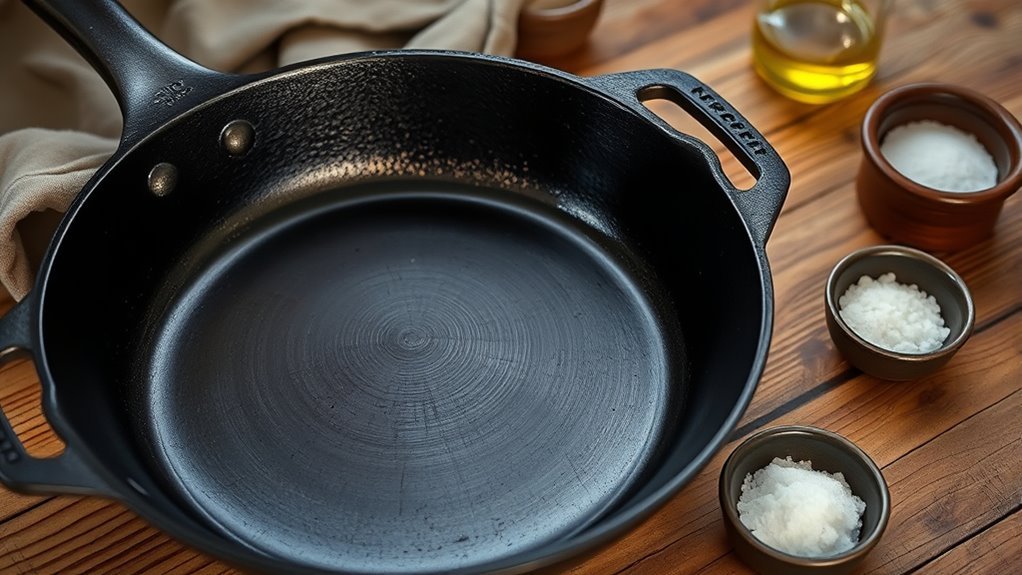
A seasoned cast iron skillet is more than just another cooking tool; it’s a culinary companion that enhances your kitchen experience. Seasoning involves a careful process of applying oil and heat, creating a natural nonstick surface that improves with use. Understanding this process is key to revealing its potential. Curious about how to achieve that perfect seasoning and the benefits it brings? Let’s explore the essential steps and common pitfalls to avoid.
How to Properly Season Your Cast Iron Skillet
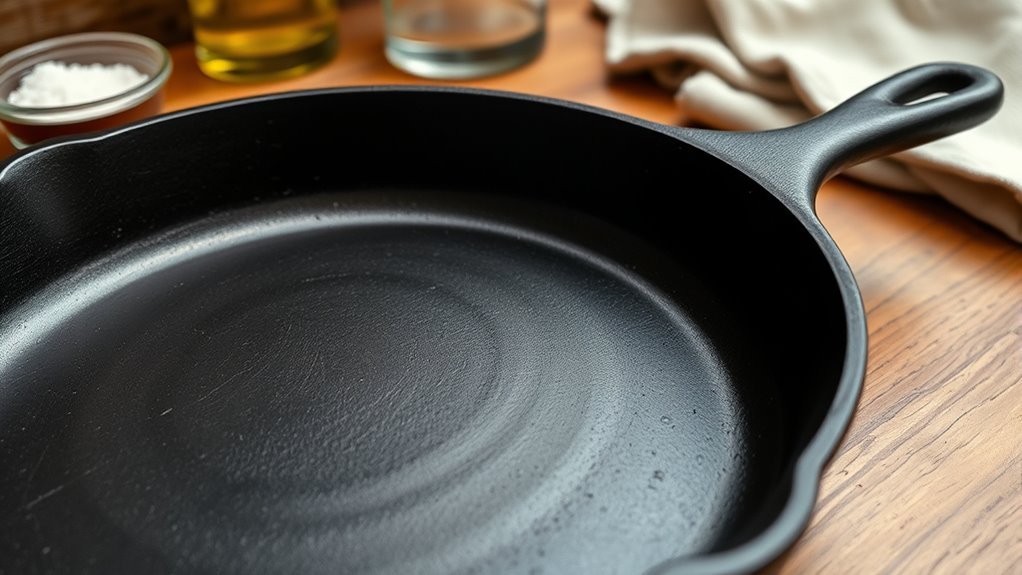
To properly season your cast iron skillet, start by giving it a thorough cleaning and drying.
Once it’s spotless, grab a high-smoke-point oil, like flaxseed or grapeseed. Apply a thin layer of oil to the entire surface, ensuring you coat the sides too.
Now, heat the skillet gradually on the stovetop or preheat your oven to 500°F. If using the oven, place the skillet upside down on the rack and put foil on the lower rack to catch drips.
This process creates a durable, non-stick surface through oxidation, forming a smooth, dark finish. Repeat the oil application and heating process until you achieve that beautiful layer of seasoning.
Remember, regular seasoning enhances this protective layer, boosting its non-stick properties and preventing rust.
After each use, lightly oil the skillet before storing it in a dry place to maintain that glorious seasoning.
Understanding the Concept of Seasoning in Cast Iron
Seasoning a cast iron skillet transforms it into a culinary powerhouse, creating a sleek, nonstick surface that elevates your cooking experience. This process involves applying cooking oil and heating the skillet, which ignites a chemical reaction.
As the fatty acids oxidize and rearrange, they form a durable layer that protects your skillet from rust while enhancing its nonstick properties.
Over time, a well-seasoned cast iron skillet can perform just as well as any nonstick frying pan, offering improved cooking performance and richer flavors in your dishes.
A well-seasoned cast iron skillet rivals any nonstick pan, enhancing cooking performance and enriching the flavors of your dishes.
Regular use and maintenance, including re-seasoning as needed, help build and strengthen this vital layer, ensuring your skillet remains in top shape.
Understanding seasoning is essential for the longevity of your cast iron skillet, allowing it to be cherished and passed down through generations with the right care, liberating you to explore endless culinary possibilities.
Benefits of Using a Seasoned Cast Iron Skillet
Using a seasoned cast iron skillet transforms your cooking experience with its naturally nonstick surface, making it perfect for delicate dishes like eggs and pancakes.
Over time, the seasoning layer not only boosts the skillet’s durability but also enhances its performance at high temperatures.
You’ll appreciate how this trusty tool improves the flavors of your meals while being easy to clean and maintain.
Enhanced Nonstick Performance
A well-seasoned cast iron skillet transforms your cooking experience with its impressive nonstick surface, which only gets better with each meal. This enhanced nonstick performance makes cooking a joy, allowing you to release food effortlessly.
- Perfect for frying, sautéing, and baking
- Forms a durable layer through the seasoning process
- Retains flavors and improves with regular use
- Safe for high temperatures and all cooking methods
- A timeless kitchen companion that can last generations
With a cast iron skillet, you’re not just cooking; you’re embracing freedom in the kitchen.
Enjoy the versatility and reliability that comes with this cooking essential, and watch your culinary creations flourish!
Increased Durability Over Time
The durability of a seasoned cast iron skillet is one of its standout features, making it a prized possession in any kitchen. Each time you use it, the robust seasoning develops a nonstick surface that enhances both cooking performance and flavor.
This layer, formed through the oxidation of fatty acids, acts as a protective barrier against rust, greatly extending your skillet’s life. Regular maintenance keeps that seasoning intact, allowing your cookware to withstand high temperatures without degradation.
With proper care, a well-seasoned skillet can last for generations, offering a sustainable alternative to less durable options. The strengthened surface improves heat retention and distribution, making your cooking more efficient over time.
Embrace this timeless piece of iron cookware and enjoy its lasting benefits!
Top Mistakes to Avoid When Seasoning Your Cast Iron Skillet
When seasoning your cast iron skillet, it’s easy to make a few common mistakes that can sabotage your efforts.
Over-oiling can lead to a sticky mess, while rushing the heating process might prevent that perfect, durable finish from forming.
Pay attention to these pitfalls to guarantee your skillet develops the nonstick surface you desire.
Common Seasoning Errors
While seasoning your cast iron skillet might seem straightforward, many common errors can hinder your efforts and lead to disappointing results. Avoid these pitfalls to guarantee your skillet shines with its nonstick frying capabilities:
- Overusing oil: A thick layer can create a sticky surface; stick to a thin, even coat.
- Skipping cleaning: Residual moisture encourages rust and weakens seasoning adhesion.
- Heating too quickly: Gradual heating promotes even seasoning, preventing cracks or peeling.
- Incorrect oven temperatures: Consistent high heat (around 500°F) is essential for ideal seasoning.
- Neglecting maintenance: Regular re-seasoning and proper cleaning keep your skillet’s nonstick properties intact.
Over-oiling Your Skillet
Over-oiling your skillet can sabotage your seasoning efforts, leading to a frustratingly sticky surface instead of the desired smooth, nonstick finish. To avoid this, always apply a thin layer of vegetable oil—about one tablespoon for the entire skillet.
Too much oil prevents proper bonding, resulting in pooling that leads to uneven cooking and compromised seasoning. Remember, seasoning is best done in multiple thin layers rather than one thick coat; this builds a stronger, more durable coating over time.
Keep an eye on your oil application and wipe off any excess before heating. By mastering this simple technique, you’ll enjoy a beautifully seasoned skillet, free from the hassle of constant re-seasoning. Embrace the freedom of effortless cooking!
Ignoring Temperature Guidelines
Seasoning your cast iron skillet requires more than just applying oil; it demands attention to temperature for perfect results. Ignoring temperature guidelines can sabotage your efforts, leaving you with a subpar pan. Here’s what to keep in mind:
- Aim for 350°F to 500°F for optimal seasoning.
- Preheat the skillet adequately to avoid uneven patches.
- Choose oils with high smoke points, like flaxseed or grapeseed oil.
- Don’t overheat; it can warp your skillet and damage the seasoning.
- Allow enough time for the oil to polymerize, creating a strong, durable layer.
How to Maintain Your Seasoned Skillet
To keep your seasoned cast iron skillet in top shape, focus on proper maintenance practices that guarantee its longevity and performance.
After each use, dry your frying pan completely to prevent rust. This step is essential! Before storing, apply a thin layer of vegetable oil to the inside surface; this not only maintains the seasoned patina but also keeps it ready for your next culinary adventure.
Avoid using metal utensils, as they can damage the seasoning. Instead, opt for wooden or silicone tools that respect your skillet’s surface.
Regular cooking with your skillet actually helps preserve the seasoning, enhancing its nonstick capabilities over time. If you notice the seasoning looking worn or dull, don’t hesitate to re-season it.
This simple act assures peak cooking performance, allowing your skillet to continue delivering delicious meals for years to come. Embrace these practices, and your skillet will reward you with flavor and joy!
What’s the Difference Between Preseasoned and Regular Cast Iron Skillets?
How do you choose between a preseasoned and a regular cast iron skillet? Understanding the differences helps you make an informed decision.
- Convenience: Preseasoned skillets come ready to use, saving you time.
- Seasoning Quality: Factory-applied seasoning is usually consistent, while homemade can be uneven.
- Learning Curve: Regular skillets require you to master the seasoning process, which can be tricky.
- Cost: Preseasoned options often start around $20, making them budget-friendly.
- Performance Check: Test the nonstick capabilities by frying an egg to verify your skillet is ready.
Preseasoned skillets offer immediate usability and ease, while regular skillets allow for customization but need more effort.
Choose based on your cooking needs and willingness to engage with the seasoning process!
Troubleshooting Sticking Issues With Your Seasoned Cast Iron Skillet
Even the best-seasoned cast iron skillets can sometimes have sticking issues, which can be frustrating when you’re trying to create a perfectly cooked meal.
If you notice food sticking, it might mean your seasoning layer isn’t enough or has worn down. Start by ensuring your skillet is properly preheated; a hot surface enhances its nonstick properties.
When frying, always use a thin layer of vegetable oil to create a protective barrier between your food and the skillet. For stubborn sticking, consider cooking foods with higher fat content, like bacon, to help rebuild that seasoning layer.
Regular maintenance is key—clean your skillet properly and re-season as needed to keep that smooth, nonstick surface.
How to Use Your Seasoned Skillet for Diverse Recipes
Release the full potential of your seasoned cast iron skillet by exploring its versatility in the kitchen. This trusty tool isn’t just for frying; it opens a world of culinary possibilities. Here’s how you can elevate your cooking:
- Fry up perfect eggs for breakfast.
- Sauté vibrant vegetables for a quick side.
- Sear meats to lock in flavor.
- Bake cornbread or cakes with a crispy crust.
- Create delicious pizzas right on the stovetop.
Understanding the ins and outs of using your skillet is essential. Regular high-heat cooking will help maintain and improve its seasoning.
Remember to clean and care for it properly—hot water and a brush are your best friends, no soap needed. Avoid metal utensils to protect that precious surface.
With these simple guidelines, your seasoned skillet will be your go-to for diverse recipes, turning every meal into a celebration.
Frequently Asked Questions
Do I Have to Do Anything to a Pre-Seasoned Cast Iron Skillet?
You don’t have to do much with a pre-seasoned cast iron skillet right away, thanks to its pre-seasoned benefits. Just give it a quick wash, dry it thoroughly, and you’re ready to cook!
For maintenance, apply a thin layer of oil before storing to keep that beautiful seasoning intact. If food starts to stick, don’t worry—just follow some re-seasoning tips, and your skillet will be as good as new!
What Is the Difference Between Raw Cast Iron and Seasoned Cast Iron?
What’s the secret to effortless cooking? The difference between raw and seasoned cast iron lies in their surfaces.
Raw cast iron demands significant cast iron maintenance, often leading to food sticking and rust. In contrast, seasoned cast iron boasts a baked oil layer that enhances cooking performance, providing a natural nonstick surface.
With regular use, it even improves over time, making each meal a flavorful experience. Embrace the joy of cooking with seasoned cast iron!
How Do You Know Your Cast Iron Is Seasoned?
You’ll know your cast iron’s seasoned when it boasts a smooth, dark finish with a slight sheen.
Try frying an egg; if it glides effortlessly, you’re in good shape!
For skillet maintenance, keep an eye out for sticking food or rancid odors, which signal it’s time to re-season.
Regular use and proper seasoning techniques strengthen that protective layer, ensuring your skillet remains a reliable cooking companion for years to come.
What Is the Point of Seasoning a Cast Iron Skillet?
Seasoning a cast iron skillet is like giving it a protective armor. The point is to create a natural non-stick surface that enhances flavor and prevents rust.
With proper maintenance tips, such as regular oiling and avoiding soap, you’ll enjoy a longer-lasting pan.
Seasoning benefits include easier food release and improved cooking performance, turning your skillet into a trusted companion for generations.
Embrace this process, and liberate your cooking experience!
Conclusion
In the dance between heat and flavor, your seasoned cast iron skillet becomes both canvas and brush. While it gleams with promise, the care you invest transforms it into a culinary masterpiece. Embrace its quirks and quirks alike, for a well-seasoned skillet not only elevates your dishes but also tells a story of countless meals shared. So, whether you’re frying, baking, or sautéing, let your skillet be the heart of your kitchen, where tradition meets innovation.