
You might think All-Clad cookware is dishwasher safe, but recent updates suggest otherwise. Concerns about corrosion and performance issues have prompted a shift in recommendations. While you may be tempted to toss your pans in the dishwasher for convenience, the potential risks could undermine their quality. Understanding the best care practices is essential for maintaining your investment. So, what’s the best way to guarantee your All-Clad cookware stays in top condition?
Are All-Clad Pans Really Dishwasher Safe?
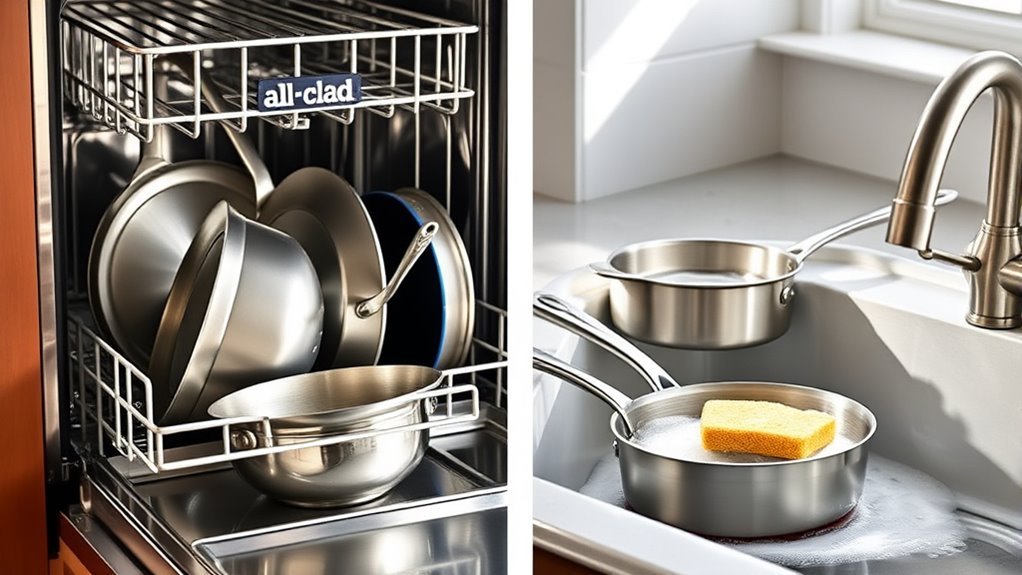
Are All-Clad pans really dishwasher safe? While All-Clad once promoted its stainless steel cookware as dishwasher safe, safety concerns have since prompted a shift in this message.
Reports of corrosion on bonded rims emerged after dishwashing, leading the company to remove the “dishwasher safe” label from its packaging. Instead of redesigning the pans or using different materials, All-Clad opted to focus on minimizing liability.
This means you should reconsider tossing your pans in the dishwasher. Over time, dishwashing can expose sharp edges due to corrosion, potentially leading to injuries.
For the longevity and safety of your All-Clad cookware, hand washing is now the recommended approach. It’s essential to scrutinize product claims and prioritize your safety and the performance of your pans.
Embracing hand washing can liberate you from the risks associated with dishwashing, ensuring your All-Clad pans stay in excellent condition.
What Are the Risks of Using the Dishwasher for All-Clad Cookware?
While you might think using a dishwasher for your All-Clad cookware is convenient, the risks far outweigh the benefits.
Dishwashing can lead to corrosion on bonded rims, creating sharp edges that may cause injuries. The removal of the “dishwasher safe” label from All-Clad packaging highlights serious concerns about durability.
Furthermore, washing non-stick pans in the dishwasher can greatly diminish their longevity, causing them to fail sooner than expected. Consumer experiences consistently show that improper cleaning methods, such as using a dishwasher, can damage cookware and impair its effectiveness over time.
Washing non-stick pans in the dishwasher significantly shortens their lifespan, risking damage and reduced effectiveness over time.
To guarantee your All-Clad remains in top condition, regular hand washing is the best practice. This method not only preserves the quality and performance of your cookware but also extends its lifespan considerably.
Best Hand Washing Practices for Your All-Clad Pans
To keep your All-Clad pans in pristine condition, hand washing is vital. Start by using warm, soapy water and a soft sponge to gently clean the surface. This prevents scratches and helps maintain the high-quality finish.
After washing, rinse thoroughly to eliminate any soap residue, as leftover soap can affect the taste of future meals.
For stubborn food residues, don’t fret—simply soak the pans in warm water before gently scrubbing. Avoid abrasive cleaners, steel wool, or harsh scouring pads, as these can damage the stainless steel finish over time.
Once you’ve finished washing, dry your All-Clad pans immediately with a soft cloth. This step is important to prevent water spots and keep them shiny.
How to Maintain the Longevity of Your Cookware
To keep your All-Clad cookware in top shape, focus on proper washing techniques and careful storage.
Hand washing with mild dish soap and a soft sponge will help prevent damage, while stacking with cloth or paper towels can avoid scratches.
Additionally, be mindful of temperature changes to prevent warping, ensuring your cookware lasts for years to come.
Proper Washing Techniques
Maintaining the longevity of your All-Clad cookware starts with proper washing techniques that guarantee its integrity and performance. Here are essential tips to keep your cookware in top shape:
- Hand wash with warm, soapy water to prevent damage to bonded rims and surfaces.
- Avoid abrasive cleaners and scouring pads; they scratch the surface and diminish performance.
- Dry immediately after washing to prevent water spots and potential corrosion.
- Use wooden or silicone utensils for non-stick variants to avoid scratches.
While it’s tempting to toss your All-Clad in the dishwasher, hand washing is your best bet for preserving its quality.
Adopting these techniques allows you to fully enjoy your cookware’s exceptional performance for years to come.
Storage and Care Tips
Proper storage and care can greatly extend the life of your All-Clad cookware. To keep your pans in pristine condition, hand wash them with warm, soapy water, avoiding the dishwasher to prevent corrosion.
For storage, stack your cookware with protective layers like paper towels or cloths to prevent scratches. Regularly check and clean the bonded rims to eliminate buildup, ensuring safe cooking.
When using utensils, opt for silicone, wood, or plastic to avoid damaging the surface. Finally, always make sure your cookware is fully dried after washing to prevent water spots, preserving its shine and durability.
How to Address Damage in Your All-Clad Cookware
If you notice common types of damage in your All-Clad cookware, like corrosion or sharp edges, it’s essential to act quickly.
You’ll want to weigh your options between repair and replacement, depending on the severity of the issue.
Regular inspections and proper care can help prevent these problems, ensuring your cookware remains in top shape.
Common Types of Damage
All-Clad cookware can suffer from several types of damage that may compromise its performance and appearance. Understanding these issues can help you protect your beloved pans.
Common types of damage include:
- Dulling of surfaces: This affects food release and cooking efficiency.
- Sharp edges from corrosion: These can be dangerous and impact handling.
- Discoloration: This diminishes the aesthetic appeal, making your pans look worn.
- Reduced lifespan: Improper cleaning methods, like using the dishwasher, accelerate wear.
To address these concerns, always hand wash your All-Clad cookware with mild soap and a soft sponge.
Regular maintenance, including careful handling and proper storage, can greatly mitigate damage, ensuring your pans remain in top shape for years to come.
Repair vs. Replacement
While maintaining your All-Clad cookware, you might face the dilemma of whether to repair or replace damaged items. For minor scratches, a gentle abrasive cleaner can be effective, but always follow All-Clad’s care instructions. However, if you notice corrosion or sharp edges, contact All-Clad for repair guidance instead of attempting DIY fixes.
Here’s a quick reference to help you decide:
| Damage Type | Repair Option | Replacement Need |
|---|---|---|
| Minor scratches | Use gentle abrasive cleaner | N/A |
| Corrosion | Contact All-Clad for advice | Yes, if severe |
| Sharp edges | Seek professional repair | Yes, due to safety risk |
| Discoloration | Clean per guidelines | N/A |
| Structural issues | N/A | Yes, if compromised |
Regular hand washing can prevent future damage, keeping your cookware in excellent condition.
Preventative Care Tips
To keep your All-Clad cookware in top shape, proactive care is essential. Here are some preventative care tips to maintain its integrity:
- Always hand wash your cookware with warm, soapy water to avoid corrosion, especially around bonded rims.
- Regularly inspect for signs of wear like discoloration or rough edges; discontinue use if damage appears.
- For stains or discoloration, use a non-abrasive cleaner designed for stainless steel to restore its shine.
- Address minor scratches by gently polishing with a stainless steel cleaner to preserve your pan’s surface.
Dishwasher vs. Hand Washing: Which Is Better for All-Clad?
How do you decide between using a dishwasher and hand washing your All-Clad cookware? While the convenience of a dishwasher is tempting, hand washing is generally the better choice for maintaining your pans’ quality.
| Method | Pros |
|---|---|
| Dishwasher | Convenience, saves time |
| Hand Washing | Preserves quality, prevents corrosion |
Many users report that hand washing with hot, soapy water helps maintain the professional-grade cooking performance of All-Clad. Although some pans were once marketed as dishwasher safe, corrosion and damage have led to a shift in recommendations. Regular hand washing not only extends the life of your cookware but also helps avoid dulling of surfaces, a common issue in dishwashers. Ultimately, if you want your All-Clad to last, hand washing is the way to go.
User Experiences With All-Clad Dishwasher Safety?
What do users really think about washing All-Clad cookware in the dishwasher? The consensus is clear: it’s best to skip the dishwasher for the sake of your All-Clad. Here’s what many users have experienced:
- Damage Risk: Users report that bonded rims can wear down, leading to sharp edges over time.
- Quality Preservation: Hand washing greatly enhances the cookware’s longevity and maintains its pristine appearance.
- Corrosion Concerns: Many noted that dishwasher use leads to corrosion and a dull finish, affecting performance.
- Non-Stick Wear: All-Clad’s non-stick options lose their effectiveness faster when exposed to harsh dishwasher conditions.
Frequently Asked Questions
Can I Put My Stainless Steel Pans in the Dishwasher?
You shouldn’t put your stainless steel pans in the dishwasher. While it might seem convenient, doing so can lead to corrosion and sharp edges that could be dangerous.
For proper stainless steel care, stick to hand washing with hot, soapy water and a non-abrasive sponge. This simple routine helps maintain the quality and longevity of your cookware, ensuring it stays in great shape for years to come.
Did All-Clad Have a Lawsuit About Their Dishwasher-Safe Cookware?
Yes, All-Clad did have a lawsuit about their dishwasher-safe cookware.
The lawsuit detailed issues with corrosion on bonded rims, leading to sharp edges that caused injuries. This legal trouble culminated in a $4 million settlement in 2023, prompting All-Clad to remove the “dishwasher safe” label from their packaging.
While they didn’t redesign their pans, this incident highlighted the importance of being cautious with cookware and understanding its limitations.
What Brand Is Better Than All-Clad?
When comparing brands, Cuisinart often stands out as a more affordable alternative to All-Clad, offering similar quality with its tri-ply construction.
If you’re looking for non-stick options, T-fal is a great choice for easy cleaning and effective heat distribution.
For those who appreciate enameled cast iron, Le Creuset excels in heat retention and style.
Ultimately, your choice depends on your cooking needs and budget, so explore these brands for the best fit.
Why Shouldn’t Aluminum Pans Go in the Dishwasher?
You shouldn’t put aluminum pans in the dishwasher due to aluminum reactivity with harsh detergents, which can cause discoloration and dullness.
The high heat and water pressure can warp the pans, affecting their shape and cooking efficiency.
Additionally, the dishwasher can strip protective coatings, increasing the risk of rust and corrosion.
To maintain their finish and longevity, it’s best to hand wash aluminum cookware with mild soap and warm water.
Conclusion
In the end, treating your All-Clad cookware with care is like nurturing a fine wine; it only gets better with time when properly handled. While the allure of the dishwasher is tempting, the risks of corrosion and diminished performance are real. By choosing to hand wash your pans, you’ll preserve their quality and extend their lifespan. So, remember to wash gently, rinse thoroughly, and dry immediately to keep your All-Clad cookware performing at its best.