
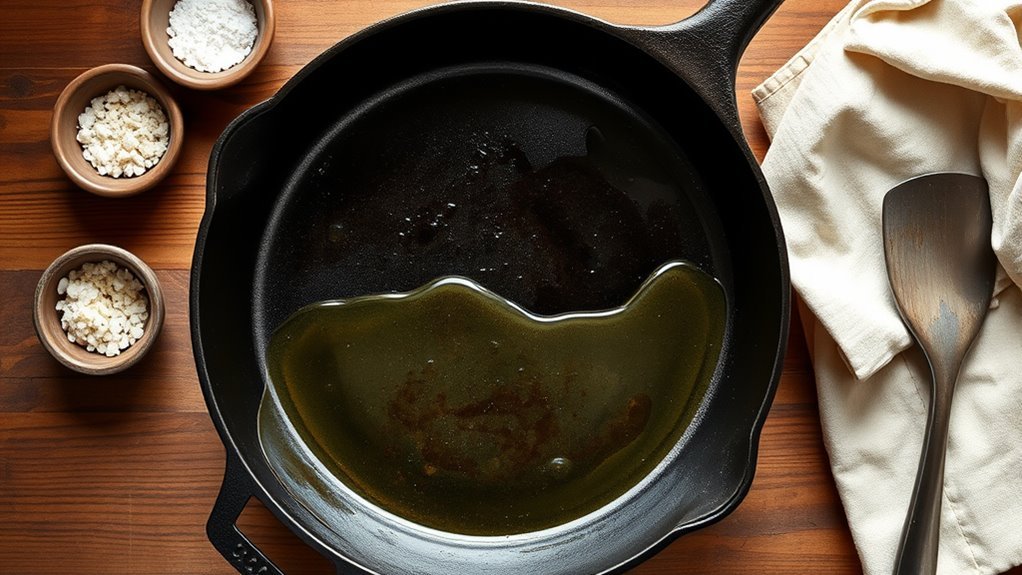
Do you have to season a cast iron skillet? It depends on the pan. A pre-seasoned skillet can be used right away, but a bare, vintage, rusty or stripped skillet needs seasoning before you cook in it. Any skillet may need re-seasoning later if the surface wears down.
When Do You Need to Season Cast Iron?
| Your pan | Season it? |
|---|---|
| New and labeled pre-seasoned | No. Start cooking and keep it oiled |
| New and labeled unseasoned or bare | Yes, before first use |
| Vintage or thrifted pan | Usually yes, after cleaning off rust or residue |
| Rusty pan | Yes, after removing the rust |
| Seasoned but dull or sticky | Re-season, or keep cooking with oil to build it up |
Why Seasoning Matters
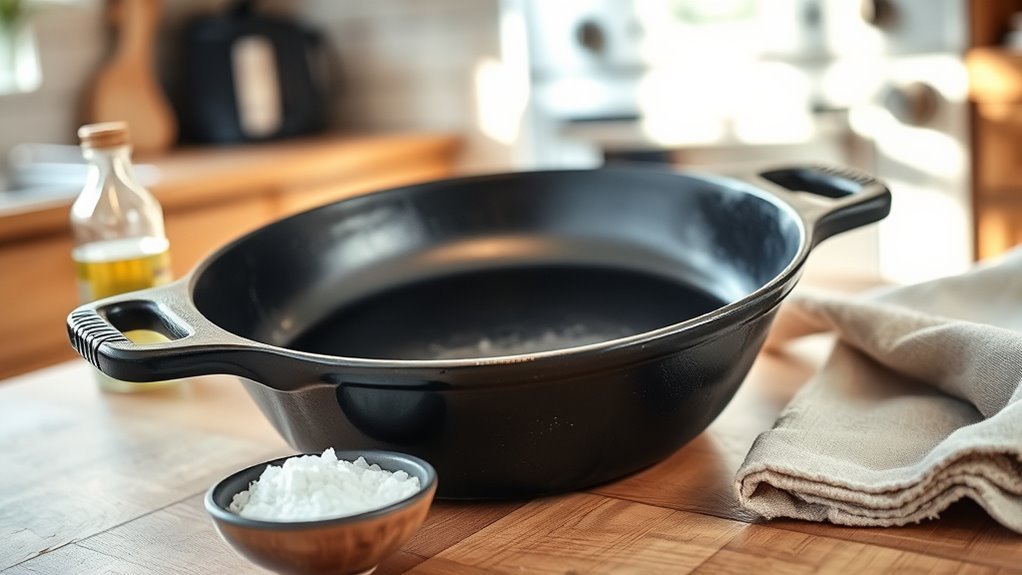
Seasoning is a thin layer of baked-on oil that protects iron from rust and helps food release. Without it, bare cast iron is rough, reactive and prone to rust. If you are unsure what it is, see what a seasoned cast iron skillet is.
Lodge notes that its pans are seasoned with baked-on vegetable oil at the foundry and that new pieces do not need home seasoning. Other brands vary, so check the instructions that came with your pan.
Signs Your Skillet Needs Seasoning
- Orange or reddish rust spots
- A dull, gray or patchy surface
- Food sticking more than it used to
- Flaking or peeling black bits
- A rough, dry feel after washing
How to Season a Cast Iron Skillet in the Oven
This follows the method Lodge publishes for oven seasoning.
- Wash the pan with warm water and a little mild soap, then dry it completely. If it is rusty, scrub the rust off first with steel wool.
- Rub a very thin coat of oil over the whole pan, inside, outside and the handle. Wipe it with a clean cloth until it looks almost dry. It should not drip if you tilt it.
- Heat the oven to 450 to 500 degrees Fahrenheit. Put foil on the bottom rack to catch drips.
- Place the pan upside down on the center rack and bake for 1 hour.
- Turn the oven off and let the pan cool inside.
For a tougher surface, repeat the process. Several thin coats work better than one thick one.
Which oil should you use?
Use a neutral cooking oil that can handle the oven temperature, such as vegetable, canola or grapeseed oil. Flaxseed oil is popular, but some cooks find it can flake, so there is no single right answer. What matters most is a very thin, even coat.
Common Seasoning Mistakes
- Too much oil: leaves a sticky, blotchy surface. Wipe it nearly dry.
- Too low a temperature: oil must go past its smoke point to harden.
- Skipping the drying step: moisture causes rust.
- Skipping ventilation: oven seasoning can smoke, so run the vent fan.
How to Keep the Seasoning Going
After cooking, wash gently, dry the pan well and wipe a thin film of oil on the surface. Regular cooking with oil builds seasoning on its own. Follow our steps for after cooking or the full cast iron care guide.
Frequently Asked Questions
Do you have to season a new cast iron skillet?
Not if it is sold pre-seasoned. Many brands, including Lodge, bake on a seasoning layer at the factory and say home seasoning is not required before first use. Bare, vintage or stripped pans do need seasoning before you cook in them.
What happens if you do not season cast iron?
A bare skillet rusts easily, food sticks and the surface looks dull or orange. It is not dangerous in itself, but the pan is harder to cook with and to clean. Rust can be scrubbed off and the pan re-seasoned.
How often should you season a cast iron skillet?
There is no fixed schedule. Cooking with oil builds seasoning over time, so most people only oven-season when the pan looks dull, rusts, flakes or food starts sticking. Wiping a thin film of oil after each wash is enough day to day.
Can you use cooking spray to season cast iron?
It can work in a thin coat, but aerosol sprays may leave a sticky residue if applied heavily. A very thin wipe of regular cooking oil is usually more reliable. Lodge sells its own seasoning spray for oven seasoning.
Does soap remove seasoning?
Mild dish soap in small amounts will not strip a well-built seasoning, according to Lodge. Soaking, harsh scouring, long acidic simmers and the dishwasher do more damage. Always dry the pan fully and re-oil it.
Conclusion
You do not have to season a pre-seasoned skillet before using it, but you will need to season bare, vintage or rusty pans, and to refresh any pan whose surface wears down. A thin coat of oil, high heat and regular use are all it takes.
