
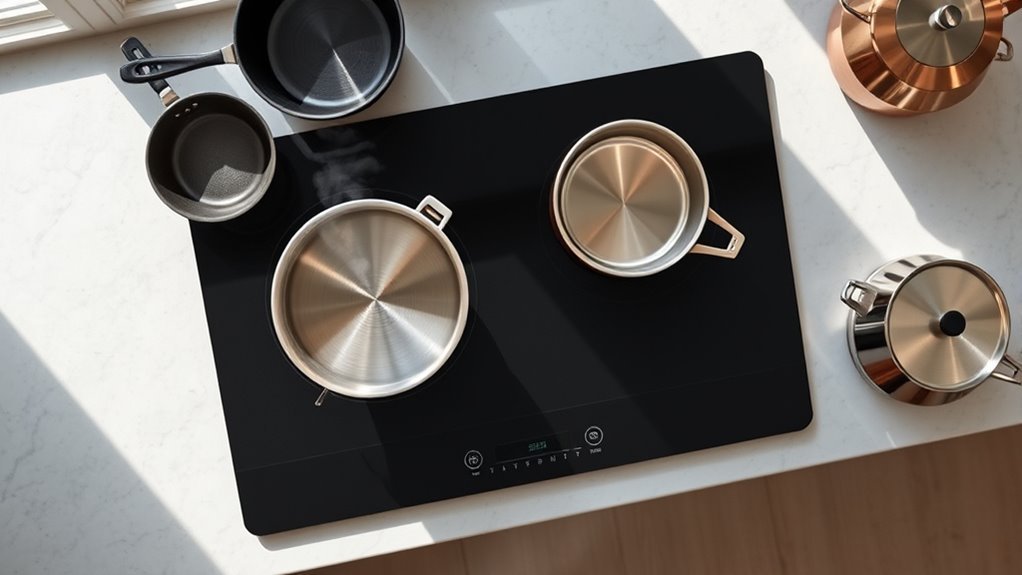
The pots that can be used on induction cookers are the ones with a magnetic base: cast iron, enameled cast iron, enameled steel, carbon steel and magnetic stainless steel. Glass, ceramic, pure copper and plain aluminum pots will not heat. Use the table below for a quick answer, then check your own pot with a magnet.
This page is the quick-reference version. For the full guide, see what cookware to use for an induction cooker.
Quick Table: Pots for Induction Cookers
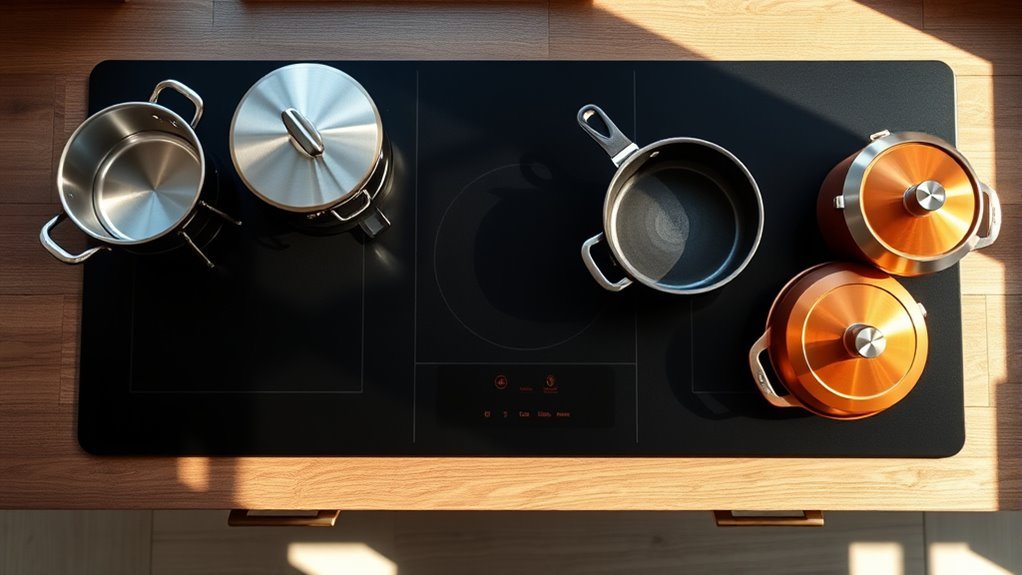
| Pot material | Works on induction? | Good for |
|---|---|---|
| Cast iron | Yes | Stews, braising, searing |
| Enameled cast iron | Yes | Soups, sauces, slow cooking |
| Magnetic stainless steel | Yes | Everyday boiling and simmering |
| Multi-ply stainless (aluminum or copper core) | Yes, if outer base is magnetic | Even heating, sauces |
| Enameled steel | Yes | Large stockpots, canning pots (check base) |
| Aluminum with steel base plate | Yes | Lightweight pots |
| Plain aluminum | No | Gas or electric only |
| Copper (no magnetic layer) | No | Gas or electric only |
| Glass, ceramic, stoneware | No | Oven or other cooktops |
Prices vary by brand and size. Check the current listing before buying and confirm that the manufacturer says the base is induction compatible.
Pros and Cons of Each Pot Material on Induction
Cast iron and enameled cast iron
Pros: strongly magnetic, holds heat, lasts for years. Cons: heavy, slow to change temperature, and rough bare iron can scratch the glass if dragged. Enameled versions need gentle handling to avoid chipping.
Stainless steel
Pros: lighter, easy to clean, and widely labeled for induction. Cons: quality varies, and cheaper pots with a thin base disc may heat unevenly or hum. For layers and what they mean, see what 5-ply stainless steel is.
Enameled steel
Pros: light for its size and good for large stockpots. Cons: the enamel can chip if knocked, and some pots have rims that are not magnetic. Check the base.
Aluminum and copper pots
Pros: excellent at spreading heat. Cons: they only work on induction when the maker adds a magnetic layer or plate to the base.
How to Identify Induction-Compatible Pots
- Stick a magnet to the base. A firm hold means the pot should work.
- Look for the word “induction” or a coil-shaped symbol on the base or packaging.
- Check that the base is flat and sits fully on the surface.
- Match the base size to your cooking zone, as cooktops can need a minimum base diameter. Your manual lists it.
Our step-by-step guide to telling if a pot is induction ready covers this in detail.
Tips for Using Pots on Induction
- Start at medium heat and adjust, because induction responds quickly.
- Center the pot on the cooking zone.
- Lift pots rather than sliding them across the glass.
- Use a base close to the size of the zone for the best efficiency.
- Do not use a pot with a warped base.
Frequently Asked Questions
What kind of pots are safe to use on an induction cooktop?
Pots with a magnetic base are safe and effective on induction: cast iron, enameled cast iron, enameled steel, carbon steel and magnetic stainless steel. Multi-layer stainless pots with an aluminum or copper core also work when the outer base layer is magnetic. Always check the base with a magnet.
Can I use an aluminum pot on an induction cooker?
Not on its own. Aluminum is not magnetic, so a plain aluminum pot will not heat. Some aluminum pots have a stainless steel or iron plate bonded into the base, and those do work. Look for an induction label or test the base with a magnet.
Can I use a stainless steel stockpot on induction?
Often, but check it. Many stainless stockpots have a magnetic disc or layer in the base, while some thin or all-304 pots do not respond. If a magnet sticks firmly to the bottom, the pot should heat. If it only clings weakly, performance may be poor.
What pots should not be used on induction?
Avoid pots made only of glass, ceramic, stoneware, copper, or plain aluminum, because they have nothing magnetic to heat. Also avoid warped pots and round-bottom woks, which cannot sit flat on the glass. Check that the base is also a suitable size for your cooking zone.
Do pot lids matter on induction?
Lids do not need to be magnetic, because only the base is heated. A well-fitting glass or stainless lid works fine. Check the maker’s rating for temperature limits if you also use the pot in the oven.
Conclusion
Magnetic-base pots are the ones that work on induction. If you are unsure about a pot, a quick magnet test will tell you. For choosing between pans, read what induction compatible pans are.
