Decorating kitchen cabinets works best when style and function are planned together. Door shape, paint or wood finish, hardware, glass fronts, open shelving, lighting, storage, and the space above the cabinets all affect how the kitchen looks and works. The goal is not to add more decoration everywhere, but to choose a few changes that make the cabinetry feel more useful, balanced, and personal.
Quick Answer
To decorate kitchen cabinets well, coordinate five things: door style, color or wood finish, hardware, display areas, and storage. Keep permanent elements durable, then add personality with pulls, glass fronts, open shelves, lighting, or above-cabinet decor. For 2026, natural materials, smarter storage, and restrained palettes are especially current.
Key Takeaways
- Start with the cabinet door style and finish before choosing decorative hardware.
- Painted cabinets need proper cleaning, surface preparation, compatible primer, and enough drying and curing time.
- Use open shelving and glass fronts selectively so display areas do not become visual clutter.
- Pull-outs, deep drawers, dividers, corner systems, and ceiling-height cabinetry can improve storage when they remain easy to reach.
- Never enclose a microwave, wine cooler, or other appliance based only on the presence of a vented cabinet door; follow the appliance manufacturer’s installation requirements.
Decide What to Change First
Before buying paint, pulls, trim, or new doors, decide how much of the cabinetry actually needs to change. A kitchen with sound cabinet boxes and dated hardware may need only new knobs or pulls. Cabinets with a finish that is worn but structurally solid may be good candidates for repainting. If the door style itself looks wrong for the room, replacing or refacing the doors can create a larger visual change without automatically replacing every cabinet box.
A full cabinet replacement makes more sense when boxes are damaged, swollen, poorly laid out, difficult to access, or unable to support the storage and appliances the kitchen now needs. Separating cosmetic problems from structural or layout problems prevents a simple decorating project from becoming unnecessarily expensive.
Choose a Kitchen Cabinet Style
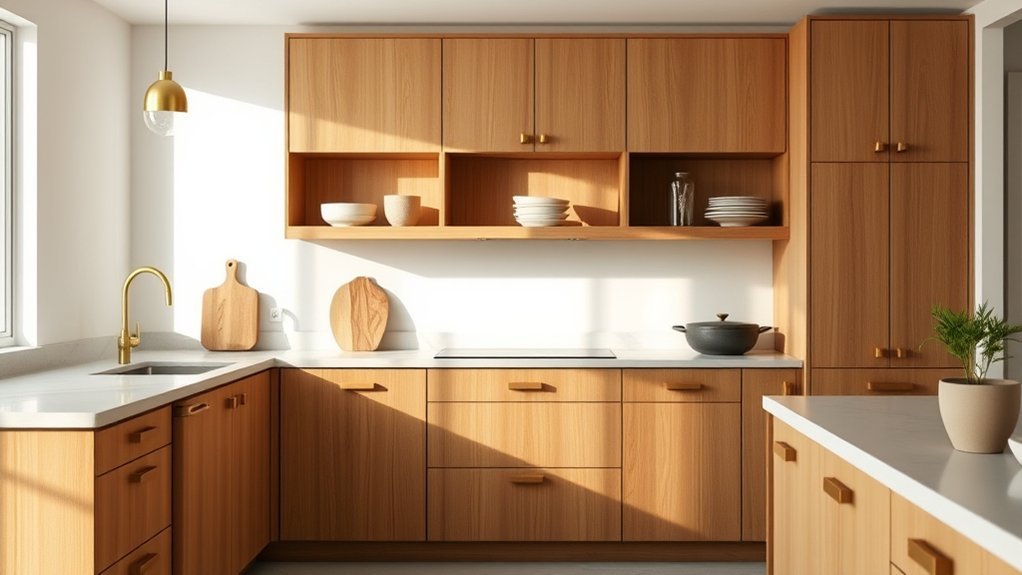
Choosing a kitchen cabinet style sets the visual direction for the room. The best choice should fit the architecture of the home, the amount of detail elsewhere in the kitchen, and the level of maintenance the homeowner is comfortable with.
Shaker cabinets use a recessed center panel and simple frame. Their straightforward geometry works in traditional, transitional, and many contemporary kitchens. Flat-panel or slab cabinets have fewer visual breaks, making them useful when a cleaner, more modern look is wanted.
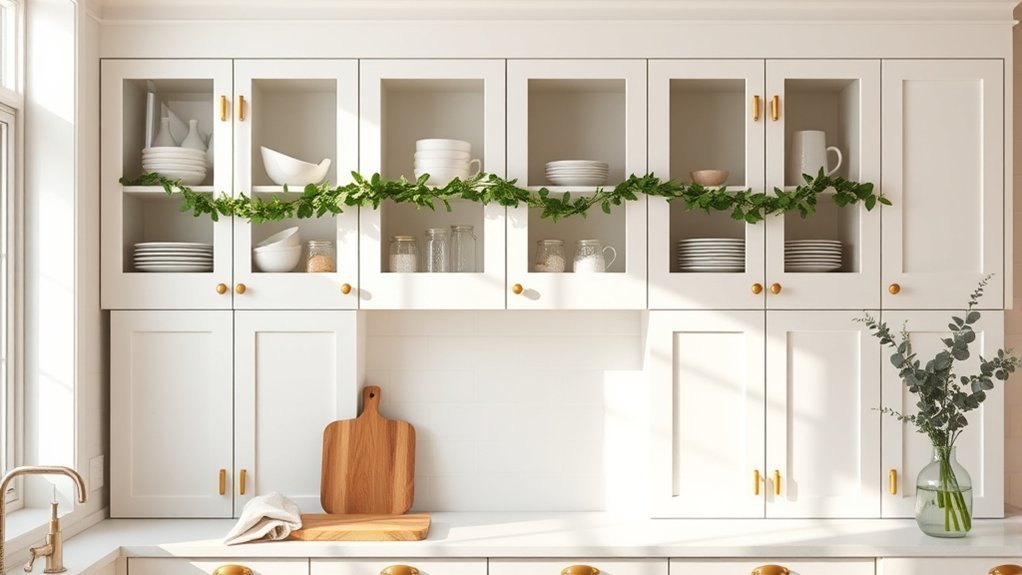
Glass-front cabinets lighten a wall of cabinetry and turn selected dishes or glassware into part of the room’s decor. Raised-panel cabinets add more molding and depth, which suits kitchens with traditional architectural details. Rustic cabinet designs emphasize wood grain, texture, knots, or hand-finished surfaces.
Do not choose a door profile in isolation. Compare it with the countertop edge, backsplash pattern, flooring, appliance style, and trim. If several of those elements are already detailed, a simpler door can keep the kitchen from feeling busy.
Paint Kitchen Cabinets the Right Color
Color changes the visual weight of cabinetry. Whites, creams, pale grays, and other light finishes can make a dark or compact kitchen appear brighter because more light is reflected around the room. Navy, charcoal, forest green, and other deeper colors add contrast and can work especially well on base cabinets, islands, or large kitchens with adequate light.
Benjamin Moore’s ADVANCE is one current paint formulated for surfaces including cabinets, doors, and trim. Its manufacturer describes it as a waterborne alkyd that cures to a hard finish. Current product specifications list a 16-hour recoat interval for common interior formulations, so cabinet painting should be treated as a multi-day job rather than a one-afternoon makeover.
| Choice | Typical Effect | Best Consideration |
|---|---|---|
| White | Bright, crisp, timeless | Useful where more reflected light is wanted |
| Off-white | Soft, warm, adaptable | Works with warmer stone, wood, or flooring |
| Deep blue or navy | Grounded, high-contrast | Good for islands, lower cabinets, or bright rooms |
| Higher sheen | More reflective | Can highlight surface imperfections |
| Lower sheen | Softer, less reflective | Check that the chosen cabinet coating remains washable |
Prepare Cabinets Before Painting
The paint color matters less if the surface preparation is poor. Remove doors, drawers, and hardware where practical. Clean grease and cooking residue thoroughly, repair damaged areas, and scuff or sand the existing finish as required by the coating manufacturer. Glossy surfaces usually need more preparation than dull, well-bonded finishes.
Use a compatible primer where the paint system calls for one, especially over bare wood, repaired areas, difficult stains, or surfaces with questionable adhesion. Apply thin, even coats and respect the specified recoat time. Avoid reinstalling hardware or stacking freshly coated doors before the finish has developed enough hardness for normal use.
Pro Tip: Paint a sample board or the back of one removable door before committing to the whole kitchen. Check the color in morning light, evening light, and under the kitchen’s artificial lighting because undertones can change noticeably.
Try Two-Tone Kitchen Cabinets
Two-tone kitchen cabinets create contrast by dividing the cabinetry into two related finishes. The most familiar arrangement uses lighter upper cabinets and darker lower cabinets, although an island can also carry the contrasting color while perimeter cabinetry stays consistent.
The combination works best when both finishes connect to something already in the room, such as the countertop veining, backsplash, flooring, hardware, or nearby furniture. Without that connection, two colors can look accidental rather than intentional.
Color Contrast Balance
A balanced contrast changes how the cabinetry is visually weighted. Pale upper cabinets can keep a wall from feeling too heavy, while a darker base creates a grounded lower line. In a kitchen with plenty of daylight, deeper colors can also be used more broadly without making the room feel dim.
Neutral cabinetry can support a stronger island color, while stained wood can be paired with paint to introduce material variation rather than relying on two paint colors. Limit the number of dominant finishes so the countertop, backsplash, hardware, and flooring still read as part of one composition.
Upper And Lower Harmony
Upper and lower cabinetry can use different tones while still feeling connected. Light uppers often reduce visual heaviness at eye level, while darker bases are useful where a stronger visual foundation is wanted.
- Choose finishes that relate to the countertop and backsplash.
- Use contrast to define an island, beverage zone, or base-cabinet run rather than changing colors randomly.
- Repeat at least one color or material elsewhere in the room so the contrast has a visual anchor.
The strongest two-tone schemes usually rely on one dominant finish and one supporting finish instead of giving every cabinet run equal visual competition.
Choose Cabinet Hardware That Pops
Cabinet hardware is one of the fastest ways to update plain doors. Matte black, brass, bronze, chrome, nickel, and stainless finishes can all work, but the finish should relate to the cabinet color and nearby fixtures rather than being selected only because it is currently popular.
Scale matters as much as finish. Wide drawers generally accommodate longer pulls, while narrow doors often look better with smaller hardware. Before drilling new holes, hold sample hardware against the actual door or drawer front and check how it feels in the hand.
Bold Knob Finishes
A strong hardware finish creates useful contrast. Matte black stands out clearly on pale doors, while brass or bronze can warm white, green, blue, or dark-stained cabinetry. Oversized knobs and sculptural pulls can become focal points, but they should not interfere with adjacent doors or drawers.
- Match the visual weight of the hardware to the size of the door or drawer.
- Check projection so a pull does not strike a wall, appliance, neighboring handle, or cabinet front.
- Test the grip before buying a full set, especially in a kitchen used by children, older adults, or anyone with limited hand strength.
Mixed Metal Accents
Mixed metals can work when each finish has a clear role. For example, cabinet hardware may be brass while the faucet and appliances use stainless steel. Repeating each finish at least once elsewhere helps the mix look deliberate.
Two dominant metal families are usually easier to coordinate than several unrelated finishes. Also consider surface character: brushed metal hides fingerprints differently from highly polished metal, which matters on frequently handled cabinet hardware.
Sized-to-Scale Pulls
Pull placement should follow the door and drawer proportions rather than one universal measurement. Shaker doors are commonly aligned with their rails and stiles, while slab doors allow more freedom. Drawer pulls should be centered consistently unless the design intentionally uses another alignment.
- Use a hardware template or jig so repeated holes line up accurately.
- Check the grip position for the people who use the kitchen rather than relying only on appearance.
- Open adjacent doors, drawers, appliances, and corner cabinets before drilling to confirm that handles will not collide.
NKBA cabinetry guidance also emphasizes hardware that can be used without excessive wrist twisting or a tight grasp. Comfort and safe operation matter just as much as symmetry.
Mix Open Shelving and Closed Cabinets
A thoughtful mix of open shelving and closed cabinets can make a kitchen feel lighter while preserving practical storage. Open shelves are best for attractive items that are used often enough to stay reasonably clean, such as everyday plates, bowls, mugs, cookbooks, or frequently used serving pieces.
Closed cabinets are better for mismatched food packages, small appliances, cleaning supplies, bulky cookware, and anything that creates visual clutter. Combining the two lets display storage remain decorative without sacrificing the ability to hide ordinary kitchen equipment.
To keep open shelves controlled, repeat a limited palette of materials or colors and leave some empty space between groups. A shelf filled edge-to-edge usually reads more like overflow storage than intentional display.
Add Glass, Fluted, or Vented Fronts
Glass, fluted glass, and decorative vented fronts can break up a long run of solid doors, but each option serves a different purpose.
Clear glass puts the contents on display, making it best for organized dishware, glassware, or collections. Fluted or reeded glass introduces texture and partially obscures what is stored behind the door, which can reduce the pressure to keep every shelf perfectly styled.
When glass is used in cabinet doors, specify glazing suitable for cabinet use. NKBA cabinetry guidance states that glass inserts should use tempered glass or an approved equivalent.
Vented cabinet fronts may be used where a cabinet or product design specifically calls for airflow, but the decorative door itself does not determine whether an appliance can be enclosed.
Warning: Do not enclose a microwave, wine cooler, beverage center, refrigerator, or other heat-producing appliance simply because the cabinet has louvers or vent holes. Use an appliance approved for the intended installation and follow its exact clearance, electrical, and ventilation instructions. Different models can require very different air clearances.
- Use clear glass where displayed pieces can stay orderly.
- Choose fluted or reeded glass when texture and partial concealment are more useful.
- Use decorative ventilation only where it is compatible with the appliance or equipment manufacturer’s installation requirements.
Build Smarter Kitchen Cabinet Storage
Smarter cabinet storage starts by making frequently used items easy to see and reach. Full-extension drawers, pull-out shelves, tray dividers, narrow organizers, and deep drawers reduce the need to reach into the back of a cabinet.
Vertical dividers can keep baking sheets, trays, and cutting boards upright instead of stacked. Shallow drawers work well for utensils and smaller tools, while deeper drawers can hold cookware, mixing bowls, or food-storage containers.
Corner cabinets are easier to use when fitted with an appropriate rotating or pull-out system. Tall pantry cabinets can use drawers or pull-outs below eye level and shelves higher up where contents remain visible from the front. Blum’s current pantry guidance uses this same principle to improve visibility and access in tall storage.
Storage should also match the workflow. Keep pots and cooking tools near the range, everyday dishes near the dishwasher, prep tools near the primary work surface, and waste or recycling near the cleanup zone when the layout allows it.
Add Cabinet Lighting
Lighting is both decorative and functional. Under-cabinet lighting brightens work surfaces, while interior lighting can make glass-front cabinets easier to use and more visually prominent. The NKBA 2026 Kitchen Trends research found strong interest in both under-cabinet and interior-cabinet lighting among surveyed industry professionals.
Keep the light color consistent with the rest of the room. Very cool cabinet lighting can clash with warm pendants or recessed lighting, while mismatched color temperatures can make cabinet paint and countertops appear different from one area to another.
Hide strips, wiring, and individual light points where possible so the effect comes from the illuminated surface rather than visible hardware. For hardwired systems, electrical work should meet applicable local requirements.
Take Kitchen Cabinets to the Ceiling
Taking kitchen cabinets to the ceiling can maximize vertical storage and eliminate the exposed ledge that collects dust above standard-height upper cabinets. The highest shelves are best for seasonal serving pieces, specialty appliances, or other items that are rarely needed.
NKBA’s 2026 kitchen-trend research identifies storage maximization, including floor-to-ceiling cabinetry and increased drawer storage, as a major direction in current kitchen design.
- Keep everyday dishes and ingredients within comfortable reach.
- Reserve the highest shelves for lightweight, infrequently used items.
- Use crown molding, a filler, or carefully fitted cabinetry to create a finished transition at the ceiling.
Ceiling-height cabinetry is not mandatory in every kitchen. Very high ceilings can make the uppermost storage impractical, and some rooms benefit visually from leaving breathing space above the cabinets. Choose the approach that fits the room’s proportions and realistic storage needs.
Decorate Above Kitchen Cabinets Without Creating Clutter
If upper cabinets stop below the ceiling, the exposed ledge can either remain empty or become a display area. Leaving it empty is often the easiest choice in small kitchens or rooms where the backsplash, countertops, and shelves already contain many visual elements.
When decorating the space, use fewer, larger pieces instead of rows of small objects. Woven baskets, ceramic vessels, framed art, vintage containers, sculptural pieces, or low-maintenance greenery can work when their scale suits the height of the gap.
Leave negative space between groups. Decor should not block vents, interfere with cabinet doors, sit close to heat sources, or make routine cleaning difficult. Anything placed high above the cabinets will collect cooking dust and grease, so washable surfaces are more practical than fragile or highly textured items in a busy kitchen.
Note: Above-cabinet decor is optional. If the room already has statement lighting, patterned tile, open shelves, or strong cabinet colors, leaving the upper gap mostly empty can create better visual balance.
Finish Cabinets With Decorative Details
Decorative details can make standard cabinetry look more architectural. Crown molding visually finishes the top of upper cabinets, while fluted trim, end panels, furniture-style feet, and decorative toe kicks can reinforce traditional or transitional styling.
Glass inserts introduce display space without converting an entire wall to open shelving. Unique hardware can provide another layer of detail, especially on otherwise plain cabinet fronts.
Open shelving or glass-front interiors can also use a contrasting painted back, removable wallpaper, or an appropriate decorative panel to introduce pattern. Keep these accents limited to selected areas so the effect remains intentional.
Avoid Common Cabinet Decorating Mistakes
- Using too many finishes: Cabinet paint, wood, countertops, backsplash, hardware, fixtures, and flooring all compete for attention when too many strong materials are combined.
- Painting without proper preparation: Grease, glossy finishes, loose coatings, and inadequate curing can shorten the life of a new paint job.
- Choosing hardware by appearance alone: A beautiful pull can still be uncomfortable or interfere with adjacent cabinetry.
- Overfilling glass cabinets or shelves: Display storage needs negative space to look intentional.
- Making upper storage inaccessible: Extra storage is not useful if frequently needed items require an unsafe reach.
- Ignoring appliance instructions: Cabinet openings, ventilation, electrical supply, and clearances must match the exact appliance being installed.
- Following trends too literally: Trend reports are useful for ideas, but cabinet finishes are long-lived. Choose materials that suit the room and the people using it.
Frequently Asked Questions
What are the cabinet trends for 2026?
NKBA’s 2026 Kitchen Trends Report points toward neutral and nature-inspired palettes, wood grain, smarter storage, minimal detailing, slab-style doors, integrated lighting, and floor-to-ceiling storage. In its survey of 634 North American kitchen-industry professionals, 96% selected neutrals as popular colors, followed by greens at 86% and blues at 78%. Wood grain was also identified as growing in popularity, with white oak leading the listed wood choices.
How can plain kitchen cabinets look more expensive?
Start with consistent hardware, a well-prepared paint or stain finish, and carefully fitted trim. Adding crown molding, finished end panels, selected glass inserts, under-cabinet lighting, or a contrasting island can also make basic cabinetry feel more customized. Avoid adding every detail at once; clean alignment and good proportions usually matter more than ornament.
What can I put on top of kitchen cabinets for decor?
Use a small number of larger pieces such as woven baskets, ceramic vessels, framed art, vintage containers, trays, or low-maintenance greenery. Choose items that can be cleaned easily and leave empty space between groups. Keep decor away from appliance ventilation, heat sources, and anything that needs service access.
How should I decorate above kitchen cabinets in 2026?
Use restraint rather than filling the entire ledge. Larger baskets, pottery, art, or greenery in a limited color palette work better than many small objects. Current kitchen design is also emphasizing cleaner storage and natural materials, so leaving part or all of the space empty can be just as effective as decorating it.
Can I mix metal finishes on kitchen cabinets?
Yes. Mixing two coordinated metal finishes can keep a kitchen from looking overly matched. Give each finish a clear role, such as brass cabinet hardware with stainless appliances and faucet components, and repeat the finishes so the combination looks deliberate.
Should kitchen cabinets go all the way to the ceiling?
Ceiling-height cabinets are useful when additional storage is worth the cost and the highest shelves can be used safely for infrequent items. They also eliminate the dust-catching ledge above conventional upper cabinets. In rooms with very high ceilings, however, a shorter cabinet run may be more practical and visually proportionate.
Conclusion
Well-decorated kitchen cabinets do more than hold dishes and cookware. Door style, color, hardware, storage, glass, lighting, trim, and display areas all influence how the kitchen feels and functions. Start with the permanent choices, then add decorative details selectively. The most successful cabinet updates are not the ones with the most features; they are the ones that make the kitchen easier to use while giving the room a clear, consistent identity.
Sources
- National Kitchen & Bath Association (NKBA | KBIS), 2026 Kitchen Trends Report and press release — supports current cabinet colors, materials, slab-door, storage, lighting, and floor-to-ceiling cabinetry trends.
- National Kitchen & Bath Association, Cabinetry & Casework Planning guidance — supports cabinet accessibility, hardware ergonomics, safe door operation, and tempered or equivalent glazing guidance.
- Benjamin Moore, ADVANCE Interior Paint product specifications and cabinet-repainting guidance — supports cabinet suitability, waterborne alkyd formulation, recoat guidance, surface preparation, and curing considerations.
- Whirlpool, over-the-range microwave installation guidance — supports following model-specific electrical, mounting, clearance, and ventilation requirements.
- GE Appliances, wine and beverage center specifications — demonstrates that appliance ventilation and air-clearance requirements vary by model and installation type.
- Blum, SPACE TOWER pantry planning guidance — supports full-extension pull-outs, visibility, flexible drawer placement, and accessible tall-cabinet storage.