
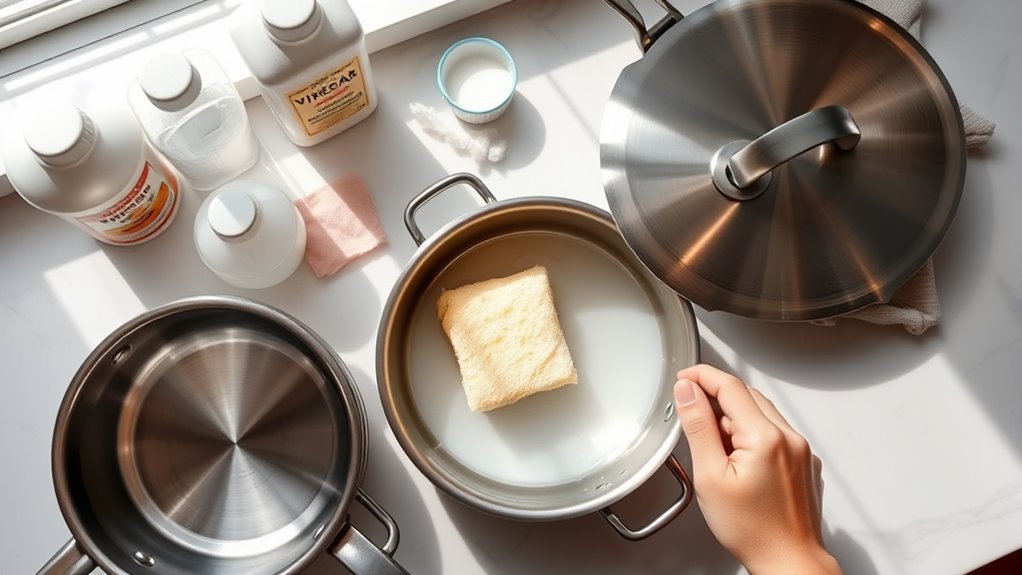
Did you know that with proper care, stainless steel cookware can last a lifetime? Maintaining its shine and functionality isn’t as challenging as it seems. You’ll find that a few simple practices can enhance its performance and appearance. From daily cleaning routines to effective stain removal techniques, understanding these essentials will keep your cookware in top shape. Curious about the best ways to preheat and store your pieces? Let’s explore further.
Essential Tips for Maintaining Stainless Steel Cookware
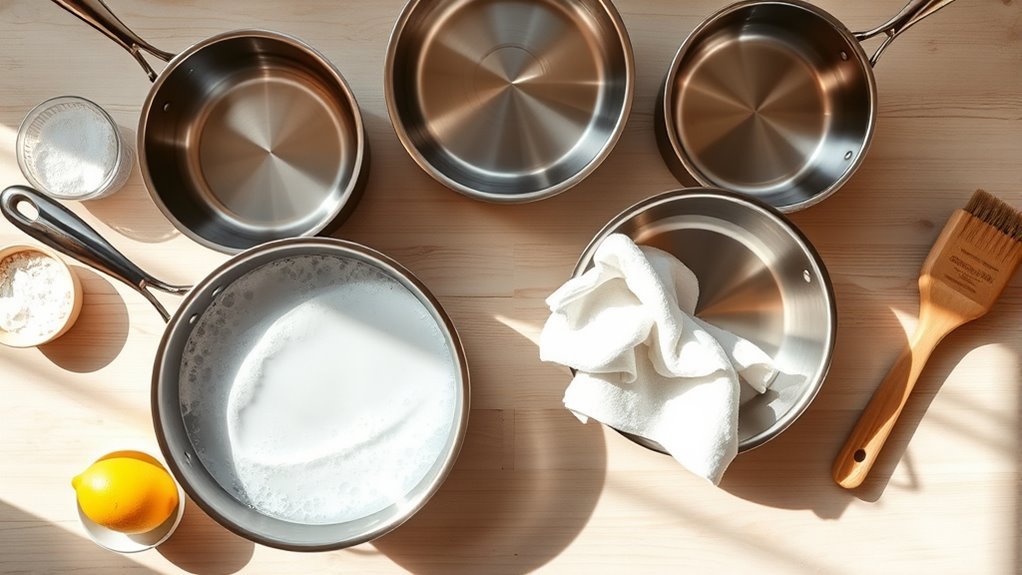
When it comes to maintaining stainless steel cookware, following a few essential tips can make all the difference. First, always preheat your pans over medium-low heat before adding oil; this minimizes sticking and enhances performance.
Maintaining stainless steel cookware is simple: preheat over medium-low heat to minimize sticking and enhance performance.
For proper cleaning, avoid dishwashers and opt for handwashing with warm, soapy water and a soft sponge. This helps preserve the cookware’s finish and prevents warping.
After cooking, practice immediate cleaning to prevent food residue buildup. If tough stains appear, use gentle cleaning products like Bar Keepers Friend or a baking soda paste to tackle them without damaging the surface.
Finally, store your stainless steel cookware in a dry place, using soft cloths or paper towels between stacked items to prevent scratches. By following these tips, you’ll guarantee your cookware stays in top condition, ready to liberate your culinary creativity!
Daily Cleaning Routine for Optimal Performance
To keep your stainless steel cookware in top shape, it’s essential to establish a daily cleaning routine.
Start by gathering essential cleaning tools like a soft sponge and gentle dish soap.
Following a few simple steps will help prevent residue buildup and maintain the cookware’s shine.
Essential Cleaning Tools
Maintaining stainless steel cookware relies on a few essential cleaning tools that guarantee peak performance.
To keep your cookware in top shape, make sure you have these on hand:
- Soft sponge: Use a fresh, non-abrasive Scotch-Brite pad for daily cleaning to avoid scratching the surface.
- Stainless Steel Cleaner: Incorporate Bar Keepers Friend for tougher stains, ensuring you minimize contact time to prevent discoloration.
- Cleaning gloves: Always wear gloves when using harsher cleaners to protect your skin.
Routine Cleaning Steps
A daily cleaning routine is essential for keeping your stainless steel cookware in prime condition. After each use, wash your pans with warm water and gentle dish soap to prevent food residue buildup and maintain their finish.
Tackling stubborn stains promptly helps make maintenance easier. Rinse thoroughly to eliminate any soap residue, which can alter the flavor of your food.
Once clean, dry your cookware completely with a clean towel to avoid water spots. For tougher stains, create a paste of baking soda and vinegar, let it sit, then scrub gently with a non-abrasive sponge.
This simple routine will keep your cookware looking great and performing at its best, allowing you to enjoy your culinary creations without worry.
Effective Techniques to Remove Stubborn Stains
Stubborn stains on stainless steel cookware can be frustrating, but effective solutions are at your fingertips. Here are three techniques to restore your cookware’s shine:
- Baking soda and water paste: Mix baking soda and water to form a paste. Apply it to the stain, let it sit for a few minutes, then scrub gently with a non-abrasive sponge.
- Vinegar and water mixture: For hard water spots, combine equal parts vinegar and water. Apply the solution to the stain and wipe clean for a polished finish.
- Boiling baking soda solution: Fill the pan with equal parts water and baking soda, then bring it to a boil. This method helps lift stubborn burnt-on food in about 15 to 30 minutes.
Always rinse thoroughly after cleaning to eliminate residue and dry completely to prevent further staining.
With these techniques, you’ll keep your stainless steel cookware looking pristine!
Common Issues With Stainless Steel Cookware and How to Fix Them
Even the best stainless steel cookware can face common issues like heat discoloration, water spots, and stubborn residue.
Fortunately, you can easily tackle these problems with a few simple techniques.
Let’s explore effective solutions to keep your cookware looking and performing its best.
Common Stains and Residue
While stainless steel cookware is celebrated for its durability and performance, common stains and residue can sometimes mar its appearance. Here’s how to tackle them:
- Water spots: Caused by mineral deposits, these can be easily wiped away with a vinegar solution or gentle dish soap.
- Burnt food: Fill your pan with a water and baking soda mix, bring it to a boil, then let it cool before scrubbing for easier cleanup.
- Stubborn residue: Create a paste using baking soda and water to lift food particles without scratching the surface.
Heat Discoloration Solutions
If you’ve ever noticed rainbow stains on your stainless steel cookware, you’re likely dealing with heat discoloration, which occurs from overheating. Don’t worry; you can easily fix this! For routine cleaning, use a mixture of baking soda and water or a specialized stainless steel cleaner. To prevent future issues, always preheat pans over medium-low heat and test with water droplets before adding oil. Here’s a quick reference table for your convenience:
| Problem | Solution | Prevention |
|---|---|---|
| Heat discoloration | Baking soda paste | Preheat on medium-low |
| Severe discoloration | Boil water and vinegar | Avoid high temperatures |
| Stubborn stains | Stainless steel cleaner | Immediate post-use cleaning |
| Regular stains | Baking soda and water scrub | Use lower heat settings |
| General maintenance | Clean after every use | Store properly to avoid damage |
Water Spot Removal Techniques
After tackling heat discoloration, you might still encounter another common issue: water spots. These pesky marks result from mineral deposits in hard water, but don’t worry; you can easily restore your cookware’s shine.
Here are some effective removal techniques:
- Vinegar solution: Mix equal parts vinegar and water, let it sit on the spots for a few minutes, then wipe with a soft cloth.
- Baking soda paste: Combine baking soda and water to form a paste. Apply it to the spots and gently scrub to lift the deposits.
- Warm soapy water: Regularly clean your cookware with warm, soapy water and dry immediately to prevent future water spots.
Avoid using abrasive scrubbers; they can scratch your stainless steel and worsen the appearance of those water spots.
Preheating and Cooking Tips for Stainless Steel
To achieve the best results with your stainless steel cookware, preheating is essential. Always preheat your pan over medium-low heat for even cooking and to minimize sticking.
Test the temperature by flicking a few drops of water onto the surface—if they dance, the pan’s ready. Never heat empty pans excessively, as this can warp and discolor them.
Once your pan is preheated, introduce oil to create a natural non-stick surface. This not only enhances browning but also boosts flavor development.
When you’re cooking, opt for wooden, silicone, or plastic utensils to keep your cookware clean and free from scratches.
If you’re preparing acidic foods like tomatoes, limit their exposure time to prevent pitting.
How to Store Stainless Steel Cookware Properly
Properly storing your stainless steel cookware can greatly extend its lifespan and maintain its pristine condition. To guarantee you’re doing it right, follow these key tips:
- Always make sure your cookware is completely dry before storage to prevent moisture buildup and rusting.
- Use a soft cloth or paper towel between stacked pans to avoid scratches and preserve surface integrity.
- Store your cookware in a well-ventilated area, allowing for air circulation to deter moisture accumulation.
Avoid placing heavy items on top of your stainless steel pans, as this can lead to warping and damage.
Additionally, keep them away from direct sunlight to preserve their finish and prevent discoloration over time.
Signs It’s Time to Replace Your Stainless Steel Cookware?
Even the best stainless steel cookware has its limits, and knowing when to replace it is vital for maintaining your kitchen’s efficiency.
Look out for signs like pitting or corrosion; if you notice these, the protective layer is compromised, making replacement critical for safety.
Be vigilant for pitting or corrosion; these indicate a compromised protective layer, making timely replacement essential for your safety.
Excessive discoloration that won’t budge after cleaning is another red flag, indicating your cookware may have deteriorated beyond repair.
Rust formation is a clear sign of degradation; if rust appears despite proper care, it’s time to let go.
Additionally, a warped base can lead to uneven cooking, which affects your culinary results.
Finally, if the handles become loose and can’t be securely tightened, safety is at risk.
Don’t ignore these signs—upgrading your cookware guarantees you’ll keep enjoying cooking without compromise.
Expert Tips for Enhancing the Longevity of Cookware
Maintaining the integrity of your stainless steel cookware is essential for both safety and performance. To enhance the longevity of your cookware, follow these expert tips:
- Hand-wash your cookware with warm, soapy water and a soft sponge. Avoid dishwashers to protect the finish.
- Preheat pans over medium-low heat before adding oil. This minimizes sticking and prevents warping.
- Store your cookware in a dry place, placing soft cloths between stacked pans to prevent scratches.
For tougher stains, mix baking soda with water to make a paste. Let it sit for a few minutes, then scrub gently with a non-abrasive sponge.
Frequently Asked Questions
What Are Common Mistakes When Cleaning Stainless Steel?
When cleaning stainless steel, avoid common mistakes like using harsh cleaning products or abrasive scrubbing techniques, as they can damage the surface.
For effective stain removal, stick to gentle soap and a soft sponge.
Don’t forget maintenance tips: let your pans cool before washing and add salt only after water’s boiled to prevent pitting.
Handwashing is best; it preserves the cookware’s finish and keeps it looking great for years to come.
Is It Okay to Use Dawn Dish Soap on Stainless Steel?
Yes, it’s perfectly fine to use Dawn dish soap on stainless steel. Its effectiveness in cutting through grease makes it an excellent choice for safe cleaning methods.
Just mix a small amount with warm water and use a soft sponge for routine cleaning. This practice not only helps maintain the cookware’s shine but also enhances its longevity.
Remember to rinse thoroughly to avoid any soap residue—it’s a simple tip for effective cookware maintenance!
What Do Chefs Use to Clean Stainless Steel?
Chefs often turn to stainless steel cleaners like Bar Keepers Friend or a simple baking soda paste for tough stains.
For the best scrubbing tools, opt for non-abrasive sponges to protect the surface.
Regularly washing your cookware after each use keeps it in top shape, while boiling a baking soda solution can tackle stubborn residue.
Incorporating these cooking tips into your routine will enhance your maintenance frequency and keep your stainless steel shining bright.
Why Is My Stainless Steel Pan Brown After the First Use?
Your stainless steel pan’s brown discoloration after the first use likely stems from heat damage, caused by high cooking temperatures.
This oxidation reveals the chromium oxide layer, and cooking oil residue can exacerbate the issue. To prevent this, use proper seasoning techniques and avoid excessive heat.
For a quick fix, mix baking soda with water to lift those brown marks. Regular cleaning after each use will help maintain your pan’s shine.
Conclusion
By following these simple maintenance tips, you can extend the life of your stainless steel cookware for years. Did you know that with proper care, stainless steel can last over 100 years? That’s right! Regular cleaning, careful preheating, and smart storage will keep your pots and pans performing at their best. So, embrace these practices and enjoy cooking with cookware that not only looks great but also stands the test of time. Happy cooking!

