
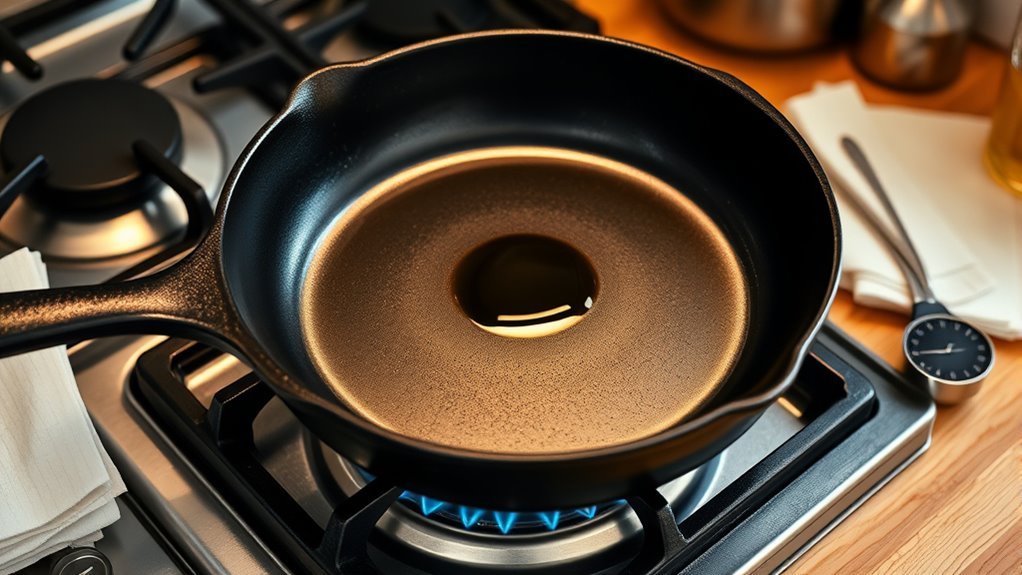
Seasoning a cast iron skillet is like nurturing a garden; it requires patience and attention to detail. You’ll want to focus on timing, as each layer of oil needs just the right amount of heat to transform your pan into a culinary powerhouse. But how do you know when you’ve hit that sweet spot? Understanding the signs of proper seasoning can make all the difference in your cooking experience. Let’s explore what you need to know.
How to Properly Season Cast Iron on the Stove?
When you want to season your cast iron skillet on the stove, start by applying a thin layer of oil, like flaxseed or grapeseed, to the pan’s surface.
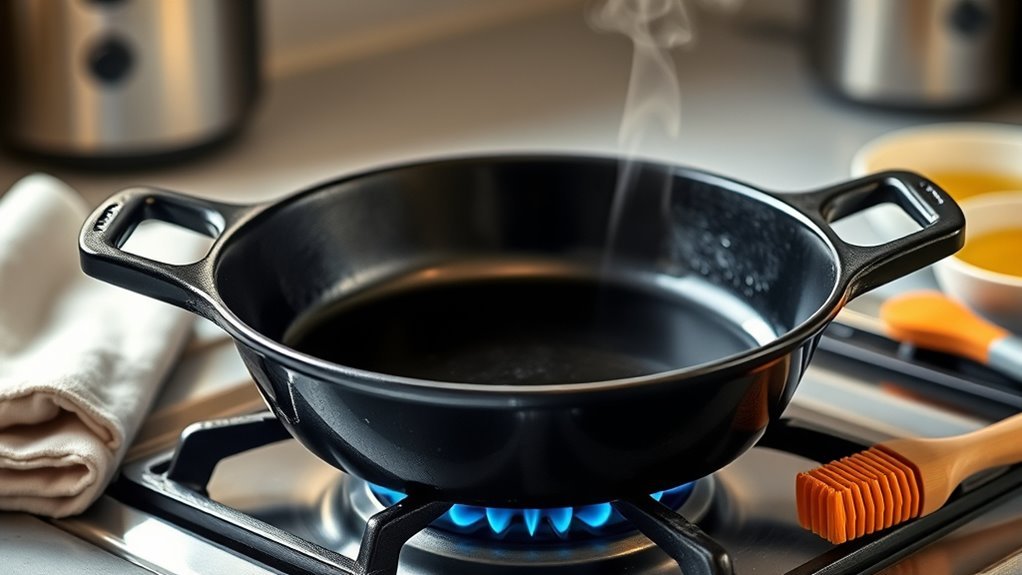
Wipe off any excess to prevent pooling, ensuring an even distribution. Next, heat the skillet on high until it begins to smoke, which usually takes about 5-10 minutes. This smoking indicates that the oil is bonding to the metal, an essential step in the seasoning process.
Once you see smoke, turn off the heat and let the skillet cool completely; this allows for polymerization, forming a protective layer that enhances its non-stick cooking abilities.
For best results, repeat this process 2-3 times, building additional layers of seasoning. Regularly seasoning your cast iron after use helps maintain its non-stick surface and prevents rust, ensuring you enjoy well-seasoned cast iron for years to come.
Signs Your Cast Iron Pan Is Properly Seasoned
After seasoning your cast iron skillet on the stove, it’s important to recognize the signs that indicate your pan is properly seasoned. A well-seasoned pan boasts a smooth, glossy black surface, free from rust or flaking.
A well-seasoned cast iron skillet features a smooth, glossy black surface, free from rust and flaking.
When you cook, you’ll notice that food releases easily, showcasing the successful polymerization of oil layers during the seasoning process. If water beads up instead of spreading on the surface, that’s a clear sign your layer of seasoning is intact and effective.
Additionally, you won’t detect any metallic taste or odor while cooking, confirming that the seasoning is well established. Over time, regularly cooking with fats will further enhance this robust nonstick surface.
Keep an eye out for these signs your cast iron pan is ready to elevate your culinary creations!
Essential Techniques and Oils for Seasoning Cast Iron
Seasoning your cast iron skillet effectively hinges on a few essential techniques and the right oils. Start with cooking oils that have high smoke points, like flaxseed, grapeseed, or canola oil. These oils polymerize beautifully at high temperatures, bonding to your skillet.
To season cast iron on the stove, apply a thin layer of oil, then heat the pan on high until it starts to smoke. This process encourages ideal adhesion. Remember to wipe off any excess oil; too much can pool and disrupt even seasoning.
For the best results, repeat this stovetop seasoning several times. Each cycle builds a robust, nonstick surface, enhancing durability and performance.
Embrace these best practices, and you’ll liberate your cast iron skillet into a reliable kitchen ally, ready for any culinary adventure!
What to Watch Out For When Seasoning Your Pan
Achieving a perfectly seasoned cast iron pan requires vigilance and attention to detail. You’ll want to keep an eye on several key factors during the process:
| What to Watch For | Significance |
|---|---|
| Oil begins to smoke | Indicates ideal polymerization temp |
| Shiny, slick appearance | Shows successful seasoning layers |
| Excess oil | Leads to sticky residue, not nonstick |
| Flaking or peeling | Signals improper bonding; needs more seasoning |
| Dull or rusty appearance | Time to reseason for protection |
Monitor the heat closely, aiming for around 400°F (204°C) to 450°F (232°C) to achieve that shiny finish. Remember, a thin layer of oil is essential; too much can ruin your hard work. If you notice any issues, don’t hesitate to reseason. Your pan’s nonstick properties depend on it!
How to Keep Your Cast Iron Seasoned and Ready
Keeping your cast iron skillet in top shape isn’t just about the initial seasoning; it’s an ongoing commitment that rewards you with a reliable cooking companion.
To maintain those precious layers of seasoning, regularly cook with vegetable oils or fats, enriching the cooking surface. After each use, clean your skillet with hot water and a stiff brush—skip the soap to preserve that hard-earned seasoning.
Regularly cook with vegetable oils to enrich your cast iron skillet, and always clean with hot water and a stiff brush to preserve seasoning.
If your skillet looks dull or rusty, don’t fret. Simply apply a thin layer of oil and heat it on the stovetop until it smokes, promoting polymerization that strengthens the surface.
Store your skillet in a well-ventilated area, and consider placing a paper towel inside to absorb moisture and prevent rust, especially after cooking acidic foods.
Frequently Asked Questions
How Do I Know When My Cast Iron Is Seasoned Enough?
You’ll know your cast iron’s seasoned enough when it has a smooth, shiny surface and a consistent dark color.
Test its nonstick quality with an egg; if it slides easily, you’re on the right track.
Keep an eye out for dull patches or sticking food—those are signs you need to season more often.
Use best oils like flaxseed or canola, and remember to troubleshoot any issues to avoid common mistakes during maintenance.
Can I Cook Immediately After Seasoning Cast Iron?
You shouldn’t cook immediately after seasoning cast iron. While the allure of a sizzling surface tempts you, waiting lets the seasoning bond properly.
Think pre-seasoning techniques and oil selection tips—these matter! A light seasoning after cleaning can help maintain the surface.
Store it well and embrace maintenance routines. You’ll guarantee that cooking remains a liberating experience, not one marred by flaking or uneven layers.
Your cast iron deserves this care!
Should I Season Cast Iron at 350 or 450?
You should season cast iron at 450°F. This temperature guarantees better polymerization of oils, creating a durable nonstick surface. Choose oils with high smoke points, like canola or grapeseed.
While stovetop methods can work, the oven provides a more uniform heat. For maintenance, you can use 350°F, but avoid common mistakes like skipping oil selection.
Season regularly to keep your cookware in top shape and enjoy its liberation in your culinary adventures!
What Ruins Cast Iron Seasoning?
To keep your cast iron seasoning intact, avoid common seasoning mistakes.
Using harsh cleaning methods like dish soap or steel wool can strip away your seasoning. Pay attention to oil types; low smoke point oils can break down at high temperatures, leading to flaking.
Always dry your pan thoroughly to prevent rust, and watch for over seasoning signs.
Regular maintenance tips include reapplying a thin oil layer after each use for ideal protection.
Conclusion
As you finish seasoning your cast iron skillet, imagine the rich, glossy surface gleaming under a warm kitchen light, ready to embrace your favorite dishes. With each layer, you’ve built a resilient bond, ensuring effortless food release and that coveted nonstick charm. By nurturing your skillet with care and love, you’re not just cooking; you’re crafting memories. Embrace the process, and let your skillet become a cherished companion in your culinary adventures.
