
The best string trimmers under $100 in 2027 include the WORX WG163 for cordless convenience, the BLACK+DECKER BESTA510 for corded power, the BLACK+DECKER BESTE620 for a lighter 14-inch option, the Greenworks 40V for stronger battery performance, and the Glenvera 20V for long runtime and easy handling. Each offers solid cutting ability, useful line feed features, and manageable weight. The right choice depends on yard size, power needs, and trimming style, with more details ahead.
WORX 20V 12″ 2-in-1 Cordless String Trimmer & Electric Lawn Edger, WG163
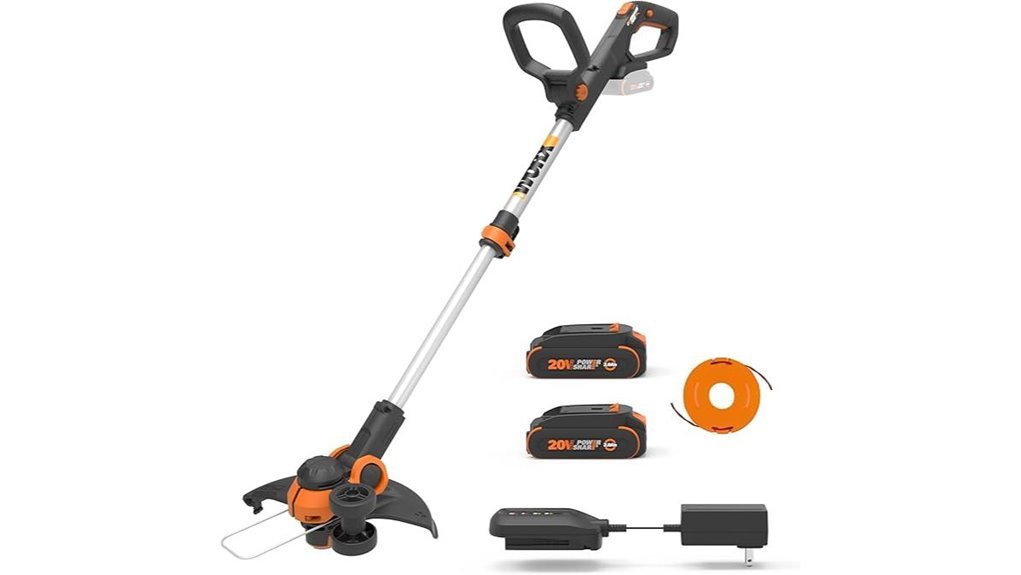
The WORX WG163 stands out as a strong pick for budget-conscious homeowners who want trimming and edging in one lightweight tool. It converts from a 12-inch string trimmer to an edger in seconds, making yard cleanup more efficient. At 5.5 pounds, it remains easy to handle, while the 7,600 rpm no-load speed supports steady cutting. The push-button feed system offers instant line adjustment, and the 90-degree tilting head helps reach slopes and tight spots. Rubberized wheels and an adjustable spacer guard improve control. Two included 20V batteries add useful runtime and cross-tool compatibility.
Best For: Budget-conscious homeowners who want a lightweight 2-in-1 tool for both trimming and edging with easy handling and decent runtime.
Pros:
- Converts from a 12-inch string trimmer to an edger in seconds for versatile yard cleanup.
- Lightweight at 5.5 lbs, making it easy to maneuver and use for longer periods.
- Includes two 20V batteries, plus features like instant line feed, a 90-degree tilting head, and support wheels for better control.
Cons:
- 12-inch cutting diameter may be limiting for larger yards or heavier-duty jobs.
- Battery-powered runtime may still be a concern for extended or very demanding use.
- Not as powerful as gas models for thick weeds or overgrown areas.
BLACK+DECKER 2-in-1 String Trimmer and Lawn Edger (BESTA510)
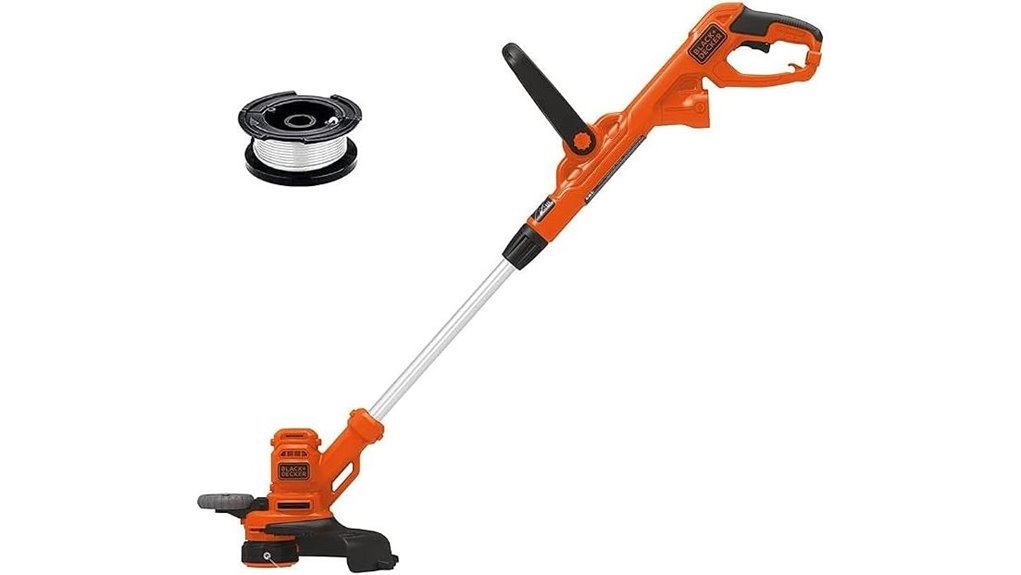
For homeowners wanting a budget-friendly trim-and-edge tool, the BLACK+DECKER BESTA510 fits well. This corded 2-in-1 model uses a 6.5-amp motor and reaches 8,000 RPM, giving it enough power for routine weed control and overgrowth. Its 14-inch cutting width helps cover ground quickly, while the automatic feed spool removes the need for bumping. The wheeled edge guide switches it into an edger for sidewalks and borders. At 6.3 pounds, it stays manageable, and the cord retention system helps prevent interruptions. A two-year warranty adds support.
Best For: Homeowners looking for a budget-friendly, corded 2-in-1 trimmer and edger for routine yard maintenance, sidewalks, and borders.
Pros:
- Automatic feed spool eliminates bumping for smoother line feeding.
- 14-inch cutting width and 8,000 RPM motor help get trimming jobs done efficiently.
- Lightweight 6.3-pound design with a wheeled edge guide makes it easy to handle and convert to edging.
Cons:
- Corded design limits mobility and requires access to an outlet.
- Not ideal for very heavy-duty or large-property cutting tasks.
- 2-year warranty is decent, but shorter than some premium competitors.
BLACK+DECKER String Trimmer, Electric, 14-inch (BESTE620)
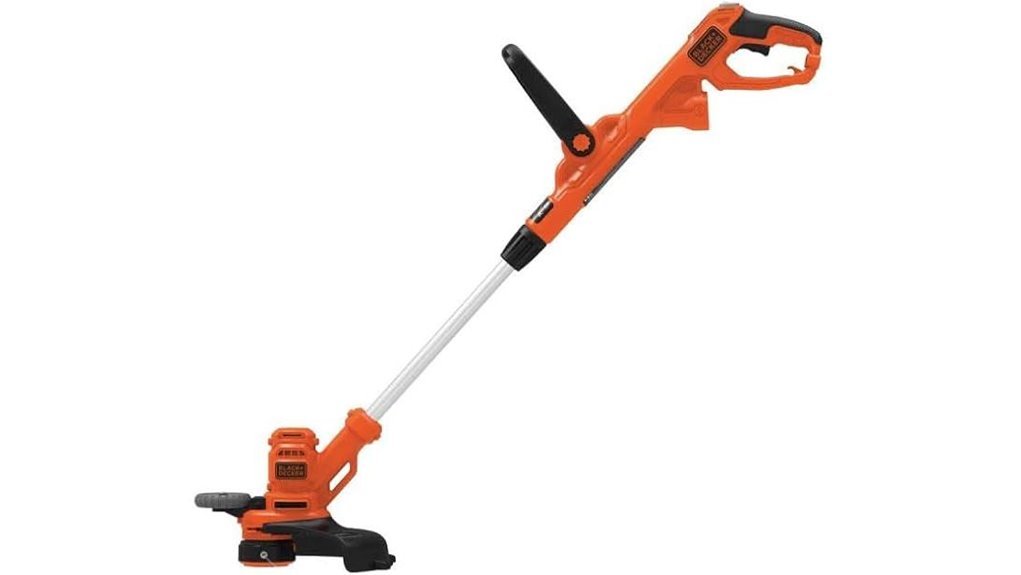
With a 6.5-amp motor and EASYFEED line advance, this BLACK+DECKER trimmer suits homeowners tackling stubborn weeds. Its 14-inch cutting swath and POWERDRIVE transmission help it cut through overgrowth with steady efficiency, while the push-button feed removes the annoyance of bumping. Weighing just 5.3 pounds, it stays manageable during longer sessions, and the adjustable handle improves comfort. The unit also converts to a wheeled edger for cleaner borders, and the cord retention system helps prevent accidental unplugging. A 2-year limited warranty adds extra reassurance.
Best For: Homeowners who want a lightweight, easy-to-use electric trimmer for regular yard cleanup, edging, and handling stubborn weeds without dealing with gas or bumping the line.
Pros:
- 6.5-amp motor and POWERDRIVE transmission provide solid cutting performance on weeds and overgrowth.
- EASYFEED button line advancement makes reloading simpler and more convenient.
- Lightweight 5.3-pound design with an adjustable handle and 2-in-1 trimmer/edger functionality improves comfort and versatility.
Cons:
- Corded electric design limits range and requires access to an outlet.
- 14-inch cutting width may be less efficient for larger yards than wider models.
- Best suited for light to moderate yard work, not heavy-duty commercial trimming.
Greenworks 40V 12 in Cordless String Trimmer, 2.0 Ah Battery and Charger
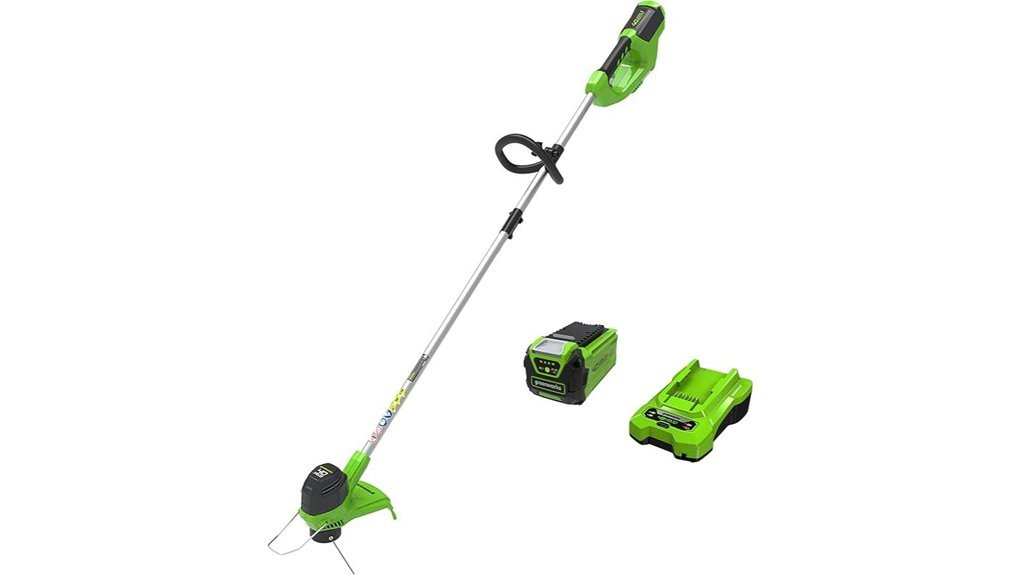
Greenworks’ 40V trimmer suits homeowners wanting cordless convenience and reliable power for routine yard work. Its 12-inch dual-line head and 0.065-inch line handle grass and light weeds efficiently, while the 7500 rpm motor supports steady cutting. The included 2.0 Ah lithium-ion battery and charger add value, and variable speed control helps when edging or tackling thicker patches. At 12 pounds, the tool remains manageable, though not ultralight. An auto-feed line system reduces interruptions, and the three-year limited warranty improves confidence. It fits routine maintenance needs.
Best For: Homeowners who want a cordless, easy-to-use trimmer for routine yard maintenance, light weeds, and quick edging tasks.
Pros:
- 12-inch dual-line cutting head with 0.065-inch line handles grass and light weeds efficiently.
- Includes a 2.0 Ah battery and charger, adding convenience and value right out of the box.
- Auto-feed line system and variable speed control help reduce interruptions and improve control.
Cons:
- At 12 pounds, it is manageable but not especially lightweight for longer trimming sessions.
- Best suited for routine maintenance rather than heavy-duty or overgrown yard work.
- Battery runtime may be limited compared with larger-capacity models.
20V 12” 2-in-1 Cordless String Trimmer & Electric Lawn Edger

The Glenvera 20V 12” 2-in-1 Cordless String Trimmer & Electric Lawn Edger suits homeowners needing flexible, cordless yard maintenance. Its 9,000 RPM motor and 12-inch swath help clear grass and weeds quickly, while the edger function improves border definition. Two 20V 4.0Ah batteries deliver up to 60 minutes of runtime, enough for roughly 1/4 acre per charge. Automatic line feed reduces pauses during use. A 4-position adjustable head and 180° rotating handle improve control around obstacles. Its lightweight build supports easy handling. Warranty details appear on the product page, and Amazon offers a 30-day return guarantee.
Best For: Homeowners who want a cordless, easy-to-handle 2-in-1 trimmer and edger for routine lawn maintenance, edging, and trimming around obstacles.
Pros:
- 2-in-1 trimmer and edger design adds versatility for lawn care tasks
- 9,000 RPM motor and 12-inch cutting swath help clear grass and weeds efficiently
- Two 20V 4.0Ah batteries provide up to 60 minutes of runtime
Cons:
- Battery-powered runtime may still be limiting for larger yards or extended jobs
- Warranty details are not clearly specified in the provided information
- Automatic line feed systems can sometimes use line faster than expected
Factors to Consider When Choosing String Trimmers Under $100 in 2026
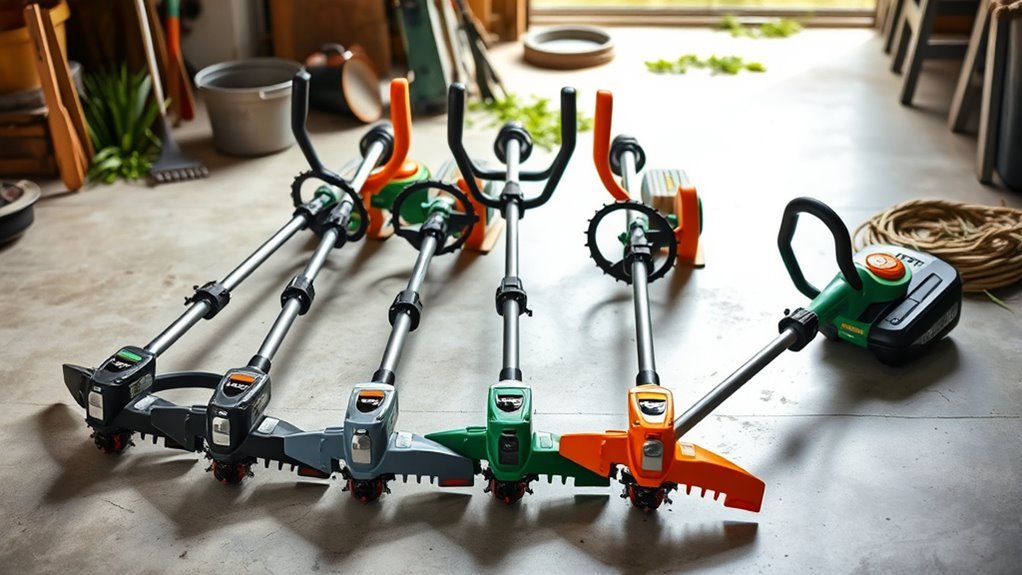
When choosing a string trimmer under $100 in 2026, key factors include cutting width, power source, battery runtime, line feed system, and weight and balance. A wider cutting width can speed up trimming, while the power source and battery runtime determine how long and how effectively the tool can work. The line feed system and overall balance also matter, since they affect ease of use and control during longer jobs.
Cutting Width
Cutting width plays a major role in how efficiently a string trimmer handles yard work, especially in the under-$100 range. Most models in this category offer a 12- to 14-inch path. A 14-inch width covers more ground per pass, which helps when trimming larger lawns or tackling thicker grass and weeds. A 12-inch width, by contrast, is often easier to guide around edges, fences, and other tight spots. The tradeoff is that wider heads can add weight and shift balance, making the tool more tiring over longer sessions. Matching the cutting width to yard size and vegetation density helps guarantee better control, fewer passes, and more effective trimming overall.
Power Source
Power source is one of the biggest factors in choosing a string trimmer under $100, since corded electric and battery-powered models each suit different yard sizes and routines. Corded trimmers deliver continuous operation as long as they remain plugged in, making them practical for longer sessions and larger properties. They also often use stronger motors, commonly in the 6.5 to 8.0 amp range, and may weigh less because they do not carry a battery. Battery-powered trimmers offer greater mobility and easier handling, which appeals to users trimming away from outlets. These models usually run on 20V to 40V batteries and are often built with 12- to 14-inch cutting widths, a fit for smaller yards and lighter edging work.
Battery Runtime
Battery runtime becomes an important consideration once the focus shifts from the type of power source to how long a cordless trimmer can keep working between charges. For models under $100, runtime often falls between 20 and 60 minutes, depending on battery capacity and overall design. Most of these trimmers use lithium-ion batteries, which remain light and durable compared with older battery types. Higher-voltage options, such as 20V or 40V packs, usually deliver stronger output and longer operating time, especially on tougher grass or larger yards. Runtime also changes with cutting width and speed; wider, faster trimming drains power sooner. Evaluating these numbers helps identify whether a trimmer can complete the job efficiently before needing another charge.
Line Feed System
A reliable line feed system can make a major difference in how smoothly a string trimmer operates, especially in the under-$100 range where efficiency matters. Automatic line feed systems advance the cutting line during use, reducing pauses and helping maintain steady performance. Instant line feed models, often triggered by a push button, release fresh line quickly and keep cutting conditions consistent with little effort. Some trimmers use automatic feed spool technology, which removes the need for bumping the head to dispense more line. This design can limit interruptions and support cleaner results across routine lawn tasks. A dependable feed system also reduces downtime, allowing the user to spend less time fixing line issues and more time completing yard maintenance with fewer distractions overall.
Weight And Balance
Weight and balance play a major role in how comfortable a string trimmer feels during use, especially for models under $100. A lighter trimmer, often in the 5.3- to 6.3-pound range, is easier to guide for longer periods and can reduce fatigue. Models near 5.5 pounds or less are typically simpler to lift and control, which helps users who want less strain. Balanced construction matters just as much as low weight, because poor distribution can make the tool feel awkward and tiring. Adjustable handles can improve stability and comfort by allowing a better grip and posture. When the weight is managed well, the trimmer moves more smoothly around obstacles and helps reduce stress on the arms and back during routine lawn care.
Edger Conversion
For many string trimmers under $100, edger conversion adds valuable versatility by letting the tool shift from trimming to edging with minimal effort. In this price range, many models use a 2-in-1 design with a wheeled edge guide or adjustable head, making the changeover straightforward. That quick switch helps users maintain clean lines along sidewalks, driveways, and flower beds without switching tools. Models with automatic line feed can further simplify edging by reducing pauses for manual adjustments. Comfort also matters, since edging often takes longer than a quick trim. Adjustable handles and lightweight construction help reduce fatigue and improve control. When the conversion is smooth and the tool stays easy to handle, edging becomes more precise and efficient.
Frequently Asked Questions
How Long Do Budget String Trimmer Batteries Usually Last?
Budget string trimmer batteries usually last about 20 to 45 minutes per charge, depending on voltage, grass density, and runtime settings. Lower-priced models often use smaller batteries, so longer trimming sessions may require recharging.
Are Under-$100 Trimmers Good for Thick Weeds?
Generally, not especially; they manage light overgrowth well, but thick weeds often ask more of them than they can gracefully provide. Repeated passes, fresh line, or a higher-powered model usually prove more dependable.
Can These Trimmers Handle Sloped or Uneven Yards?
Yes, they can handle sloped or uneven yards, though performance depends on balance, weight, and grip. A lighter trimmer with adjustable shaft and good edge control usually manages inclines better than heavier, less stable models.
Do Budget Trimmers Come With Replacement Spools?
Yes, many budget trimmers include replacement spools, though some only provide one preloaded line. The observer should check product details carefully, since spool availability and compatibility often vary among low-cost models.
How Noisy Are Electric String Trimmers Compared to Gas?
Like a telegram from 1927, electric string trimmers are generally quieter than gas models, producing less engine roar and vibration. Gas trimmers sound louder, harsher, and more disruptive, especially during extended yard work.
Conclusion
To summarize, the best string trimmer under $100 depends on yard size, power needs, and whether edging matters. For example, a homeowner with a small suburban lawn may find the WORX WG163 ideal because it trims and edges without stretching the budget. Meanwhile, corded models like the BLACK+DECKER BESTE620 suit users who want reliable runtime. Overall, shoppers can still get solid performance, convenience, and value without spending more than $100.
