
Warm water dispensers for baby formula have become a practical fixture for many households in 2027. Parents are looking for faster heating, steady temperatures, and safer materials during late-night feeds. Models from Dr. Brown’s, Grownsy, HEYVALUE, and Baby Brezza each promise a different balance of speed and control. Yet the real question is which one best fits daily routine, bottle type, and feeding habits.
Dr. Brown’s Insta-Prep Warm Water Dispenser with Glass Tank, Black

Dr. Brown’s Insta-Prep Warm Water Dispenser with Glass Tank, Black, provides a practical option for formula preparation. Its BPA-free glass tank helps preserve water taste while maintaining set temperatures. Three preset settings offer room temperature, body temperature, and a slightly warmer option for different feeding needs. The unit keeps warm water ready around the clock, supporting quick bottle mixing. Its 1.5-liter capacity reduces refills, and one-hand dispensing adds convenience. A compact black design fits standard countertops, while the built-in nightlight aids quiet nighttime use without disturbing sleep.
Best For: Parents who want a convenient, always-ready warm water dispenser for quick baby bottle preparation, especially for nighttime feedings.
Pros:
- Three preset temperature settings make it easy to prepare bottles for different feeding needs.
- 24/7 warming and one-hand dispensing support fast, convenient formula mixing.
- BPA-free glass tank, compact design, and built-in nightlight add practicality and comfort.
Cons:
- The 1.5-liter capacity may still require occasional refills for frequent use.
- It is designed specifically for baby bottle prep, so it has limited general-purpose use.
- As an electric warming appliance, it must stay plugged in to function continuously.
Grownsy Instant Baby Bottle Warmer with Night Light, Precise 4-Temp Control
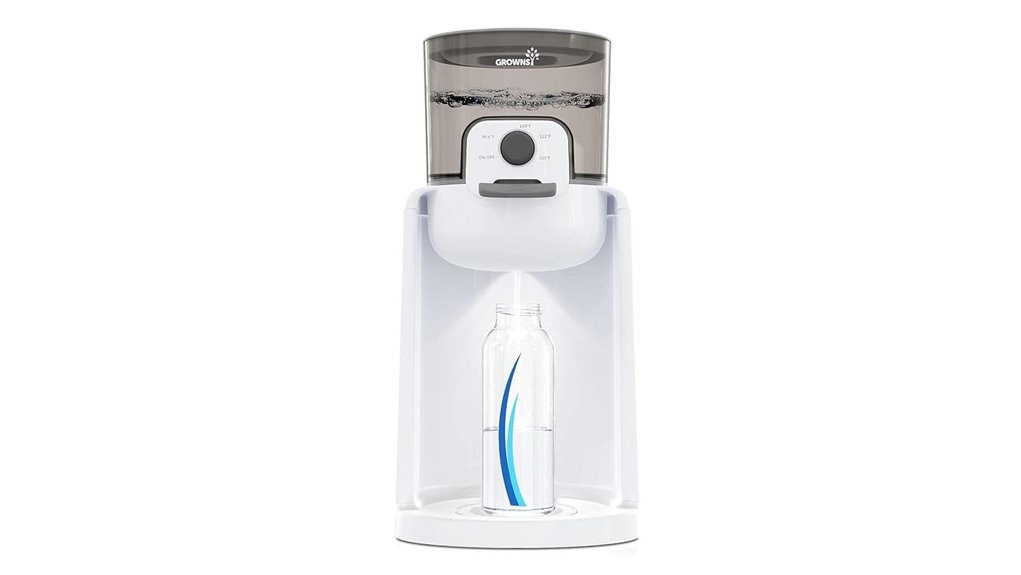
The Grownsy K301-W suits parents who need fast, precise formula preparation, especially at night. It dispenses warm water instantly and offers four set temperatures: 98.6°F, 104°F, 122°F, and 158°F. The BPA-free ABS build and airtight tank help avoid unwanted odors or harmful substances, while the anti-leak design supports hygienic use. It maintains warmth for up to 72 hours, and the detachable tank and jar stand simplify cleaning. A gentle LED night light improves midnight feeding. One-handed operation adds convenience. Its compact 11.2 x 7.6 x 7.4-inch frame weighs 2.57 pounds.
Best For: Parents who want a fast, convenient, and hygienic way to prepare baby formula, especially for nighttime feedings.
Pros:
- Instant warm water dispensing makes formula preparation quick and easy.
- Four precise temperature settings offer flexibility for different feeding needs.
- Night light, one-handed operation, and detachable parts improve nighttime convenience and cleaning.
Cons:
- The unit is relatively bulky for smaller counters or travel use.
- It only offers four preset temperatures, which may not suit every preference.
- Requires regular cleaning to maintain hygiene and performance.
HEYVALUE Water Warmer for Baby Formula with Night Light,Bottle Warmer,Black
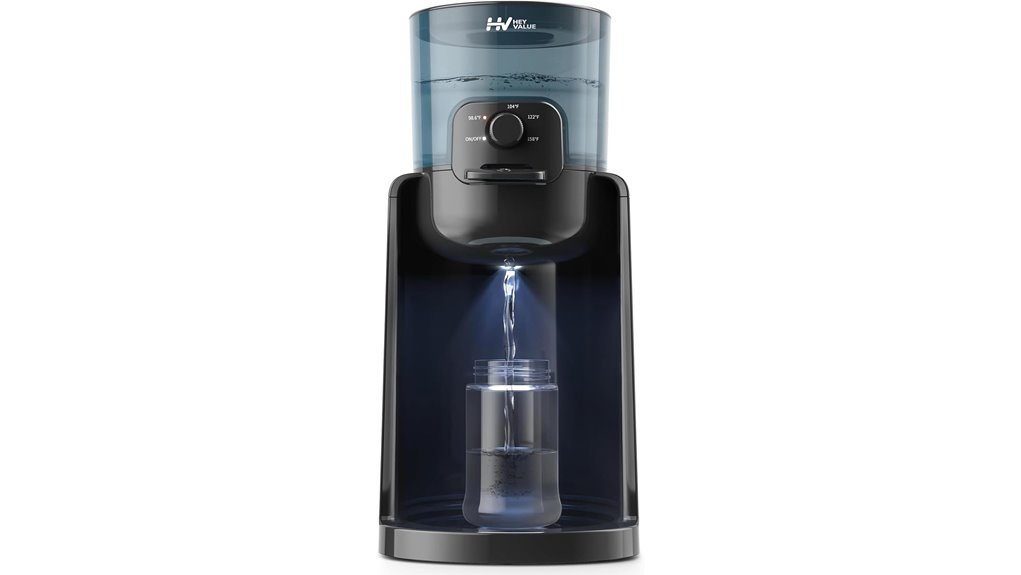
HEYVALUE’s K301 suits parents who need fast, precise nighttime formula prep. This black, 1-liter bottle warmer delivers instant heating in about 25 seconds and offers four temperature settings: 98.6°F, 104°F, 122°F, and 158°F. The lowest setting mirrors body temperature for formula close to fresh breast milk. Its 72-hour keep-warm function preserves readiness through the night. An integrated night light aids dispensing and soothes infants. Built from BPA-free, food-grade materials, the compact 400W unit includes an anti-leak design and a detachable tank for easier cleaning.
Best For: Parents who want a fast, compact bottle warmer with precise temperature control and convenient nighttime feeding features.
Pros:
- Heats formula quickly in about 25 seconds for minimal waiting.
- Four temperature settings and 72-hour keep-warm function offer flexibility and convenience.
- Night light, BPA-free materials, and detachable tank improve nighttime use and cleaning.
Cons:
- 1-liter capacity may be limiting for larger households or heavy daily use.
- No mention of app control or advanced smart features.
- Designed primarily for bottles, so it may not suit broader warming needs.
Baby Brezza Instant Baby Bottle Maker with 3 Temperature Settings

For parents who want instant bottle prep, Baby Brezza’s dispenser delivers warm water on demand. It keeps water ready 24/7, so bottles can be mixed in seconds without relying on a traditional warmer. Three temperature settings—body temperature, warmer than body temperature, and room temperature—allow simple customization for different feeding preferences. Its 50-ounce airtight tank can supply nearly two days of bottles, making it practical for bedside use. The unit works with glass, plastic, and silicone bottles, and includes a one-year limited warranty for U.S. use.
Best For: Parents who want a fast, bedside-friendly way to prepare warm formula bottles with customizable temperatures and broad bottle compatibility.
Pros:
- Dispenses warm water on demand, letting you make bottles in seconds
- Offers 3 temperature settings for more personalized feeding
- Large 50 oz airtight tank reduces refills and supports overnight use
Cons:
- Requires setup and regular cleaning compared with simpler bottle prep methods
- Warranty is limited to U.S. use only
- May be less useful for families who prefer making bottles manually or don’t need warm water on demand
Instant Baby Bottle Warmer with Smart Thermostat

Kisdream’s ZCW-TN1816 is ideal for parents who want steady formula water ready around the clock. This white Water Warmer Instant Baby Bottle Warmer uses a 24-hour smart thermostat to hold a preset temperature without frequent adjustment. It offers 77°F room temperature, a recommended 99°F setting with a yellow indicator light, and 122°F warmer output. With a 54-ounce capacity, it suits single infants or twins. BPA-, PVC-, and phthalate-free materials, a sealed lid, and a transparent tank support hygiene. The 50-watt unit is designed for indoor nursery use and easy cleaning.
Best For: Parents looking for a reliable, around-the-clock baby bottle warmer that keeps water at a steady preset temperature for formula feeding, including families with twins.
Pros:
- 24-hour smart thermostat maintains a consistent preset water temperature with minimal adjustment.
- Large 54-ounce capacity works well for single babies or households with twins.
- BPA-, PVC-, and phthalate-free materials with a sealed lid and transparent tank support safer, cleaner use.
Cons:
- Designed for indoor nursery use, so it may not be portable for travel.
- Requires regular water refreshing every 48 hours to maintain cleanliness.
- Offers a limited set of preset temperatures rather than highly precise custom settings.
Factors to Consider When Choosing Warm Water Dispensers for Baby Formula in 2026
When choosing a warm water dispenser for baby formula in 2026, temperature precision and heating speed are central, since both affect consistency and convenience. Safe, durable materials and the right capacity for daily feeding needs also matter. Nighttime convenience can further influence whether the dispenser fits well into a family’s routine.
Temperature Precision
Temperature precision is a key factor in warm water dispensers for baby formula, as feeding water is typically best kept near 98.6°F to mimic fresh breast milk. Reliable control helps preserve formula nutrients and reduces the chance of overheating, which can create unnecessary health risks for infants. Many dispensers offer multiple temperature settings, giving caregivers flexibility to match a baby’s preference while maintaining safe mixing conditions. Some units also hold a preset warmth for long periods, supporting consistent preparation without frequent readjustment. Advanced models may use smart thermostats to regulate heat automatically and keep water within a narrow range. In practice, accurate temperature control supports safer, more consistent bottle preparation and makes daily feeding routines easier to manage.
Heating Speed
Heating speed is a major consideration in warm water dispensers for baby formula, especially for parents handling nighttime feedings or urgent bottle prep. Models that warm water in seconds can shorten preparation time dramatically, with some reaching usable temperature in about 25 seconds. That is far faster than traditional methods, which often require three to five minutes. Quick heating reduces delays when a hungry infant needs immediate feeding and helps keep routines smoother during late-night wakeups. Some dispensers also hold preset temperatures for up to 72 hours, allowing warm water to remain ready without repeated reheating. Adjustable settings add flexibility for different formula needs. Faster preparation can also limit prolonged heat exposure, supporting nutrient preservation during the warming process.
Safety Materials
Beyond how quickly a dispenser warms water, the materials used in its construction directly affect infant safety. BPA-free components should be prioritized to reduce the risk of harmful chemical leaching into formula water. Food-grade, high-temperature resistant materials are also important, since dispensers repeatedly cycle between heating and cooling without degrading. Non-toxic construction is essential, and the absence of phthalates and PVC helps lower exposure to substances linked with infant health concerns. Airtight tanks add another layer of protection by limiting contact with contaminants and preserving water quality over time. Transparent water containers can further support safe use, allowing caregivers to inspect cleanliness at a glance. Together, these material standards help guarantee dependable performance and safer formula preparation in 2026.
Capacity Needs
Capacity should be matched to actual feeding habits, since larger dispensers can reduce refills and simplify routine use. A household preparing bottles often benefits from units holding 50 ounces or more, especially when feeding occurs many times each day. For twins or multiple back-to-back bottles, dispensers with at least 1.5 liters can improve efficiency. If the dispenser will be used frequently, greater volume may keep warm water ready for several days and reduce upkeep. Space also matters; compact models can fit smaller countertops or nursery stations without sacrificing useful capacity. The selected size should still reflect the baby’s schedule, because intake often rises as infants grow. Choosing capacity with these factors in mind helps balance convenience, storage, and practical feeding demands.
Nighttime Convenience
Nighttime convenience matters because a well-designed warm water dispenser can make midnight feedings faster and less disruptive. Built-in night lights help caregivers locate controls without turning on bright lamps, preserving a calm sleep environment. Models that keep water at preset temperatures for long periods reduce waiting time and support quick bottle preparation when a baby wakes. One-handed operation is especially useful, since it lets a parent dispense water while still holding the infant. Adjustable temperature settings add flexibility, allowing the water warmth to match changing preferences. Compact units also suit bedside placement, keeping essentials within easy reach in small spaces. Together, these features streamline nighttime routines and help feedings feel more efficient, controlled, and less intrusive for everyone involved.
Bottle Compatibility
Bottle compatibility is a practical priority when selecting a warm water dispenser for baby formula in 2026. A suitable model should work with glass, plastic, and silicone bottles, allowing caregivers to match different feeding preferences and bottle materials. Dispensers that state universal compatibility are especially useful, since they are more likely to fit most baby bottle brands without adjustment. The physical size of the bottle and dispenser should also be checked so the bottle sits securely in the dispensing area without blockage. Adjustable temperature settings add flexibility for formulas and materials that respond differently to heat. A detachable water tank further supports safe use by making cleaning easier and reducing contamination risks across bottle types.
Frequently Asked Questions
How Often Should I Clean a Warm Water Dispenser?
A warm water dispenser should be cleaned at least once a week, and more often if mineral buildup, spills, or cloudy water appear. If it is used daily, a quick rinse and wipe can be done every few days, with a deeper descaling routine monthly. Regular cleaning helps keep water fresh, prevents bacteria growth, and maintains the dispenser’s performance. Manufacturer instructions should always be checked for specific care recommendations.
Can Warm Water Dispensers Keep Water Safe All Night?
Yes, many can keep water safe overnight if the unit maintains a steady temperature, uses clean filtered water, and has been properly sanitized; yet “safe” is not magic, only a managed risk. If the dispenser cools, reheats poorly, or sits dirty, bacteria can multiply. For infant use, the water should be refreshed daily and the machine checked regularly. Manufacturers’ instructions remain the strongest guide.
Are Plastic or Glass Tanks Better for Baby Formula Use?
Glass tanks are generally better for baby formula use because they do not absorb odors, stain easily, or leach chemicals when heated. They also make it easier to spot residue and clean thoroughly. Plastic tanks can be lighter and less breakable, but they may scratch over time and retain smells. For repeated use with warm water, glass is often the more reassuring choice, provided the dispenser is handled carefully and kept clean.
Do Warm Water Dispensers Work With All Formula Brands?
No, warm water dispensers do not work with all formula brands; the machine, naturally, does not possess mystical respect for marketing labels. Most brands can be mixed with warm water, but some formulas specify exact temperatures, preparation steps, or shaking methods. Parents should check the manufacturer’s instructions first, since specialty, hypoallergenic, or thickened formulas may behave differently. Compatibility is usually broad, yet not universal, and caution remains the least glamorous but wisest choice.
How Long Does Water Stay Warm After Dispensing?
Water usually stays warm for about 15 to 60 minutes after dispensing, though the exact time depends on the dispenser’s insulation, starting temperature, room conditions, and the amount poured. In some models, heat retention can last longer if the water remains in a closed reservoir. Once exposed to air, cooling happens quickly. For formula preparation, it is often best to use the water soon after dispensing to keep the temperature consistent.
Conclusion
In the nursery’s quiet dawn, five lanterns stand watch beside the cradle, each warming the path to easier feedings. One gleams with glass clarity, another hums with precise control, while nightlit companions guard the hours when sleep is thinnest. Together, they are faithful stewards, turning haste into calm and worry into comfort. For parents steering through midnight’s small storms, these dispensers become the steady hearth, offering warmth, safety, and a gentler journey through the early years.
