
Standing desk stools are becoming a practical middle ground between sitting and standing, especially as more workspaces focus on comfort and movement. The 8 best options for 2027 range from wobble stools to drafting-style chairs, each offering a different balance of support, height adjustability, and active sitting. Some stand out for simplicity, while others add armrests or footrests. The differences matter more than they first appear.
IWMH Standing Desk Stool, Adjustable Standing Desk Chair, Sit Stand Stool
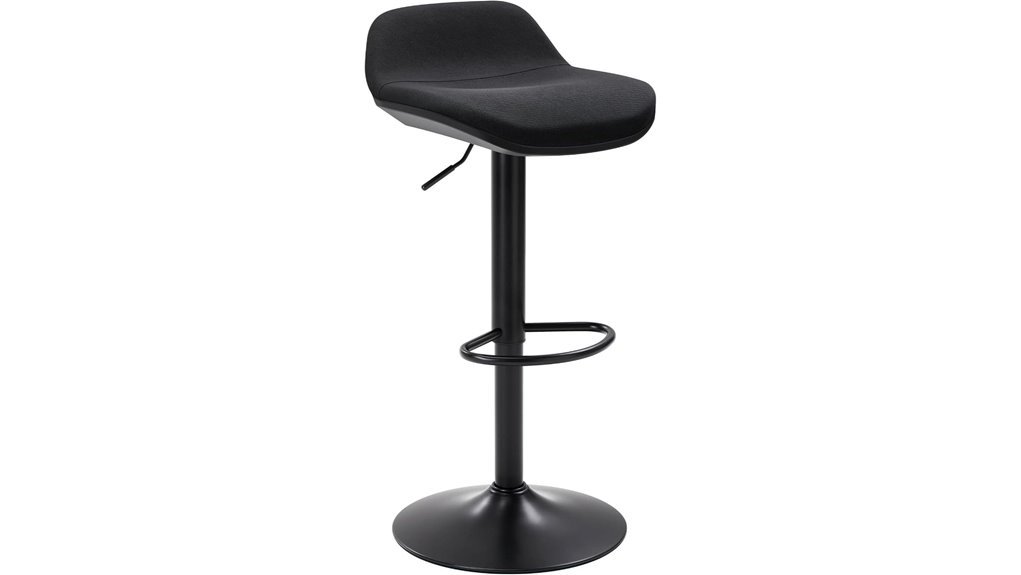
The IWMH Standing Desk Stool is a strong choice for users who want ergonomic support while alternating between sitting and standing at a desk. Its modern black, L-shaped design includes lumbar support to reduce slouching and a footrest for added leg comfort. Height adjusts from 25.59 to 33.46 inches, allowing flexible positioning. High-density foam balances firmness and softness, while the seat resists deformation for long use. A wide circular base with non-slip protection improves stability. It supports up to 330 pounds, assembles in about 10 minutes, and suits offices, kitchens, bars, receptions, and standing desks.
Best For: People who need an ergonomic, height-adjustable sit-stand stool with lumbar support for use at a standing desk or in versatile home and workplace settings.
Pros:
- Adjustable height makes it easy to find a comfortable position for sitting or standing work.
- Lumbar support, footrest, and high-density foam improve comfort during longer use.
- Stable wide base with non-slip protection and a 330-pound weight capacity adds confidence and durability.
Cons:
- May not suit users who want a fully cushioned traditional office chair.
- The L-shaped stool design may take some getting used to.
- Best performance is tied to standing-desk style use, so it may be less ideal for standard desk setups.
IWMH Standing Desk Stool, Ergonomic Adjustable Height Standing Office Chair
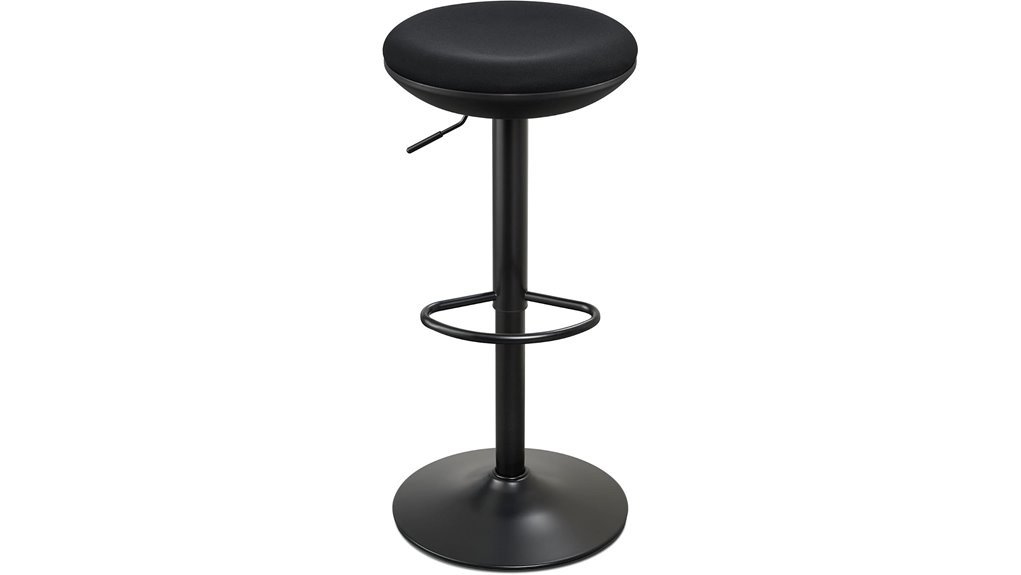
Ideal for people who alternate between sitting and standing, the IWMH Standing Desk Stool offers ergonomic support with adjustable height and 360° rotation. Its contoured design helps relax muscles and improve back comfort during long work sessions. The high-density sponge cushion maintains support without flattening, while the large non-slip base adds steadiness on carpets and mats. Assembly is straightforward, taking about 15 minutes with simple pole insertion and cushion attachment. Suitable for offices, breakfast bars, makeup rooms, study spaces, and warehouses, it also comes with dedicated after-sales service for product or service concerns.
Best For: People who alternate between sitting and standing and want an ergonomic, height-adjustable stool for desks, counters, or similar workspaces.
Pros:
- Ergonomic design helps support back comfort and muscle relaxation.
- Adjustable height and 360° rotation add flexibility for different tasks.
- Large non-slip base and supportive cushion improve stability and long-term comfort.
Cons:
- May not be ideal for users who prefer a fully supportive backrest.
- Assembly is simple, but still requires about 15 minutes.
- Best suited for standing-desk style use rather than traditional all-day seated work.
SONGMICS Ergonomic Wobble Stool, Height Adjustable Swivel Balance Chair
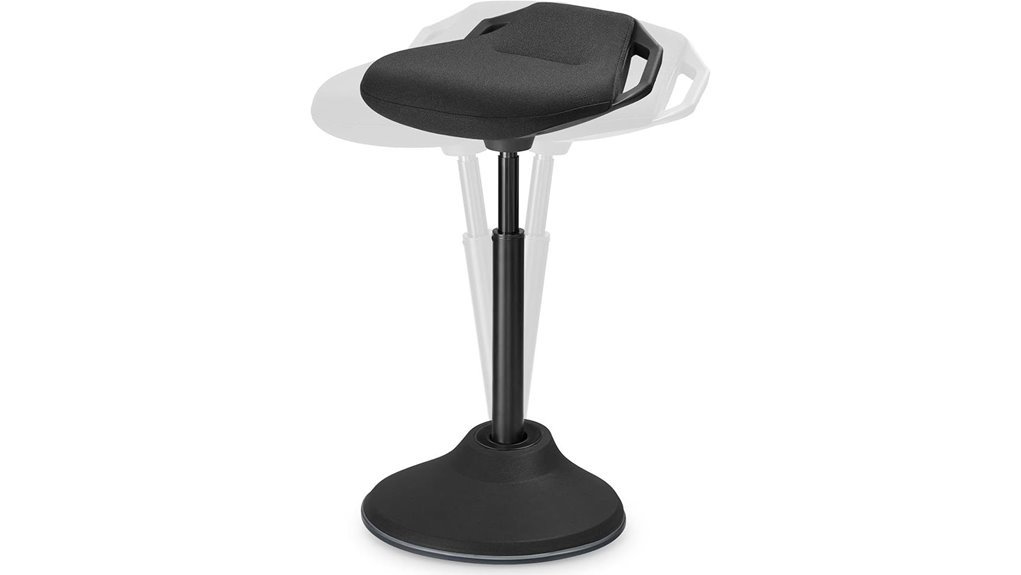
With an 8-degree tilt, the SONGMICS Ergonomic Wobble Stool suits users who prefer active sitting. The model UOSC02BK functions as a height adjustable swivel balance chair with a seat range from 23.6 to 33.3 inches, helping align posture at standing desks. Its large padded seat uses thick foam and breathable polyester fabric for comfort during longer sessions. A non-slip rubber base adds stability, while the stool supports up to 264 pounds. Tool-free assembly keeps setup simple, and wipe-clean care supports easy maintenance. Ink black upholstery gives it a restrained, office-friendly appearance.
Best For: Users who want an active-sitting stool for standing desks, posture support, and a simple ergonomic seating option with easy adjustment.
Pros:
- 8-degree tilt encourages active sitting and can help reduce back strain and stiffness.
- Height adjusts from 23.6 to 33.3 inches, making it versatile for different desk setups.
- Large padded seat with breathable fabric and a non-slip base offers comfort and stability.
Cons:
- No backrest or armrests, so it may not suit users who want full support.
- The wobble design may feel unstable for people who prefer a traditional chair.
- Assembly is tool-free, but the stool’s 19.6-pound weight may be less convenient to move often.
Backerz Adjustable Standing Desk Stool Chair
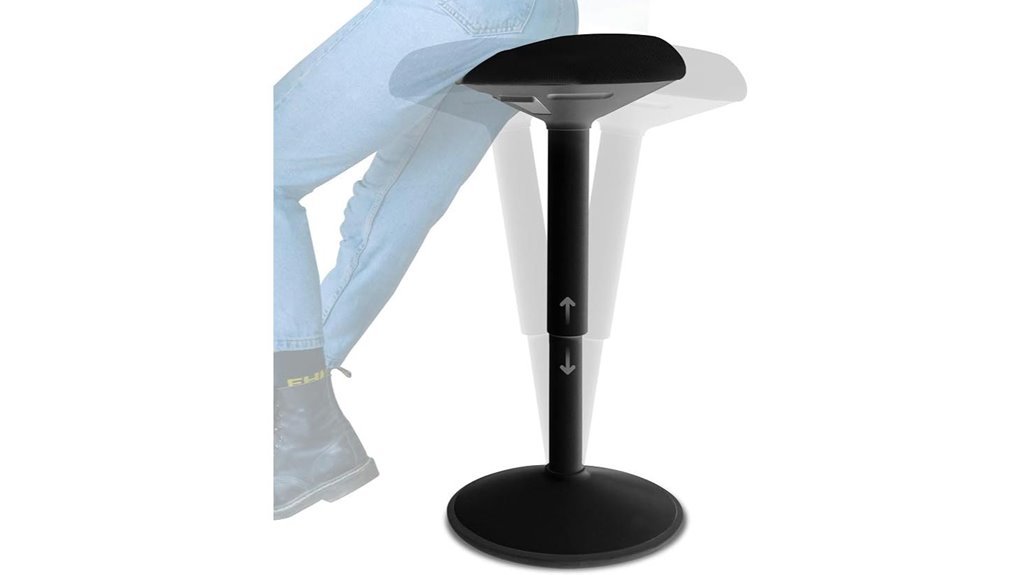
Backerz’s adjustable stool suits users needing active support at standing desks or classroom stations. Its height range, from 21 to 31 inches, or 16 to 24 inches with the dual-button mechanism, helps match varied work surfaces. The swivel seat and ergonomic wobble design encourage movement, while the 2.4-inch HR60 molded foam cushion adds pressure relief. A non-slip rubber footplate and anti-slip base improve stability. With a 220-pound capacity, 10,000-cycle testing, and a compact 6-kilogram frame, it offers practical durability, portability, and posture-friendly support for daily active sitting.
Best For: People who want an active, height-adjustable stool for standing desks or classroom workstations, especially those who value movement, posture support, and a compact footprint.
Pros:
- Adjustable height range makes it adaptable to different desk and counter setups.
- Ergonomic wobble and swivel design encourages active sitting and better posture.
- Thick HR60 molded foam cushion and non-slip base improve comfort and stability.
Cons:
- No backrest, so it may not be ideal for users who want full support.
- 220 lb weight capacity may be limiting for some users.
- Compact seat size may feel too small for extended sitting sessions.
Primy Drafting Chair with Flip-up Armrests and Footrest
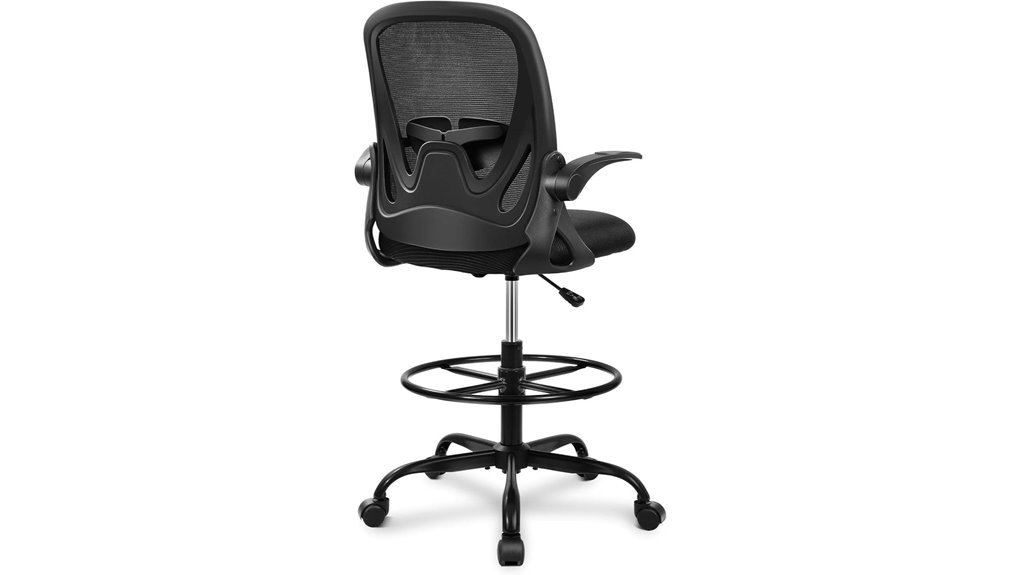
Primy’s drafting chair suits users who need flexible support at standing desks. It combines height adjustment with a foot ring, helping reduce leg pressure while encouraging movement. The 90-degree flip-up armrests save space and make it usable at standing desks, sitting desks, and bars. A curved backrest and adjustable lumbar support aim to support the spine during long sessions. Breathable mesh and a 3-inch cushioned seat improve comfort, while the five-claw base, smooth casters, and 360-degree swivel add stability and mobility. A one-year warranty provides added reassurance.
Best For: Users who need a comfortable, space-saving drafting chair for standing desks, sit-stand setups, or workspaces that benefit from adjustable support and mobility.
Pros:
- Flip-up armrests and height adjustment make it versatile for standing desks, sitting desks, and bars.
- Curved backrest, adjustable lumbar support, and cushioned seat improve ergonomic comfort during long use.
- Breathable mesh, smooth casters, and a sturdy five-claw base support airflow, mobility, and stability.
Cons:
- Drafting-chair height may not suit users who prefer a standard low office chair.
- Mesh and cushioning comfort may vary depending on personal preference for softer or firmer seating.
- Assembly may be required, which could take some time for first-time users.
IWMH Ergonomic Wobble Stools,Standing Desk Stool, Standing Chair for Desk
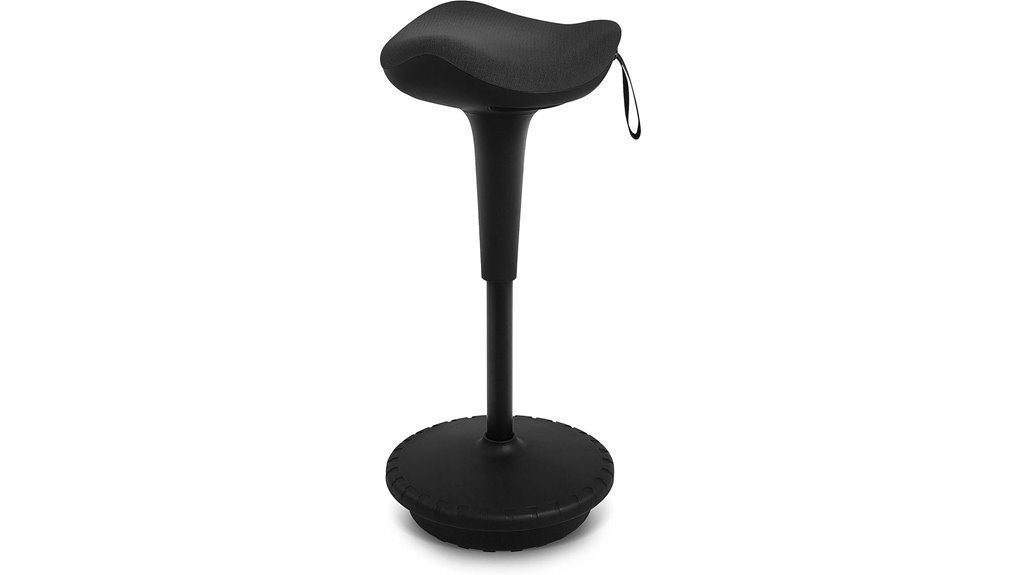
The IWMH Ergonomic Wobble Stool suits users who need active support at a standing desk. Its saddle seat follows the hip curve, encouraging upright posture while easing back strain and leg pressure. The high-density sponge keeps its shape, and the fabric seat rests on a metal frame with a nylon base that includes soft rubber particles for grip. Height adjusts with a drawstring, and assembly is simple, with no tools required. At 9.2 kg, it supports up to 113 kg. Care is limited to wiping with a damp cloth.
Best For: People who want an ergonomic, active-support stool for a standing desk that helps promote better posture and reduce leg and back strain.
Pros:
- Saddle seat design supports the hips and encourages upright posture.
- Height adjusts easily with a drawstring, and assembly is quick without tools.
- Sturdy metal frame and grip-enhanced nylon base provide stable support.
Cons:
- The wobble-style design may not suit users who prefer a fully stationary seat.
- Fabric and sponge cushioning may require more care than harder-surface seating.
- Limited care instructions and warranty details may be a drawback for some buyers.
IWMH Standing Desk Chair,Wobble Stool,Adjusting Height Standing Stool

IWMH’s wobble stool suits users who want adjustable support at standing desks. Model 004 includes a cushioned seat with high-density foam and durable nylon upholstery. Its contoured shape follows hip curves, helps posture, and reduces leg pressure during long work sessions. The seat height adjusts from 25 to 33 inches, making it compatible with standard and standing desks. A nylon-reinforced soft rubber base and compact non-slip tread improve stability. At 22.9 pounds, it remains relatively substantial. Assembly is tool-free: insert the gas lift rod, remove the protective cap, and connect seat and base. Customer support is available for concerns.
Best For: People who need an adjustable, supportive wobble stool for standing desks or standard desks and want easy, tool-free setup.
Pros:
- Height adjusts from 25 to 33 inches, making it versatile for different desk setups.
- Contoured cushioned seat helps support posture and reduce leg pressure.
- Tool-free assembly and a stable non-slip base make it convenient to use.
Cons:
- At 22.9 pounds, it may be less easy to move around than lighter stools.
- Wobble design may not suit users who prefer a fully stationary seat.
- Warranty details are not clearly included and must be requested.
IWMH Standing Desk Stool, Ergonomic Adjustable Height Office Chair

With adjustable height and a stable 360° base, the IWMH Standing Desk Stool suits standing workspaces well. This ergonomic office chair is designed to ease muscle tension and reduce back strain often caused by traditional seating. Its high-density sponge cushion resists deformation, supporting longer use without sagging. The large base and non-slip design add security on carpets and mats, while the rotating seat improves mobility. Assembly is straightforward and takes about 15 minutes. It fits offices, bars, studios, study rooms, and more, with customer service available if concerns arise.
Best For: People who need an ergonomic, adjustable stool for standing desks or other elevated workspaces and want added comfort, stability, and mobility.
Pros:
- Adjustable height and 360° rotation make it versatile for different tasks and setups.
- High-density sponge cushion is designed to stay supportive and resist deformation over time.
- Stable, non-slip base adds security on carpets and mats, and assembly is quick and simple.
Cons:
- May not provide enough back support for users who prefer a traditional full office chair.
- Best suited for short to moderate sitting periods rather than all-day seated use.
- Limited to a stool-style design, so it may not be ideal for those seeking armrests or a high-back chair.
Factors to Consider When Choosing Standing Desk Stools in 2026

In 2026, choosing a standing desk stool depends first on the height adjustment range, since it must suit both the desk and the user’s posture. Ergonomic support features, stability and base design, and the comfort of the seat materials also shape how well the stool performs during long use. Versatility and placement matter as well, especially in workspaces that need equipment to move easily between tasks or fit within limited floor space.
Height Adjustment Range
A stool’s height adjustment range is one of the most important factors to evaluate when choosing a standing desk stool in 2026. A wide range, often from 21 to 34 inches, gives users more flexibility to match different desk heights and seated or semi-standing preferences. This adaptability also helps accommodate various body types, making it easier to find a stable and comfortable position. Proper height selection supports better posture and can reduce strain on the back and legs during extended use. Many models include straightforward adjustment mechanisms that allow quick changes without tools. Before buying, users should check both the minimum and maximum settings to confirm the stool fits their workspace and meets their ergonomic needs.
Ergonomic Support Features
Ergonomic support features play a major role in how well a standing desk stool performs during daily use. Lumbar support helps maintain proper spinal alignment, which can reduce back strain during extended periods of sitting or perching. A well-shaped seat with high-density foam adds comfort and resists deformation, making it more suitable for long work sessions. Height adjustment also remains important because it lets users match the stool to desk level and sustain a natural working posture. Some designs encourage active sitting, allowing subtle movement that can engage the core and support better posture over time. These features together contribute to a more comfortable, productive experience, especially when the stool is used for hours at a time in a standing desk setup.
Stability And Base Design
Stability is one of the most important factors in a standing desk stool, because a secure base helps prevent tipping or unwanted sliding during use. A well-designed base should stay firm on carpets and hardwood alike, with non-slip features improving grip across different surfaces. Wider bases usually offer better balance, especially when the user shifts weight or changes position during work. Rubberized footplates can add another layer of traction by increasing friction between the stool and the floor. Base construction also affects weight capacity, since a stronger frame can support higher limits with greater reliability. For this reason, stability and base design should be evaluated carefully before selecting a standing desk stool.
Comfort And Seat Materials
Comfort and seat materials play a major role in how usable a standing desk stool feels over long periods. High-density foam or sponge is often preferred because it combines firmness with enough softness to support the body without quickly deforming. Breathable fabrics such as polyester or mesh improve airflow, helping reduce heat buildup during extended sitting. Ergonomic seats that follow the body’s natural curves can lessen back strain and support healthier posture. Lumbar support adds another layer of comfort by encouraging proper spinal alignment and reducing fatigue. A stool with a well-padded, well-shaped seat is more likely to remain comfortable through long work sessions. Together, these features determine whether the stool feels supportive, cool, and suitable for sustained daily use.
Versatility And Placement
Because standing desk stools are used in different environments, versatility and placement matter as much as design. A strong choice adapts easily to home offices, kitchens, or reception areas, giving it broader value across changing layouts. Height adjustment is important, since it helps match different desk heights and user preferences while supporting ergonomic comfort in both seated and semi-standing positions. Swivel functions can add useful mobility, making it easier to turn, reach, and interact without leaving the workstation. Compact stools suit smaller rooms because they store neatly and preserve an orderly look. Stability also matters: a firm base and non-slip features improve safety, especially in active spaces where movement is frequent. Placement should support access, balance, and daily workflow.
Frequently Asked Questions
How Do Standing Desk Stools Improve Posture Compared to Regular Office Chairs?
Standing desk stools can improve posture by encouraging a more open hip angle, lighter sitting, and active balance, which helps reduce slouching and keeps the spine more neutral. Unlike regular office chairs, they often support partial standing and frequent position changes, lowering pressure on the lower back and pelvis. This dynamic setup can engage core muscles and discourage prolonged, rigid sitting that commonly contributes to poor posture over time.
Can Standing Desk Stools Help Reduce Lower Back Pain During Long Workdays?
Yes, standing desk stools can help reduce lower back pain during long workdays, but they are not a cure-all. Like a bridge between sitting and standing, they may encourage better spinal alignment, shift weight, and reduce pressure on the lumbar area. Their benefit depends on proper height, posture, and movement breaks. Without adjustment or variety, prolonged use can still strain the back and limit lasting relief.
Are Wobble Stools Suitable for People With Balance Issues?
Wobble stools are generally not suitable for people with balance issues. Their unstable design encourages constant micro-movements, which can increase the risk of slipping, tipping, or fatigue. A person with reduced stability, vestibular problems, or limited lower-body strength would likely benefit more from a seat with firm support and adjustable back support. In some cases, a healthcare professional may recommend them only with supervision, caution, or specific rehabilitation goals.
What Weight Capacity Should I Check Before Buying a Standing Desk Stool?
A standing desk stool should be checked for a weight capacity that exceeds the user’s body weight by a comfortable margin, ideally at least 20 to 50 pounds. This provides a safety buffer for movement, leaning, and long-term durability. Heavier users should look for reinforced frames and higher-rated models, often 250 to 300 pounds or more. The manufacturer’s limit should always be verified before purchase.
Do Standing Desk Stools Work Well With Electric Standing Desks?
Yes, standing desk stools generally work well with electric standing desks when height ranges align. They can support semi-standing posture, reduce fatigue, and encourage movement during long work sessions. A stool with adjustable height and a stable base is especially useful because electric desks often change positions frequently. If the seat is too high or low, however, comfort and posture can quickly suffer, making proper compatibility important.
Conclusion
In the landscape of modern work, standing desk stools rise like quiet sentinels, balancing motion and support with graceful ease. From wobble stools that awaken the core to adjustable chairs that cradle long hours, each option offers a different path to comfort. Choosing the right one is less about furniture and more about harmony—between posture, productivity, and personal rhythm. In that balance, the workday feels less like strain and more like steady ground.
