
The best tunnel greenhouses for 2027 emphasize sturdy galvanized steel frames, UV-resistant PE covers, and strong airflow. VEVOR walk-in tunnel greenhouses stand out for compact, durable builds and easy ventilation. AMERLIFE models offer larger growing space and built-in watering support. KING BIRD provides a roomy walk-in design with reinforced stability. These options suit home gardens and small farms alike, while key factors like insulation, anchoring, and ventilation can reveal even better choices ahead.
VEVOR Walk-in Tunnel Greenhouse with Steel Frame
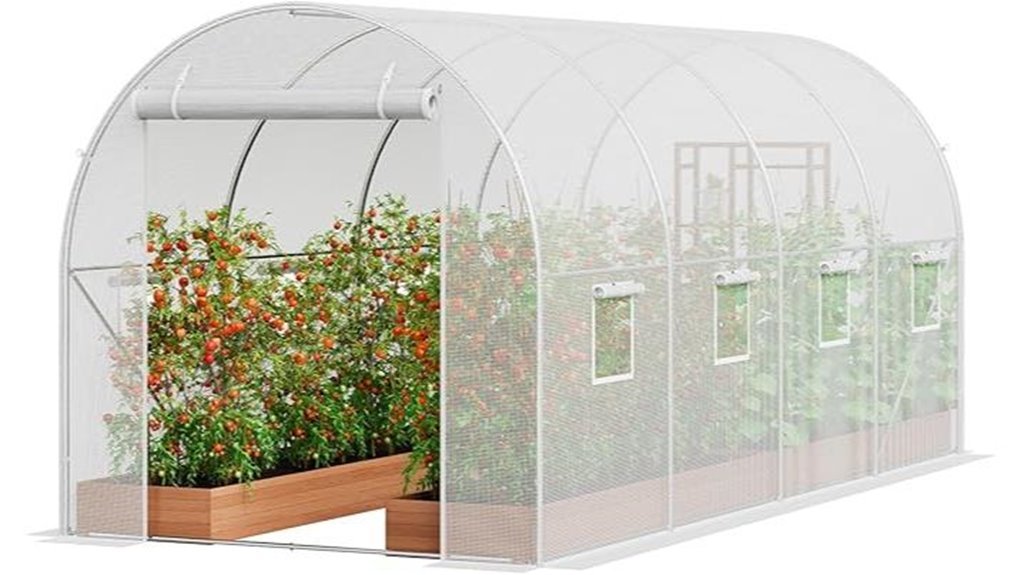
The VEVOR Walk-in Tunnel Greenhouse with Steel Frame is best suited for gardeners who need a compact, sturdy, and easy-to-ventilate growing space. Measuring 14.6 by 6.4 by 6.3 feet, it uses a galvanized steel frame with reinforced pipes, diagonal bars, U-shaped stakes, and tie-downs for stability. Its 140g/m² PE cover offers sun resistance and insulation, while double-stitched seams improve durability. Eight windows and a roll-up zipper door support airflow and access. The walk-in layout suits plant shelves, seasonal extension, and year-round use in home gardens, farms, or small commercial settings.
Best For: Gardeners, home growers, and small-scale users who want a compact, sturdy, walk-in greenhouse with good ventilation and extended growing-season protection.
Pros:
- Heavy-duty galvanized steel frame with reinforced support features adds stability and durability.
- 140g/m² PE cover provides sun resistance, insulation, and improved temperature control.
- Eight windows plus a roll-up zipper door make access and airflow easy.
Cons:
- At 14.6 x 6.4 x 6.3 ft, the size may be too small for larger growing operations.
- PE cover material is less long-lasting than more rigid greenhouse panels.
- Assembly and anchoring may require extra effort to ensure full stability in windy conditions.
VEVOR Walk-in Tunnel Greenhouse with Steel Frame

Built for growers who need a sturdy, walk-in structure, VEVOR’s tunnel greenhouse suits ambitious home gardeners and small-scale growers alike. Measuring 9.6 by 6.4 by 6.2 feet, this hoop house pairs a heavy-duty galvanized steel frame with reinforced poles, diagonal bars, U-shaped stakes, and tie-downs for added stability. Its 140 g/m² PE cover is sun-resistant and insulating, with double-stitched seams and extended edges. Six windows and a roll-up zipper door improve airflow, while mesh screening helps block pests. The roomy layout supports year-round growing and flexible plant arrangements.
Best For: Home gardeners and small-scale growers who want a sturdy, walk-in tunnel greenhouse for extending the growing season and protecting plants year-round.
Pros:
- Heavy-duty galvanized steel frame with reinforced poles and extra stability features
- 140 g/m² PE cover is sun-resistant, insulating, and built with reinforced seams
- Six windows plus a roll-up zipper door provide good airflow and easy access
Cons:
- Small footprint may be limiting for larger gardening projects
- PE cover may require replacement sooner than more rigid greenhouse materials
- Assembly and staking may take time to set up securely
VEVOR Walk-in Tunnel Greenhouse with Steel Frame

VEVOR’s walk-in tunnel greenhouse suits growers needing a sturdy, spacious season extender. Measuring 14.6 by 6.4 by 6.3 feet, it uses a galvanized steel frame with reinforced pipes, diagonal bars, U-shaped stakes, and tie-downs for stability. The 140 g/m² PE cover resists sun damage while helping retain warmth. Eight windows and a roll-up zipper door support airflow, and mesh details help block pests. Double-stitched seams and reinforced edges improve durability. Its walk-in layout suits home gardens, farms, and small commercial plots, extending the growing season for varied crops.
Best For: Gardeners, small farmers, and hobby growers who want a sturdy walk-in tunnel greenhouse to extend the growing season and protect plants.
Pros:
- Strong galvanized steel frame with reinforced support features for added stability
- 8 windows plus a roll-up zipper door provide good ventilation and easy access
- Durable 140 g/m² PE cover helps retain warmth and resist sun damage
Cons:
- PE cover is less long-lasting than rigid greenhouse panels
- Tunnel design may offer less insulation in extreme cold climates
- Assembly can be time-consuming due to multiple frame and tie-down components
VEVOR Walk-in Tunnel Greenhouse with Steel Frame
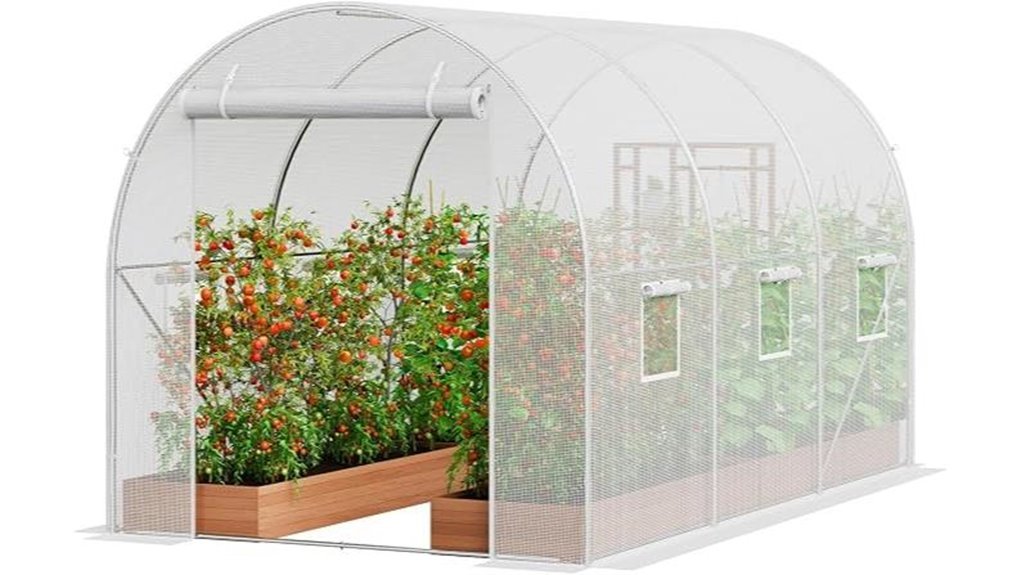
With its roomy walk-in design, this VEVOR tunnel greenhouse suits gardeners needing easy access and steady protection. Measuring 9.6 x 6.4 x 6.2 feet, it functions as a hoop house for outdoor plant care. The galvanized steel frame uses 1-inch tubing and includes reinforced door poles, diagonal bars, U-shaped stakes, and tie-downs for added stability. A 140g/m² PE cover provides sun resistance and insulation, while double-stitched seams improve durability. Six windows, a roll-up zipper door, and mesh Velcro closures support airflow and animal exclusion. It serves home gardens, farms, and small commercial operations.
Best For: Home gardeners, small farms, and small commercial growers who want a roomy, protected walk-in greenhouse for extending the growing season.
Pros:
- Sturdy galvanized steel frame with reinforced supports for better stability
- Six windows plus a roll-up zipper door for strong ventilation and easy access
- Durable 140g/m² PE cover with double-stitched seams for sun resistance and insulation
Cons:
- At 31.3 lbs, it may still require careful anchoring in windy conditions
- The compact size may be limiting for larger-scale growing needs
- PE cover material may not be as long-lasting as rigid greenhouse panels
AMERLIFE 34x10x7 FT Walk-in Tunnel Greenhouse with Watering System
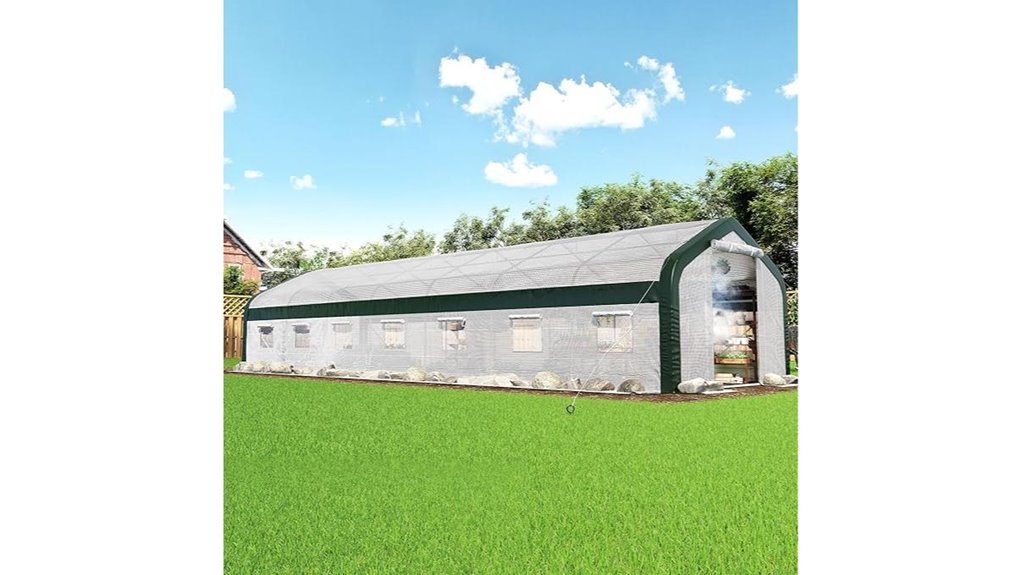
The AMERLIFE 34x10x7 FT walk-in tunnel greenhouse suits growers needing spacious, protected, year-round cultivation. Its pointed roof, green trim, and two 5.8-foot zipper doors create practical access in a 34-by-10-by-7-foot footprint. A built-in watering device uses adjustable nozzles to control flow, droplet size, and spray range, delivering moisture directly to roots and limiting waste. Thickened 120g PE fabric, a solid frame, and curved corners improve weather resistance. Fourteen mesh-screen windows support airflow and keep animals out. Dual anchoring with stakes and spiral anchors adds stability; stones or sandbags are recommended.
Best For: Gardeners and growers who want a spacious, walk-in greenhouse with built-in watering, airflow, and added weather protection for year-round cultivation.
Pros:
- Large 34x10x7 FT walk-in design with two zipper doors for easy access
- Adjustable watering system targets roots and helps reduce water waste
- Stronger stability features, mesh windows, and reinforced weather-resistant materials
Cons:
- May require extra securing with stones or sandbags for best wind resistance
- Assembly and setup may take time due to size and anchoring components
- Mesh windows help airflow but may still need monitoring in extreme weather
VEVOR Walk-in Tunnel Greenhouse with Steel Frame
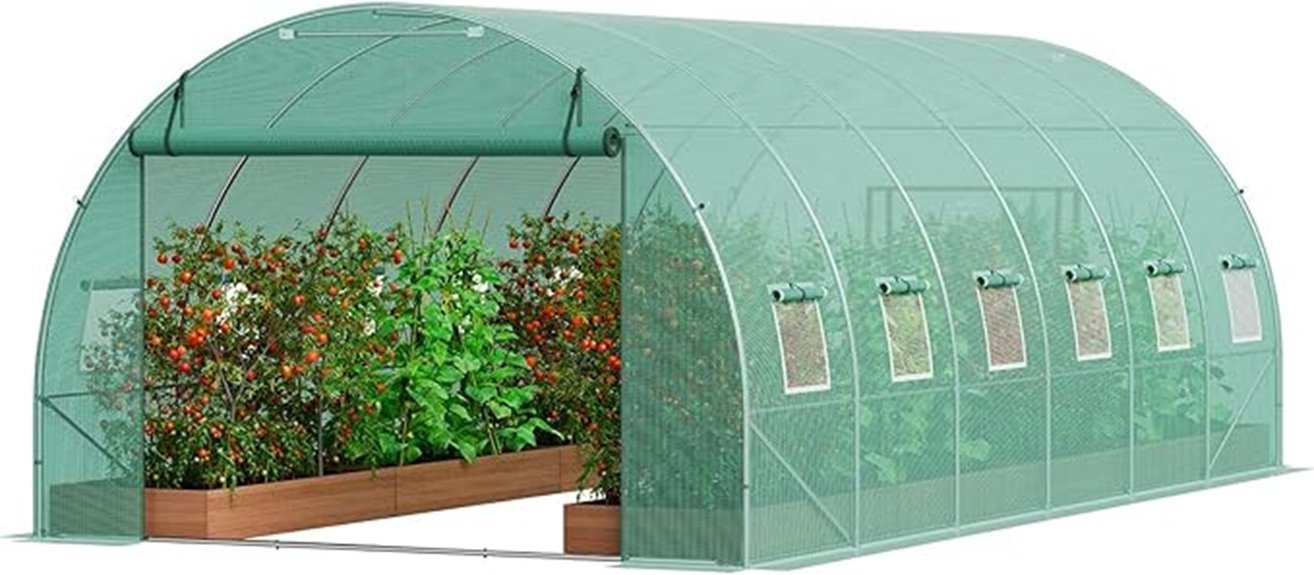
Ideal for gardeners needing a roomy, stable growing space, this VEVOR walk-in tunnel greenhouse fits diverse planting setups. Its reinforced galvanized steel pipes, diagonal bars, U-shaped stakes, and tie-downs support strong structural stability. The 140g/m² PE cover resists sun exposure while helping retain warmth, and its double-stitched seams improve durability. Measuring 19.36 by 9.68 by 6.50 feet, it offers generous walk-in access for shelves and maintenance. Twelve windows, a large zipper door, and mesh screening promote airflow and protection, making it suitable for gardens, farms, and small-scale commercial growing.
Best For: Gardeners, small farm operators, and home growers who need a spacious, stable walk-in greenhouse for extended seasonal planting and easy maintenance.
Pros:
- Strong galvanized steel frame with added reinforcement for improved stability
- Large walk-in size with plenty of room for shelves, plants, and movement
- Good ventilation and protection with 12 windows, a zipper door, and mesh screening
Cons:
- PE cover may not be as long-lasting as rigid greenhouse panels in extreme weather
- Large size may require significant space and careful setup
- Best stability likely depends on proper staking and tie-down installation
AMERLIFE 30×10 FT Tunnel Greenhouse with Built-in Sprinkler System
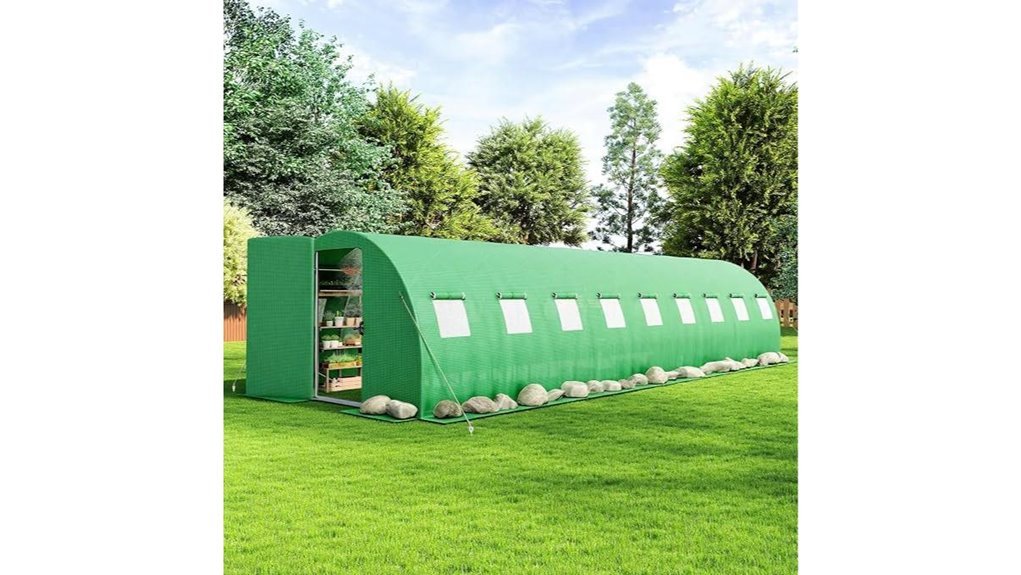
AMERLIFE’s 30×10 tunnel greenhouse suits growers who want easy, even irrigation. This walk-in model, measuring 30 by 10 by 6.4 feet, provides generous standing space for planting, pruning, and harvesting. Its galvanized steel frame and waterproof PE cover offer durable outdoor protection, while the built-in sprinkler system helps maintain steady moisture with less manual watering. A front door and 18 mesh windows improve airflow and limit insects. Spiral anchors, ropes, stakes, and a ground skirt add stability. The swing door improves access for vegetables, flowers, and seedlings.
Best For: Home gardeners and small-scale growers who want a spacious walk-in greenhouse with built-in irrigation for vegetables, flowers, and seedlings.
Pros:
- Built-in sprinkler system provides even watering and reduces manual watering effort.
- Walk-in tunnel design offers generous standing room for easier planting, pruning, and harvesting.
- Galvanized steel frame, PE cover, and anchoring accessories improve durability and stability outdoors.
Cons:
- At 119 pounds, it may take multiple people and time to assemble and position.
- PE cover may not be as long-lasting as rigid greenhouse panel materials in harsh weather.
- Greenhouse ventilation relies on mesh windows and a door rather than more advanced climate control.
KING BIRD Premium 20x10x6.6FT Greenhouse for Outdoors Large Walk-in House

KING BIRD’s 20x10x6.6FT walk-in greenhouse suits gardeners needing a spacious, durable outdoor growing space. Measuring 236.2 by 118.8 by 79.2 inches, it offers room for crops, tools, and easy movement. The reinforced galvanized steel frame uses three top crossbars, two diagonals, and ten vertical poles, while 24 stakes and four ropes improve anchoring. A 150g/sqm PE cover provides UV6 protection, waterproofing, and a close fit for warmth. Eight roll-up windows and two dual zipper screen doors support airflow, pest control, and seasonal temperature management, backed by one year of 24/7 service.
Best For: Gardeners who want a spacious, durable, walk-in outdoor greenhouse with strong weather protection and good ventilation for year-round growing.
Pros:
- Large 20x10x6.6FT interior provides plenty of room for plants, tools, and easy movement.
- Reinforced galvanized steel frame with stakes and ropes offers added stability and support.
- UV6 waterproof PE cover with multiple windows and dual zipper doors helps balance warmth, airflow, and pest control.
Cons:
- Large size may require significant outdoor space and careful setup.
- Assembly may be time-consuming due to the reinforced frame and multiple components.
- PE cover, while durable, may still need replacement over time with heavy exposure or wear.
Factors to Consider When Choosing Tunnel Greenhouses in 2026
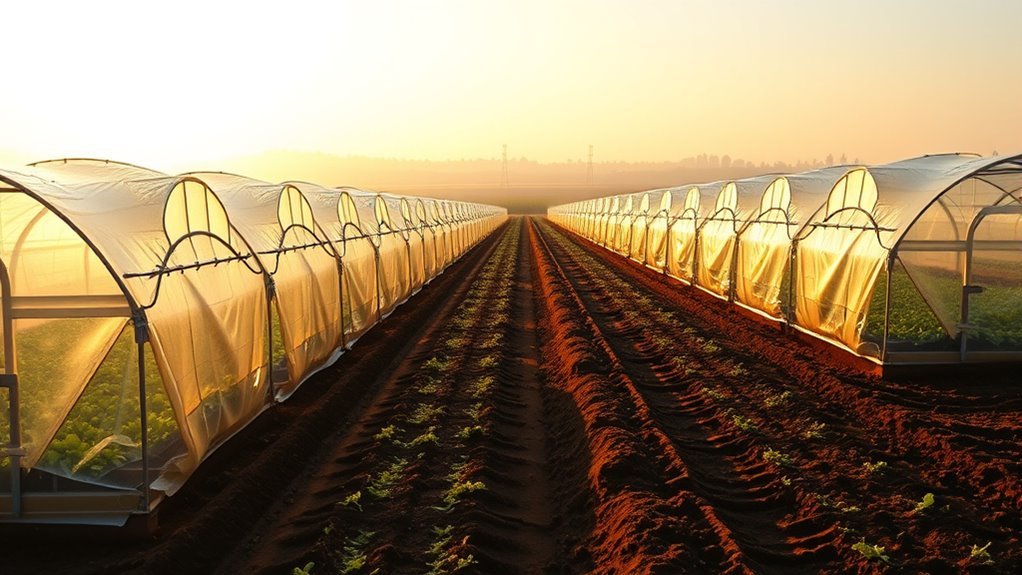
Selecting a tunnel greenhouse in 2026 begins with evaluating size and layout to match the available space and growing goals. Frame strength, cover thickness, ventilation, and access also shape how well the structure performs through changing seasons. Proper anchoring and wind resistance remain essential for maintaining stability and protecting crops.
Tunnel Size And Layout
Tunnel greenhouse size and layout should be matched to the plants, workflow, and space available, with common lengths ranging from 9.6 to 34 feet depending on the growing plan. Smaller tunnels suit compact crops or limited yards, while larger footprints increase planting capacity and may require more site clearance. A walk-in layout improves access for watering, pruning, and harvesting, and it can support multiple shelves to use vertical space efficiently. Ventilation should be built into the plan through several windows or doors so air moves freely and heat does not accumulate. The tunnel’s shape and height also matter, because a pointed roof helps shed rain and manage wind exposure. Overall, the best layout balances growing room, access, airflow, and available ground area.
Frame Strength And Stability
Beyond size and layout, a tunnel greenhouse must also be judged by the strength of its frame and how well it stays anchored in place. Heavy-duty galvanized steel is often preferred because it resists corrosion and supports long-term durability in changing weather. For dependable structural integrity, frame pipes around 1 inch in diameter with 0.02-inch wall thickness provide useful resistance to wind and snow loads. Stability improves further when diagonal bars and U-shaped stakes are included, since they reduce shifting and collapse during severe conditions. Tie-downs and ground anchors add another layer of security against uplift and movement in strong winds. A rigid frame also supports reinforced roll-up doors and windows, helping the structure remain stable while still allowing practical ventilation and access.
Cover Material And Thickness
Cover material and thickness play a major role in how well a tunnel greenhouse performs through the seasons. Most covers range from 120g/m² to 150g/m², with heavier fabrics generally offering stronger insulation and better resistance to weathering. Polyethylene remains a common choice because its sun-resistant surface helps limit UV damage, while denser grades usually last longer. Seams and edges also matter; double stitching and reinforcement reduce the risk of tearing in exposed conditions. Extended edges can be buried or weighted to hold heat inside and stabilize temperatures. The best option balances light transmission with thermal retention, allowing crops to receive enough sunlight while benefiting from a more protective growing environment and a longer productive season overall.
Ventilation And Access
Once the covering is selected, airflow and access become the next key considerations for tunnel greenhouse performance. Adequate ventilation helps keep humidity and temperature in a workable range, supporting stronger plant growth and reducing stress. Designs with multiple windows and a large roll-up zipper door improve air exchange, helping prevent overheating during warm periods. Mesh screens on openings add protection against small pests while still allowing circulation, which supports cleaner crops. Good airflow also limits mold and mildew, especially in enclosed spaces where moisture can accumulate. A walk-in layout further improves usability by giving growers direct access for watering, pruning, monitoring, and harvesting. Together, these features make daily management simpler and help maintain a healthier growing environment throughout the season.
Anchoring And Wind Resistance
Anchoring determines how well a tunnel greenhouse holds its shape when weather turns severe. Effective setups often use spiral ground anchors or metal stakes to secure the frame against strong winds. Structural strength also depends on material thickness; galvanized steel with a 0.02-inch wall can improve resistance to wind loads. Some designs add a dual anchoring system with tension ropes and ground skirts, spreading forces across the structure to limit wind shear. Roof slope and crossbar placement matter too, because they reduce lift and add rigidity during storms. Regular inspection remains important, since soil erosion or ground movement can loosen anchor points and weaken stability over time.
Insulation And Weather Protection
Insulation and weather protection play a central role in tunnel greenhouse performance, since the cover material directly affects temperature control, humidity retention, and crop stability. High-density polyethylene covers, especially those rated at 140g/m² or above, offer stronger insulation and better moisture retention than lighter films. Extended cover edges can be weighted down or buried to improve thermal sealing and reduce exposure to cold air and wind. Durability also depends on construction quality: double-stitched seams and reinforced window seams help prevent tearing and preserve weather resistance over time. UV-resistant materials are important because sunlight can degrade nonprotected covers, shortening their useful life. At the same time, adequate ventilation through multiple windows and doors remains necessary to balance heat and humidity, limiting overheating and supporting steady plant growth.
Extra Features And Accessories
Beyond the basic frame and cover, extra features can considerably improve a tunnel greenhouse’s day-to-day performance. Multiple windows and roll-up doors support steady airflow, helping regulate temperature and protect plant health during warm periods. Built-in watering systems, such as integrated sprinklers, reduce manual labor while keeping moisture levels more consistent. Structural stability also matters; reinforced frames paired with stakes and ropes help the greenhouse resist wind and adverse weather. Cover quality should not be overlooked, either. High-density polyethylene with UV protection offers better durability, insulation, and tear resistance than weaker materials. A spacious walk-in layout adds practical value by making maintenance, planting, and organization easier. Together, these accessories create a more efficient, resilient growing environment.
Frequently Asked Questions
How Do Tunnel Greenhouses Perform in Extreme Winter Conditions?
Tunnel greenhouses usually struggle in extreme winter conditions, losing heat quickly and requiring insulation, thermal covers, and heating support. Their performance depends on structure strength, snow load management, and careful climate control.
What Permits Are Needed for Installing a Tunnel Greenhouse?
Measure twice, cut once: permits typically include zoning approval, building permits, and sometimes agricultural or environmental clearances. Requirements vary by location, so local planning offices should be consulted before installation to avoid costly delays.
Can Tunnel Greenhouses Withstand Strong Coastal Winds?
Tunnel greenhouses can withstand strong coastal winds if they are properly anchored, reinforced, and designed with wind-rated materials. Without those precautions, they are vulnerable to damage, uplift, and structural failure during storms.
How Often Should Tunnel Greenhouse Covers Be Replaced?
Tunnel greenhouse covers are typically replaced every 4 to 7 years, depending on UV exposure, weather, and material quality. Regular inspections help identify brittleness, tears, or reduced light transmission before failure occurs.
Are Tunnel Greenhouses Suitable for Year-Round Hydroponics?
Yes, tunnel greenhouses can support year-round hydroponics, rather charmingly, if climate control behaves. With insulation, lighting, and heating, they become productive all seasons; without them, winter quickly reminds everyone who is actually in charge.
Conclusion
In 2027, the best tunnel greenhouses stand out for durability, space, and convenience, making it easier to grow healthy plants through changing seasons. Whether choosing a VEVOR model, an AMERLIFE option with watering features, or the KING BIRD walk-in house, gardeners can find a fit for different needs and budgets. As steady shelters for growth, these greenhouses can serve like a reliable umbrella in a storm, protecting every seedling with care.
