
Quiet water dispensers matter more than many buyers expect, especially in shared homes and busy offices where constant hums become distracting. In 2027, four models stand out for keeping noise low while still delivering reliable performance: the Primo Bottom Loading, two Clover options, and a compact HotFrost pump. Each offers a different balance of convenience, hygiene, and portability, but one may fit a space far better than the others.
Primo Bottom Loading Hot & Cold Water Dispenser
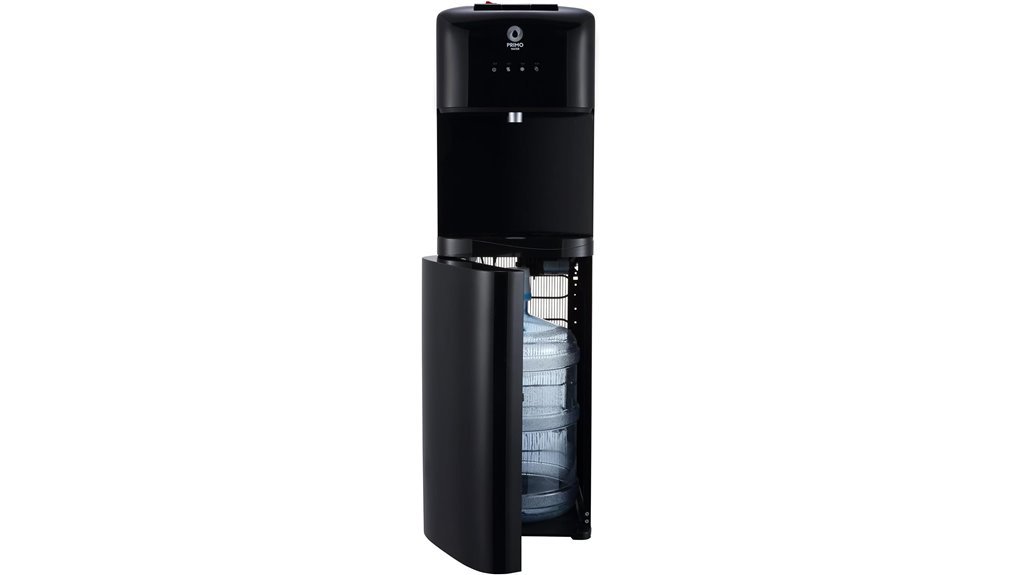
The Primo Bottom Loading Hot & Cold Water Dispenser is a strong choice for households or small offices that want quiet operation without the hassle of lifting heavy bottles. It offers hot and cold dispensing through a bottom-loading design, with push-button controls and a two-step child safety lock for the hot tap. Stainless steel reservoirs help resist corrosion, while the removable drip tray is dishwasher-safe for easier cleanup. The unit includes an LED night light, no-tool setup, and quiet heating and cooling. Rated 4.3 stars from 240 reviews, it measures 14.2 by 12.2 by 40.9 inches.
Best For: Households or small offices that want a quiet, easy-to-use hot and cold water dispenser without the hassle of lifting heavy bottles.
Pros:
- Bottom-loading design eliminates heavy lifting and bottle flipping
- Quiet heating and cooling with convenient push-button dispensing
- Helpful features like a child safety lock, LED night light, and dishwasher-safe drip tray
Cons:
- Requires 5-gallon bottles, which still need periodic replacement
- Takes up considerable floor space at 40.9 inches tall
- Hot water safety lock adds an extra step for dispensing
Clover B7A Hot and Cold Water Dispenser
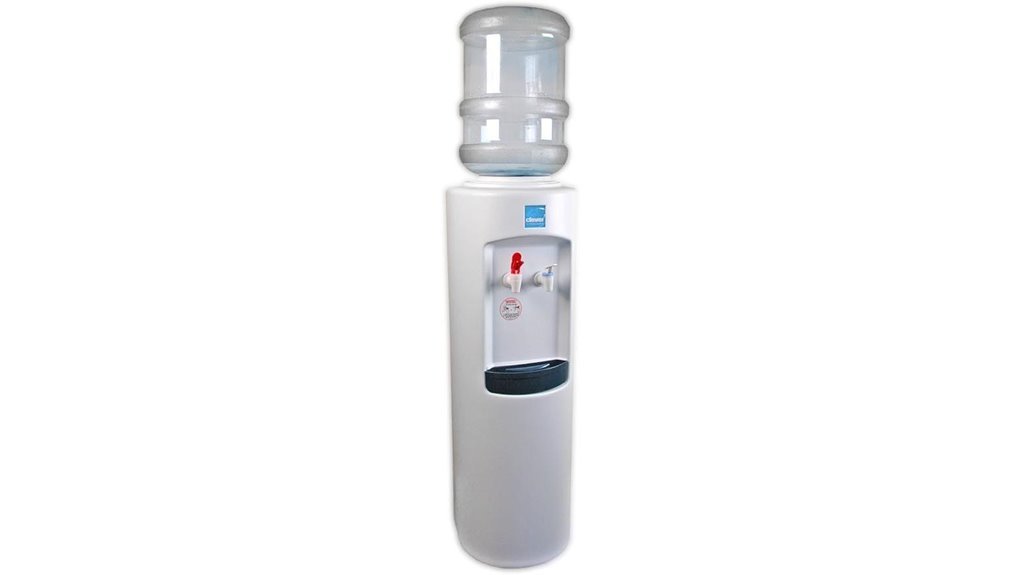
Clover’s B7A suits users who want quiet operation with dependable hot and cold water on demand. Its stainless steel tanks support hygienic, contaminant-resistant use, while the cold side adjusts from 35.6°F to 53.6°F. Hot water is automatically maintained near 185°F, removing guesswork. Energy Star compliance signals strong efficiency under EPA and U.S. Department of Energy standards. An ultra-efficient condenser cooled by convection helps preserve performance without excess noise. The result is a practical dispenser that balances sanitation, temperature control, and low sound levels for offices or shared kitchens.
Best For: Offices, shared kitchens, or households that want a quiet, energy-efficient dispenser with reliable hot and cold water on demand.
Pros:
- Stainless steel tanks help support hygienic, contaminant-resistant use.
- Adjustable cold water range offers flexible temperature control.
- Energy Star compliance and convection cooling help keep operation efficient and quiet.
Cons:
- Hot water temperature is not adjustable.
- Best suited for users who need both hot and cold water, not just one function.
- May be more dispenser than needed for very small or occasional-use settings.
Clover B7B Room Temperature and Cold Bottled Water Dispenser, Black

Ideal for offices or homes that need quiet, reliable cold water, the Clover B7B dispenses room-temperature and chilled water from 5-gallon bottles. Its black, one-piece high-density polyethylene cabinet measures 14 by 14 by 40 inches and weighs 35 pounds. A stainless-steel tank and self-closing polypropylene faucets support sanitary use, while the removable ABS drip tray simplifies cleaning. An adjustable thermostat cools water to 35.6°F–53.6°F through a quiet convection condenser. Energy Star certification, CE, NSF, and UL listings reinforce efficiency and compliance. The unit uses corded 110-120 volt power and includes a one-year limited warranty.
Best For: Offices or homes that need a quiet, reliable bottled water dispenser with both room-temperature and chilled water.
Pros:
- Energy Star certified for efficient operation
- Quiet convection cooling with adjustable cold-water temperature
- Durable, sanitary design with stainless-steel tank and easy-to-clean removable drip tray
Cons:
- No built-in filtration system
- Only compatible with 5-gallon bottles
- Requires corded electric power, so placement depends on an outlet
HotFrost Electric Water Pump for 5 Gallon Jug with Chrome-Plated Spout
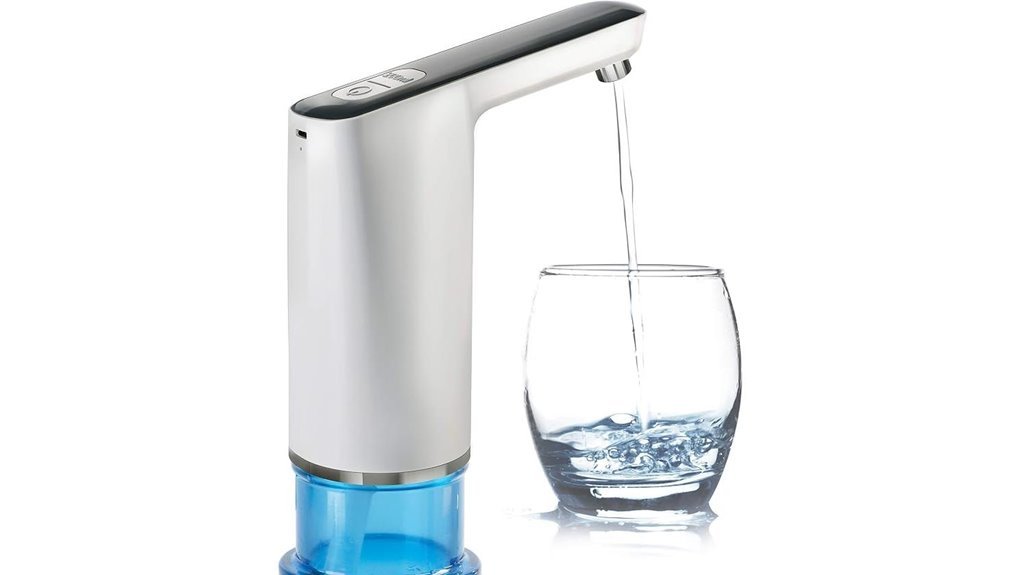
HotFrost suits campers and RV travelers who want a quiet, cordless dispenser. This battery-operated pump runs at 45 dB or less, staying softer than normal conversation. Its one-touch control offers a 200 ml serving or continuous flow for pitchers. BPA-free food-grade construction avoids plastic taste or odor, while the chrome-plated spout helps prevent drips and wet counters. A 1200mAh battery dispenses up to 21 gallons per charge and recharges quickly through USB-C. Setup takes three steps, and the compact unit fits 5-gallon jugs plus smaller compatible bottles.
Best For: Campers, RV travelers, and anyone who wants a quiet, cordless water dispenser for 5-gallon jugs and smaller compatible bottles.
Pros:
- Quiet operation at 45 dB or less, making it suitable for shared or calm environments.
- BPA-free, food-grade materials help avoid plastic taste or odor, and the chrome-plated spout helps prevent drips.
- Long battery life with USB-C charging, dispensing up to 21 gallons per charge.
Cons:
- Designed primarily for jug use, so it may not suit users needing a full countertop water system.
- Battery operation means it will eventually need recharging rather than providing unlimited use.
- Compatibility depends on bottle neck size, so some containers may not fit.
Factors to Consider When Choosing Quiet Water Dispensers in 2026

When choosing a quiet water dispenser in 2026, attention typically centers on noise level ratings, cooling system type, and overall energy efficiency. Hot water safety and tank material quality also matter, since both affect daily use and long-term reliability. A careful comparison of these factors helps identify models that stay quiet without sacrificing performance.
Noise Level Ratings
Noise level ratings are one of the most important factors when choosing a quiet water dispenser, since they are typically measured in decibels (dB) and lower numbers indicate less operating noise. A unit rated around 45 dB is generally quieter than a normal conversation, making it suitable for homes, offices, bedrooms, and meeting rooms. Product descriptions should be checked carefully, because ratings can differ noticeably from one model to another and affect daily comfort. Design also plays a role: materials and construction can reduce vibration and sound, with stainless steel tanks often associated with quieter operation. Quiet operation features help limit distraction in shared spaces, supporting a calmer environment without sacrificing convenience.
Cooling System Type
Beyond decibel ratings, the cooling system type strongly affects how quietly a water dispenser runs. Compressor-based units often produce less noise than thermoelectric models, especially during sustained cooling. Systems that use ultra-efficient condenser cooling through convection can further reduce sound, which suits homes and offices where a low acoustic profile matters. Adjustable cold water thermostats also help by keeping temperatures steady and limiting frequent cycling, a common source of audible operation. Energy Star-rated dispensers frequently include advanced cooling features that improve efficiency while lowering sound output. Placement and insulation of the cooling components matter as well; when designed well, they dampen vibration and limit noise transmission. In practice, the best choice balances cooling performance, efficiency, and a quietly engineered internal layout for everyday use.
Hot Water Safety
Hot water safety is a critical factor in choosing a quiet water dispenser, since many units heat water to nearly 185°F and must include safeguards against accidental burns. A reliable 2-step hot water lock is especially valuable in homes with children, because it adds deliberate control before dispensing begins. Non-adjustable hot water settings also help by keeping temperatures consistent and reducing the chance of overheating. Quiet heating cycles matter as well; unusual noise can signal a malfunction or another safety concern during operation. Regular maintenance supports safe performance over time, and corrosion-resistant parts, including stainless steel, help preserve dependable function. Buyers should consequently evaluate both protective controls and stable operation when comparing models for safe, quiet hot water use.
Tank Material Quality
Tank material is another key factor because it affects how long a quiet water dispenser lasts, how safely it stores water, and how well it operates over time. Stainless steel is generally preferred over plastic because it resists corrosion, supports long service life, and maintains structural strength under regular use. It also offers a more hygienic storage surface, helping limit contamination and preserve water quality. A BPA-free tank is important as well, since it reduces the risk of unwanted chemicals leaching into stored water during extended contact. In addition, stainless steel tanks often provide better insulation than plastic, which can contribute to quieter operation. For buyers focused on dependable performance, material quality should be treated as a core indicator of safety, durability, and overall dispenser value.
Energy Efficiency
Energy efficiency has become a practical benchmark for quiet water dispensers, especially as buyers look for models that reduce power use without sacrificing performance. Models aligned with EPA guidelines generally consume less electricity while still meeting everyday dispensing needs. Energy Star certification offers a clear signal that a unit meets high efficiency standards and may help lower utility bills over time. Advanced heating and cooling systems can preserve stable water temperatures with less wasted power, while adjustable thermostats let users tailor settings to actual demand instead of running constantly at maximum output. In quieter designs, less energy is often spent on noise mitigation, which can support overall efficiency. For households and offices, these features make a dispenser more economical and environmentally responsible.
Dispensing Speed
Dispensing speed is another practical factor that shapes how well a quiet water dispenser fits daily use, especially when efficiency has already been prioritized. Some units can deliver a full cup of cold water in about 8 seconds, while hot water often takes longer because heating elements need more time. Faster models usually pair advanced heating and cooling systems with stable temperature control and reasonable energy use. Design also matters: pump performance and reservoir size can influence how quickly water reaches the cup, and bottom-loading systems often provide quicker access. Quiet operation depends partly on pump tuning, since smoother pumps reduce noise without sacrificing flow. One-touch controls further improve convenience by limiting delays and making dispensing more direct.
Bottle Compatibility
Bottle compatibility is a key consideration when selecting a quiet water dispenser, since most households and offices rely on standard 5-gallon bottles and need a model that fits them securely. Buyers should confirm that the dispenser accepts this common size before comparing other features. Some models also work with 2-, 3-, or 4-gallon bottles, but neck size compatibility matters for a proper seal and stable flow. Bottom-loading designs can make bottle changes simpler by reducing lifting, which is useful in shared spaces. It is also worth checking whether a flexible hose or adapter is included, as these parts can improve compatibility with different bottle styles. Manufacturer specifications should always be reviewed, because supported bottle sizes and connector types vary by model.
Easy Maintenance
Maintenance can be a deciding factor when choosing a quiet water dispenser in 2026, especially for households and offices that want convenience without extra upkeep. Models with removable, dishwasher-safe drip trays make routine cleaning faster and reduce manual scrubbing. Stainless steel reservoirs are also preferable because they resist corrosion and are easier to maintain than plastic tanks. Dispensers with minimal setup are useful as well, since simpler installation usually means fewer ongoing adjustments and less maintenance later. Quiet operation matters beyond comfort, because a well-designed unit limits disruptive sounds during use and upkeep. Energy-efficient dispensers can further reduce service needs by using fewer moving parts. Together, these features help guarantee dependable performance with less effort over time.
Frequently Asked Questions
How Often Should a Quiet Water Dispenser Be Cleaned?
It should be cleaned every one to two weeks, with a deeper cleaning monthly. Regular wiping of the exterior, drip tray, and spouts helps prevent buildup, while periodic sanitizing reduces bacteria and mineral deposits. If the dispenser is used heavily, or if water tastes unusual, cleaning may be needed more often. Following the manufacturer’s care instructions remains important, since materials and filtration systems can vary.
Do Quiet Dispensers Work With Filtered Water?
Most quiet dispensers do work with filtered water, and many are designed specifically for it. About 85% of household water in some regions is filtered before use, making compatibility important. A detached observer would note that filtered water often reduces mineral buildup, helping the machine stay quieter and last longer. Still, compatibility depends on the dispenser’s pump, tubing, and filter housing, so checking the manufacturer’s specifications remains essential before purchase.
Can I Use a Quiet Dispenser in a Small Office?
Yes, a quiet dispenser can work well in a small office, provided its footprint fits the available space and its noise level stays low during operation. In a compact setting, quieter models help avoid distraction and support a calmer atmosphere. It is also wise to take into account cooling speed, maintenance needs, and daily water demand, since frequent use in a small office may make efficiency and placement just as important as sound.
What Maintenance Reduces Dispenser Noise Over Time?
Regular cleaning, filter replacement, and descaling reduce dispenser noise over time. Dust around vents and pumps can magnify a hum into a thunderous roar, so removing buildup matters. Tightening loose panels, checking worn seals, and keeping the reservoir properly aligned also helps. If mineral deposits are allowed to accumulate, valves may strain and vibrate more. Routine inspections preserve smooth operation and keep mechanical sounds low and controlled.
Are Quiet Water Dispensers Energy Efficient?
Yes, quiet water dispensers are often energy efficient, though not always by default. Many models use insulated tanks, smart compressors, and sleep modes that lower power use while reducing noise. Energy efficiency depends on features like heating and cooling systems, standby settings, and usage patterns. A quieter machine may simply be better designed, but efficiency still varies by model, so specifications should be checked carefully before purchase.
Conclusion
In 2027, quiet water dispensers remain a smart choice for homes and offices that value comfort, convenience, and peace. For example, a busy family might choose the Primo Bottom Loading model to avoid lifting heavy bottles while keeping noise low during early mornings. Meanwhile, the Clover models and HotFrost pump serve different needs, from hygiene to travel. Ultimately, the best option depends on where it will be used and how much quiet matters.
