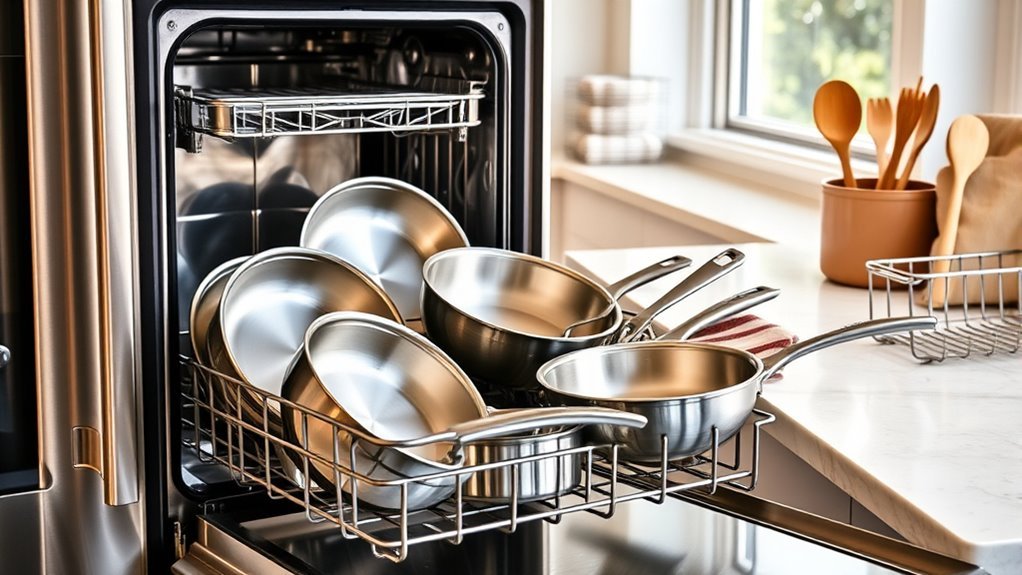
Are USA Pans dishwasher safe? Most USA Pan bakeware should be washed by hand to protect its nonstick finish and keep it working well. However, dishwasher rules differ between baking pans, stainless-steel cookware, and accessories. Knowing which product you own helps you clean it safely and avoid damage.
Quick Answer
USA Pan aluminized-steel bakeware should generally stay out of the dishwasher. Wash it by hand with warm water, mild soap, and a soft sponge. USA Pan also advises against soaking bakeware. Its stainless-steel cookware has different cleaning rules and can be dishwasher-safe. Some cooling-rack instructions conflict, making handwashing the safer choice.
At a Glance
| Difficulty | Easy |
| Tools Needed | Mild dish soap, warm water, soft sponge or nylon cleaning pad, and a clean towel |
Are USA Pans Dishwasher Safe?
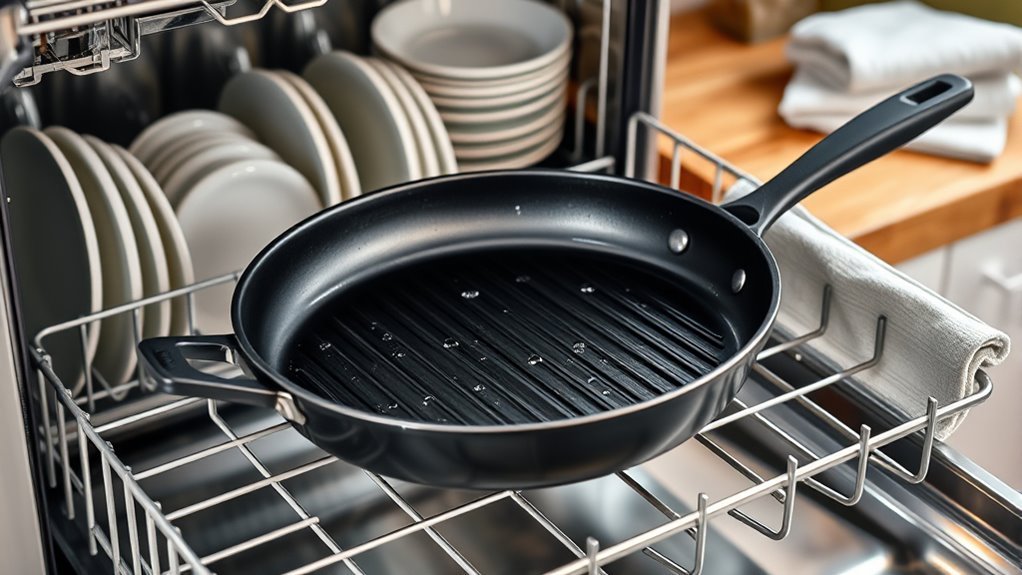
Most USA Pan baking pans are not recommended for dishwasher cleaning. This includes common Americoat-coated baking sheets, cake pans, loaf pans, and muffin pans. The manufacturer’s detailed product instructions specifically advise handwashing.
USA Pan uses aluminized steel in much of its bakeware. This material combines a steel base with an aluminum-containing surface layer. Many products also have Americoat, a silicone-based nonstick coating designed for easy food release.
The company’s Quarter Sheet Pan cleaning instructions explicitly say not to put that pan in the dishwasher.
However, USA Pan sells different product types. Their cleaning requirements are not identical.
| USA Pan Product | Dishwasher Guidance | Recommended Cleaning |
|---|---|---|
| Americoat nonstick bakeware | Avoid dishwasher use | Handwash with mild soap and a soft sponge |
| Bare, uncoated bakeware | Not dishwasher-safe | Handwash and dry thoroughly |
| Ceramic nonstick bakeware | Handwashing recommended; verify the model | Warm, soapy water and a nonabrasive sponge |
| Nonstick cooling racks | Some manufacturer instructions conflict | Handwashing is the safer option |
| USA Pan stainless-steel cookware | Dishwasher cleaning permitted in the official FAQ | Dishwasher or hot, soapy water, according to product instructions |
USA Pan’s official FAQ confirms that its stainless-steel cookware can be washed in a dishwasher after initial cleaning. It also gives different advice for bakeware.
If your pan has a model number or original care label, use those instructions to identify the correct cleaning method.
How to Hand-Wash USA Pans (Step-by-Step)
Handwashing USA Pan bakeware is simple. You need warm water, mild dish soap, and a soft sponge or nylon cleaning pad.
The goal is to remove food and grease without scratching the coating or leaving the pan wet during storage.
- Let the pan cool. Place the used pan on a heat-safe surface and allow it to cool before washing. Avoid sudden temperature changes.
- Prepare warm, soapy water. Add a small amount of mild dish soap to warm water. Avoid strong cleaners or harsh chemicals.
- Wash gently. Use a soft sponge or nylon pad to clean the cooking surface, corners, edges, and exterior. Follow the ridges rather than applying heavy pressure.
- Rinse thoroughly. Remove soap and loosened food with clean water. Check the corners and textured areas for remaining particles.
- Dry completely. Wipe the pan with a clean towel and allow any trapped moisture to evaporate before storage.
You should be able to remove ordinary food residue without heavy scrubbing. If particles remain, repeat the gentle washing process instead of using steel wool.
Do not leave USA Pan bakeware submerged in water. The manufacturer’s current care guidance specifically advises against soaking bakeware.
Removing Burnt-On Food, Stains, and Discoloration
Burnt-on food and discoloration need different solutions. Food residue should be removed, but a stain does not automatically mean the nonstick coating has failed.
Start with the gentlest cleaning method. Avoid boiling water in coated bakeware, using stainless-steel polish on the coating, or scrubbing with metal tools.
Should You Soak USA Pans to Loosen Residue?
Do not soak USA Pan bakeware. Although soaking is a common cleaning method for cookware, USA Pan’s bakeware care instructions specifically warn against it.
The original recommendation to soak bakeware for 15–30 minutes does not match the manufacturer’s guidance.
For stubborn food on a baking sheet or cake pan, try this safer process:
- Allow the pan to cool before cleaning.
- Wet the affected area with warm, soapy water.
- Gently loosen softened food with a nylon pad or soft sponge.
- Rinse the pan and repeat gentle washing if necessary.
- Dry the pan completely.
There is an important exception. USA Pan’s FAQ allows soaking and boiling water to loosen burned food in its stainless-steel cookware. Those instructions should not be transferred to Americoat-coated bakeware.
Warning: Never use steel wool, sharp metal scrapers, harsh abrasives, or prolonged soaking on USA Pan nonstick bakeware. These cleaning methods can damage the finish and may affect warranty coverage.
Gentle Scrubbing Methods
A soft sponge or nylon cleaning pad is usually enough to remove ordinary residue. Use light pressure and work carefully over the pan’s surface.
USA Pan’s textured baking sheets have shallow ridges that help with airflow and food release. Grease and crumbs may collect around these ridges and along the corners.
To clean these areas:
- Use a soft sponge to wipe along the ridges.
- Clean corners with the edge of the sponge rather than a sharp object.
- Use a nylon cleaning pad for particles that need slightly more attention.
- Rinse away loosened debris before drying.
Do not increase pressure when a stain remains. The mark may be discoloration rather than removable food.
Removing Stains Safely
USA Pan states that oils, fats, and certain foods can stain or discolor bakeware without affecting performance. A pan can remain useful even when it no longer looks new.
First, wash away any grease with mild dish soap. If the surface is smooth, intact, and releasing food normally, a remaining color change may be cosmetic.
Consider the type of mark before attempting further cleaning:
- Brown grease marks: Remove surface oil with mild soap and a soft sponge.
- Dark or yellow staining: Check whether the mark remains after normal cleaning. Avoid aggressive polishing.
- Sticky residue: Gently wash the affected area to remove remaining grease or food deposits.
- Peeling or flaking: Stop using the damaged pan until you can determine whether the coating remains suitable for use.
Baking soda paste and abrasive stainless-steel cleaners are sometimes suggested for stained pans. However, USA Pan does not list them as its standard cleaning method for coated bakeware.
Do not apply an abrasive cleaning product to Americoat simply because it works on bare stainless steel.
Why Dishwashers Can Damage Americoat Nonstick Coatings
Dishwasher cleaning can expose nonstick bakeware to stronger detergents, prolonged moisture, heat, and contact with other items. These conditions are different from normal handwashing.
Americoat is USA Pan’s proprietary silicone-based nonstick coating. Protecting that finish helps maintain easy food release and reduces the need for vigorous cleaning.
USA Pan recommends gentle washing rather than repeated automatic cleaning for its coated bakeware.
Dishwasher Detergent Chemistry
Automatic dishwasher detergents are formulated to remove food and grease during machine cleaning. Their ingredients and cleaning strength differ from ordinary hand dish soap.
Depending on the formulation, detergents may contain alkaline agents, enzymes, surfactants, and other cleaning ingredients.
These products can also affect exposed metal surfaces. For example, GE Appliances’ dishwasher guidance explains that detergent and water minerals may cause spotting or darkening on aluminum.
Aluminized steel is not identical to bare aluminum, and USA Pan’s Americoat adds another surface layer. The practical lesson is to follow the bakeware manufacturer’s cleaning instructions rather than general dishwasher advice.
Avoid concentrated dishwasher detergent, bleach-based cleaners, and other harsh chemicals on coated bakeware unless the manufacturer specifically approves them.
High-Temperature Cycle Effects
Dishwashers may use hot water and heated drying to clean and dry dishes. Combined with detergents and moisture exposure, these cycles can create unwanted conditions for coated bakeware.
USA Pan’s oven temperature rating does not mean its bakeware is automatically dishwasher-safe. Oven cooking and dishwasher cleaning expose a pan to different conditions.
The main concerns are summarized below.
| Risk Factor | Mechanism | Action |
|---|---|---|
| Heated cleaning cycles | Repeated exposure to hot water, detergent, and moisture | Handwash coated bakeware |
| Strong detergents | Possible finish deterioration and metal discoloration | Use mild dish soap |
| Prolonged moisture | May encourage corrosion where metal is exposed | Rinse and dry thoroughly |
A pan that survives one dishwasher cycle may still appear undamaged. However, that does not make the cleaning method suitable for regular use.
Mechanical Abrasion Risk
Dishwasher racks, utensils, and nearby cookware can contact a baking pan during washing. If items shift or rub together, the nonstick surface may become scratched.
Unlike a washing machine, a dishwasher does not normally tumble its contents. The main physical risk comes from contact between loaded items and the cleaning action.
Damage is more likely when:
- Metal utensils rest against the coated baking surface.
- Large pans are packed tightly against other cookware.
- Loose items move and strike the pan.
- An already damaged coating experiences further contact or rubbing.
Handwashing lets you control the cleaning pressure and avoid unnecessary contact with metal objects.
When to Use Parchment, Silicone Mats, or Foil
Parchment paper, silicone baking mats, and aluminum foil can protect USA Pan bakeware from food residue. Each works best for different cooking tasks.
Use the correct liner for your recipe and make sure its temperature limit suits your oven.
- Parchment paper: Useful for cookies, brownies, cakes, bread, and delicate baked goods. It helps food release and reduces the mess left on the pan.
- Silicone baking mats: Suitable for repeated baking tasks and foods that might otherwise stick. They provide a reusable barrier between food and the pan.
- Aluminum foil: Useful when roasting vegetables, meat, or higher-fat foods. It can catch grease and help reduce staining.
USA Pan specifically recommends liners when preparing foods that may stain the baking surface.
Always check the temperature rating of your liner. For example, Reynolds Kitchens’ parchment guidance gives its parchment paper a maximum oven temperature of 425°F.
That limit is lower than the 450°F rating for many USA Pan Americoat products.
Keep parchment away from exposed heating elements and oven walls. Avoid using wax paper for baking tasks where the paper will be directly exposed to oven heat.
When using foil, position it carefully so that sharp folds or edges do not scrape the nonstick surface.
Temperature and Utensil Rules to Protect USA Pans
Proper use matters as much as proper cleaning. Excessive oven temperatures, sharp utensils, and sudden temperature changes can shorten a pan’s useful life.
These simple habits help protect Americoat-coated bakeware during everyday baking.
Maximum Oven Temperature
Do not exceed 450°F (230°C) with USA Pan Americoat nonstick bakeware. This is the manufacturer’s stated temperature limit for its standard silicone-coated baking products.
USA Pan also explains that its aluminized-steel pans conduct heat efficiently. You may need to adjust baking time or temperature depending on the recipe and oven.
Different product lines may have different ratings. For example, the USA Pan Ceramic Nonstick Bakeware Set listing contains conflicting temperature information: its specification area states 550°F, while its care section states 450°F.
For that ceramic line, use the more conservative limit until the model-specific rating is confirmed.
To protect your bakeware:
- Preheat the oven within the pan’s approved temperature range.
- Avoid broiler use unless the specific product explicitly permits it.
- Follow the recipe’s greasing and flouring instructions when needed.
- Allow hot pans to cool before washing.
- Avoid pouring cold water directly into a hot pan.
Sudden cooling can distort metal bakeware. Allowing the pan to cool gradually helps preserve its shape.
Safe Utensil Choices
Silicone, nylon, and wooden utensils are recommended for USA Pan nonstick bakeware. They are less likely to scratch the surface than sharp metal tools.
Use them when lifting cookies, removing brownies, or loosening food from the pan.
Avoid cutting baked goods directly inside a coated pan with a metal knife. Transfer the food to a suitable cutting surface first.
Be careful with plastic tools near high heat. Not every plastic utensil is designed for oven temperatures, even if it is safe for ordinary food preparation.
USA Pan also discourages cooking sprays because they can stain the bakeware. Follow your recipe’s instructions for greasing or flouring instead.
Do USA Pan Cooling Racks and Accessories Go in the Dishwasher?
USA Pan cooling racks require special attention because some official product descriptions contain conflicting dishwasher information.
For example, the company’s Half Sheet Cooling/Baking Rack page describes the rack as dishwasher-safe in its product features. However, the detailed use-and-care instructions on the same page say not to place it in a dishwasher.
Handwashing is the safest practical choice until USA Pan confirms the instructions for your specific rack.
For routine cleaning:
- Allow the rack to cool completely.
- Wash with warm water and mild dish soap.
- Use a soft sponge or nylon pad to remove food around the wires.
- Rinse thoroughly and dry before storage.
USA Pan cooling racks are also listed as oven-safe up to 450°F (230°C). This temperature rating does not establish dishwasher compatibility.
Silicone baking mats are another accessory with separate care instructions. USA Pan recommends wiping them with a damp, soft sponge and rinsing with clean water.
Handwashing with mild dish soap is also permitted when necessary. Dry the mat in the open air and store it flat or rolled.
A slightly oily feeling or some discoloration after washing a silicone baking mat can be normal, according to USA Pan.
For accessories such as lids or other removable parts, follow the instructions supplied with the individual item rather than assuming the entire set has identical dishwasher requirements.
Warranty, Dishwasher Damage, and Claim Implications
USA Pan provides a limited lifetime warranty for eligible bakeware. However, this warranty does not cover every type of damage.
According to the company’s official limited warranty, damage caused by improper cleaning is excluded. The policy specifically mentions dishwasher use on products not identified as dishwasher-safe, as well as soaking.
The warranty also excludes damage from misuse, overheating, improper storage, and ordinary wear that does not affect functionality.
For US warranty coverage, important conditions include:
- The warranty applies to the original consumer purchaser.
- Coverage is not transferable to a later owner.
- Eligible products must generally come from USA Pan or an authorized seller in the United States.
- The lifetime coverage lasts while the original purchaser owns the product.
- Normal cosmetic changes are not automatically manufacturing defects.
If you need to request warranty service, USA Pan asks you to email info@usapan.com with product photographs, a description of the problem, product details, contact information, and proof of purchase.
Proof may include a receipt or order history showing where and when you bought the product.
The manufacturer’s published warranty process does not state that product registration is required for every claim. Keeping purchase records is still useful.
Do not mail the product before receiving authorization from USA Pan.
One accidental dishwasher cycle does not automatically mean your pan is damaged or that every future claim will be rejected. Warranty decisions depend on the actual problem and the applicable terms.
Simple Daily and Monthly Maintenance Habits for USA Pans
Good maintenance helps USA Pan bakeware stay clean, functional, and ready for your next recipe. The most useful habits are gentle cleaning, thorough drying, and careful storage.
You do not need a complicated maintenance routine or special cleaning chemicals.
Clean USA Pan bakeware gently, dry it completely, and protect the cooking surface during storage.
After each use:
- Allow the pan to cool naturally.
- Remove food residue using the recommended handwashing method.
- Dry the pan completely before putting it away.
- Keep sharp tools and other metal objects away from the coated surface.
For occasional maintenance, inspect the surface for scratches, peeling, or other changes.
Pay attention to the corners, edges, and textured areas. These spots can collect residue or show signs of damage.
If you stack bakeware, place a soft cloth or protective layer between pans to reduce rubbing.
Pro Tip: Store large baking sheets upright in a suitable organizer when space allows. This helps prevent heavy cookware from resting directly on their coated surfaces.
Keep pans in a dry storage area and avoid placing them away while moisture remains around the rims.
There is no need to remove every cosmetic stain. Focus on cleanliness, coating condition, and reliable baking performance.
When to Replace a USA Pan: Signs of Permanent Damage
You should consider replacing a USA Pan when physical damage affects its function or safe use. Cosmetic discoloration alone is not usually enough reason to discard it.
USA Pan recognizes that normal staining, scratches, and color changes may occur without reducing performance.
Look for these warning signs:
- Peeling or flaking coating: The nonstick layer is visibly separating from the baking surface.
- Significant warping: The pan no longer sits securely or bakes evenly.
- Deep scratches: Damage extends through the coating and exposes the underlying material.
- Rust or corrosion: Exposed metal shows deterioration that cannot be removed through appropriate cleaning.
- Structural damage: Cracks, severe dents, or damaged rims affect handling or stability.
- Persistent food-release problems: Food sticks badly despite correct preparation, temperature, and cleaning.
If the pan is only discolored but still releases food and maintains its shape, replacement may not be necessary.
For peeling, structural damage, or suspected manufacturing defects, contact USA Pan before attempting a repair.
Do not sand, polish, or apply an unapproved replacement coating to damaged nonstick bakeware.
If the pan cannot be used reliably, replacement is more sensible than continuing with damaged cooking equipment.
Key Takeaways
- Standard Americoat-coated and bare USA Pan bakeware should be handwashed rather than placed in a dishwasher.
- Stainless-steel cookware has different cleaning instructions and may be cleaned in a dishwasher.
- USA Pan advises against soaking bakeware, even though soaking is permitted for its stainless-steel cookware.
- Some cooling-rack listings contain contradictory dishwasher guidance, so handwashing remains the cautious choice.
- The standard Americoat oven limit is 450°F (230°C). Always check other product lines separately.
- Staining alone does not necessarily mean a pan is damaged. Peeling, severe warping, and structural problems deserve closer attention.
Frequently Asked Questions
How Do I Know if My Pans Are Dishwasher Safe?
Check the manufacturer’s instructions for your exact product. Most USA Pan nonstick bakeware should be handwashed, while its stainless-steel cookware may be dishwasher-safe. Product materials and coating types matter, so do not assume every pan from the same brand has identical cleaning requirements.
How Do I Clean My USA Pans?
Clean USA Pan bakeware with warm water, mild dish soap, and a soft sponge or nylon pad. Allow the pan to cool first, remove food residue gently, rinse thoroughly, and dry completely. Avoid soaking, steel wool, and harsh abrasive cleaners on coated bakeware.
What Is the Lifespan of USA Pan Bakeware?
USA Pan bakeware can last many years with appropriate care, but there is no guaranteed lifespan for every pan. Frequency of use, oven temperatures, cleaning methods, and coating wear affect durability. The limited lifetime warranty covers qualifying defects, not all normal wear or damage.
Why Shouldn’t Aluminum Pans Go in the Dishwasher?
Dishwasher detergents and water minerals can darken or spot aluminum surfaces. Some aluminum cookware is dishwasher-safe, but certain finishes may discolor or deteriorate. USA Pan’s aluminized-steel bakeware has its own care requirements, so follow the product instructions instead of relying on general aluminum cleaning advice.
Can I Soak USA Pan Bakeware Overnight?
No. USA Pan’s official bakeware care instructions say not to soak bakeware. Use warm, soapy water and a soft sponge for cleaning instead. Its separate stainless-steel cookware guidance allows soaking to loosen burned food, but that method does not apply to coated baking pans.
Is USA Pan Stainless-Steel Cookware Dishwasher Safe?
Yes. USA Pan’s official cookware FAQ permits dishwasher cleaning after the initial wash. The brand also allows cleaning with hot, soapy water. This guidance applies to its stainless-steel cookware, not automatically to Americoat-coated baking sheets, cake pans, or other bakeware.
Can USA Pan Cooling Racks Go in the Dishwasher?
Handwashing is the safer choice for USA Pan cooling racks. Some official product features describe racks as dishwasher-safe, but the detailed care instructions on those pages say not to use a dishwasher. Wash with mild soap, rinse thoroughly, and dry completely unless the manufacturer confirms otherwise for your model.
Conclusion
For most USA Pan bakeware, handwashing is the best way to protect the finish. Use mild soap, warm water, and a soft sponge. Avoid soaking, harsh detergents, and abrasive tools.
Remember that stainless-steel cookware and certain accessories have different instructions. Match the cleaning method to your specific product, keep it dry during storage, and replace it only when damage affects performance or safe use.
Sources
- USA Pan Bakeware Use & Care: Official cleaning methods, soaking restrictions, coating protection, cooling-rack care, and oven temperature limits.
- USA Pan Frequently Asked Questions: Americoat specifications, cookware dishwasher compatibility, stain removal, and baking-mat care.
- USA Pan Quarter Sheet Pan: Product-specific dishwasher restrictions, aluminized-steel construction, and nonstick care.
- USA Pan Half Sheet Cooling/Baking Rack: Product specifications and conflicting dishwasher statements.
- USA Pan Ceramic Nonstick Bakeware Set: Ceramic product specifications and temperature guidance.
- USA Pan Lifetime Limited Warranty: Warranty eligibility, exclusions, required claim documentation, and improper cleaning provisions.
- GE Appliances Dishwasher Cleaning Guidance: Metal compatibility and aluminum discoloration caused by detergent and water minerals.
- Reynolds Kitchens Parchment Paper Guidance: Parchment temperature limits and safe baking practices.