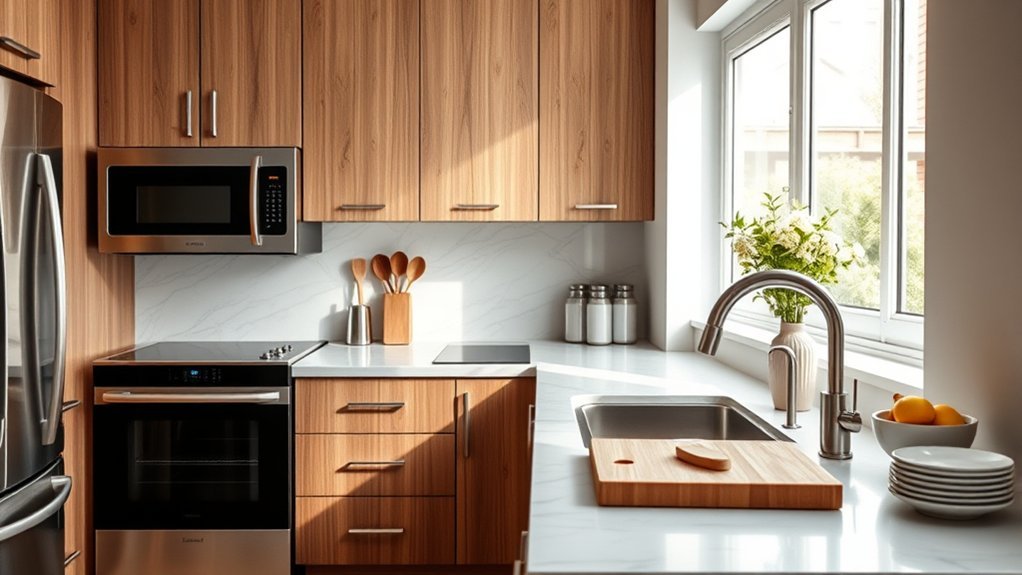
A kitchen is a room or designated area equipped for cooking, food preparation, storage, and cleaning. Most kitchens combine a cooktop or stove, refrigerator, sink, work surfaces, and cabinets, while larger kitchens may also include ovens, dishwashers, ventilation systems, islands, and pantry storage. In homes, kitchens often double as gathering spaces; in restaurants and other food businesses, they are organized around efficient workflow, sanitation, and food safety.
Quick Answer
A kitchen is a room or work area designed for preparing and cooking food. It normally includes cooking equipment, refrigeration, a sink, countertops, and storage. Kitchens range from small residential spaces to high-capacity restaurant and production facilities, but all are organized around storing, preparing, cooking, and cleaning.
Key Takeaways
- A kitchen is primarily a place equipped for cooking and food preparation.
- Core kitchen functions include food storage, preparation, cooking, washing, and equipment storage.
- Common layouts include one-wall, galley, L-shaped, U-shaped, and island kitchens.
- Home and commercial kitchens share basic functions, but commercial kitchens use heavier equipment and must follow applicable food-safety regulations.
- The word kitchen also has documented secondary meanings, including a restaurant’s cooking staff and, in African American English, hair at the nape of the neck.
What Is a Kitchen?
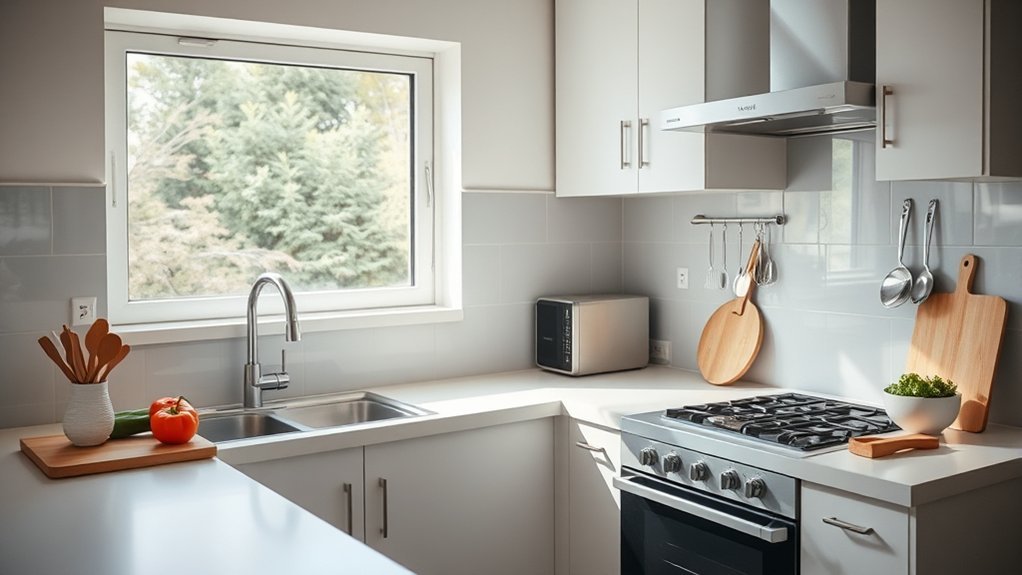
A kitchen is a designated place with cooking facilities. Merriam-Webster defines it as a place, such as a room, equipped for cooking.
In a home, the kitchen supports several everyday jobs: storing ingredients, washing produce and dishes, preparing food, cooking meals, and storing cookware. Depending on the layout, it may also include seating or connect directly with a dining or living area.
The word has other documented meanings. In restaurant usage, “the kitchen” can refer collectively to the people who prepare and cook the food. In African American English, “kitchen” can also refer to hair growing at the nape of the neck.
The role of the kitchen has changed considerably over time as heating, ventilation, plumbing, refrigeration, electricity, appliances, and fitted storage changed the way food could be prepared and stored.
Main Kitchen Appliances and Features
Modern kitchens usually combine appliances, work surfaces, storage, water, and ventilation. The exact equipment depends on the household, building, cooking habits, available space, and whether the kitchen is residential or commercial.
| Feature | Purpose |
|---|---|
| Refrigerator and freezer | Keep perishable and frozen foods cold |
| Cooktop, stove, or range | Boil, fry, simmer, and cook food |
| Oven | Bake, roast, and broil food |
| Countertops | Provide space for food preparation and small appliances |
| Cabinets and pantry storage | Organize cookware, dishes, utensils, and dry food |
| Sink | Support handwashing, rinsing, food preparation, and dishwashing |
| Dishwasher | Automate much of the dish-cleaning process |
| Range hood or ventilation | Help remove cooking vapors, odors, heat, and airborne contaminants |
Other common features include microwaves, small appliances, islands, breakfast bars, recycling and waste storage, under-cabinet lighting, and dedicated pantry areas. Not every kitchen needs every feature; a compact kitchen can perform the same core functions with much less equipment.
Common Kitchen Layouts and Work Zones
Kitchen design is often described by layout. Common arrangements include:
- One-wall kitchen: cabinets, appliances, and work surfaces are arranged along one wall, making it useful in small homes and apartments.
- Galley kitchen: two parallel runs of cabinets and counters create a compact work corridor.
- L-shaped kitchen: two connected runs meet at a corner, leaving the rest of the room relatively open.
- U-shaped kitchen: cabinets and work surfaces occupy three sides, providing substantial storage and counter space.
- Island kitchen: a freestanding island adds preparation space, storage, seating, a sink, or cooking equipment when room dimensions allow it.
A practical kitchen can also be planned around work zones rather than one rigid formula. Typical zones include cold-food storage, dry storage, preparation, cooking, and cleanup. Keeping frequently connected tasks reasonably close can reduce unnecessary walking and make the space easier to use.
Pro Tip: When evaluating a kitchen layout, focus on how you actually cook. Clear counter space beside the refrigerator, sink, and cooking area is often more useful than following a design rule that does not match your routine.
How Kitchens Are Used at Home and in Restaurants
At home, kitchens combine storage, cooking equipment, refrigeration, washing facilities, and work surfaces in a space designed around household meals and daily routines. Many residential kitchens also support dining, conversation, homework, entertaining, and other family activities.
A restaurant kitchen performs many of the same basic tasks but usually at much greater volume. Equipment may include commercial ranges, fryers, grills, preparation tables, walk-in refrigerators or freezers, high-capacity sinks, commercial dishwashing systems, ventilation hoods, and separate workstations for different stages of food preparation.
Commercial kitchens also require more formal procedures for receiving food, temperature control, preventing cross-contamination, cleaning, employee hygiene, storage, and waste handling. In the United States, the FDA Food Code serves as a model that state, local, tribal, and territorial authorities can use when creating or updating food-service regulations.
Note: Restaurant food-safety requirements are not identical everywhere. The FDA Food Code is a model framework; the rules that legally apply to a particular restaurant depend on the relevant jurisdiction.
Kitchen Food and Fire Safety
A well-designed kitchen should support safe food handling as well as efficient cooking. The USDA Food Safety and Inspection Service summarizes basic home food safety with four actions:
- Clean: wash hands, utensils, and food-contact surfaces regularly.
- Separate: prevent raw meat, poultry, seafood, and their juices from contaminating ready-to-eat food.
- Cook: use a food thermometer when needed to confirm that food reaches a safe internal temperature.
- Chill: refrigerate perishable food promptly and keep the refrigerator at a safe temperature.
Fire safety is equally important. The National Fire Protection Association advises staying in the kitchen while frying, boiling, grilling, or broiling and keeping combustible objects such as towels, packaging, and oven mitts away from the stovetop.
Warning: Never leave high-heat stovetop cooking unattended. Keep children, loose clothing, towels, paper packaging, and other combustible materials away from hot burners and cookware.
How Kitchens Have Changed Over Time
Kitchens have changed alongside developments in buildings, fuel, utilities, appliances, and household organization. In many earlier dwellings, cooking took place over an open hearth, sometimes in the main living space and sometimes in a separate service area.
Chimneys gradually transformed indoor heating and cooking by carrying smoke away from occupied rooms. According to Historic England, chimneys were not widely used in ordinary domestic buildings until brick became more available in the late medieval period. Before that, many homes relied on open central hearths with smoke escaping through the roof or other openings.
Later cooking technology increasingly enclosed and controlled the fire. Over the following centuries, purpose-built stoves, improved ventilation, piped water, gas, electricity, refrigeration, and standardized cabinetry made kitchens cleaner, more controllable, and more specialized.
A major milestone in modern kitchen design was the Frankfurt Kitchen, designed by Margarete Schütte-Lihotzky in 1926–27. The Museum of Modern Art describes the design as an effort to improve efficiency, hygiene, and workflow while reducing domestic labor. It used built-in storage, carefully placed work areas, a gas stove, labeled storage bins, and other compact features.
The modern kitchen developed not from one invention, but from repeated improvements in fire control, ventilation, water supply, refrigeration, appliances, storage, and workflow.
Common Kitchen Phrases and Word History
The history of the word kitchen reaches back centuries. According to Merriam-Webster, Middle English kichene came from Old English cycene, which ultimately traces to Latin coquina, meaning a kitchen, and coquere, meaning to cook.
Modern English uses the word in several related ways. The literal kitchen sink is the basin used for washing and food preparation, while the expression “everything but the kitchen sink” describes including almost everything imaginable. An open kitchen can describe a kitchen visible from an adjoining room or, in a restaurant, a cooking area visible to customers.
“The kitchen” may also mean the people working in a restaurant’s cooking operation, as in saying that the kitchen is preparing an order. “Cooking from scratch” generally refers to preparing food from basic ingredients rather than relying mainly on fully prepared components.
These uses show how a word that originally described a cooking place can also refer to the people, equipment, practices, and expressions associated with that space.
Frequently Asked Questions
What Is the Definition of a Kitchen?
A kitchen is a room or designated work area equipped for cooking and food preparation. It normally includes facilities for storing food, preparing ingredients, cooking, washing, and storing cookware or dishes.
What Does Kitchen Mean in Black Slang?
In African American English, “kitchen” can refer to the hair at the nape of the neck. Merriam-Webster documents this as a distinct meaning of the word and lists its first known use in this sense in 1964. The exact origin of the expression is uncertain.
What Are the Three Types of Kitchens?
There is no universal system that divides all kitchens into exactly three types. By use, kitchens can be broadly grouped into residential kitchens, commercial or foodservice kitchens, and large-scale production or institutional kitchens. By layout, however, common categories include one-wall, galley, L-shaped, U-shaped, and island kitchens.
What Does Kitchen Mean in Slang?
The meaning depends on context. In African American English, “kitchen” can refer to hair at the nape of the neck. In restaurant conversation, “the kitchen” can also mean the cooking staff or operation. Other local or subcultural uses should be interpreted from their specific context rather than treated as universal slang definitions.
What Are the Most Common Kitchen Layouts?
Common kitchen layouts include one-wall, galley, L-shaped, U-shaped, and island arrangements. The best option depends on room dimensions, doorways, appliance locations, available counter space, storage needs, and how many people normally use the kitchen.
What Are the Main Work Zones in a Kitchen?
The main work zones usually include food storage, preparation, cooking, cleaning, and cookware or dish storage. Organizing related tools and ingredients close to the zone where they are used can make cooking more efficient.
Conclusion
A kitchen is fundamentally a place for storing, preparing, cooking, and cleaning up food, but its role often extends beyond those tasks. Home kitchens can become gathering spaces, while restaurant kitchens operate as organized production areas built for speed, sanitation, and consistency. From open hearths to fitted modern rooms, kitchens have changed with technology and household life while keeping the same central purpose: making food preparation practical, safe, and efficient.
Sources
- Merriam-Webster: Kitchen — definition, secondary meanings, African American English usage, and word history.
- Historic England: Open Fires, Chimneys and Flues — development of open hearths, chimneys, and domestic smoke control.
- Museum of Modern Art: Frankfurt Kitchen — Margarete Schütte-Lihotzky’s 1926–27 kitchen and its focus on efficiency, hygiene, and workflow.
- U.S. Food and Drug Administration: FDA Food Code — model food-safety framework for retail and foodservice establishments.
- USDA Food Safety and Inspection Service: Keep Food Safe — Clean, Separate, Cook, and Chill food-safety guidance.
- National Fire Protection Association: Cooking Safety — stovetop supervision and home cooking-fire prevention guidance.