
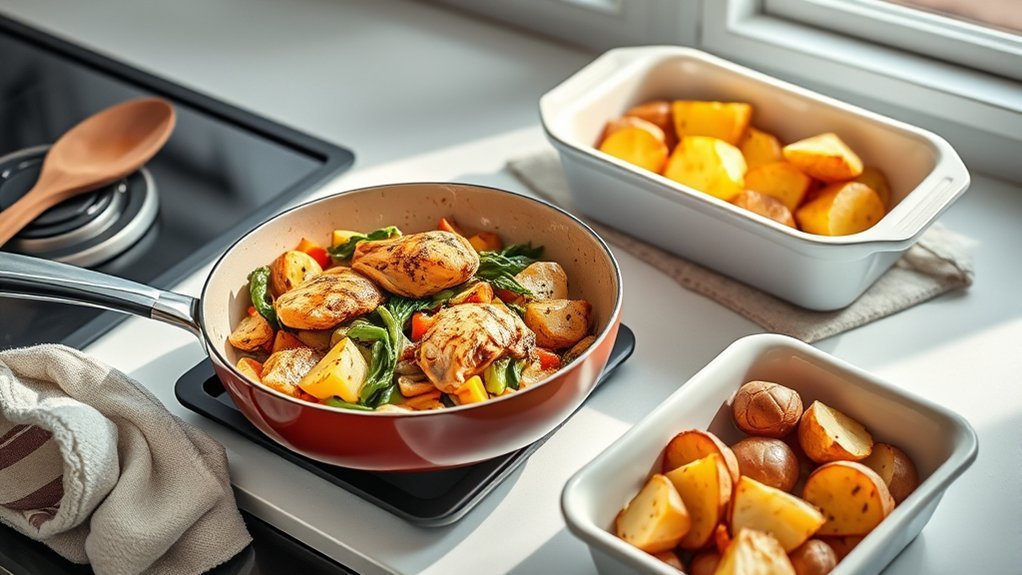
Ceramic cookware can be a good choice for everyday cooking when you want easy food release, simple cleanup, and a nonstick surface that performs well with eggs, fish, vegetables, pancakes, and other delicate foods. The main tradeoff is durability: ceramic-style nonstick coatings usually need gentler heat and care than stainless steel, and their slickness can decline with use. Safety, oven limits, induction compatibility, and PFAS claims also vary by product, so the construction and manufacturer specifications matter as much as the word “ceramic.”
Quick Answer
Ceramic cookware is a good option for low-to-medium-heat cooking and foods that benefit from easy release. Many ceramic-coated pans are sold as PFAS-free alternatives to conventional nonstick cookware. Their main weakness is that the coating can lose its nonstick performance faster than PTFE or uncoated stainless steel lasts.
Key Takeaways
- Most modern “ceramic nonstick” pans are metal cookware coated with a silica- or siloxane-based sol-gel surface rather than cookware made entirely from ceramic.
- Ceramic nonstick works especially well for eggs, fish, pancakes, vegetables, and other foods cooked at low to medium heat.
- The coating generally loses its easy-release performance sooner than durable stainless steel lasts and, in comparative testing, sooner than quality PTFE coatings.
- Do not assume every ceramic pan is PFAS-free, induction-ready, or safe for the same oven temperature; check the individual manufacturer’s specifications.
- Low-to-medium heat, nonmetal utensils, gentle cleaning, and protection from scratches can help the coating last longer.
What Is Ceramic Cookware?
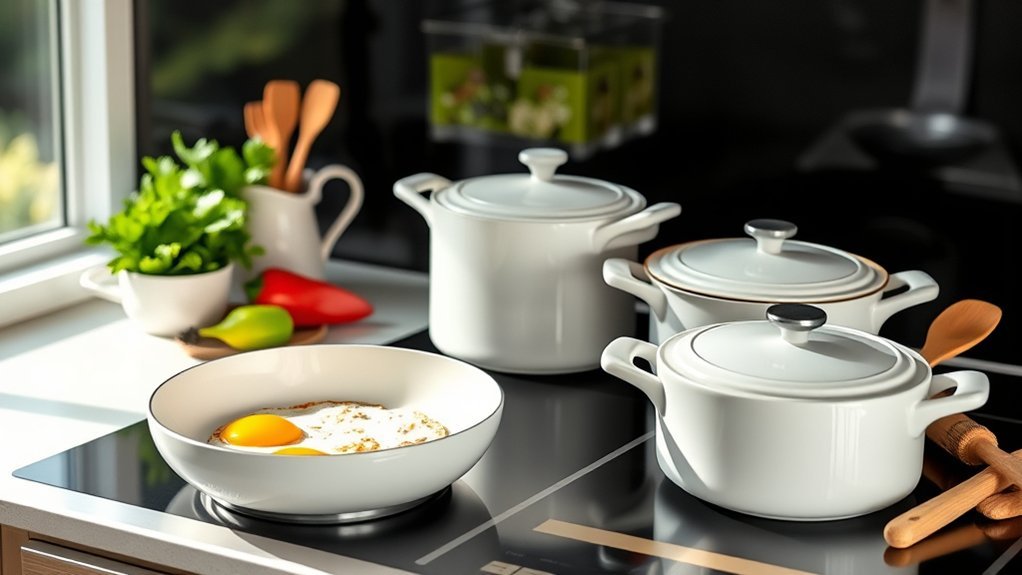
In the nonstick cookware market, ceramic cookware usually means a metal pan—often aluminum or stainless steel—with a ceramic-style nonstick coating on the cooking surface. It should not be confused with traditional pottery, stoneware, or cookware made primarily from fired ceramic material.
Many modern ceramic nonstick surfaces are produced with a sol-gel coating. These coatings can use silica particles and siloxane-based materials to create a smooth surface that helps food release. Research comparing commercial coatings describes sol-gel ceramic systems as a distinct alternative to fluoropolymer nonstick coatings.
The underlying pan still matters. An aluminum body can heat quickly and evenly, while stainless-steel construction can add durability or induction compatibility. The coating itself does not determine all of the pan’s heating characteristics.
Induction compatibility also depends on the base. A ceramic-coated aluminum pan will not automatically work on induction unless it includes a magnetic base or other induction-compatible construction. Check the induction symbol or manufacturer’s specifications before buying.
Is Ceramic Cookware Safe?
Well-made ceramic-coated cookware can be suitable for everyday cooking when it is used according to the manufacturer’s instructions. Many ceramic nonstick brands specifically market their coatings as being made without intentionally added PFAS or PTFE, which can appeal to buyers who want a nonstick surface without a fluoropolymer coating.
However, “ceramic” alone does not prove that every product has the same composition. Check the manufacturer’s actual PFAS, PTFE, lead, cadmium, food-contact, and testing statements instead of relying only on front-of-package terms such as “healthy,” “green,” or “nontoxic.”
The U.S. Food and Drug Administration also notes that authorized PFAS used in conventional nonstick cookware are polymerized and tightly bound to the cookware and that studies show negligible amounts capable of migrating to food. This means the safety comparison is more nuanced than simply labeling ceramic “safe” and PTFE “unsafe.”
Warning: Do not leave coated cookware heating empty over a powerful burner. Use the heat range and oven limit listed by the manufacturer. Excessive heat can damage nonstick coatings, handles, lids, and other pan components even when the base metal itself could tolerate a higher temperature.
Quality and traceability also matter. In a December 2024 safety letter, the FDA warned retailers about certain imported metal cookware that could leach lead. The issue was not specific to ceramic nonstick coatings, but it reinforces the value of buying cookware from identifiable manufacturers that provide material and food-contact information.
How Ceramic Cookware Compares to Teflon
Ceramic and PTFE-based nonstick cookware can both release delicate food easily, but they use different coating systems and have different performance tradeoffs.
PTFE is the polymer commonly associated with traditional nonstick cookware and the Teflon name. Ceramic nonstick coatings typically use sol-gel technology rather than PTFE. Ceramic can therefore be attractive when a buyer specifically wants cookware sold as being made without intentionally added PFAS.
That difference does not mean properly used PTFE cookware is automatically unsafe. The German Federal Institute for Risk Assessment states that adverse health effects are not expected when PTFE-coated cookware is used as intended. Its main warning is against strong overheating of empty cookware: PTFE can begin decomposing at around 360°C, or about 680°F, and above, releasing gases that may be hazardous.
PTFE also tends to have an advantage in sustained nonstick performance. A 2024 Journal of Food Engineering study found tested PTFE and PFA coatings delivered substantially lower food-release forces than the tested sol-gel ceramic coatings. A 2025 follow-up study likewise reported stronger long-term nonstick performance from PTFE under the tested cooking cycles.
| Feature | Ceramic Nonstick | PTFE Nonstick | Stainless Steel |
|---|---|---|---|
| Food release | Excellent when new | Excellent and often longer-lasting | Requires heat and fat technique |
| Best heat range | Usually low to medium for longest coating life | Low to medium for routine nonstick cooking | Low through high, depending on construction |
| Coating durability | Can lose slickness with wear | Typically stronger nonstick longevity | No nonstick coating to wear out |
| PFAS | Many products are marketed as made without intentionally added PFAS; verify the product | PTFE belongs to the broad PFAS family | Uncoated stainless steel does not need a PFAS nonstick surface |
| Best fit | Gentle everyday nonstick cooking | Maximum easy release and convenience | Searing, browning, durability, and long service life |
Ceramic Cookware Benefits for Everyday Cooking
A well-made ceramic pan offers a smooth cooking surface that can make delicate foods easier to flip and remove without tearing. Eggs, omelets, pancakes, flaky fish, and tender vegetables are especially well suited to this type of pan.
The easy-release surface also lets cooks use relatively small amounts of oil or butter when a recipe allows it. That can be convenient for people who prefer lighter cooking, although using a nonstick pan does not automatically make a meal healthier.
Cleanup is another advantage. When the coating is performing correctly, food residue often wipes away with warm water, mild dish soap, and a soft sponge instead of aggressive scrubbing.
Ceramic cookware is also sold in many colors and finishes, making it popular in kitchens where cookware remains visible on open shelving or hanging racks.
Compatibility varies by model. Some ceramic-coated cookware works on gas, electric, glass, and induction cooktops, while other products do not support induction. Oven limits also vary because handles, lids, bonding materials, and coatings may have different temperature ratings.
Where Ceramic Cookware Falls Short
The biggest weakness of ceramic nonstick cookware is usually the gradual loss of its easy-release performance. A pan can still be physically usable after it becomes less slick, but eggs and other delicate foods may begin sticking more easily.
High heat, abrasive cleaning, cooking-spray residue, scratches, and thermal shock can accelerate that decline. Ceramic nonstick is therefore better suited to controlled everyday cooking than repeated hard searing or rough commercial-style use.
Shorter Nonstick Lifespan
Ceramic cookware often performs extremely well when new, but its nonstick lifespan can be shorter than many buyers expect. There is no reliable universal number of uses or years because coating formulations, cooking temperatures, utensils, cleaning methods, and pan construction differ widely.
Controlled comparisons provide a more useful picture. Research published in the Journal of Food Engineering found that tested PTFE and PFA coatings outperformed the tested sol-gel ceramic coatings in nonstick effectiveness, while a later 2025 study also found PTFE maintained stronger nonstick performance over repeated cooking cycles.
That does not mean every ceramic pan fails quickly. It means buyers should treat the coating as a wear surface and avoid promises of permanent nonstick performance.
Heat Sensitivity Issues
Ceramic cookware can tolerate normal cooking temperatures, but repeated high burner settings may shorten the life of the nonstick surface. Manufacturers commonly recommend low or medium heat for routine use.
There is no single accurate “breakdown temperature” that applies to every ceramic nonstick formulation. The safest rule is to follow the individual pan’s stovetop and oven-temperature instructions rather than relying on one number for the entire category.
High heat is also unnecessary for many foods that ceramic handles best. Eggs, pancakes, fish, and vegetables generally benefit from controlled heat rather than an extremely hot pan.
Care And Durability Limits
Ceramic nonstick needs more careful treatment than uncoated stainless steel. Metal utensils, abrasive pads, harsh cleaners, and careless stacking can scratch or dull the cooking surface.
Sudden temperature changes may also stress cookware. Let a hot pan cool before running cold water over it, and avoid moving cookware directly from a very cold environment to intense heat.
The base material affects durability too. Thin pans of any coating type can be more vulnerable to distortion than heavier, well-constructed cookware. Look at the full pan construction rather than judging durability from the coating alone.
Best Uses for Ceramic Cookware
Ceramic cookware works best when easy release matters more than intense browning. It is especially useful for delicate breakfast foods, fish, reheating, vegetables, and other everyday dishes cooked at controlled temperatures.
| Best Use | Why It Works | Watch For |
|---|---|---|
| Eggs and omelets | Easy release at gentle heat | Avoid excessive preheating |
| Fish | Helps protect delicate fillets | Use nonmetal utensils |
| Vegetables | Good for sautéing at controlled heat | Avoid prolonged maximum burner heat |
| Pancakes and crepes | Smooth surface aids flipping | Keep residue from building up |
| High-heat steak searing | Usually not the ideal tool | Consider stainless steel, carbon steel, or cast iron |
How to Make Ceramic Cookware Last Longer
Good care cannot make a ceramic coating permanent, but it can reduce avoidable wear. Manufacturer guidance for ceramic nonstick commonly emphasizes moderate heat, nonmetal tools, and gentle washing.
- Use low to medium heat for most cooking. Give the pan time to warm instead of immediately using the highest burner setting.
- Use silicone, nylon, or wooden utensils. Avoid knives, forks, whisks, or sharp metal spatulas on the cooking surface.
- Use a small amount of suitable oil or butter when needed. Avoid repeatedly burning oil onto the coating.
- Let the pan cool before washing. This reduces thermal shock.
- Wash with mild soap and a soft sponge. Skip steel wool and aggressive abrasive pads.
- Protect the cooking surface during storage. Use pan protectors or soft cloths when stacking cookware.
- Remove residue before assuming the coating has failed. Grease and cooking-spray buildup can make a surface feel sticky even when the coating is still present.
Pro Tip: If food suddenly starts sticking, clean the cooled pan thoroughly with a soft sponge and mild detergent before replacing it. Residue can reduce release performance. If the surface remains rough, visibly damaged, or consistently sticky afterward, replacement may make more sense.
How to Choose Ceramic Cookware
Look beyond color and the word “ceramic.” A better buying decision considers both the coating and the construction underneath it.
| What to Check | Why It Matters |
|---|---|
| Coating disclosure | Check whether the manufacturer specifically states that the food-contact coating is made without intentionally added PFAS or PTFE if that is important to you. |
| Base construction | Aluminum, stainless steel, thickness, and bonded layers affect heating, weight, warp resistance, and durability. |
| Induction compatibility | Ceramic coating alone does not make a pan induction-ready. |
| Oven limit | Handles, lids, coatings, and other parts can have different temperature limits. |
| Care instructions | Dishwasher claims, recommended utensils, and heat settings differ by manufacturer. |
| Manufacturer traceability | Clear material information, customer support, safety documentation, and a warranty are preferable to vague marketplace listings. |
Note: “PFOA-free” and “PFAS-free” are not interchangeable claims. If avoiding the broad PFAS category matters to you, look for an explicit PFAS statement from the manufacturer rather than relying only on a PFOA-free label.
Frequently Asked Questions
Is It Healthy to Cook on Ceramic?
Ceramic-coated cookware can be a practical cooking surface when it comes from a reputable manufacturer and is used according to its instructions. Many products are sold as being made without intentionally added PFAS or PTFE. The pan itself does not make food automatically healthy, but its easy-release surface can let you cook some foods with relatively little added fat.
Is It Better to Cook With Stainless Steel or Ceramic?
Stainless steel is generally the stronger choice for durability, browning, searing, and long-term use because it has no nonstick coating that gradually loses performance. Ceramic is easier for eggs, fish, pancakes, and other delicate foods. Many kitchens benefit from using stainless steel for high-heat work and one ceramic nonstick pan for gentle foods.
What Are the Downsides of Ceramic Cookware?
The main downside is coating longevity. Ceramic nonstick can gradually lose its slick food-release performance, especially when exposed to high heat, abrasive cleaning, metal utensils, residue buildup, or rough storage. It also requires checking product-specific induction and oven compatibility because these depend on the full pan construction.
Which Is Healthier, Ceramic or Nonstick?
There is no universal “healthier” winner. Ceramic appeals to shoppers seeking cookware made without intentionally added PFAS. Current FDA and BfR guidance also indicates that properly manufactured and properly used PTFE nonstick cookware is not expected to create a health risk through normal food contact. Whichever type you use, follow its heat and care instructions.
Can Ceramic Cookware Go in the Oven?
Some ceramic-coated cookware is oven-safe, but the maximum temperature varies by product. The limiting part may be the handle, lid, knob, coating, or bonding system rather than the metal pan body. Always use the manufacturer’s stated oven limit instead of assuming all ceramic cookware can tolerate the same temperature.
Does Ceramic Cookware Work on Induction?
Only if the pan has an induction-compatible magnetic base. The ceramic coating does not determine induction compatibility. Check the manufacturer’s specifications or induction symbol before buying.
Conclusion
Ceramic cookware is most useful as a gentle, convenient nonstick option rather than an indestructible all-purpose pan. Its smooth surface works especially well for eggs, fish, pancakes, vegetables, and other low-to-medium-heat cooking. The compromise is that the coating can gradually lose its easy-release performance and needs more careful treatment than uncoated stainless steel.
Choose ceramic cookware based on the full construction, not marketing language alone. Verify any PFAS-free claim, check induction and oven compatibility, use moderate heat, avoid metal utensils, and clean the surface gently. For hard searing and decades of service, stainless steel, cast iron, or carbon steel may be a better fit; for easy everyday food release, ceramic remains a practical option.
Sources
- U.S. Food and Drug Administration — Questions and Answers on PFAS in Food — current FDA context on authorized PFAS use and migration from nonstick cookware coatings.
- German Federal Institute for Risk Assessment — PTFE Nonstick Cookware FAQ — safety guidance and overheating information for PTFE-coated cookware.
- Journal of Food Engineering — Evaluation of the Effectiveness and Durability of Commercial Non-stick Coatings — comparative testing of PTFE/PFA and sol-gel ceramic coating performance.
- Results in Engineering — Towards a Greener Kitchen: Can Sol-Gel Ceramic Non-stick Coatings Replace Polytetrafluoroethylene? — updated comparison of ceramic sol-gel and PTFE nonstick durability.
- U.S. Food and Drug Administration — Letter to Retailers and Distributors of Cookware — cookware lead-leaching and food-contact safety guidance.
- GreenPan — Ceramic Nonstick Care Guidance — manufacturer guidance on heat, utensils, cleaning, storage, and coating care.