
Garden insecticidal soaps remain a practical choice for gardeners facing aphids, mites, whiteflies, and other soft-bodied pests. The 8 best options for 2027 include ready-to-use sprays, concentrates, and larger refill formats from trusted names like Garden Safe, Bonide, Safer, and Trifecta Crop Control. Each product brings a different balance of coverage, convenience, and plant safety. A closer look reveals which soaps stand out and which ones may suit specific garden needs best.
Garden Safe Insecticidal Soap Insect Killer Spray, 32 Oz
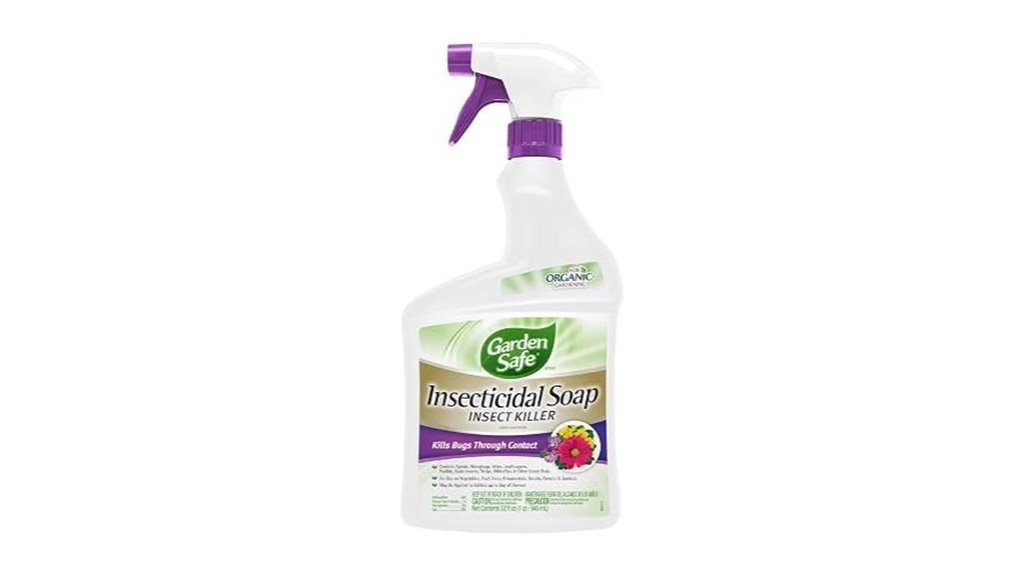
Garden Safe Insecticidal Soap Insect Killer Spray, 32 Oz is a strong choice for gardeners who want a ready-to-use, contact-based treatment for common soft-bodied pests. This 32-ounce formula uses potassium salts of fatty acids to kill aphids, mealybugs, mites, leafhoppers, psyllids, scale insects, thrips, whiteflies, and similar pests through direct contact. It can be applied indoors, outdoors, and in greenhouses, including on vegetables, fruit trees, ornamentals, shrubs, and flowers. It is usable up to harvest day. Coverage should include leaf undersides. Label directions and precautions should always be followed.
Best For: Gardeners looking for a ready-to-use, contact insecticide for controlling common soft-bodied pests on vegetables, fruit trees, ornamentals, shrubs, and flowers.
Pros:
- Effective against a wide range of pests including aphids, mealybugs, mites, thrips, and whiteflies.
- Safe for use on many plant types and can be applied up to the day of harvest.
- Suitable for indoor, outdoor, and greenhouse use.
Cons:
- Requires direct contact with pests to work effectively.
- May need thorough coverage, including undersides of leaves, for best results.
- Not a long-lasting preventive treatment and may require repeated applications.
Bonide Insecticidal Soap Spray, 32 oz Ready-to-Use
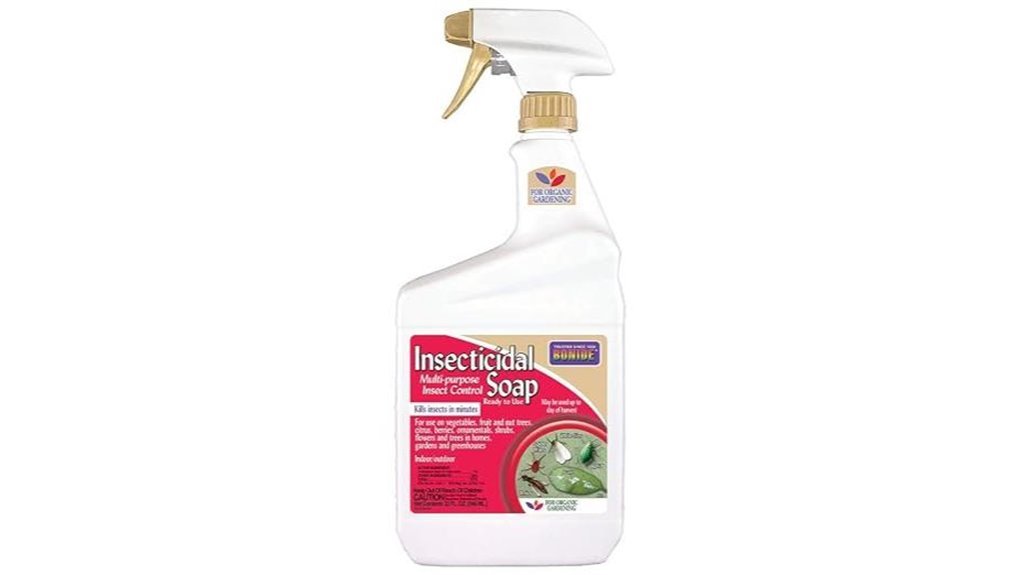
Bonide’s ready-to-use spray suits gardeners who want organic, broad-spectrum pest control fast. The 32-ounce formula targets aphids, spider mites, caterpillars, thrips, weevils, ants, flies, and other common pests through direct contact and ingestion. It fits home gardens, lawns, ornamentals, greenhouses, and edible crops such as basil, cabbage, onions, berries, apples, and herbs. Made with potassium salts of fatty acids from plants, it is approved for organic gardening and can be used up to harvest day. A built-in nozzle adds convenience.
Best For: Organic gardeners who want a ready-to-use, broad-spectrum insecticidal soap for quickly treating pests on edible crops, ornamentals, lawns, and greenhouse plants.
Pros:
- Ready-to-use spray with a built-in nozzle for easy application.
- Organic gardening approved and can be used up to harvest day.
- Effective against many common pests, including aphids, spider mites, thrips, and caterpillars.
Cons:
- Works best by direct contact, so thorough coverage is important.
- May require repeat applications for ongoing pest pressure.
- Not a targeted solution for severe or hard-to-reach infestations.
Bonide Captain Jack’s Insecticidal Super Soap Spray
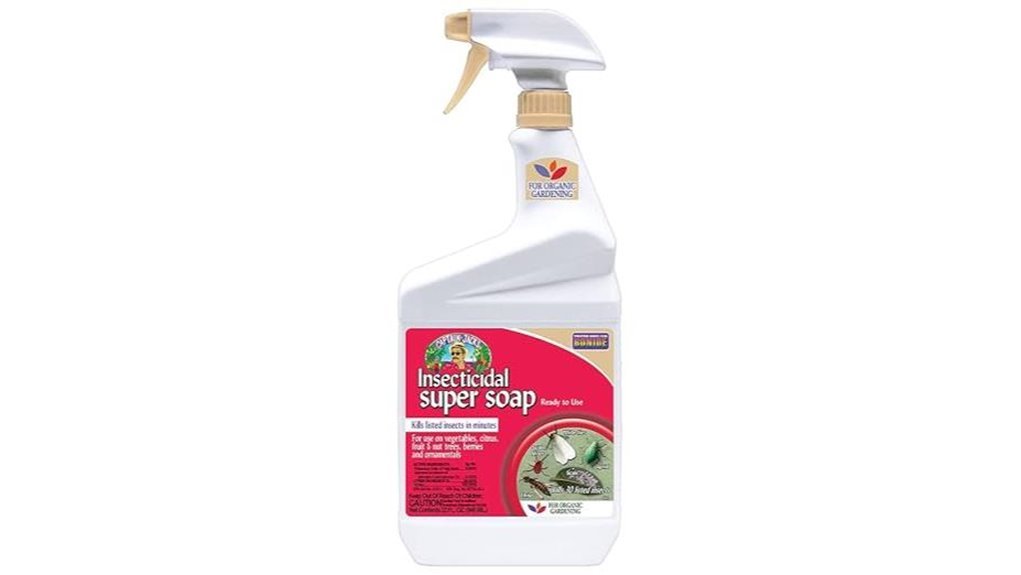
With its ready-to-use sprayer and broad-spectrum formula, this option suits gardeners wanting fast, convenient pest control. Bonide Captain Jack’s Insecticidal Super Soap is a 32-ounce spray from Bonide Products LLC, built for outdoor use in gardens, lawns, ornamentals, and greenhouses. Its potassium salts of fatty acids and spinosad help control more than 30 pests, including aphids, caterpillars, spider mites, thrips, and weevils, through direct contact and ingestion. It is approved for organic gardening and can also help with powdery mildew. The included nozzle supports immediate application on many crops and turf.
Best For: Gardeners and homeowners who want a ready-to-use, organic-approved spray for quick control of a wide range of outdoor pests on gardens, lawns, ornamentals, and greenhouse plants.
Pros:
- Broad-spectrum formula controls 30+ pests, including aphids, caterpillars, spider mites, thrips, and weevils.
- Ready-to-use spray with an included nozzle for convenient, immediate application.
- Approved for organic gardening and also helps with powdery mildew.
Cons:
- Intended for outdoor use, so it is not a good fit for indoor pest control.
- Works best with direct contact and ingestion, so thorough coverage is important.
- May require repeated applications for heavy or persistent infestations.
Safer Insect Killing Soap Concentrate for Plants
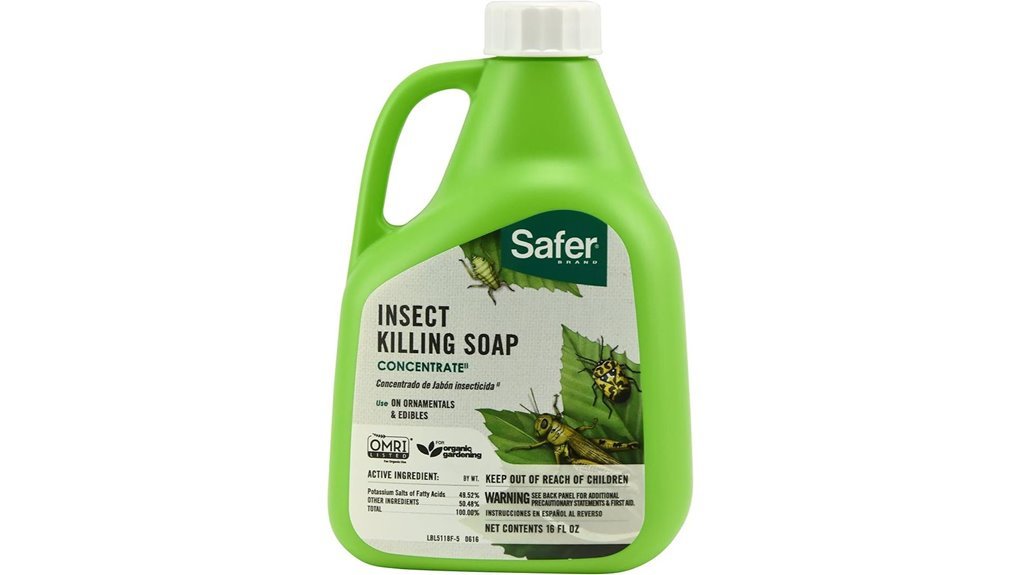
Safer 5118-6 Insect Killing Soap Concentrate suits gardeners needing an organic, contact-killing spray for soft-bodied pests. OMRI Listed for organic use, it targets aphids, whiteflies, thrips, spider mites, mealybugs, leafhoppers, grasshoppers, psyllids, sawfly larvae, soft scales, and squash bugs. The potassium salts of fatty acids dehydrate insects on contact, then break down naturally within 7-10 days. It can be used on flowers, herbs, vegetables, houseplants, trees, and shrubs. Applications should begin at first damage and repeat every 5-7 days while pests remain, avoiding peak heat and allowing use up to harvest.
Best For: Gardeners looking for an OMRI-listed, organic insecticidal soap to control soft-bodied pests on edible and ornamental plants.
Pros:
- Kills a wide range of soft-bodied pests on contact, including aphids, whiteflies, thrips, spider mites, and mealybugs.
- Safe for use on flowers, herbs, vegetables, houseplants, trees, and shrubs, with application allowed up to harvest.
- Breaks down naturally in 7–10 days and is gentle for indoor and outdoor use when applied correctly.
Cons:
- Only works on contact, so thorough coverage and repeated applications are needed.
- Must be avoided during peak heat to reduce the risk of leaf damage.
- Less effective on hard-bodied insects and will not provide long-lasting residual protection.
Trifecta Crop Control Insecticidal Soap | 32 fl oz, 2 Pack
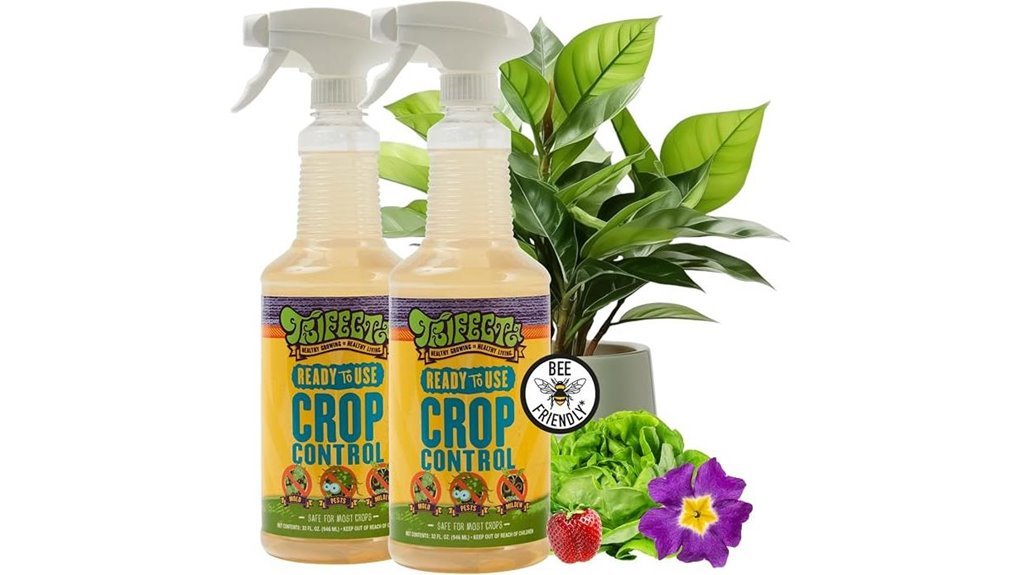
suits gardeners needing broad pest and mildew protection in one spray. This 32 fl oz, two-pack oil formula targets spider mites, aphids, whiteflies, fungus gnats, and other soft-bodied pests on indoor and outdoor plants. It also helps defend against powdery mildew and related diseases with strong coverage and lasting results. The ready-to-spray blend dries quickly, leaves no residue or odor, and is safe for edible crops, home gardens, and grow spaces. Gardeners value its biodegradable, made-in-USA formula for reliable control without harsh chemicals.
Best For: Gardeners and growers who want broad pest and mildew protection for indoor or outdoor plants, including edible crops and grow spaces.
Pros:
- Targets spider mites, aphids, whiteflies, fungus gnats, and other soft-bodied pests.
- Helps control powdery mildew and other diseases with quick-drying, no-residue application.
- Biodegradable, made in the USA, and safe for home, garden, and edible crops.
Cons:
- May require repeated applications for ongoing pest or mildew pressure.
- Spray coverage can be less effective if plants are heavily infested or disease is advanced.
- Oil-based formula may not be ideal for users seeking a non-oil treatment option.
Trifecta Crop Control Insecticidal Soap | 128 oz
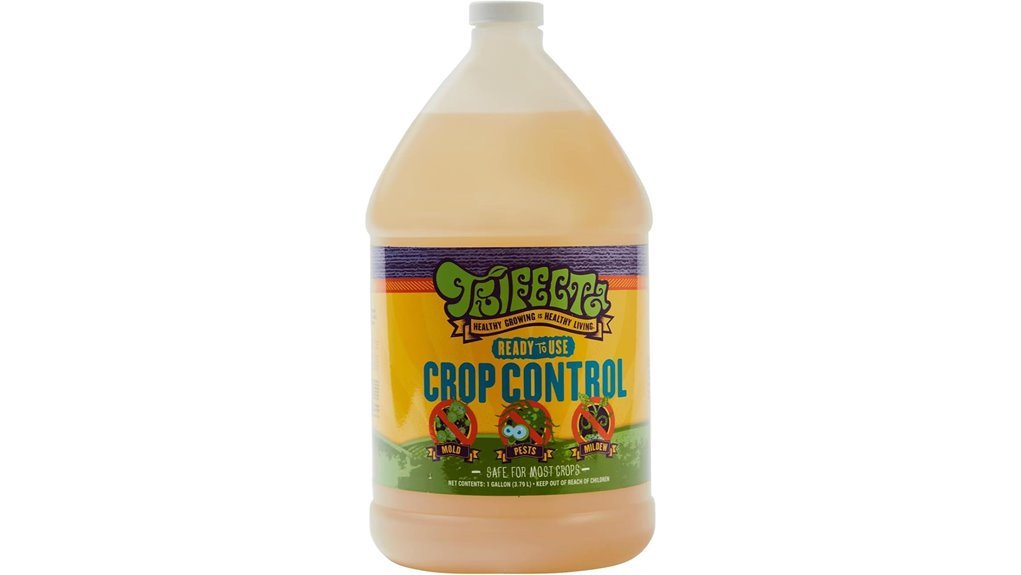
Ideal for organic gardeners, this 128 oz Trifecta Crop Control formula tackles pests and mildew on indoor and outdoor plants. Its plant-based, biodegradable oil targets spider mites, aphids, whiteflies, fungus gnats, and other soft-bodied pests while helping suppress powdery mildew. The concentrated, fast-drying spray leaves no residue and suits edible crops without harming beneficial insects. Gardeners use it on houseplants, vegetables, and ornamentals for broad coverage and lasting protection. Trusted by homeowners and professional growers, it offers eco-friendly performance, consistent results, and support through Amazon’s 30-day return policy.
Best For: Organic gardeners, homeowners, and professional growers looking for a plant-based, eco-friendly insecticidal soap to control soft-bodied pests and suppress powdery mildew on indoor or outdoor plants.
Pros:
- Targets spider mites, aphids, whiteflies, fungus gnats, and other soft-bodied pests.
- Safe for edible crops and suitable for both indoor and outdoor plants.
- Fast-drying, biodegradable formula leaves no residue and is gentle on beneficial insects.
Cons:
- May require repeated applications for severe or recurring infestations.
- Best suited for soft-bodied pests, so it may not control tougher insect problems.
- The concentrated formula may need careful measuring and proper mixing for best results.
Natria Insecticidal Soap RTU – Kills Aphids, Mites & Whitefly Fast, 24oz
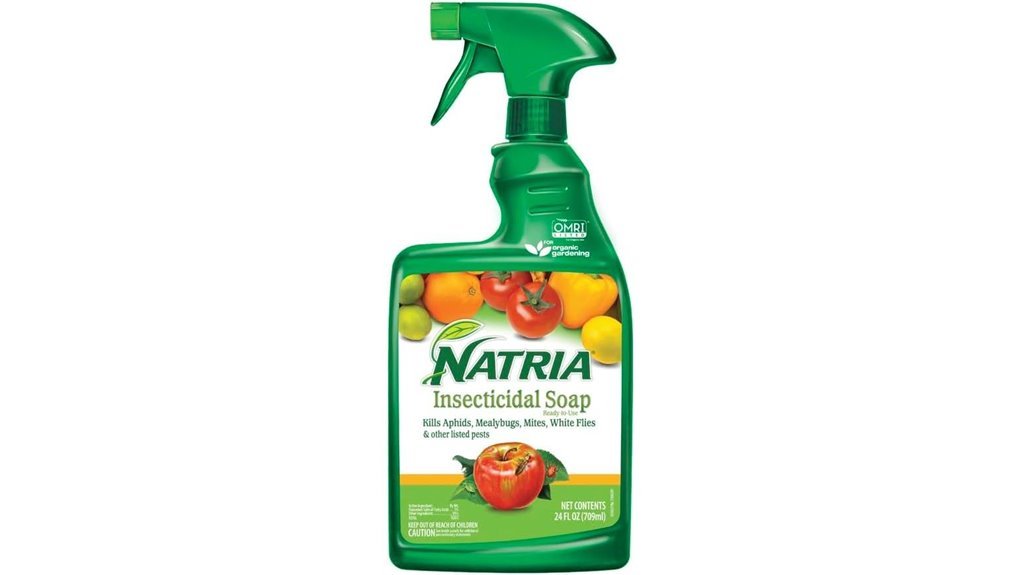
Natria Insecticidal Soap RTU suits gardeners needing fast, ready-to-use pest control. The 24oz spray bottle removes mixing steps and makes treatment simple for routine use. It targets aphids, mealybugs, mites, whiteflies, and similar soft-bodied pests, helping protect roses, flowers, fruits, vegetables, and houseplants. The formula works indoors and outdoors, adding flexibility for varied growing spaces. It also supports organic gardening practices and can be used up to harvest day, making it practical for edible crops. For gardeners wanting convenience and broad plant compatibility, it offers a straightforward option.
Best For: Gardeners who want a ready-to-use insecticidal soap for quick control of aphids, mites, whiteflies, and other soft-bodied pests on indoor or outdoor plants, including edible crops.
Pros:
- Ready-to-use 24oz spray bottle makes application quick and convenient.
- Effective on a wide range of plants, including roses, flowers, fruits, vegetables, and houseplants.
- Suitable for organic gardening and can be used up to harvest day.
Cons:
- Designed mainly for soft-bodied pests, so it may not help with tougher insect problems.
- May require repeated applications for ongoing pest control.
- Spray format may not be ideal for treating very large garden areas.
Fertilome (16052) Spinosad Soap Insecticide, Spinosad Bagworm, T, 16 oz
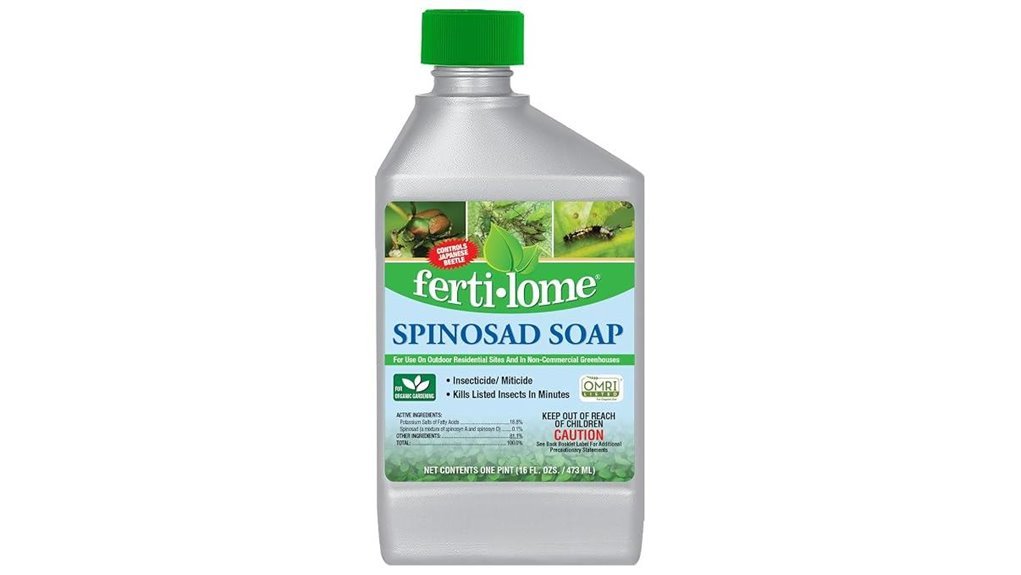
ferti-lome’s spinosad soap suits gardeners needing organic pest control on vegetables, fruits, and ornamentals. The 16 oz Fertilome 16052 formula combines potassium salts of fatty acids with a small dose of spinosad, helping manage aphids, ants, beetles, caterpillars, earwigs, leafhoppers, and other labeled pests. It is intended for outdoor use on gardens, lawns, shrubs, trees, flowers, and citrus, and it also fits greenhouse applications. OMRI listing supports certified organic production. Users should follow the label for dilution and application details, since the product’s performance depends on correct mixing and coverage.
Best For: Organic gardeners and homeowners looking for an OMRI-listed insect control spray for vegetables, fruits, ornamentals, and greenhouse use.
Pros:
- OMRI listed, making it suitable for certified organic production and use.
- Broad pest coverage for many common insects such as aphids, beetles, caterpillars, earwigs, and leafhoppers.
- Versatile for outdoor use on gardens, shrubs, trees, flowers, citrus, and greenhouses.
Cons:
- Must be mixed and applied according to the label, so results depend on correct dilution and coverage.
- Not a specialized solution for every pest, and effectiveness may vary by insect pressure and timing.
- Primarily intended for outdoor/greenhouse use, so it is not ideal for general indoor pest control.
Factors to Consider When Choosing Garden Insecticidal Soaps in 2026
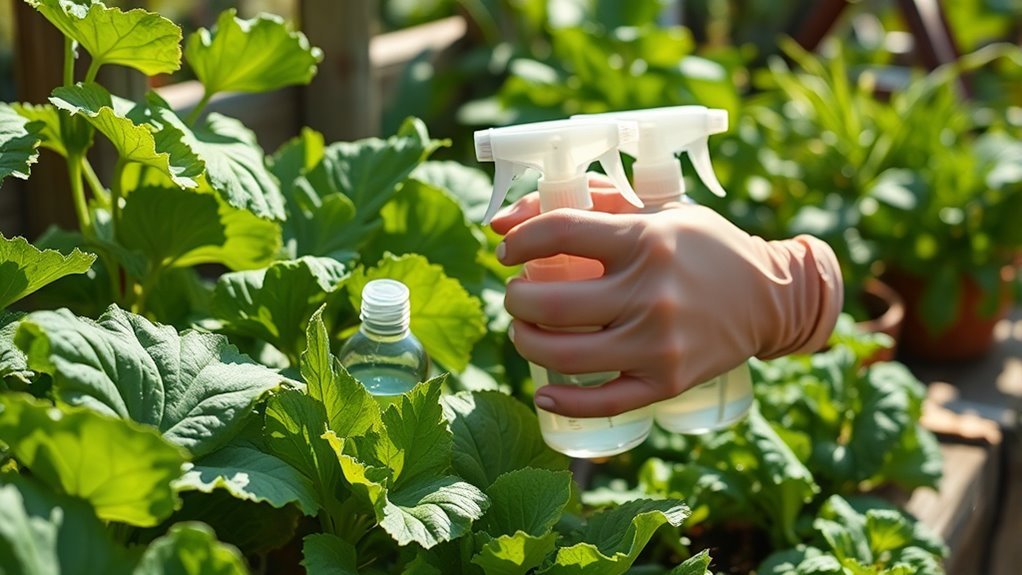
In 2026, choosing a garden insecticidal soap begins with reviewing the active ingredients and the range of pests it targets. Plant safety and organic certification also matter, especially for growers seeking effective treatment with lower risk to foliage and aligned with eco-friendly practices. The application method should then be checked for ease of use, coverage, and suitability for the garden setting.
Active Ingredients
Active ingredients are the key factor in choosing a garden insecticidal soap, since most rely on potassium salts of fatty acids to break down soft-bodied insects on contact. These compounds dehydrate pests quickly, making direct coverage essential for reliable results. Many products are formulated for organic gardening and can be used up to harvest, which adds practical value for edible crops. Some blends include spinosad, extending activity and improving control of certain chewing pests. Ingredient lists also matter for environmental reasons, as many soaps biodegrade rapidly and leave little residue. Because performance depends on contact, label directions and spray coverage should be reviewed carefully before purchase. A well-chosen formulation balances effectiveness, safety, and low environmental impact without adding unnecessary ingredients.
Pest Spectrum
Pest spectrum is one of the most practical filters when comparing garden insecticidal soaps in 2026, since products vary in how well they control aphids, spider mites, whiteflies, and other soft-bodied pests. Some formulas are broad-spectrum and address several common invaders at once, while others are more selective and excel on a narrower set of species. Matching the soap to the pest problem helps avoid paying for control that is not needed. Product labels should be checked for the insects listed, because efficacy can differ widely by formulation. Application notes also matter: some soaps rely on direct contact, while others are intended to act after insects feed on treated surfaces. Clear pest targeting improves choice and reduces guesswork for gardeners.
Plant Safety
Plant safety should be a top priority when comparing garden insecticidal soaps in 2026, especially for gardeners using them on vegetables, fruits, and ornamentals. A dependable product should be labeled for a wide range of plants, reducing the risk of injury to desirable crops. For edible gardens, products that can be used up to harvest day offer added confidence because they minimize residue concerns. Potassium salts of fatty acids are a common active ingredient and are generally well tolerated by most plants while targeting soft-bodied pests. Application matters as much as formulation: soaps can cause phytotoxicity if sprayed during peak heat or on stressed plants. Careful use helps preserve plant health and the effectiveness of treatment overall.
Organic Certification
Organic certification is an important consideration when comparing garden insecticidal soaps in 2026 because it signals that the product is made from natural ingredients and avoids synthetic chemicals. Certified formulas are generally gentler on the environment and on beneficial organisms that support garden balance. Products carrying an OMRI Listed mark meet recognized organic standards and may be used in certified organic farming and gardening systems. Many of these soaps rely on potassium salts of fatty acids, which target pests while limiting broader ecological disruption. Organic certification also supports same-day harvest use, since crops can often be picked and eaten without residue concerns. For home gardeners who sell or share produce, certification can improve market appeal among buyers seeking sustainable, responsible growing practices.
Application Method
Application method plays a major role in how well garden insecticidal soaps perform in 2026, since these products work best when they make direct contact with pests. Thorough coverage is essential, especially on leaf undersides and dense foliage where insects often hide. Ready-to-use sprays with built-in nozzles can make this easier, particularly in larger gardens. Timing also matters: treatment at the first sign of infestation helps stop pests before populations grow, and repeat applications may be needed. Spraying should be avoided during peak heat or strong sunlight, because soaps can scorch leaves under harsh conditions. When used properly, organic formulas may be applied up to harvest day, making them practical for edible crops while minimizing harm to beneficial insects.
Frequently Asked Questions
How Often Should I Reapply Insecticidal Soap After Rain?
Insecticidal soap should usually be reapplied after rain, because rainfall can wash away the residue that kills soft-bodied pests. If only a light drizzle occurred soon after spraying, a full reapplication may be needed once foliage dries. For heavier rain, reapply immediately after conditions improve, following the product label. Some soaps work best with coverage repeated every 5 to 7 days until infestations decline.
Can Insecticidal Soap Harm Beneficial Insects?
Like a selective rain, insecticidal soap can harm beneficial insects if it lands on them directly. It is most damaging to soft-bodied insects on contact, so bees, lady beetles, and lacewings are safest when sprays are used carefully. Applications in the evening, avoiding flowers, and targeting pests only can reduce risk. Residue usually breaks down quickly, but direct exposure still matters. Careful timing protects allies in the garden.
What’s the Best Time of Day to Spray Insecticidal Soap?
The best time of day is early morning or late evening, when temperatures are cooler and direct sun is limited. At those times, insecticidal soap dries more slowly and is less likely to scorch foliage. It also reduces immediate contact with active pollinators. Treatment should be applied when pests are present, coating affected surfaces thoroughly. A reapplication may be needed after rain, depending on product directions.
Do Insecticidal Soaps Work on Spider Mites Indoors?
Yes, insecticidal soaps can work on spider mites indoors, especially when contact is direct and thorough. They damage the mites’ outer membranes, helping reduce infestations quickly. Success depends on repeated applications, since eggs often survive treatment. Leaves, including undersides, should be sprayed carefully. Plants should be tested first for sensitivity, because some species can be injured. Good coverage and regular monitoring usually improve results indoors.
Can I Mix Insecticidal Soap With Other Garden Sprays?
Like oil and water, insecticidal soap should not be mixed with other garden sprays unless the label specifically allows it. Compatibility varies, and combining products can increase plant injury or reduce effectiveness. A detached recommendation would be to test a small area first and avoid tank mixes with oils, sulfur, or pesticides already known to stress foliage. When in doubt, separate applications and follow each product’s instructions closely.
Conclusion
In the garden’s quiet kingdom, these soaps are the patient wardens, washing away aphids, mites, and whiteflies like a cleansing rain after a storm. Some arrive ready at the gate, others in concentrated form, but each serves the same gentle law: protect the tender leaves without poisoning the soil. For growers seeking harmony, the right insecticidal soap is less a weapon than a shepherd’s hand, guiding the garden back toward balance, leaf by leaf.
