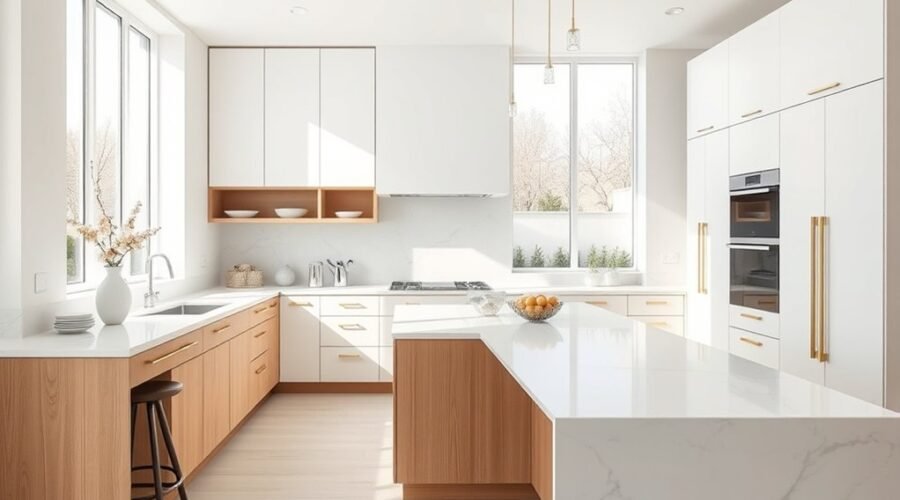
The most stylish kitchen cabinet colors right now lean warm and layered. Mushroom, taupe, sandy beige, and khaki create a cozy base, while dusty sage and deep navy add a fresh, modern edge. Natural white oak keeps the look authentic and inviting. Charcoal and midnight blue bring drama in darker kitchens. Two-tone designs also remain strong, with pale uppers and richer lowers creating balance, depth, and a highly personalized finish. More ideas follow below.
Top Kitchen Cabinet Colors for 2026
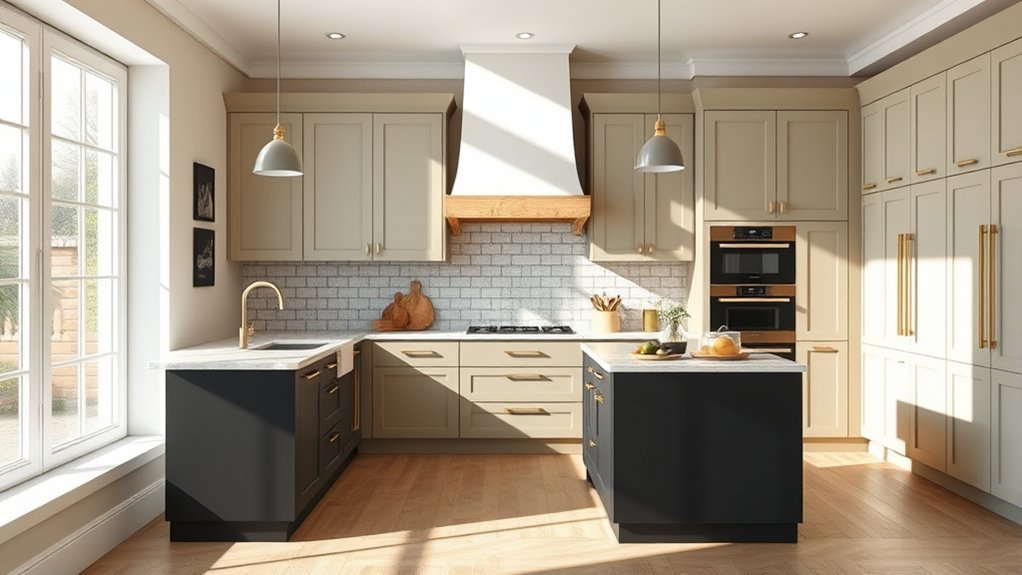
In 2026, kitchen cabinet color trends lean toward a more layered, grounded palette, with warm neutrals like mushroom and taupe setting a softer, more inviting tone.
Among the best kitchen cabinet colors, these kitchen cabinet paint colors read refined yet approachable, allowing a room to feel calm without losing character.
Nature-inspired greens, from muted sage to deep navy, are also gaining traction, especially on islands where they introduce quiet drama and a sense of freedom.
Two-tone designs continue to shape layouts, pairing pale uppers with richer lower cabinets for depth.
Dark & moody accents, including charcoal and midnight blue, can anchor the scheme while keeping it balanced.
Natural wood finishes are returning with confidence, and white oak in particular adds authenticity, grain, and warmth.
Together with walnut and other rich hues, these choices create cabinetry that feels current, expressive, and distinctly human.
Warm Neutrals and Khakis
Warm neutrals are taking a leading role in kitchen cabinet design, with mushroom, taupe, sandy beige, and khaki bringing a soft, inviting balance to open-plan homes and lower-light spaces.
These warm neutrals sit neatly between stark white and deeper tones, giving cabinets a relaxed versatility that suits modern, transitional, and organic kitchens alike.
Sherwin-Williams’ Universal Khaki stands out for its easy pairing with warm veined quartz counters and travertine floors, creating a composed look without feeling rigid.
Soft greige wall treatments and creamy white trim can deepen the sense of light while letting cabinetry and stone textures remain distinct.
The appeal is clear: homeowners are moving toward cozy inviting spaces that feel grounded, expressive, and free from the chill of overly cool palettes.
In that change, warm neutrals offer an elevated middle ground, making everyday kitchens feel calm, adaptable, and quietly refined.
Fresh Greens and Blues
Fresh greens and blues are stepping into kitchen cabinetry as sophisticated new neutrals, with dusty sage and rich navy bringing a calm, enduring presence to the space. In contemporary kitchens, sage green softens hard edges, while navy blue grounds the room with elegance. These kitchen cabinets pair easily with warm neutrals like taupe and cream, creating freedom for layered, livable interiors.
| Finish | Effect | Best Pairing |
|---|---|---|
| Sage green | Fresh, airy | Brushed brass |
| Navy blue | Bold, refined | Light perimeter cabinets |
| Dusty sage | Soft, timeless | Taupe counters |
| Deep blue | Dramatic, balanced | Earthy tones |
Used together, fresh greens and blues deliver visual interest without excess. A navy island beneath lighter cabinets can define zones and add dimension, while brushed brass hardware introduces warmth and polish. The result feels modern, expressive, and quietly liberated.
Natural Wood Cabinet Finishes
Natural wood cabinet finishes are regaining attention for the depth and authenticity of their grain, bringing visible warmth and texture back into the kitchen.
Walnut and white oak stand out for their refined, trend-conscious appeal, especially in light-stained or hardwax oil-treated versions that preserve natural character.
These finishes also pair easily with painted cabinetry, matte black accents, brushed brass hardware, and a range of countertop materials for a balanced two-tone look.
Wood Grain Warmth
Wood grain cabinetry is resurfacing as a defining kitchen choice, with walnut and white oak leading the return to natural finishes that showcase texture, depth, and understated warmth.
These wood finishes bring wood cabinetry back into focus, especially when paired with light-stained wood for an airy look or mid-tone stains for a more grounded update. Compared with painted kitchen cabinets, the grain reads as more authentic, aligning with neutral color palettes and a desire for freedom from overly processed surfaces.
- Soft warmth that feels lived-in, not staged
- Matte black cabinet hardware for crisp contrast
- Warm off-whites and pale quartz to keep the room open
Design-forward homeowners favor this shift because it balances craft, comfort, and modern restraint without sacrificing individuality.
Walnut And Oak
Walnut and white oak have returned as quiet standards in kitchen design, valued for their authentic grain, visible craftsmanship, and adaptable warmth. Their appeal lies in freedom from flat, overspecified surfaces; wood cabinets now signal restraint and confidence.
| Finish | Design effect |
|---|---|
| light-stained wood | Brightens while preserving texture |
| walnut | Adds depth and natural beauty |
| mid-tone stains | Refresh oak with ease |
These tones suit two-tone designs with painted cabinets, creating contrast without visual noise. Hardwax oil keeps the surface durable and the grain legible, supporting a more effortless lifestyle. Among current choices, oak and walnut read as timeless yet current, especially when the goal is a kitchen that feels grounded, tactile, and liberated from trend fatigue.
Pairing Wood Finishes
Pairing stained wood finishes with painted cabinets and tailored surfaces gives kitchen cabinetry more dimension without disrupting the room’s calm.
In current cabinet color trends, wood finishes—especially light-stained wood and softly mid-tone oak—signal authenticity while keeping the palette open and free.
Mixing stained wood with painted cabinets in two-tone designs creates texture without overwhelming, letting warmth and natural elements read as intentional, not busy.
Designers often pair stained wood with pale quartz or veined marble, then sharpen the look with matte black or brushed brass hardware.
- The room feels grounded, yet airy.
- The grain becomes a quiet luxury.
- The composition feels liberating, not fixed.
Dark Kitchen Cabinet Colors
Dark kitchen cabinet colors such as charcoal, black, and deep navy bring a dramatic, sophisticated presence to the kitchen while still allowing the room to feel grounded rather than overpowering.
In well-lit spaces, these rich tones create crisp contrast beside lighter countertops and warm brass or bronze hardware, sharpening the overall composition. Designers often choose dark kitchen cabinet colors for their ability to signal confidence and restraint at once, especially when matte finishes soften glare and add tactile depth.
As bold color choices continue to gain momentum, dark cabinetry has seen a notable rise in use on perimeter runs, reflecting a broader shift toward expressive, liberated interiors.
Charcoal, black, and deep navy also add visual interest when used in two-tone designs, where lighter elements can amplify balance. The result is a kitchen that feels current, tailored, and quietly assertive, with rich tones that support both style and everyday function.
Two-Tone Kitchen Cabinets
Two-tone kitchen cabinets build on the same appetite for depth seen in darker cabinetry, but they introduce contrast in a more measured, customizable way. In a kitchen, two-tone cabinets often place lighter upper colors above deeper lower tones, creating visual interest and a sense of expanded dimension.
This approach feels liberating because it invites color without demanding a full commitment, letting homeowners test painted finishes with confidence. Common combinations pair warm neutrals with dark accents, such as warm greige over charcoal, delivering quiet sophistication.
- lighter uppers can open the room
- darker bases ground the composition
- mixed colors offer freedom with balance
Designers also use natural wood tones to soften the palette and reinforce comfort. The trend’s 15% rise in perimeter cabinetry color suggests a clear move toward personalized, balanced kitchens.
For those seeking fresh cabinets with restraint, two-tone styling remains an elegant, low-risk choice.
Frequently Asked Questions
What Kitchen Cabinet Color Is Outdated?
Outdated kitchen cabinet colors are often stark all-white, cool gray, and harsh yellow, especially in monotonous monochromatic schemes.
Design trends now favor warmer neutral tones, softer pastel shades, and contrasting accents that feel freer and more inviting.
Heavy glossy finishes are fading, while matte textures and natural wood finishes bring depth and vintage vibes.
Even bold colors work better when balanced, avoiding cramped, overly dark cabinets with little light.
What Is the Most Popular Kitchen Cabinet Color Right Now?
The most popular kitchen cabinet color right now is warm white, though the theory that one shade can dominate is only partly true.
Design trends favor modern neutrals and timeless whites, paired with bold accents for contrast. Many spaces also embrace rich woods, soft pastels, vibrant blues, sleek blacks, earthy greens, and two tone combinations, creating kitchens that feel liberated, layered, and confidently personal rather than prescribed.
What Is the 2026 Color for Kitchen Cabinets?
For 2026, kitchen cabinets trend toward warm neutrals, smoky greens, and rich blues, with creamy off-whites, mushroom, taupe, and deep indigo leading the palette.
These trending hues suit modern designs and classic choices alike.
Thoughtful cabinet finishes, color combinations, and accent colors create balance in seasonal palettes, while light vs dark contrasts and material influences, especially natural wood, add depth, authenticity, and a liberated, tailored feel.
What Kitchen Cabinet Colors Will Look Outdated in 2026?
In 2026, stark classic white, icy gray, and flat pastel hues may read outdated, especially in kitchens lacking warmth.
Heavy dark shades and overly uniform matte finishes can feel rigid, while one-note palettes often seem stale.
Trendy neutrals, layered two tone schemes, wood tones, bold accents, and metallic details offer more freedom and depth.
Cool, synthetic looks are giving way to softer, textured, more liberated design choices.
Conclusion
In 2026, kitchen cabinets are turning heads in a big way, with color choices that can transform a room almost overnight. Warm neutrals and khakis bring a calm, effortlessly polished feel; fresh greens and blues add a lively, designer-approved twist; natural wood finishes deliver timeless warmth; and dark tones create dramatic sophistication. Two-tone cabinets, meanwhile, offer the ultimate style power move—bold, balanced, and unforgettable. The right cabinet color can make a kitchen feel spectacularly current.