
Small gaps between your washer and dryer can collect lint, detergent spills, dust, and lost laundry items. The right washer and dryer gap covers help keep these narrow spaces cleaner without making your laundry area harder to maintain.
The DOOHOOKIT 2-Pack Flexible Silicone Gap Covers are a practical choice for narrow gaps with fairly level surfaces. The CozyKit Silicone Gap Cover is another option, with a stated heat-resistance rating and a wide silicone profile.
Both products were primarily designed as stove gap fillers but are also marketed for use around washers and dryers. Their suitability depends on your appliance spacing, surface height, and ventilation requirements.
Washer and Dryer Gap Covers Compared
| Product | Best for | Length | Main features |
|---|---|---|---|
| Simple, low-profile gap coverage | 21 inches per strip | Flexible silicone, matte black surface, trim-to-fit design | |
| Flexible coverage with a stated heat rating | 21 inches per strip | 2.25-inch overall width, non-slip underside, rated to 446°F |
Washer and Dryer Gap Covers: Our Top Picks
1. DOOHOOKIT 2-Pack Flexible Silicone Stove Gap Covers
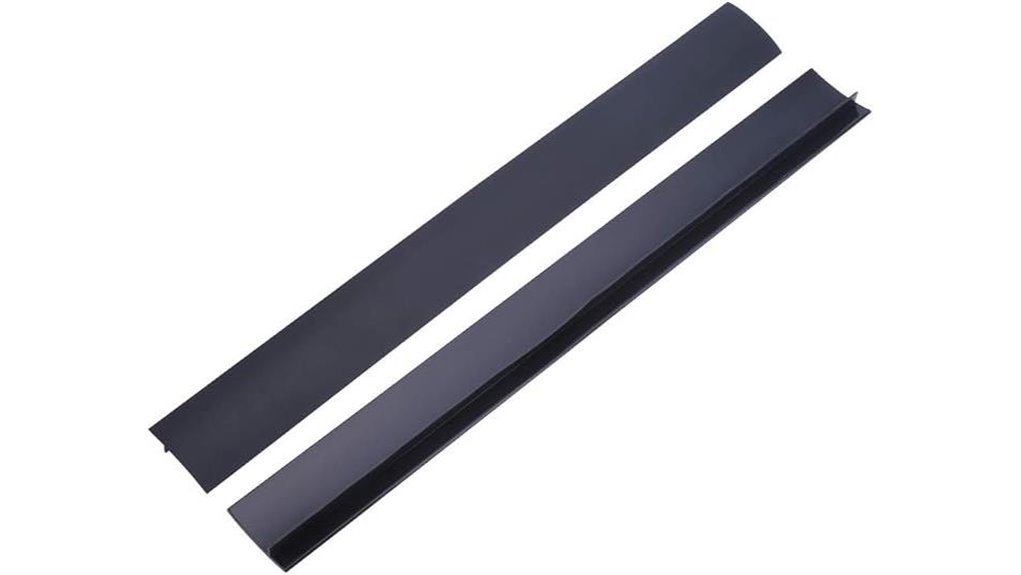
Bottom line: The DOOHOOKIT 2-Pack Flexible Silicone Stove Gap Covers offer a straightforward way to cover narrow gaps between laundry appliances or adjacent countertops. Their soft, cut-to-length design makes them a practical choice when both surfaces are fairly level.
These covers are primarily marketed for stove and countertop gaps, but their product listing also includes washers and dryers as possible applications.
Key Specifications
- Pack: Two strips, suitable for covering separate gaps.
- Length: 21 inches each, trimmable for shorter spaces.
- Material: Food-grade silicone, flexible for uneven edges.
- Cleaning: Wipe clean or dishwasher safe.
- Fit: Non-slip, T-shaped profile for narrow surface gaps.
The silicone material bends easily and can be trimmed with scissors. That gives you more control over the finished length than a rigid cover. It is especially helpful beside a countertop where the gap runs for only part of the appliance’s depth.
The matte black finish helps hide everyday fingerprints and smudges. A T-shaped profile rests across the adjoining surfaces, while the center portion sits in the gap to help reduce movement.
For laundry use, make sure both sides provide enough support. These strips are not a substitute for a wide bridge designed to catch clothing or objects falling between appliances.
- Flexible silicone can be trimmed for shorter gaps.
- Matte, low-profile design helps the strip blend into surrounding surfaces.
- Easy to wipe clean or remove for dishwasher cleaning.
- Two strips provide coverage for separate narrow spaces.
- Designed mainly for stove-style gaps, not wide appliance openings.
- May shift if the adjoining surfaces are uneven or vibrate heavily.
- Cutting the strip too short cannot be reversed.
2. CozyKit Silicone Kitchen Stove Counter Gap Cover (2-Pack)
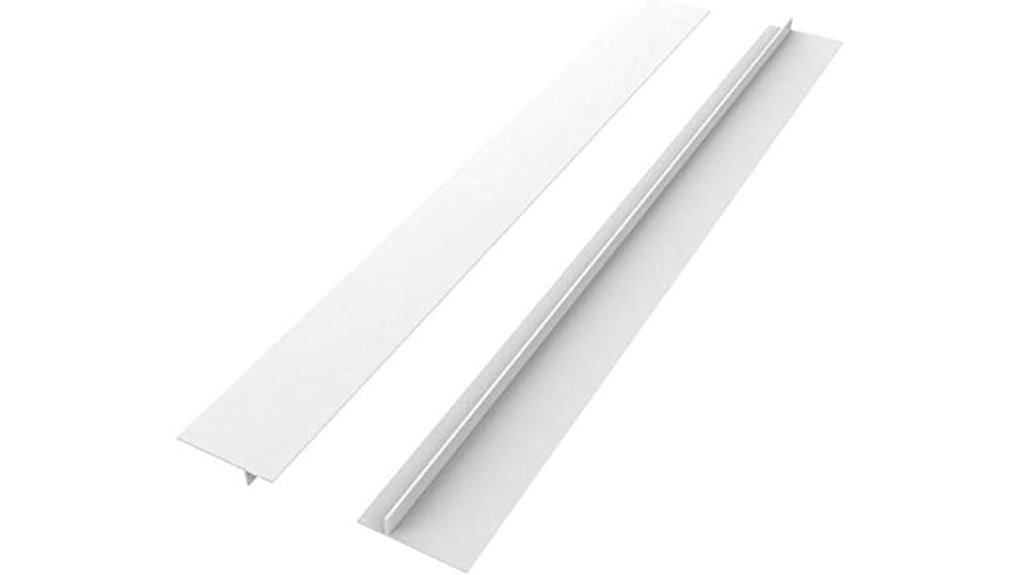
Bottom line: The CozyKit Silicone Kitchen Stove Counter Gap Cover is a flexible, washable gap filler with a stated heat-resistance rating of 446°F (230°C). It can suit narrow, supported gaps around washers and dryers, provided appliance ventilation and clearance requirements are met.
Like the DOOHOOKIT option, CozyKit was designed mainly for spaces beside stoves and countertops. Its product description also lists washing machines and dryers as possible uses.
Key Specifications
- Pack: Two strips for separate gaps.
- Length: 21 inches each, trimmable for shorter spaces.
- Material: Food-grade, heat-resistant silicone.
- Cleaning: Wipe clean or dishwasher safe.
- Fit: Flexible profile with a non-slip underside.
Each strip measures approximately 21 inches long and 2.25 inches wide overall. The wide top helps the material rest across adjoining surfaces, while its flexible construction allows it to follow minor surface differences.
CozyKit describes the top surface as matte and resistant to smudges. Its underside has a tackier finish intended to reduce slipping without permanently attaching the cover to the appliance.
The advertised 446°F temperature rating relates to the silicone material. It does not mean you can safely install the strip over a hot dryer vent or block ventilation openings. Always follow your appliance manufacturer’s instructions.
The original product description also advertises a lifetime warranty. Review the current seller’s written warranty terms before treating that coverage as a deciding factor.
- Advertised heat resistance up to 446°F (230°C).
- Flexible silicone adapts to minor surface differences.
- Wide top profile helps cover narrow exposed gaps.
- Dishwasher-safe material simplifies cleaning.
- Not intended for direct contact with flames or dryer exhaust outlets.
- May need trimming to match shorter spaces.
- The non-slip underside still depends on adequate surface contact.
DOOHOOKIT vs CozyKit: Which Should You Get?
Both covers use removable, flexible silicone and are intended to prevent debris from collecting in narrow gaps. DOOHOOKIT emphasizes a simple, low-profile fit, while CozyKit provides a stated temperature rating and overall strip width.
- Dimensions: Both are 21 inches long. CozyKit lists an overall width of 2.25 inches.
- Finish: DOOHOOKIT has a matte black surface. CozyKit also describes a matte upper surface and non-slip underside.
- Heat rating: CozyKit advertises resistance up to 446°F. A comparable model-specific rating was not confirmed for DOOHOOKIT.
- Cleaning: Both products can be wiped clean or washed in a dishwasher.
Which Washer and Dryer Gap Cover Should You Buy?
- For a narrow, level gap: Choose the DOOHOOKIT Silicone Gap Covers if the strip has enough support on both sides.
- For a specified silicone heat rating: Consider the CozyKit Silicone Gap Cover, while keeping it away from restricted airflow areas.
- For easy cleanup: Either option works when you want removable, washable silicone instead of a permanently attached filler.
- For a wide or stepped gap: Neither product is an automatic fit. Look for a purpose-built laundry gap bridge with dimensions that match your appliances.
How We Chose These Gap Covers
These selections are based on product descriptions, available specifications, relevant appliance guidance, and product-safety research. They are not presented as hands-on tested products.
- Product relevance: The products must function as gap fillers and identify laundry appliances among their possible uses.
- Fit and flexibility: We considered strip length, material, profile, and the ability to trim the cover.
- Cleaning: Removable and washable materials received preference over designs that could trap debris.
- Installation safety: We considered dryer ventilation requirements and the risk of interfering with appliance operation.
- Product information: We cross-checked accessible listings and reviewed the U.S. Consumer Product Safety Commission’s recall resources.
Safe Placement and Installation Tips
Install a gap cover only where the adjoining surfaces can support it without interfering with appliance operation. A neat-looking fit is not enough if the material blocks an opening or catches on a moving lid.
- Measure the length and width of the gap before choosing a strip.
- Check whether the washer and dryer tops sit at similar heights.
- Confirm that the proposed cover will not obstruct vents, controls, hinges, or access panels.
- Clean and dry the surfaces where the cover will rest.
- Trim the strip only after checking the required length.
- Place the cover across the gap and make sure it rests securely on both sides.
- Run a normal appliance cycle and check for movement, rubbing, or interference.
Dryer ventilation requirements vary by model. GE Appliances’ dryer clearance guidance explains why you must check the installation instructions for your specific machine.
Never use a silicone gap strip as a replacement for a dryer vent, exhaust duct, or manufacturer-specified clearance.
Factors to Consider When Choosing Washer and Dryer Gap Covers
The best cover is one that fits your actual laundry setup. Gap width, surface height, material, cleaning, and grip matter more than appearance alone.
Before buying, consider how often the machines vibrate, whether the covers must be removed for cleaning, and whether the gap runs beside another appliance or countertop.
Gap Width Measurement
Measure the gap at several points because appliances and adjoining surfaces may not be perfectly parallel. A cover that fits at the front might leave an opening farther back.
Some household appliance gaps measure between 0.5 and 2 inches, but there is no universal gap size. The correct cover depends on the actual opening and how much material rests on the surfaces to either side.
Check three dimensions:
- Gap width: The open space between the adjoining surfaces.
- Gap length: The total distance you want to cover.
- Height difference: Whether one surface sits above the other.
Flexible silicone can be trimmed for shorter lengths, but trimming does not make a narrow strip capable of spanning any width. For a wide opening, look for a purpose-built appliance bridge.
Heat Resistance Rating
A gap cover’s heat rating tells you something about its material, but it does not guarantee safe placement around a dryer. Even heat-resistant silicone must stay clear of ventilation openings and exhaust connections.
CozyKit advertises a 446°F (230°C) material rating. That figure is useful for comparing materials, not for overriding the dryer’s installation instructions.
For dryers, unobstructed airflow is especially important. Whirlpool’s dryer venting guidance explains how restricted airflow can reduce performance and contribute to overheating concerns.
Do not assume that every silicone cover has the same temperature rating. Check the specification for the exact product you buy.
Material Durability
Flexible silicone is useful because it bends without needing a rigid frame. It also makes cleaning easier, since you can lift the strip instead of scraping around a permanently fixed edge.
However, silicone is not always the best material for every laundry setup. Repeated vibration, excessive stretching, or poor support can cause a flexible strip to shift.
Look for a material that maintains its shape and is easy to remove. If a cover begins to crack, curl, or lose its grip, inspect the fit and replace it when necessary.
Easy Cleaning
Choose a cover that you can lift and clean without moving heavy appliances. Removable silicone designs are convenient because they can be wiped with a damp cloth, and many are dishwasher safe.
A matte finish may help hide visible fingerprints, but it does not eliminate the need for cleaning. Lint, detergent residue, and moisture can still collect around the edges or underneath.
Check underneath periodically. Dry the cover and the adjoining surfaces before replacing it, especially after cleaning up spills.
Secure Non-Slip Fit
A non-slip fit helps reduce movement when the washer spins or the dryer vibrates. Silicone covers generally rely on friction and their shape rather than permanent attachment.
A T-shaped strip can sit partly inside the gap while its upper edges rest on the appliances or countertop. This design works best when both sides offer enough support.
Some other gap covers use magnetic attachment or adhesive backing. Magnetic covers require compatible metal surfaces, while adhesive models may be less convenient to remove.
For the two silicone options in this article, check that the strips remain stable during normal appliance operation.
Mistakes to Avoid When Buying Washer and Dryer Gap Covers
- Buying without measuring: A strip that looks wide enough may not span the actual opening.
- Ignoring height differences: Uneven appliance tops can leave one side unsupported.
- Covering ventilation: Never block vents or required airflow clearances to improve appearance.
- Choosing a permanent fit: A cover that is difficult to remove can make routine cleaning harder.
- Assuming all silicone is identical: Compare dimensions, grip, and heat specifications for the exact product.
FAQs
How Do Gap Covers Stay in Place During Laundry Vibrations?
Gap covers stay in place through friction, their shape, or an attachment system. Silicone designs often have a non-slip underside or a center flap that fits into the opening. Magnetic covers attach to compatible metal surfaces, while adhesive versions stick to adjoining surfaces. A properly sized cover is less likely to shift during vibration. Check its position after a normal spin cycle.
Can Washer and Dryer Gap Covers Be Trimmed to Fit?
Yes, many silicone gap covers can be trimmed with scissors to match shorter openings. Both products reviewed here describe a trim-to-fit design. Measure carefully before cutting, and make sure the remaining material will still rest securely across the gap. Rigid, magnetic, or specially molded models may have different trimming restrictions, so follow the instructions for the specific product.
Are Gap Covers Safe Around Hot Dryer Exhaust Areas?
Gap covers should not be placed over dryer exhaust outlets, air intakes, or other ventilation openings. A material’s heat rating does not make blocked airflow safe. The installation instructions for your dryer take priority over a gap cover’s advertised temperature resistance. If the only possible position would interfere with airflow or a required clearance, do not install the cover there.
Do Gap Covers Affect Moving Appliances for Cleaning?
Yes, a gap cover can make moving appliances less convenient if it is tightly fitted, attached with adhesive, or extends underneath a machine. Removable silicone strips are generally easier to lift away before repositioning your washer or dryer. Remove the cover first, move the appliance carefully, then check the gap again before reinstalling it. Avoid pulling on a tightly trapped strip.
How Often Should Washer and Dryer Gap Covers Be Replaced?
Replace a gap cover when it becomes cracked, curled, damaged, or unable to stay in position. There is no single replacement schedule that applies to every silicone or magnetic model. Material quality, heat exposure, cleaning chemicals, and appliance vibration all affect its useful life. Inspect the cover every few months and clean underneath it to spot moisture or debris buildup.
Can You Use Stove Gap Covers Between a Washer and Dryer?
Yes, some flexible stove gap covers can also work between washers and dryers when the opening is narrow and the surfaces offer enough support. Both products in this comparison list laundry appliances among their possible uses. However, stove gap fillers are not designed to bridge every laundry setup. Check the gap dimensions, lid clearance, and ventilation before installing one.
Do Gap Covers Work When the Washer and Dryer Are Different Heights?
Some flexible covers can accommodate small differences in surface height, but a significant mismatch can prevent a secure fit. The strip may lift on one side or slide into the opening during vibration. Measure the height difference before purchasing. If the tops are noticeably uneven, a purpose-built laundry gap bridge may be a better solution than a narrow silicone stove strip.
Are Silicone or Magnetic Gap Covers Better?
Silicone is a practical choice for narrow spaces where you need flexibility, trimming, and easy removal. Magnetic covers can offer secure attachment when the appliance surfaces are made from compatible magnetic metal. Neither design is automatically better for every installation. Consider the material of your washer and dryer, the opening’s size, and whether the cover needs to move with the appliances.
Final Verdict
The best washer and dryer gap cover depends on the space you need to protect. For a narrow, supported opening, a flexible silicone strip is an easy-to-clean option. Always measure first and confirm that the cover will not obstruct ventilation or appliance movement.
Of the two products compared here, DOOHOOKIT is the simpler general-purpose choice. CozyKit is worth considering if its specified width and heat-rated silicone are more useful for your setup.
For a wider silicone profile with a stated temperature rating, compare the CozyKit Silicone Gap Cover before making your final choice.
