
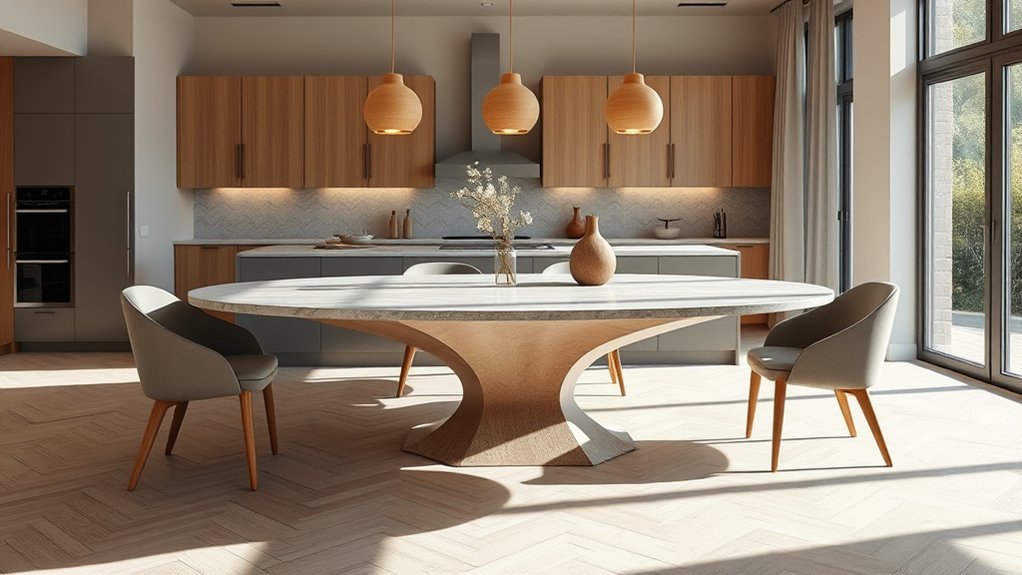
Kitchen islands are not disappearing in 2026, but homeowners have more choices when a large fixed island does not suit the room. Dining tables, peninsulas, breakfast bars, rolling prep carts, and vintage worktables can provide prep space, seating, storage, or better circulation. The right alternative depends less on fashion and more on the kitchen’s size, workflow, and everyday use.
Quick Answer
Nothing is universally replacing kitchen islands in 2026. Islands remain popular, but dining tables, peninsulas, breakfast bars, movable prep tables, rolling carts, and vintage worktables are useful alternatives when homeowners want more floor space, flexible seating, easier circulation, or less permanent cabinetry.
Key Takeaways
- Kitchen islands remain a major 2026 remodeling feature rather than a design element that is broadly going out of style.
- Peninsulas and breakfast bars work well where a freestanding island would make walkways too tight.
- Dining tables and worktables create a lighter furniture-style look but usually provide less built-in storage.
- Rolling carts and movable prep tables offer the most flexibility and require the least permanent commitment.
- Measure circulation, appliance doors, seating space, storage needs, and work-surface height before choosing any alternative.
What’s Replacing Kitchen Islands in 2026?
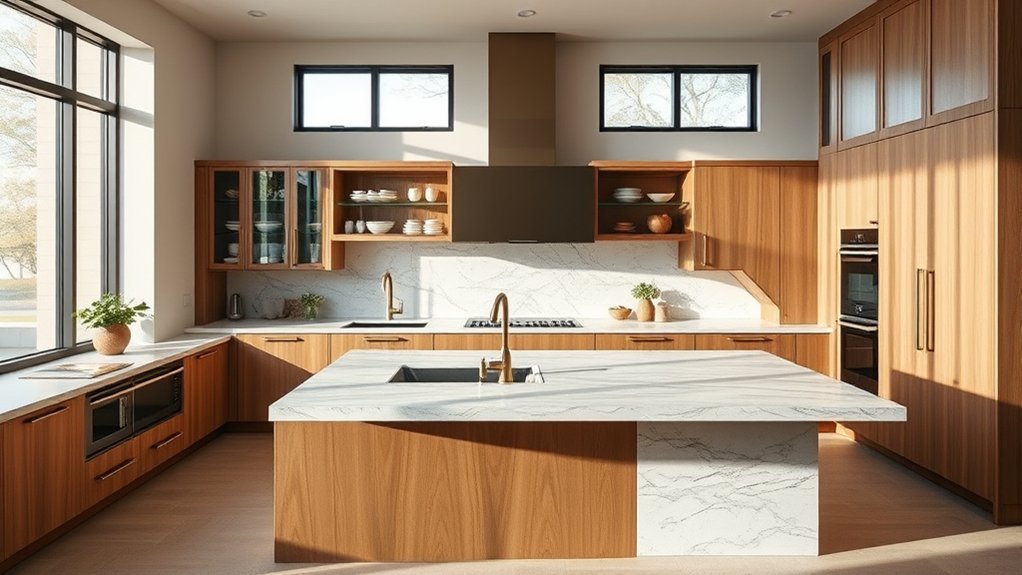
There is no single 2026 replacement for the traditional kitchen island. Instead, kitchen layouts are becoming more personalized. A dining table may work better for a family that values sit-down meals, while a peninsula may be better for a compact kitchen that still needs cabinetry and counter space.
Current remodeling data also shows why it is misleading to describe islands as obsolete. The 2026 U.S. Houzz Kitchen Trends Study found that 58% of renovating homeowners add or update an island. Separate Houzz reporting found that 52% of homeowners choosing islands selected one longer than 7 feet.
The shift is therefore less about eliminating islands and more about choosing the form that best supports the room. Popular alternatives include dining tables, breakfast bars, movable prep tables, kitchen peninsulas, vintage worktables, consoles, and rolling carts.
A kitchen peninsula can provide countertop space, cabinetry, and seating while remaining attached to a wall or cabinet run. This can make it easier to fit into a narrow floor plan.
Vintage work tables and freestanding prep tables offer another approach. Their open bases can make a kitchen appear visually lighter, and secondhand pieces can add character without committing to permanent cabinetry.
Multifunctional furniture also supports kitchens that need to switch between food preparation, dining, homework, entertaining, and everyday storage.
Sustainable choices can include reclaimed wood, reused furniture, salvaged components, or durable pieces designed for long service. The U.S. Environmental Protection Agency identifies source reduction and reuse as important ways to reduce material use and waste.
In 2026, the bigger trend is not the death of the kitchen island. It is choosing an island, peninsula, table, or movable workstation according to the way the kitchen is actually used.
Are Kitchen Islands Actually Going Away in 2026?
No. Available 2026 remodeling research shows that islands remain a prominent part of kitchen design. Houzz reports that nearly three in five renovating homeowners add or update one, while NKBA’s 2026 trend research continues to identify storage-rich islands as an important kitchen feature.
What is changing is the design of the island itself. Homeowners and designers are using islands for storage, appliances, seating, entertaining, food preparation, and visual contrast rather than treating them as simple rectangular cabinets in the middle of a room.
Curves are one visible change. Houzz’s 2026 Emerging Summer Trends Report recorded a 123% increase in searches for “rounded kitchen island” and a 61% increase for “curved peninsulas and islands.” Larger islands also remain prominent in current renovation data.
Note: A design trend is not a requirement. A smaller kitchen may work considerably better without an island even when islands are popular nationally.
Dining Tables That Double as Kitchen Islands
Dining tables that double as kitchen work surfaces offer a softer, furniture-like alternative to built-in islands. They are especially useful when the main goal is seating and gathering rather than cabinets, plumbing, or integrated appliances.
Open legs can create clearer sightlines and make a compact kitchen feel less crowded. A table can also be moved or replaced more easily than a permanently installed island.
| Feature | Benefit | Design Effect |
|---|---|---|
| Generous surface | Supports light meal prep and dining | Creates one shared gathering area |
| Open base | Keeps the floor visually open | Feels lighter than full cabinetry |
| Vintage or reclaimed materials | Can extend the useful life of existing materials | Adds character and texture |
The main compromise is storage. A dining table generally lacks the deep drawers, cabinets, outlets, sink, dishwasher, or other integrated features that can be built into a permanent island.
Height also matters. A normal dining table is lower than a typical kitchen counter, so it may be comfortable for eating but less comfortable for prolonged standing prep. A counter-height worktable is usually the better choice when chopping and food preparation are the main priorities.
Pro Tip: Decide whether the surface will be used primarily for sitting or standing before buying a table. Furniture that is comfortable for dining is not automatically the best height for food preparation.
Breakfast Bars and Peninsulas for Small Spaces
Breakfast bars and peninsulas are space-efficient alternatives to freestanding islands, particularly when the room is too narrow to maintain comfortable walkways around four sides of an island.
A breakfast bar can add a small eating or laptop area without occupying the center of the room. A peninsula extends from a wall or cabinet run and can provide countertop space, storage, seating, electrical outlets, or even appliances while requiring circulation on fewer sides.
- Narrow breakfast bars preserve more open floor space while offering casual seating.
- Peninsulas can provide cabinetry and a substantial work surface without needing an island-sized footprint.
- A peninsula can visually separate cooking and dining zones while keeping the room open.
- Because a peninsula is fixed, plumbing and electrical integration may be easier to plan than with movable furniture.
The drawback is that a peninsula can create a dead end if it is poorly positioned. The layout should be checked against refrigerator doors, dishwashers, ovens, cabinet drawers, stools, and the routes people regularly take through the kitchen.
Movable Kitchen Islands and Rolling Prep Tables
Movable kitchen islands and rolling prep tables offer the greatest flexibility. They can provide extra work surface during meal preparation and then move aside when the kitchen needs more open floor area.
In small kitchens, that can be more useful than a permanent island. Designs with shelves, drawers, towel bars, or removable trays provide additional storage without requiring new cabinetry.
Mobility is especially useful for renters and for homeowners who are unsure whether they want a permanent island. A movable piece can also serve several purposes: chopping station, serving cart, baking surface, coffee station, or temporary buffet.
However, wheels should lock securely when the surface is being used for cutting or mixing. Heavy appliances should only be placed on furniture designed to support their weight, and cords should not be stretched across walkways.
Vintage Worktables, Consoles, and Breakfast Nooks
Vintage worktables are appealing kitchen alternatives when the goal is to add age, texture, and practical storage without installing another bank of cabinetry.
Vintage worktables bring age, texture, and practical storage to kitchens that need more than a standard island can offer.
In 2026 kitchen design, vintage worktables, consoles, and breakfast nooks fit the broader preference for personalized, multifunctional spaces. They are best viewed as individual design solutions rather than a universal replacement for islands.
Consoles provide a lighter freestanding silhouette and can work along a wall for serving, coffee equipment, or occasional prep. Breakfast nooks turn corners and window areas into inviting zones, often combining dining with built-in seating and storage.
- A weathered worktable with drawers and open shelves
- A slim console paired with stools where adequate knee room is available
- A bright breakfast nook with bench storage and washable cushions
Reused and salvaged pieces can also support sustainability. Reuse extends the service life of existing materials and can reduce demand for newly manufactured products. Condition still matters: inspect older furniture for stability, damaged finishes, loose joints, and surfaces unsuitable for direct food contact.
When Does an Island Alternative Make More Sense?
An alternative becomes attractive when a permanent island would solve one problem but create another. A kitchen does not benefit from extra counter space if that counter makes the refrigerator difficult to open or turns the main walkway into a bottleneck.
Consider an alternative when:
- The room cannot comfortably support circulation around a fixed island.
- Seating matters more than built-in cabinet storage.
- The kitchen needs floor space that can change for parties, children, pets, or mobility needs.
- You rent the home or do not want permanent construction.
- You already have enough cabinets but need occasional prep space.
- A wall-connected peninsula can use the available footprint more efficiently.
- A dining table would eliminate the need for a separate eating area.
Conversely, a permanent island may remain the stronger choice when the kitchen needs substantial drawers, an appliance, sink, outlets, dedicated seating, or a large uninterrupted work surface.
Kitchen Island Alternatives Compared
| Option | Best For | Main Advantage | Main Tradeoff |
|---|---|---|---|
| Dining table | Dining and gathering | Comfortable seating and a lighter appearance | Limited built-in storage and lower work height |
| Peninsula | Compact or narrow kitchens | Counter space and cabinetry without four open sides | Permanent and can create a dead end |
| Breakfast bar | Very small kitchens | Small footprint with casual seating | Less prep and storage space |
| Rolling cart | Renters and flexible layouts | Easy to move and relatively low commitment | Less stable and usually smaller |
| Worktable | Prep-focused kitchens | Large open work surface with furniture character | Usually less concealed storage |
| Breakfast nook | Family dining | Uses corners efficiently and can include bench storage | Does not replace a central prep surface |
Measure Before Choosing an Island Alternative
Before buying furniture or adding cabinetry, map the kitchen at full scale. Measure the proposed table, peninsula, cart, or worktable and then account for people standing at the surface, pulled-out chairs or stools, appliance doors, drawers, cabinet doors, and normal walking paths.
Painter’s tape on the floor is an easy way to test a proposed footprint. Leave the outline in place for a day or two and use the kitchen normally. Open the refrigerator and dishwasher, carry groceries through the room, pull out chairs, and see whether two people can cook without repeatedly moving around one another.
Accessibility may require additional planning. For covered accessible kitchens, U.S. accessibility standards specify clear floor and maneuvering requirements, including minimum clear floor areas at certain work surfaces and appliances. Those standards do not automatically govern every private home, but they illustrate why adequate open space can matter for people using mobility aids.
Note: Check applicable local building and electrical requirements before adding permanent counters, plumbing, outlets, cooktops, or other built-in equipment.
How to Choose the Best Island Alternative
Choosing the right island alternative depends on how the kitchen is used day to day. Start with the function that is currently missing rather than choosing a piece because it is fashionable.
For open-plan kitchens, a dining table can soften the transition between kitchen and living space while supporting conversation and meals. The tradeoff is reduced storage and prep space compared with a cabinet-based island.
In smaller kitchen layouts, a narrow breakfast bar or peninsula can preserve the center walkway while adding seating and work surface.
A portable kitchen island or movable prep table suits a kitchen that needs to shift between cooking, serving, entertaining, and open floor space.
Those seeking more character may prefer a work table or vintage or antique piece. Reusing an existing piece can also reduce the need for newly manufactured materials.
If storage is the main problem, however, replacing an island with open-legged furniture may make the kitchen less functional. In that situation, a redesigned island or peninsula with deeper drawers may be the better solution.
The best choice expands the available kitchen island ideas without forcing the room into a layout that does not fit. Comfort, circulation, storage, seating, work-surface height, and appliance access should guide the final decision.
Frequently Asked Questions
What Is the 2026 Replacement for Kitchen Islands?
There is no single 2026 replacement for kitchen islands. Depending on the layout, homeowners may use a peninsula, dining table, breakfast bar, rolling cart, movable prep table, worktable, or breakfast nook. Current remodeling research still shows strong demand for traditional islands, so these options are alternatives rather than universal replacements.
Are Kitchen Islands Going Out of Style in 2026?
No. Kitchen islands remain popular in 2026. Houzz reports that 58% of renovating homeowners add or update an island, and larger islands continue to attract interest. What is changing is their design: storage, seating, appliances, contrasting finishes, curves, and more personalized shapes are becoming important.
Why Are People Getting Rid of Kitchen Islands?
Some homeowners remove kitchen islands because the island is too large for the room, narrows walkways, interferes with appliance doors, or provides less useful space than a dining table or peninsula. Others simply want a more flexible floor plan. This is a layout decision rather than evidence that islands as a whole are becoming obsolete.
What Are the Trends for Kitchen Islands in 2026?
Major 2026 island trends include larger multifunctional surfaces, generous storage, seating, appliances, warm wood and natural finishes, contrasting color, and softer curved forms. Houzz also recorded increased search interest in rounded and curved islands, while NKBA research emphasizes multifunctional kitchens, storage, natural materials, and technology.
Is a Peninsula Better Than an Island in a Small Kitchen?
Often, yes. Because a peninsula connects to a wall or cabinet run, it does not need open circulation on all four sides. That can make it easier to fit into a narrow kitchen while still providing cabinets, work surface, and seating. The actual floor plan should determine which option works better.
Can a Dining Table Replace a Kitchen Island?
Yes, particularly when dining and gathering matter more than built-in storage. A table can create a lighter look and seat people comfortably, but it usually lacks cabinets, outlets, plumbing, and the standing work height of a traditional kitchen island.
Conclusion
Kitchen design in 2026 is moving toward adaptable spaces, but that does not mean the traditional island has become obsolete. Current renovation data shows that islands remain popular and are becoming larger, more functional, and more personalized. What has changed is the assumption that every kitchen needs one.
Dining tables, peninsulas, breakfast bars, rolling carts, and vintage worktables can outperform a fixed island when they better match the room. The smartest choice is the one that improves circulation, storage, preparation, dining, and everyday comfort rather than simply following a trend.
Sources
- National Kitchen & Bath Association, 2026 Kitchen Trends Report — supports 2026 findings on multifunctional kitchens, storage, natural materials, technology, eat-in kitchens, and continued island use.
- Houzz Research, 2026 U.S. Houzz Kitchen Trends Study — supports current homeowner renovation behavior and kitchen-layout trends.
- Houzz, These Are the Kitchen Features Homeowners Are Choosing Right Now — supports the finding that 58% of renovating homeowners add or update a kitchen island.
- Houzz, 2026 U.S. Emerging Summer Trends Report — supports increased search interest in rounded kitchen islands and curved peninsulas and islands.
- U.S. Environmental Protection Agency, Sustainable Management of Construction and Demolition Materials — supports reuse, salvage, and source-reduction guidance.
- U.S. Access Board, ADA Accessibility Standards: Kitchens and Kitchenettes — supports accessibility-related clear-floor and kitchen-clearance considerations for covered spaces.

1 thought on “What Is Replacing the Kitchen Island? 2026 Design Trends”