When it comes to seasoning cast iron, finding the right temperature is essential for achieving that perfect nonstick surface. You wouldn’t want to skimp on the heat, as it plays an important role in oil polymerization. So, what’s the ideal temperature range you should aim for? Understanding this can make all the difference in your cooking experience and longevity of your skillet. Let’s explore the best practices to guarantee your cast iron stays in top shape.
Optimal Temperature Range for Seasoning Cast Iron
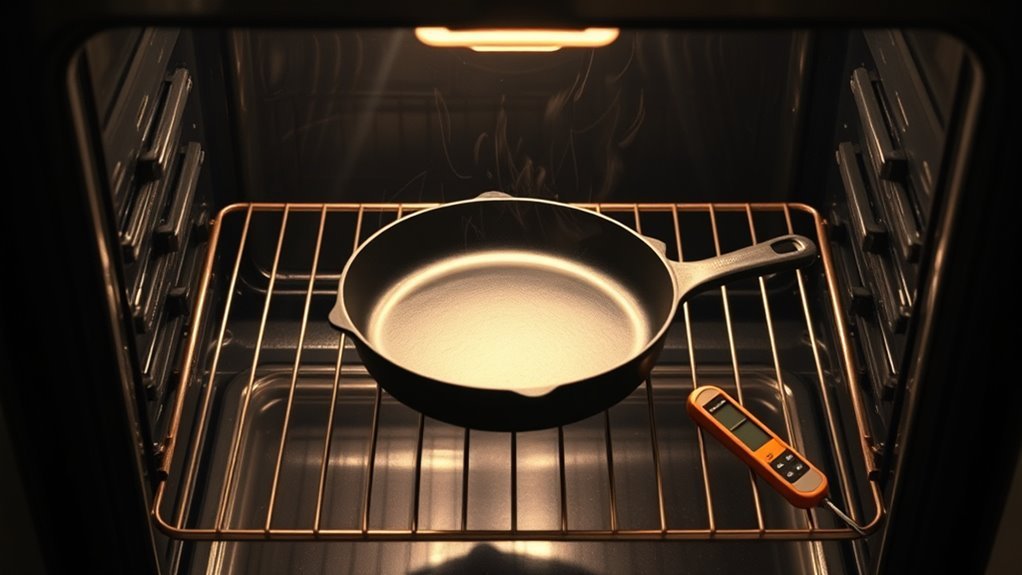
When it comes to seasoning cast iron, aiming for an ideal temperature range of 475°F to 500°F is essential. This optimal temperature allows oils to polymerize effectively, bonding with the iron to create a durable seasoning layer.
At these high temperatures, the oil breaks down, forming a hard protective surface that enhances rust resistance, ensuring your skillet remains a reliable kitchen tool.
To achieve the best results, preheat your oven to the desired temperature before placing the greased skillet upside down on the top rack. Don’t forget to line the bottom rack with foil to catch any drips.
Apply multiple thin coats of oil, allowing each layer to bake for 60 minutes. This process not only improves your seasoned cast iron’s cooking performance but also extends its longevity, empowering you to enjoy the freedom of cooking with confidence.
Why Temperature Matters in Seasoning Cast Iron
Temperature plays an essential role in seasoning cast iron, as it directly affects how oils interact with the skillet. When you season your cast iron at temperatures between 475°F and 500°F, effective polymerization occurs, resulting in a durable nonstick surface through the heat and oxygen interaction.
| Temperature Range | Polymerization Effect | Cooking Performance |
|---|---|---|
| 475°F – 500°F | Creates hard layer | Ideal performance |
| Below 475°F | Incomplete bonding | Poor nonstick |
| Above 500°F | Risk of burning oil | Compromised surface |
| 3-5 Coats | Solid foundation | Enhanced durability |
| Consistent Use | Smoother surface | Improved cooking |
Step-by-Step High-Heat Seasoning Guide
To properly season your cast iron, you need to understand the essential temperature range and the right oils to use.
First, prepare your skillet by applying a thin layer of a high smoke point oil.
Follow these steps closely to guarantee a durable, non-stick finish that enhances your cooking experience.
Essential Temperature Range
Achieving the perfect seasoning for your cast iron skillet hinges on hitting the ideal temperature range of 475°F to 500°F. This essential temperature range allows high heat to polymerize the oils, creating a durable non-stick surface.
Start by preheating your oven to the desired temperature. Once heated, place the greased skillet upside down on the top rack to prevent oil pooling. Bake it for about one hour, letting the heat bond the oil to the skillet’s surface, which protects against rust.
After baking, cool the skillet gradually in the oven to avoid cracking. For best results, repeat this seasoning process 3-5 times to build a robust, effective non-stick coating that liberates your cooking experience.
Pre-Seasoning Preparation Steps
Before you start seasoning your cast iron skillet, verify it’s in top shape with these essential pre-seasoning preparation steps.
Begin by scrubbing the skillet with steel wool to remove any rust or residue, ensuring it’s clean and dry.
Next, preheat your oven to a high temperature between 475°F and 500°F.
Rub a thin layer of high smoke point oil, like flaxseed or grapeseed oil, evenly across the skillet’s surface, including the sides and handle.
Place the skillet upside down on the top rack, with aluminum foil on the bottom rack to catch drips.
Bake for 1 hour to allow the oil to polymerize.
Afterward, let the skillet cool gradually in the oven, repeating this process 2-3 times for durable seasoning.
Recommended Oils for Seasoning
Choosing the right oil for seasoning your cast iron skillet is essential for achieving a smooth, non-stick surface. Opt for oils with high smoke points, as they polymerize effectively under heat, ensuring superior seasoning results.
Here are some recommended oils:
- Flaxseed oil: Renowned for its excellent polymerization properties.
- Grapeseed oil: Light and easy to apply, with a high smoke point.
- Canola oil: Affordable and effective for a durable finish.
To season, apply a thin layer of oil evenly, using a paper towel to avoid pooling.
Preheat your oven to 475°F to 500°F, bake the skillet upside down for 60 minutes, and cool it gradually in the oven. This process will create a solid, lasting seasoning layer.
Common Temperature Mistakes to Avoid When Seasoning
When seasoning cast iron, it’s crucial to avoid common temperature mistakes that can compromise your efforts. First, don’t season at temperatures below 400°F; the oils won’t polymerize properly, leaving you with a sticky surface.
Aim for a preheated oven between 475°F and 500°F to create a durable, non-stick surface through effective polymerization. However, be cautious—using temperatures above 500°F for extended periods can cause flaking of the seasoning layer due to overheating.
Remember to let your cast iron cool gradually in the oven post-seasoning; this solidifies the protective layer and helps prevent cracking.
Finally, make certain your oil reaches its smoke point, around 400°F for most cooking oils, to achieve the best results without burning.
How to Recognize When to Re-Season Your Cast Iron?
Maintaining your cast iron skillet’s seasoning is just as important as the initial application. Knowing when to re-season can safeguard your cooking experience and keep your pan in top shape.
Maintaining your skillet’s seasoning is crucial; knowing when to re-season ensures optimal cooking performance and longevity.
Here are some signs that it’s time to take action:
- Food starts to stick, indicating your seasoning layer is compromised.
- You spot dull or discolored areas, signaling that the seasoning has worn thin.
- Rust spots appear, highlighting the need for immediate re-seasoning to restore its non-stick qualities.
If you’ve cooked something acidic, like tomatoes or citrus, consider re-seasoning even sooner.
A flaky or peeling seasoning layer isn’t just unsightly; it can affect your skillet’s performance and lead to rust.
Regularly inspect your cast iron to guarantee it continues to serve you well, keeping your meals delicious and hassle-free.
Oils vs. Wax: Which Is Better for Seasoning?
Ever wondered whether oils or wax are better for seasoning your cast iron? Oils require high temperatures—around 475–500°F—to polymerize and create a durable, nonstick layer.
While this process can produce excellent results, it often involves multiple layers and the risk of sticky surfaces or rancid smells if you choose the wrong type.
On the other hand, wax, like Bumblechutes Wax, can be applied at lower temperatures and serves both as seasoning and conditioning in one step. It melts into the pan’s pores quickly, ensuring an even coating without pooling or blotchiness.
This makes it a more straightforward option for those seeking efficiency. Plus, wax maintains a clean, fresh scent while improving seasoning longevity, requiring minimal reapplication.
Ultimately, if you’re looking for convenience and effectiveness, wax might just be the superior choice for seasoning your cast iron.
Troubleshooting: What to Do If Your Seasoning Goes Wrong
Even the most seasoned cast iron enthusiasts can encounter issues with their cookware, and knowing how to troubleshoot these problems can save your favorite skillet.
Here’s how to tackle common seasoning dilemmas:
- Sticky Surface: This often results from using too much oil. Remove excess and re-season at a higher temperature to create a stronger bond.
- Rusty Skillet: Confirm your skillet is thoroughly dried after washing. Apply a thin layer of oil to protect against moisture.
- Flaking Seasoning: This usually stems from low-quality oils or insufficient curing time. Use high smoke point oils and confirm multiple coats are baked at 475–500°F.
Frequently Asked Questions
Should I Season Cast Iron at 350 or 450?
You should season cast iron at 450°F instead of 350°F. This higher temperature guarantees that the seasoning oils bond effectively, creating a durable, non-stick surface.
Using a thin layer of high-smoke point oil prevents excessive smoke, which can compromise flavor. Always prioritize oven safety when working with heat sources.
Proper cast iron care at this temperature guarantees long-lasting results, so don’t settle for less—give your skillet the treatment it deserves!
What Ruins Cast Iron Seasoning?
Seasoning cast iron can feel like a dance, but missteps ruin the rhythm. Common seasoning mistakes include using low-quality oil types, which can leave a sticky residue.
Cleaning methods matter too; harsh scrubbing strips away that precious layer. Avoid overheating with improper heat sources, as it creates brittle spots.
For lasting results, embrace maintenance tips like proper drying and occasional re-seasoning to keep your cookware in top shape.
Can I Season Cast Iron at 400 Degrees?
Yes, you can season cast iron at 400 degrees. While it’s effective, higher temperatures around 475-500°F yield better results.
Use high smoke point seasoning oils for ideal bonding. To enjoy the cast iron benefits, preheat your oven to guarantee even heat.
Watch out for common mistakes, like using low-quality oils or skipping maintenance tips. Regular seasoning at 400°F can keep your cookware in great shape, but aim higher for that perfect non-stick surface.
How to Tell if Your Cast Iron Is Seasoned Enough?
If your cast iron skillet has a smooth, shiny surface, it’s likely seasoned enough—about 80% of users report this as a key sign!
Watch for oil types you use; fats like flaxseed provide excellent seasoning. If food sticks, consider maintenance tips, like applying a thin oil layer after washing.
Cooking techniques that involve fats enhance seasoning, while restoration methods like baking at high heat can rejuvenate your skillet’s surface.
Conclusion
In the dance of seasoning your cast iron, remember that heat is your partner. Keeping that temperature between 475°F and 500°F guarantees a bond as strong as iron itself. With each layer, you’re crafting a resilient surface that can withstand the test of time. So, embrace the process, stay vigilant, and don’t shy away from re-seasoning when needed. Your skillet will reward you with meals that sing with flavor, turning every cook into a culinary masterpiece.