
Panasonic’s 2027 rice cooker lineup covers very different needs, from commercial kitchens to compact home use. The SR-GA541FH stands out for large-volume cooking, while the SR-G06FGL suits smaller households with simple versatility. The SR-42HZP and SR-ZC075K add more flexibility through grain options and microcomputer control. Each model serves a distinct purpose, but the real question is which one offers the best balance for its setting.
Panasonic Commercial Electric Rice Cooker (SR-GA541FH)
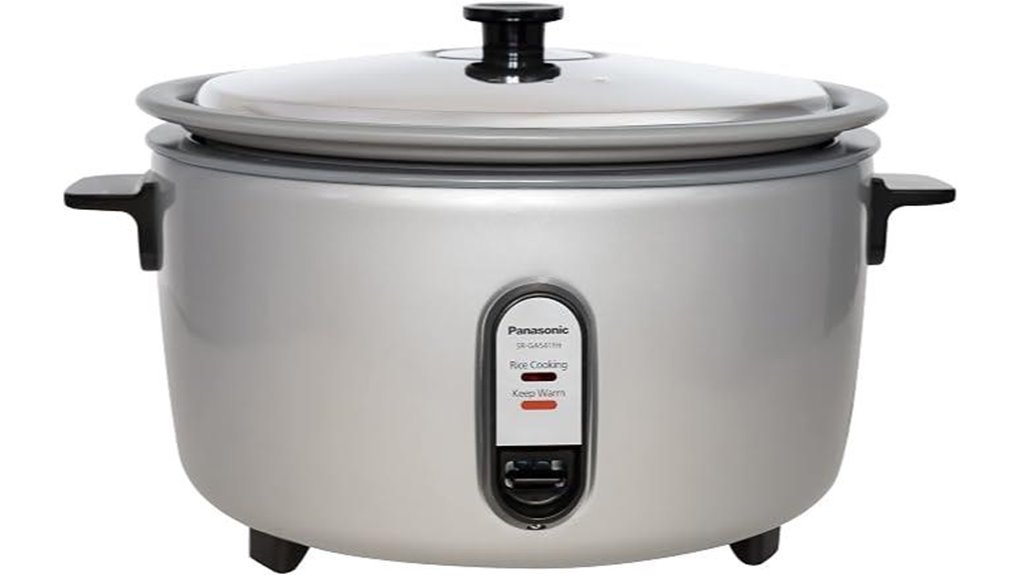
The Panasonic Commercial Electric Rice Cooker (SR-GA541FH) stands out as a strong choice for restaurants, cafeterias, and other high-volume food service settings, thanks to its 60-cup cooked capacity and simple one-touch operation. It can prepare rice, quinoa, oatmeal, and similar staples, then automatically shut off when cooking is complete to help prevent overcooking. The non-stick Teflon-coated inner pan supports durability, while the stainless steel lid wipes clean easily. NSF approval, a double safety thermal fuse, and 1800 watts of power reinforce its commercial reliability. It measures 14-13/16 x 16-29/32 x 14-7/32 inches and weighs 22 pounds.
Best For: Restaurants, cafeterias, and other high-volume food service operations that need a durable, easy-to-use commercial rice cooker.
Pros:
- Large 60-cup cooked capacity is well-suited for busy commercial kitchens
- One-touch operation and automatic shut-off make it simple and convenient to use
- NSF approval plus a stainless steel lid and durable non-stick inner pan support commercial reliability
Cons:
- Heavy at 22 lbs, so it may be less convenient to move or store frequently
- Primarily designed for large-batch cooking, which may be excessive for small households or low-volume use
- 120V / 1800W power requirements may limit placement in some kitchens
Panasonic Rice Cooker, Steamer & Multi-Cooker (SR-G06FGL)
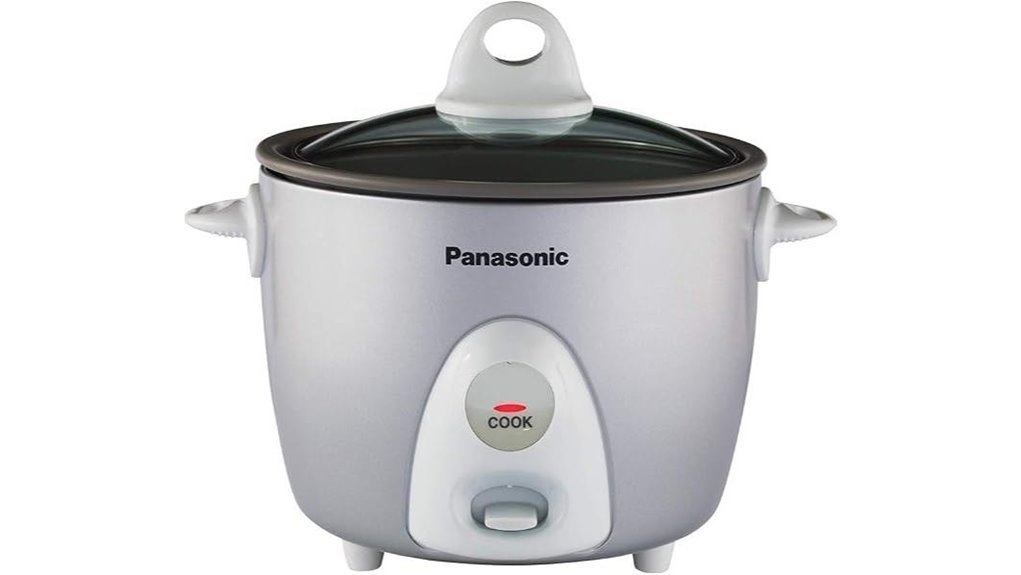
Compact and simple, the Panasonic SR-G06FGL suits small households needing dependable everyday rice cooking. Its 3-cup uncooked capacity yields up to 6 cups cooked, making it practical for modest meals. The one-button automatic cycle handles white, brown, yellow, short, and long-grain rice, then shuts off when finished. A non-stick aluminum inner pan supports even heating and easy cleanup, while the tempered-glass lid allows safe monitoring. At 310 watts, it runs on corded electric power and includes a measuring cup, rice scoop, and multilingual instructions for straightforward use.
Best For: Small households or individuals who want a compact, easy-to-use rice cooker for everyday white and specialty rice cooking.
Pros:
- One-button automatic operation makes cooking simple and convenient.
- Non-stick aluminum inner pan helps with even heating and easy cleanup.
- Includes helpful accessories like a measuring cup, rice scoop, and multilingual instructions.
Cons:
- Small 3-cup uncooked capacity may not suit larger families or batch cooking.
- Limited to basic rice cooking features compared with more advanced multi-cookers.
- Hand wash care recommendation may be less convenient than dishwasher-safe models.
Panasonic Commercial Rice Cooker, 46-Cup, SR-42HZP

Built for high-volume service, the Panasonic SR-42HZP suits busy kitchens needing dependable rice output. It cooks up to 46 cups of rice, or 23 cups uncooked, producing about 94 three-ounce servings. One-touch operation keeps preparation simple, while automatic shut-off helps prevent overcooking. The keep-warm mode holds rice for up to eight hours, and the unit also handles grains such as quinoa and farro. Its aluminum-coated inner pan resists scratches, and the stainless steel lid simplifies cleaning. NSF approval, double thermal fuse protection, and a one-year warranty reinforce its commercial practicality.
Best For: High-volume food service operations like restaurants, cafeterias, and food stores that need a reliable commercial rice cooker for consistent daily use.
Pros:
- Cooks up to 46 cups of rice, making it ideal for busy kitchens and large batches.
- One-touch operation, automatic shut-off, and keep-warm mode simplify use and help prevent overcooking.
- NSF approved with durable commercial-grade construction, including a scratch-resistant inner pan and stainless steel lid.
Cons:
- Large capacity and commercial design may be more than needed for small households or low-volume use.
- At 12.1 lbs and sizable dimensions, it takes up considerable counter or storage space.
- Limited to basic cooking functions compared with more advanced multi-function cookers.
Panasonic SR-ZC075K 4-Cups (Uncooked) Rice Cooker & Multi-Cooker, White
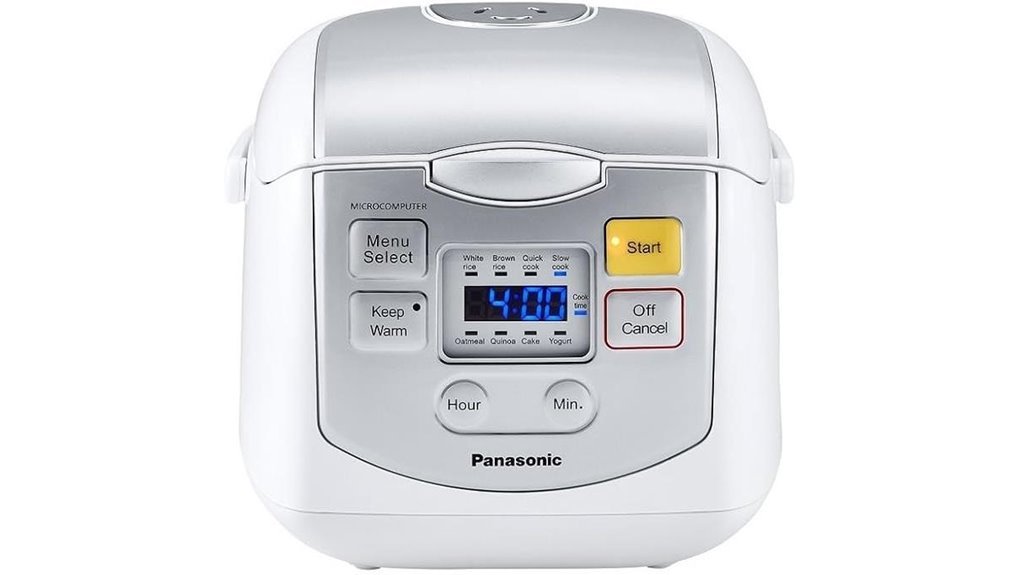
Panasonic’s SR-ZC075K suits singles, couples, and small families needing versatile, small-batch cooking. This 4-cup uncooked, 8-cup cooked rice cooker and multi-cooker uses microcomputer heating control for precise results. Eight automatic menu options cover rice, hot cereals, soups, yogurt, quinoa, and more. The smart keep warm function preserves freshness for up to 12 hours, while the fluorine-coated inner pan supports even cooking and quick cleanup. At 400 watts, it is compact, corded, and finished in white and silver. A measuring cup and scoop are included for accurate preparation.
Best For: Singles, couples, and small families who want a compact, easy-to-use rice cooker and multi-cooker for small-batch meals.
Pros:
- Microcomputer heating control helps deliver precise, consistent cooking results.
- Eight automatic menu options add versatility for rice, soups, yogurt, quinoa, and more.
- Smart keep warm function maintains serving temperature and freshness for up to 12 hours.
Cons:
- 4-cup uncooked capacity may be too small for larger households or meal prep.
- At 400 watts, it may cook more slowly than higher-powered models.
- Limited to basic compact size, so it may not suit those wanting advanced or large-capacity features.
Factors to Consider When Choosing Panasonic Rice Cookers in 2026
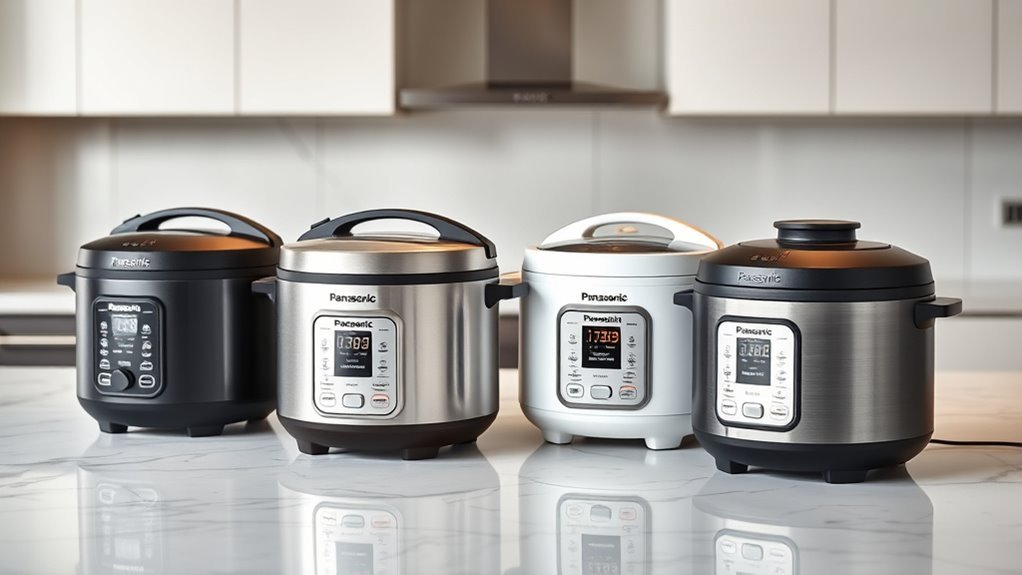
In 2026, selecting a Panasonic rice cooker often starts with capacity, since household size and frequent batch cooking affect the right size. It is also important to weigh whether the model is intended for home use or heavier commercial demand, along with the available cooking functions. Safety and convenience features, including auto shutoff and how long the unit can keep rice warm, further shape the best choice.
Cooking Capacity
Cooking capacity is one of the most important factors when choosing a Panasonic rice cooker, since models range from compact units that handle 3 cups of uncooked rice to commercial versions that can produce up to 60 cups cooked. Smaller cookers suit individuals, couples, and small families, while larger options provide enough volume for bigger groups and more efficient batch preparation. Matching capacity to intended use helps avoid waste and improves day-to-day convenience. A 4-cup model can support routine meals, whereas a 46-cup model is built for high-demand settings. Servings also vary widely, with some larger units yielding more than 120 portions. Evaluating both cup size and serving output gives a clearer sense of which cooker fits specific needs best.
Commercial Versus Home Use
The choice between commercial and home Panasonic rice cookers depends mainly on volume, durability, and workflow. Commercial models are built for restaurants, cafeterias, and other high-demand settings, with capacities that can reach 60 cups. Their heavy-duty construction and safety features, including double thermal fuses, support repeated daily use and reduce downtime. Home models are sized for smaller households, usually cooking 3 to 8 cups, and they emphasize simple operation, portability, and easy handling. Both types commonly include automatic shut-off and keep warm functions, but commercial units are better suited to longer temperature maintenance during service periods. Maintenance also differs: commercial cookers favor quick cleanup and rugged parts, while home versions prioritize convenience for everyday washing and storage.
Cooking Functions
Panasonic rice cookers stand out for their versatile cooking functions, making it easier to match the appliance to specific meal preferences. Many models handle white, brown, yellow, short, and long grain rice, supporting varied textures and results. One-touch automatic cooking adds convenience by reducing operation to a single button press. Some units expand usefulness with presets for grains, oatmeal, soups, and yogurt, allowing broader meal planning without extra cookware. Advanced models with microcomputer heating control adjust time and temperature with precision, helping produce consistent rice and grains. A keep warm function also preserves serving temperature for several hours, so meals remain ready when needed. Together, these features make function selection a key factor in comparing Panasonic rice cookers.
Auto Shutoff Features
Auto shutoff features help Panasonic rice cookers detect when cooking is complete, reducing the chance of overcooking and preserving better texture and flavor. Many Panasonic models use sensors that trigger shutdown once target temperature or pressure conditions are reached, which supports consistent results. This automatic response also improves safety by limiting unnecessary heat and lowering the risk of overheating. For buyers, that means less monitoring and more flexibility in daily routines. The feature is especially useful for households that value convenience, since the cooker can manage the final stage without attention. It may also help protect the appliance over time by reducing stress on internal components. In short, automatic shutoff remains an important factor for users seeking dependable performance, efficiency, and ease of use.
Keep Warm Duration
Keep-warm duration is a practical factor when comparing Panasonic rice cookers in 2026, especially for households that need rice ready over several hours. Some models can hold rice at serving temperature for up to 12 hours, which helps maintain freshness without forcing immediate serving. This feature suits busy kitchens, where meals may be staggered or guests arrive late. Longer keep-warm periods also support larger gatherings by allowing rice to remain available throughout extended dining times. Many Panasonic cookers automatically enter keep-warm mode after cooking, reducing the chance of rice becoming burnt or dried out. Buyers should also weigh energy use during this phase, since efficiency can vary between models. A balance of duration and power consumption is often ideal.
Inner Pan Materials
The inner pan is one of the most important parts of a Panasonic rice cooker because its material affects both performance and upkeep. Non-stick fluoride Teflon coatings are valued for durability and scratch resistance, making them suitable for frequent use and helping preserve the pan over time. Aluminum-coated inner pans are often chosen for their ability to distribute heat evenly, which supports consistent results across different grains. Some models use ultra non-stick fluorine coatings that further reduce sticking and make cleaning easier. Material choice also influences overall cooking efficiency and maintenance demands, which can shape long-term satisfaction. In high-use settings, scratch resistance becomes especially important, since a durable inner pan helps maintain reliable performance and reduces wear-related issues.
Power And Wattage
Power and wattage strongly influence how well a Panasonic rice cooker performs, since output affects cooking speed, temperature stability, and overall efficiency. Lower-wattage models, often around 310 watts, suit modest cooking demands, while larger units may reach 1800 watts for more intensive use. Higher wattage generally shortens cooking time and helps maintain steady heat, which supports consistent results across different rice varieties and grains. Electrical compatibility also matters; voltage and wattage should match local standards to guarantee safe operation. Energy use can rise with output, so efficiency remains important for long-term ownership. A well-matched power rating balances performance, reliability, and operating cost without unnecessary consumption.
Size And Portability
Size and portability can shape how well a Panasonic rice cooker fits a kitchen or lifestyle, especially when storage space and cooking volume vary widely. Capacity should match household demand, from compact 3-cup uncooked units for small meals to commercial models that prepare up to 60 cups cooked. Weight also matters: lightweight cookers near 2.6 pounds are easier to move and store, while 22-pound commercial versions suit fixed setups. Dimensions should be checked carefully, since compact models around 240 x 198 x 210 mm fit tight counters, whereas larger units over 14 inches tall or wide need more room. Removable inner pots can simplify storage, and multi-cooking designs add value when space is limited.
Frequently Asked Questions
Do Panasonic Rice Cookers Support Brown Rice Cooking?
Yes, many Panasonic rice cookers support brown rice cooking, though availability depends on the specific model. Numerous units include dedicated brown rice or multigrain settings, which use longer cooking times and adjusted heat cycles to handle tougher grains. A detached review would note that buyers should confirm the exact model’s features before purchasing, since entry-level versions may lack this option while higher-end models usually provide it.
Are Panasonic Rice Cooker Inner Pots Dishwasher Safe?
Panasonic rice cooker inner pots are generally not meant to take a long, machine-washed journey; many are best gently cleaned by hand to preserve their delicate nonstick finish. Specific models may vary, so the owner’s manual remains the quiet authority. If a pot is labeled dishwasher safe, it can usually handle the cycle, but avoiding it is often the safer route for longevity and consistent performance over time.
How Long Do Panasonic Rice Cookers Usually Last?
Panasonic rice cookers usually last about 5 to 10 years, though some can keep working longer with careful use and cleaning. Lifespan depends on cooking frequency, maintenance, water hardness, and how well the inner pot and lid are protected from wear. Regular descaling and gentle handling can extend service life. If heating becomes uneven, buttons fail, or the pot coating deteriorates, replacement is often considered the practical choice.
Can Panasonic Rice Cookers Keep Rice Warm Overnight?
Yes—many Panasonic rice cookers can keep rice warm overnight, but the result depends on the model and rice type. The setting holds heat for hours, yet the grains may slowly dry, harden, or develop off flavor by morning. What happens next matters: for food safety and quality, rice should usually not stay warm too long. Checking the manual is the safest way to confirm the exact warm-hold limit.
Do Panasonic Rice Cookers Come With a Warranty?
Panasonic rice cookers typically come with a limited warranty, though coverage varies by model and region. Most units include protection against manufacturing defects for a specified period, often one year. The buyer should check the product manual or retailer listing for exact terms, since accessories and accidental damage are usually excluded. Registration may be required in some cases. For confirmation, Panasonic customer support or the seller can provide the applicable warranty details.
Conclusion
In the crowded kitchen of choices, Panasonic rice cookers stand like reliable lanterns, each shining for a different need. The SR-GA541FH serves big gatherings, the SR-G06FGL suits cozy meals, the SR-42HZP flexes across grains, and the SR-ZC075K brings precision to small-batch cooking. Together, they prove that the right cooker can turn everyday rice into a steady, satisfying ritual, with safety and durability as dependable companions in every simmer.
