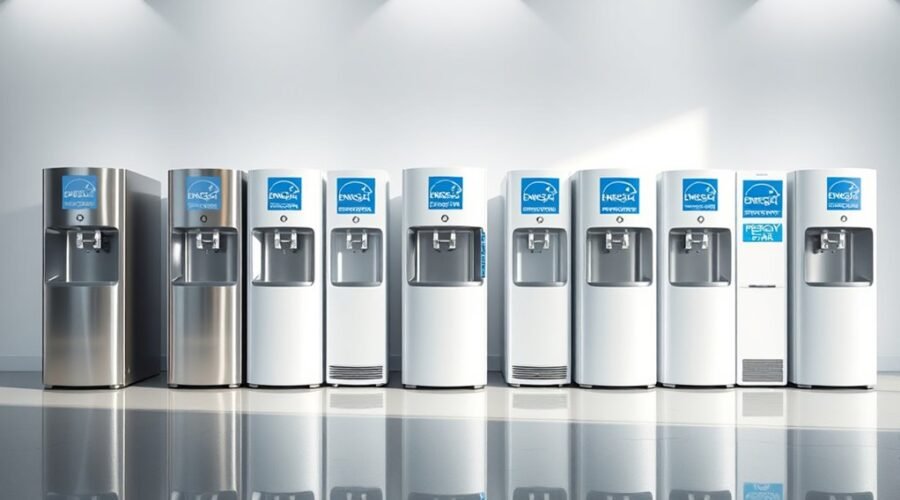
ENERGY STAR water dispensers continue to appeal to homes and offices that want efficiency without sacrificing convenience. In 2027, models like the Brio 130SS, several Avalon designs, and Clover units stand out for different reasons, from bottom-loading ease to touchless operation. Yet the real differences lie in details that are not always obvious at first glance, and those details can change which dispenser is the better fit.
Brio 130SS Top-Load Water Dispenser, Hot & Cold
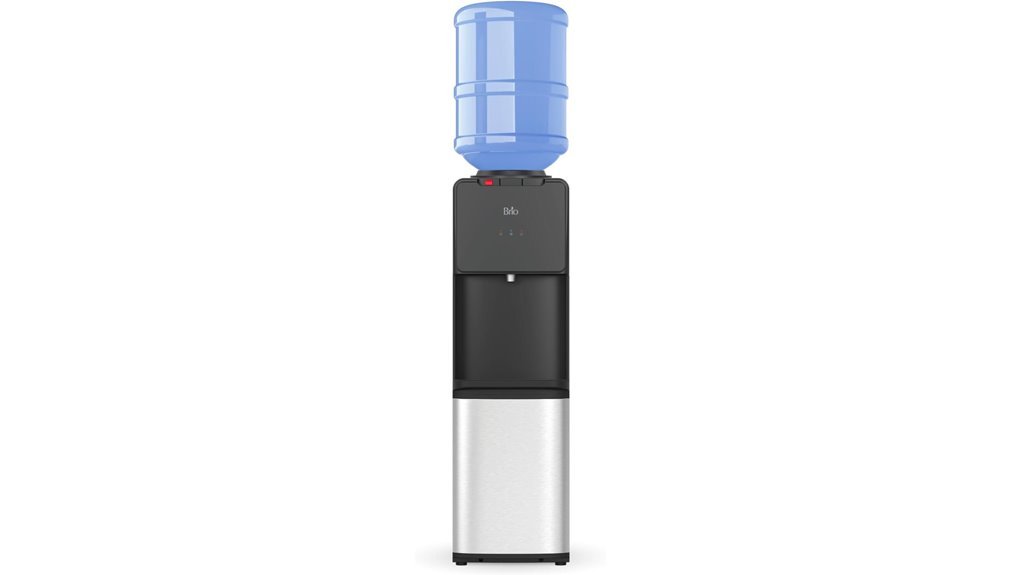
The Brio 130SS Top-Load Water Dispenser is a strong choice for households or offices that want a reliable hot-and-cold unit with simple setup, since it requires no plumbing and works with standard 3- and 5-gallon bottles. Its black and stainless steel design uses rugged polymer and durable metal components for long-term service. The top-loading, no-spill system makes bottle changes cleaner, while the fast 1.5 L/min flow supports quick access to water. A two-step child safety lock protects hot water use, and bright LED indicators signal readiness. A manual is included, with warranty support available through customer service.
Best For: Households or offices that want a reliable hot-and-cold water dispenser with easy setup, fast dispensing, and compatibility with standard 3- and 5-gallon bottles.
Pros:
- No plumbing or tools required, making setup simple and flexible
- Top-loading no-spill design helps keep bottle changes clean and mess-free
- Child safety lock and LED indicators add convenience and safety
Cons:
- Top-loading design can make lifting and replacing heavy bottles inconvenient
- Requires manual bottle changes since it is not a plumbed-in system
- Warranty details are only available through customer service, which may be less straightforward
Avalon Bottom Loading Water Cooler Dispenser
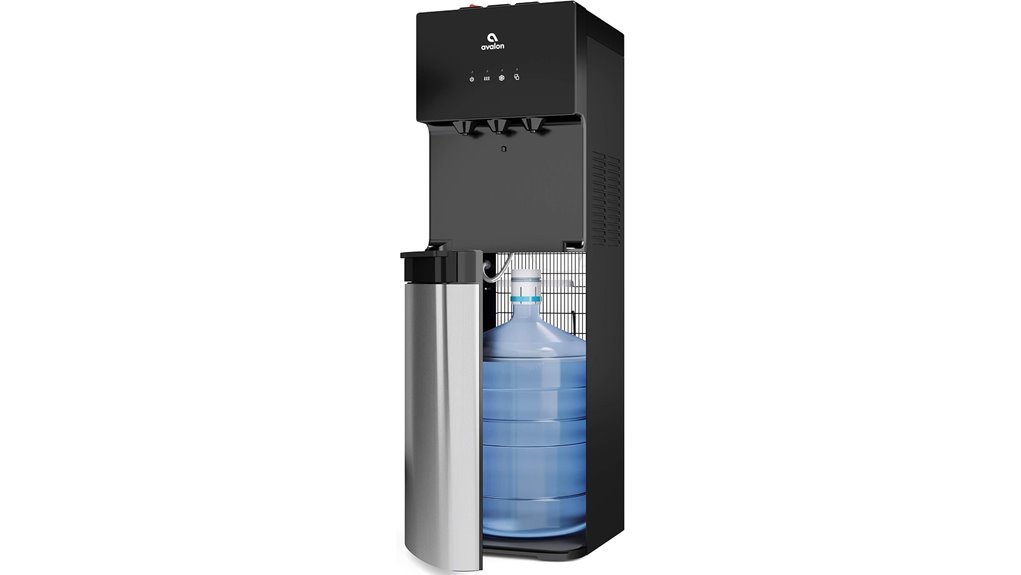
Avalon’s bottom-loading dispenser suits households wanting easy refills and three temperature options. The Avalon A4BLWTRCLR uses a stainless steel cabinet and accepts 3- to 5-gallon bottles from the base, reducing lifting. It provides hot, cold, and room-temperature water, with 420W heating and 100W cooling. The unit reaches up to 85 °C and down to 8.3 °C. A built-in nightlight improves visibility, while the empty-bottle indicator signals replacement. BioGuard coating helps limit bacteria on high-contact areas. It measures 12 x 13 x 41 inches, weighs 38.1 pounds, and includes a one-year warranty.
Best For: Households or offices that want a bottom-loading water cooler with easy 3- to 5-gallon refills and hot, cold, and room-temperature water options.
Pros:
- Bottom-loading design reduces heavy lifting when replacing bottles.
- Offers three temperature settings with strong heating and cooling performance.
- Helpful extras like a nightlight, empty-bottle indicator, and BioGuard coating.
Cons:
- At 38.1 pounds, it’s relatively heavy to move or reposition.
- Requires 3- to 5-gallon bottles, which still need to be purchased and replaced.
- The one-year warranty may feel limited for long-term peace of mind.
Avalon Self-Cleaning Touchless Bottleless Water Cooler Dispenser
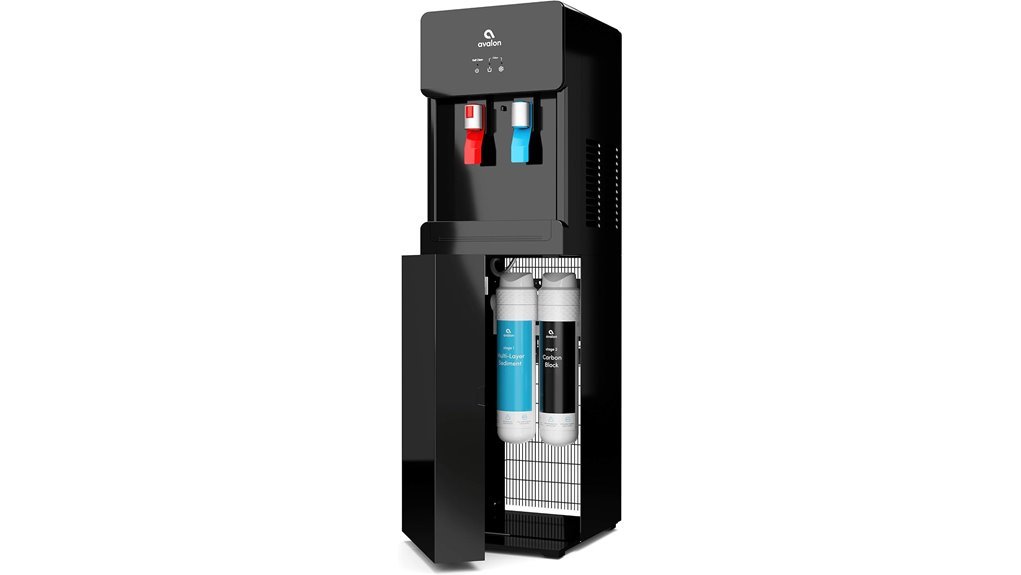
With hot, cold, and self-cleaning touchless dispensing, this Avalon model suits busy households and small offices. The black, freestanding A7BOTTLELESSBLK uses a slim profile and bottleless design to reduce recurring water purchases. It provides crisp cold water and piping hot output, while a child safety lock adds protection. A built-in night-light improves nighttime access. Dual filtration combines Avalon A5FILTER and A4FILTER cartridges, lasting up to six months or 1,500 gallons. The unit includes installation hardware, operates at 520 watts, holds 3.6 liters, and measures 13 by 12 by 41 inches, backed by a one-year warranty.
Best For: Households and small offices that want a slim, bottleless water cooler with hot and cold water, touchless dispensing, and self-cleaning convenience.
Pros:
- Bottleless design helps reduce recurring water purchase costs.
- Dual filtration and self-cleaning features support cleaner, fresher water.
- Hot, cold, touchless dispensing with a child safety lock adds convenience and safety.
Cons:
- Requires installation, which may be less convenient than a plug-and-play bottled cooler.
- Filter replacements are needed every 6 months or 1,500 gallons.
- At 40 pounds and 41 inches tall, it may be bulky for very tight spaces.
Avalon Touchless Bottleless Water Cooler Dispenser with BioGuard
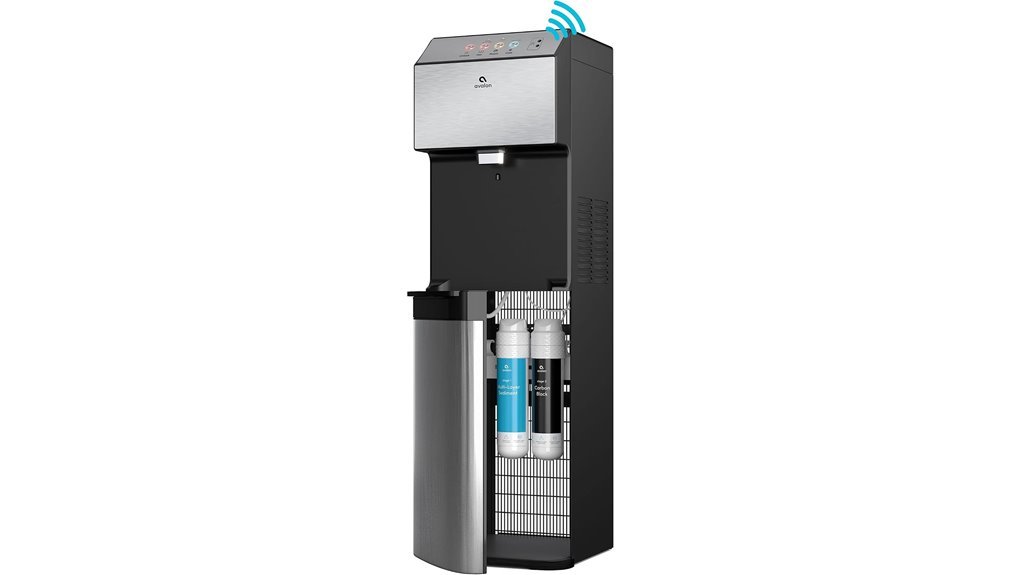
For users seeking a hands-free, bottleless option, the Avalon Hand-Free Touchless Electric Water Cooler Dispenser with BioGuard stands out. The A13-S model uses a stainless steel body, corded electric power, and an under-sink setup to deliver cold, cool, or hot water up to 185°F. Its touchless sensor, digital display, and nightlight add convenience, while the ozone self-cleaning function supports maintenance. Dual filters remove chlorine, lead, rust, and bacteria for up to 1,500 gallons. A built-in leak detector, full installation kit, and 1-year warranty further strengthen its practical appeal.
Best For: Users who want a hands-free, bottleless water cooler with multiple temperature settings, built-in filtration, and convenient self-cleaning features for home or office use.
Pros:
- Touchless sensor dispensing adds convenience and helps reduce contact.
- Dual filtration system removes chlorine, lead, rust, and bacteria.
- Includes useful extras like a digital display, nightlight, leak detector, and self-cleaning ozone function.
Cons:
- Requires under-sink installation and a direct connection to an existing water line.
- Filters need replacement about every 6 months or 1,500 gallons, adding maintenance costs.
- Higher upfront cost and more complex setup than a standard bottled dispenser.
Clover Hot and Cold Water Dispenser
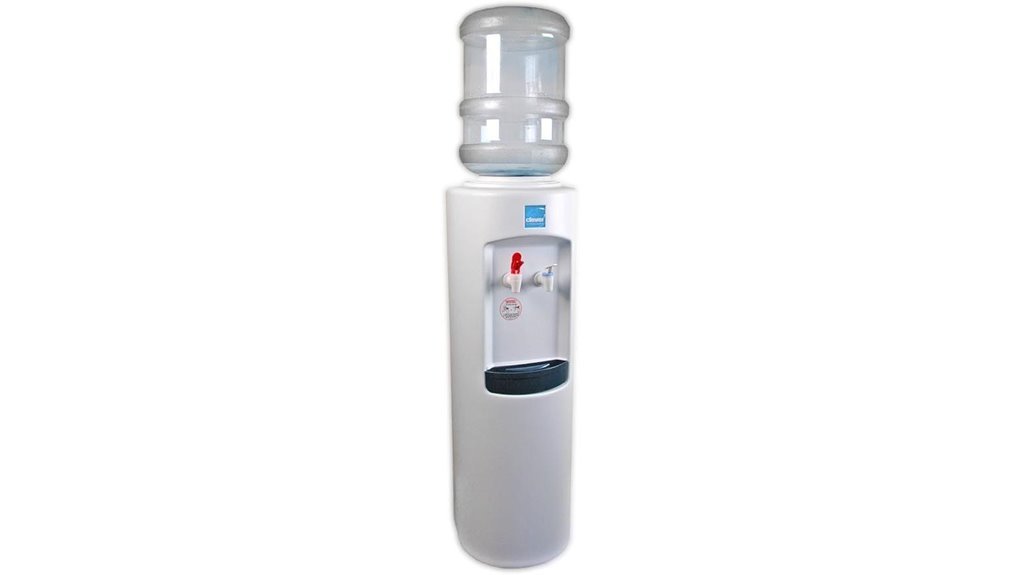
Clover’s B7A suits users needing reliable hot and cold water from a compact, quiet dispenser. The Clover B7A Hot and Cold Water Dispenser uses stainless steel tanks for both temperatures, supporting a hygienic, contaminant-resistant build. Its cold setting is adjustable from 35.6°F to 53.6°F, while hot water is automatically maintained near 185°F. The unit meets ENERGY STAR requirements, reflecting strict EPA and Department of Energy efficiency standards. An ultra-efficient, convection-cooled condenser helps limit energy use, and its quiet operation makes it suitable for offices, break rooms, and other shared spaces.
Best For: Offices, break rooms, and shared spaces that need a compact, quiet dispenser with dependable hot and cold water.
Pros:
- Stainless steel tanks help support a hygienic, contaminant-resistant design.
- Adjustable cold-water temperature and automatically maintained hot water offer flexible everyday use.
- ENERGY STAR certification and convection cooling help improve energy efficiency.
Cons:
- Hot water temperature is not adjustable.
- The compact dispenser may not be ideal for very high-volume settings.
- Cooling range is limited compared with more advanced refrigeration systems.
Clover B7B Room Temperature and Cold Bottled Water Dispenser, Black
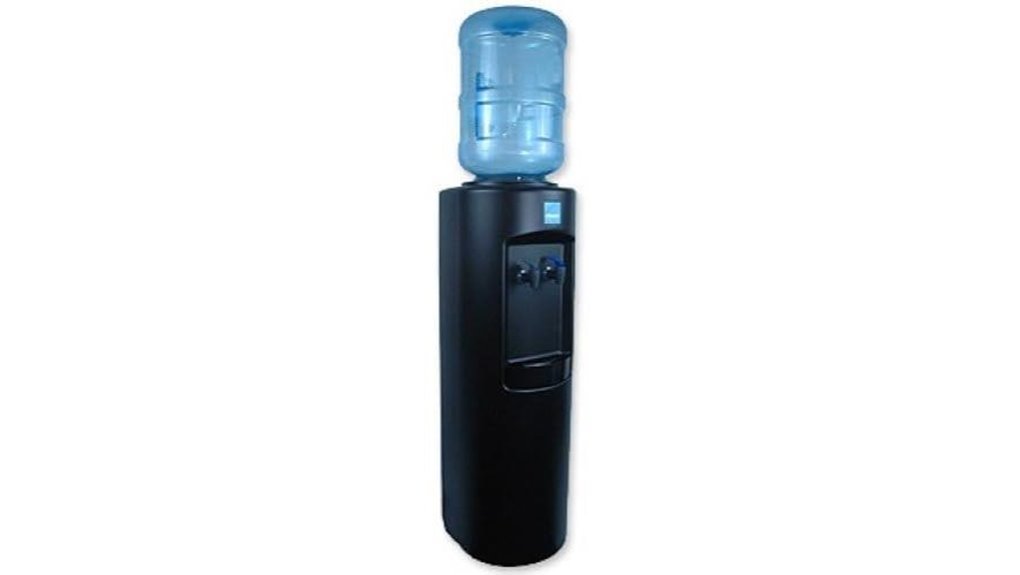
The Clover B7B suits offices and homes needing dependable cold and room-temperature water. Its black cabinet measures 14 by 14 by 40 inches and weighs 35 pounds, making it a compact bottled dispenser for 5-gallon containers. The one-piece UV-protected polyethylene body and stainless steel tank support hygiene and durability, while the removable ABS drip tray simplifies cleanup. Self-closing polypropylene spigots add practicality. An adjustable thermostat cools water to 35.6°F to 53.6°F through a quiet convection condenser. Energy Star certification, CE, NSF, and UL listings, plus a one-year warranty, strengthen its appeal.
Best For: Offices or households that want a compact, Energy Star–rated bottled water dispenser with both cold and room-temperature water.
Pros:
- Compact 14 x 14 x 40-inch footprint fits well in homes or offices.
- Energy-efficient, quiet convection cooling with adjustable cold-water temperature.
- Durable, hygienic construction with stainless steel tank and easy-clean removable drip tray.
Cons:
- No built-in filtration system.
- Requires 5-gallon bottled water containers.
- Offers only room-temperature and cold water, not hot water.
Avalon Self Cleaning Bottom Loading Water Cooler Water Dispenser
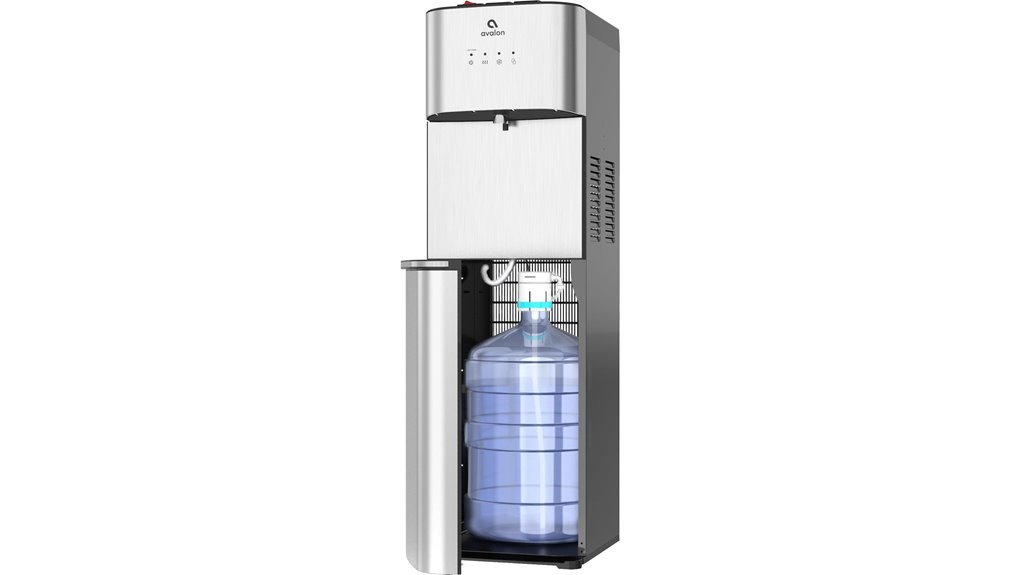
Bottom loading makes the Avalon Self Cleaning Water Cooler ideal for households wanting easy, spill-free bottle changes. This freestanding stainless steel dispenser fits 3- to 5-gallon bottles and measures 41 by 12 by 13 inches. It offers cold, cool, and hot water, with the cold setting near 47°F and hot water around 185°F. Push-button spouts simplify use, while a child safety lock protects the hot tap. Ozone self-cleaning helps reduce germs and bacteria. A nightlight, empty-bottle indicator, and drip tray improve convenience. Energy Star approval and a one-year limited warranty add value.
Best For: Households or offices that want a convenient, spill-free bottom-loading water cooler with hot, cold, and self-cleaning features.
Pros:
- Bottom-loading design makes bottle changes easier and reduces lifting strain and spills
- Offers three temperature settings, including hot water with a child safety lock
- Self-cleaning ozone feature, nightlight, and empty-bottle indicator add convenience
Cons:
- Requires 3- to 5-gallon bottles, which are not included
- Heavier and bulkier than smaller countertop dispensers
- Higher upfront cost than basic water coolers due to added features
Factors to Consider When Choosing ENERGY STAR Water Dispensers in 2026
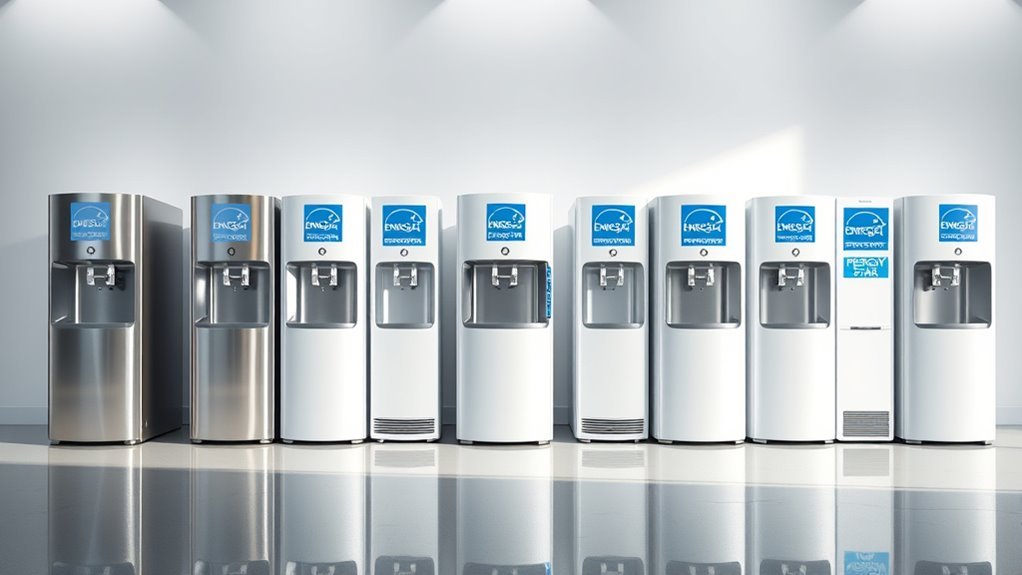
When choosing an ENERGY STAR water dispenser in 2026, attention often turns first to certification, temperature options, and the loading style that best suits the space. Safety features also remain important, especially in homes with children or busy shared environments. A filtration system can further shape overall water quality and long-term convenience.
Energy Star Certification
ENERGY STAR certification serves as a practical benchmark for buyers comparing water dispensers in 2026, signaling models that meet strict efficiency standards from the U.S. Environmental Protection Agency and the Department of Energy. Certified dispensers are designed to use at least 10% less energy than non-certified alternatives, which can translate into noticeable savings on electricity bills over time. The designation also reflects rigorous testing and verification, giving buyers confidence that claimed performance and efficiency are genuine. In addition, certification supports sustainability by favoring manufacturing practices intended to reduce environmental impact. Many certified dispensers also help lower water heating costs through effective insulation that limits energy loss. For buyers seeking efficiency, reliability, and lower operating expenses, ENERGY STAR status remains a strong indicator.
Temperature Options
Temperature options play a major role in choosing an ENERGY STAR water dispenser, since many buyers need hot, cold, and room-temperature water for different daily uses. A suitable model should provide clear settings for each of these needs, with adjustable ranges that may cool water to about 35.6°F to 53.6°F and heat it up to 185°F. Multiple temperature controls can help match preferences for tea, coffee, or chilled drinks without compromise. Efficient heating and cooling systems are also important, as they maintain target temperatures while reducing energy use. Safety should not be overlooked, especially in households with children; a child safety lock on the hot-water spout adds protection. These features together support convenience, comfort, and responsible operation.
Loading Style
Three main loading styles shape the user experience of an ENERGY STAR water dispenser: top loading, bottom loading, and bottleless. Top loading units use standard 3- or 5-gallon bottles placed above the cabinet, making swaps straightforward but requiring lifting. Bottom loading models conceal the bottle inside the base, reducing strain and helping avoid spills, though they usually need more vertical clearance. Bottleless dispensers connect directly to a water line, delivering steady access without bottle changes and often lowering long-term waste and expense. Top and bottom loading designs usually involve simple setup, while bottleless systems demand more involved installation and filter upkeep. The best choice depends on available space, refill preference, and how much maintenance a household or workplace is willing to manage.
Safety Features
Safety features should be a priority when choosing an ENERGY STAR water dispenser in 2026, especially in homes with children or in shared spaces. Models with child safety locks on hot water spouts help prevent accidental burns and support safer everyday use. Self-cleaning mechanisms are also valuable, since they reduce the buildup of germs and bacteria and contribute to a more hygienic dispensing process. Built-in nightlights improve visibility during late-night use, lowering the chance of spills or missteps. Empty-bottle indicators add another layer of convenience by alerting users before water runs out, avoiding sudden interruptions. ENERGY STAR certified dispensers that meet safety standards offer added reassurance, combining efficient operation with dependable protection.
Filtration System
Beyond safety features, the filtration system is another major factor when choosing an ENERGY STAR water dispenser in 2026. A high-quality setup helps remove contaminants such as chlorine, lead, and bacteria, supporting safer drinking water. Dual filtration designs, combining sediment and carbon block filters, can improve purity by trapping larger particles, reducing odor, and refining taste. Advanced filtration technologies also help limit microbial growth, which may support a healthier water supply and prolong dispenser life. Filter maintenance matters as well, since many units require replacement after about six months or 1,500 gallons to preserve performance. Built-in filtration can also reduce reliance on bottled water, lowering costs and supporting environmental sustainability while keeping water access efficient and practical.
Capacity And Size
Capacity and dimensions often determine whether an ENERGY STAR water dispenser fits comfortably into a home or office. Capacity typically falls between 3 and 5 gallons, a range that suits small households, busy offices, and shared spaces alike. Larger capacity reduces refill frequency, while smaller models conserve floor space and suit lighter use. Dimensions matter just as much: many units measure about 12 to 14 inches wide and roughly 40 inches tall, which affects placement near counters, walls, or break rooms. Weight also deserves attention, since 35 to 50 pounds can influence portability and installation. Top-loading and bottom-loading designs offer different conveniences, with bottom-loading models making bottle changes easier. Temperature options, including hot, cold, and room settings, may further shape the best choice.
Warranty Coverage
Warranty coverage is another important factor after size and placement, since a dispenser’s long-term value depends on how well the manufacturer stands behind it. For ENERGY STAR water dispensers, a standard one-year warranty is common and usually covers defects in materials and workmanship. That baseline can indicate the maker’s confidence in durability and performance. Some brands also offer extended protection, which may appeal to buyers planning long-term use. The exact terms should be reviewed closely, because exclusions often apply to filters or other wear items, and some warranties require regular maintenance to remain valid. Customer service quality matters as well, since straightforward claims and responsive support can improve ownership experience and reduce future frustration.
Frequently Asked Questions
How Much Electricity Do ENERGY STAR Water Dispensers Use Monthly?
ENERGY STAR water dispensers typically use about 15 to 50 kilowatt-hours per month, depending on size, temperature settings, insulation, and how often hot or cold water is dispensed. Smaller countertop units often use less, while larger hot-and-cold bottleless models may use more. Their efficiency comes from improved compressors, insulation, and standby controls. Actual monthly electricity use can vary widely with climate, usage patterns, and whether heating or chilling functions run continuously.
Do ENERGY STAR Dispensers Work With Filtered Tap Water?
Yes, many ENERGY STAR dispensers work with filtered tap water, provided the water matches the dispenser’s inlet and filtration requirements. The unit typically cares more about water temperature, pressure, and cleanliness than the source itself. If a built-in filter exists, it may still accept prefiltered water. A user should check the manufacturer’s manual to confirm compatibility and avoid clogging, reduced flow, or warranty issues from incompatible filtration systems.
How Often Should I Sanitize the Dispenser’s Water Lines?
The dispenser’s water lines should usually be sanitized every 3 to 6 months, though heavier use or warmer conditions may justify more frequent cleaning. If the system is used with filtered tap water, buildup can still occur, so regular maintenance remains important. Any sign of odor, slime, or flow changes suggests an earlier sanitation cycle. Manufacturer instructions should always take priority, since designs and materials vary.
Can ENERGY STAR Water Dispensers Fit Under Low Kitchen Cabinets?
Yes, some ENERGY STAR water dispensers can fit under low kitchen cabinets, but only if their height and top clearance are measured carefully. Like a hat slipping beneath a low lintel, the dispenser must leave room for bottle loading, ventilation, and easy access. Compact countertop models usually fit more easily than taller freestanding units. Exact dimensions should always be checked against cabinet clearance before purchase or installation.
What Warranty Coverage Is Typical for ENERGY STAR Water Dispensers?
Typical warranty coverage for ENERGY STAR water dispensers usually includes one year for parts and labor, with some brands extending coverage to two or three years on the compressor, sealed system, or cooling components. Premium models may add limited coverage for the tank or faucets. It is common for warranties to exclude filters, normal wear, misuse, and installation errors. Registration may be required to activate full protection.
Conclusion
In the end, the best ENERGY STAR water dispenser is the one that quietly transforms daily routines into effortless refreshment. Whether it is the dependable Brio 130SS, the sleek Avalon models, or the compact Clover options, each brings efficiency with a touch of modern ease. Yet the real choice lingers in the details—where convenience, cleanliness, and savings meet. For households and offices alike, the right dispenser may be waiting just beyond the next pour.