
Finding a reliable rice cooker under $100 in 2027 is less of a challenge than it once was. Several models now offer features that were once reserved for pricier appliances, from fuzzy logic to easy-clean coatings and compact designs. The six options ahead cover different needs, but a few stand out for reasons that are not immediately obvious.
COMFEE’ Rice Cooker with Fuzzy Logic, 11-Preset Modes, 6-Cups Uncooked Rice
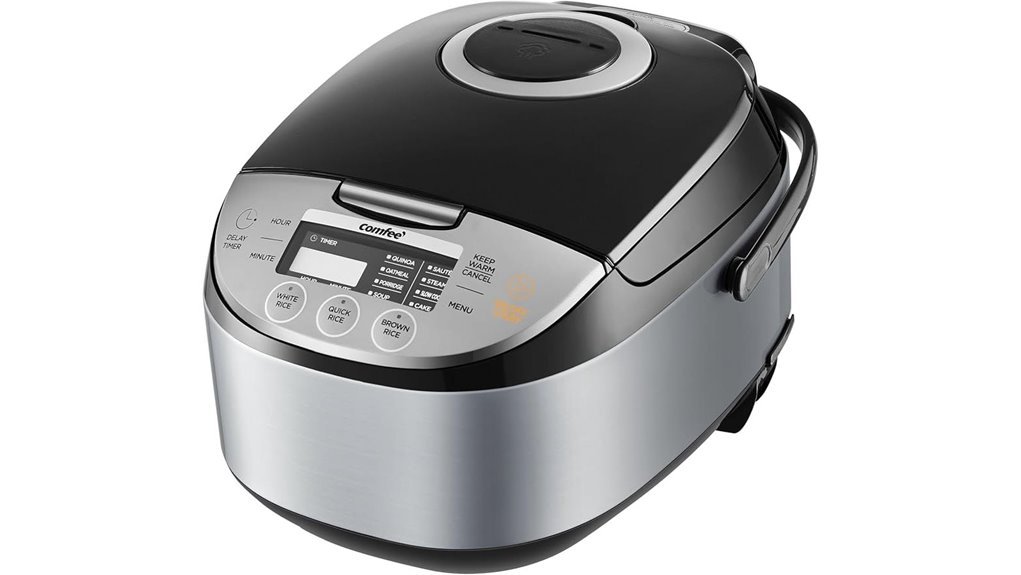
The COMFEE’ Rice Cooker is a strong pick for small families, busy cooks, or anyone who wants more than a basic rice maker without spending over $100. Its 6-cup uncooked capacity yields up to 12 cups cooked, while fuzzy logic monitors moisture and adjusts heat and timing for reliable results. Eleven preset modes handle white rice, brown rice, sushi, pasta, soup, stew, sauté, and vegetables. The 30-minute fast cook option adds convenience. A touch LCD, automatic keep warm, non-stick pot, and removable parts simplify use and cleaning. It includes a measuring cup, rice spoon, and one-year warranty.
Best For: Small families, busy home cooks, and anyone who wants a compact, versatile rice cooker with easy operation and reliable results.
Pros:
- Fuzzy logic helps adjust cooking time and temperature for consistent rice and grains.
- 11 preset modes add versatility for rice, pasta, soup, stew, sauté, and vegetables.
- Easy to use and clean, with a touch LCD, keep warm function, and removable parts.
Cons:
- 6-cup uncooked capacity may be too small for larger households or meal prep.
- Hand washing is recommended, which may be less convenient than fully dishwasher-safe models.
- Best suited for basic to mid-level cooking needs rather than advanced customization.
Cosori Rice Cooker 10 Cup, Fuzzy Logic, Ceramic Coating Inner Pot,18-in-1
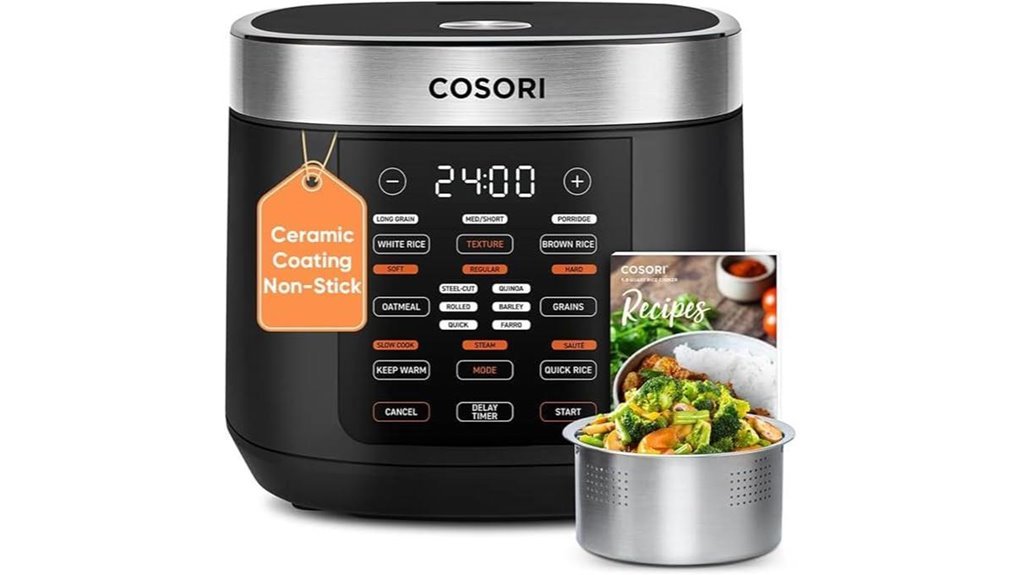
With 18 cooking modes, the Cosori Rice Cooker suits busy cooks wanting versatility on a budget. This 10-cup model uses fuzzy logic to adjust heat and timing for steady results across white rice, brown rice, grains, oats, soups, and sautéed dishes. A quick rice setting shortens wait times, while soft, regular, and hard texture options add control. The ceramic-coated inner pot simplifies cleanup, and dishwasher-safe parts help further. Steam, slow cook, keep warm, and delay timer functions broaden meal options. It includes a steamer basket, paddle, and measuring cup.
Best For: Busy home cooks who want a versatile, budget-friendly rice cooker with multiple cooking modes, easy cleanup, and reliable results.
Pros:
- 18 cooking modes provide strong versatility for rice, grains, oats, soups, steaming, and sautéing.
- Fuzzy logic and texture settings help deliver consistent rice results with more control over doneness.
- Ceramic-coated pot and dishwasher-safe parts make cleanup easier.
Cons:
- 10-cup capacity may be too large for smaller households or limited counter space.
- 1000W power and multiple functions can make it bulkier than simpler rice cookers.
- Best suited for U.S. power standards, so it may not work as intended in regions with different voltage requirements.
Yum Asia Kumo YumCarb Rice Cooker (5.5 Cups)

Yum Asia Kumo suits small households seeking versatile, healthier rice cooking under budget. This 5.5-cup model uses advanced fuzzy logic and multi-phased cooking to handle white, long grain, sushi, brown rice, and low-carb results with consistent texture. Its 5-layer, 2mm ceramic-coated bowl supports durability, while steam, porridge, and slow-cook modes add flexibility. The light stainless steel body, LED display, and Smart Button panel keep operation simple. A 24-hour timer and keep-warm function improve convenience. Included accessories and a two-year warranty strengthen its value.
Best For: Small households or couples who want a compact, versatile rice cooker with healthier low-carb options and easy everyday convenience.
Pros:
- Advanced fuzzy logic and multi-phased cooking help deliver consistent texture for several rice types.
- 5-layer, 2mm ceramic-coated inner bowl adds durability and a healthier nonstick cooking surface.
- Includes useful extras like steam, porridge, and slow-cook modes plus a 24-hour preset timer.
Cons:
- Small 5.5-cup capacity may not suit larger families or batch cooking.
- 110V US power limits use to compatible regions without a converter.
- Limited to 500 watts, so some cooking tasks may take longer than higher-powered models.
COMFEE’ 14-in-1 Rice Cooker, Stainless Steel, 10-Cups Uncooked Rice
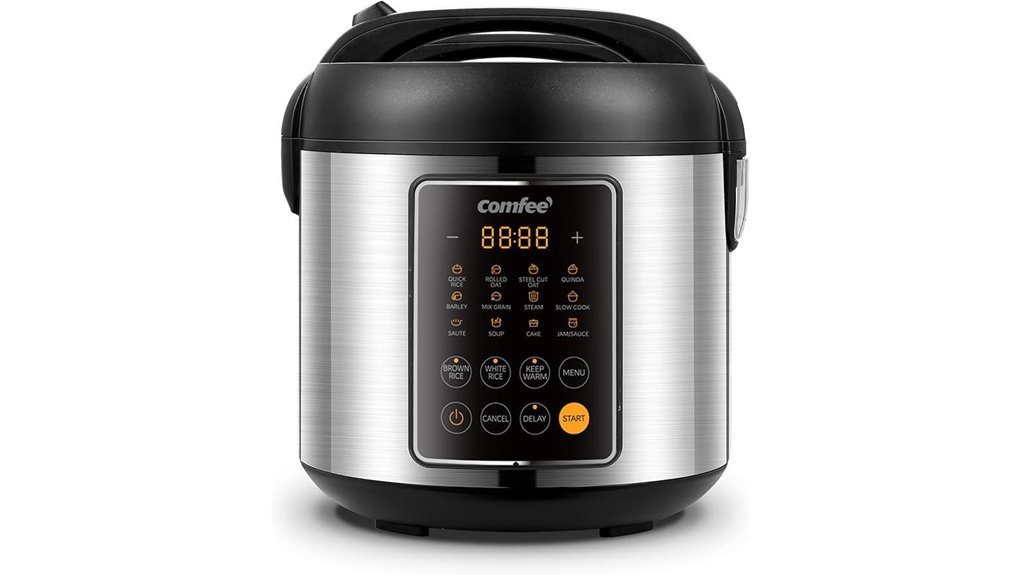
Ideal for larger households, the COMFEE’ 14-in-1 rice cooker handles up to 10 cups uncooked. The stainless steel CRD50LB1BSS combines a 5.3-quart capacity with a compact footprint, making it suitable for everyday use. Its 14 digital programs cover white rice, brown rice, oats, grains, steam, slow cook, sauté, soup, cake, and jam. An LED panel simplifies selection, while the 15-hour delay timer and 24-hour keep warm function support flexible meal planning. Dishwasher-safe parts, overheating protection, and BPA-free materials add practicality and safety.
Best For: Larger households or busy home cooks who want a versatile, easy-to-use rice cooker with multiple one-touch programs and flexible meal timing.
Pros:
- 14-in-1 functionality covers rice, oats, grains, steaming, slow cooking, sautéing, soup, cake, and jam.
- 10-cup uncooked capacity with a compact stainless steel design suited for everyday kitchen use.
- Convenient features like a 15-hour delay timer, 24-hour keep warm, dishwasher-safe parts, and safety protections.
Cons:
- Large capacity may be more than needed for individuals or small households.
- Stainless steel exterior can show fingerprints or smudges more easily.
- As a multi-function cooker, it may not replace dedicated appliances for specialized cooking tasks.
GreenLife Digital Rice Cooker, 2-Cups Uncooked/4-Cups Cooked, White
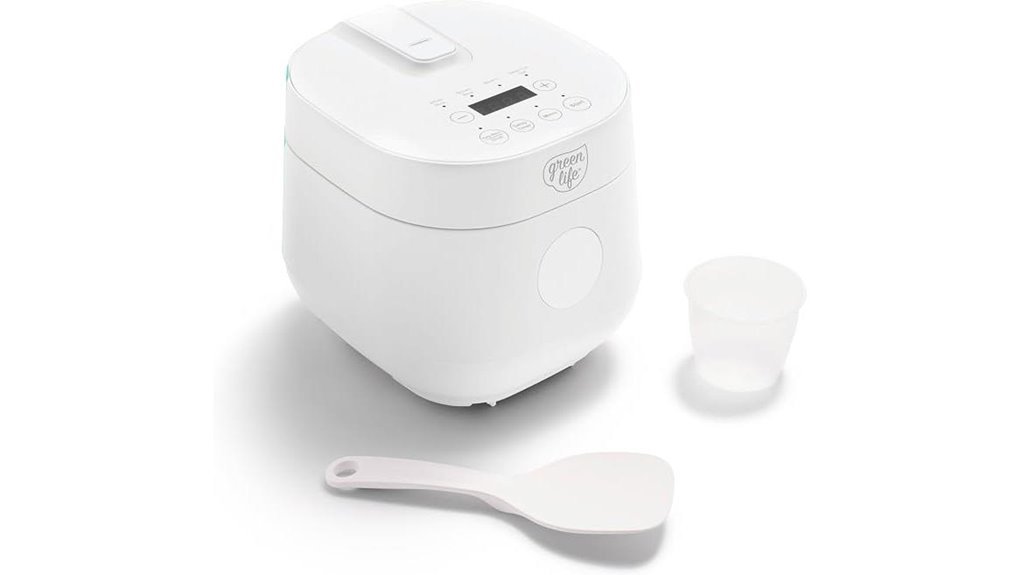
The GreenLife Digital Rice Cooker suits small households needing compact, easy rice and grain cooking. Its 2-cup uncooked capacity makes it better for singles or couples than larger families, while the white, 4-pound design stays unobtrusive on counters. One-touch presets handle white rice, brown rice, quinoa, and steel cut oats, and fuzzy logic helps improve results automatically. A delay timer and auto-warm mode add convenience. The PFAS-free ceramic coating, cool-touch exterior, dishwasher-safe bowl, LED display, and included measuring cup and spatula round out a practical, low-maintenance option.
Best For: singles, couples, or small households looking for a compact, easy-to-use rice and grain cooker with convenient preset functions and simple cleanup.
Pros:
- One-touch presets for white rice, brown rice, quinoa, and steel cut oats make cooking straightforward.
- PFAS-free ceramic nonstick bowl, dishwasher-safe parts, and cool-touch exterior support easy, safer use.
- Delay timer and auto-warm mode add flexibility and convenience for meal planning.
Cons:
- 2-cup uncooked capacity is too small for larger families or batch cooking.
- Lacks the versatility and output of larger multi-function cookers.
- Corded electric design and 240-watt power may feel basic compared with more advanced models.
Toshiba Mini Rice Cooker with Steamer and Warmer
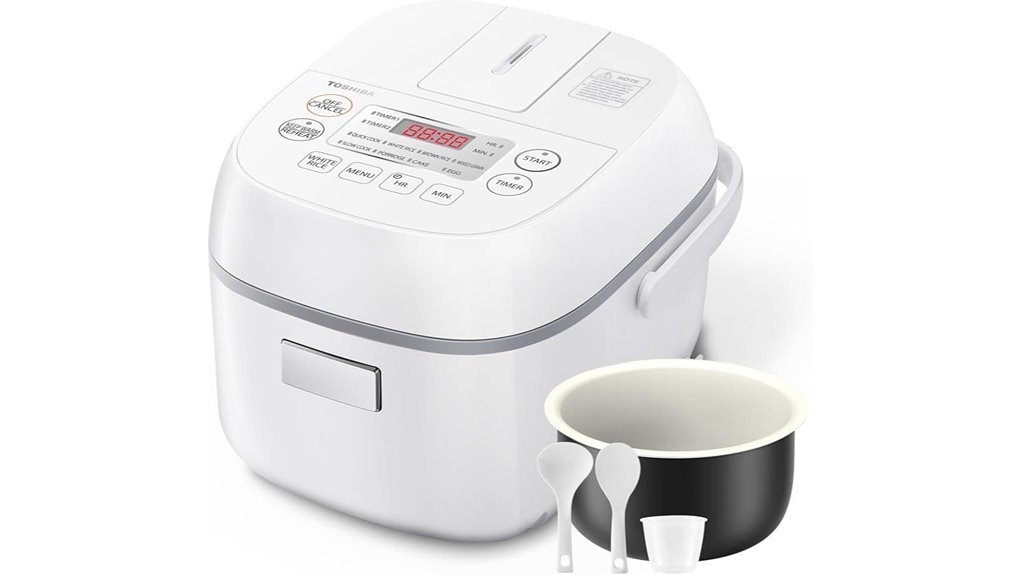
With 3-cup capacity and fuzzy logic, Toshiba’s mini cooker suits small households needing reliable versatility. It handles 1 to 3 people and prepares white rice, brown rice, mixed grain, quinoa, oatmeal, soups, stews, porridge, cake, and eggs through eight preset modes. The LED display simplifies control, while the 24-hour delay timer adds scheduling convenience. Its keep-warm function preserves heat for hours. Safety features include a locking lid, detachable cord, thermal fuse, steam vent cap, and automatic shut-off. A non-stick pot and removable steam valve make cleanup easier.
Best For: Small households or individuals cooking for 1 to 3 people who want a compact, versatile rice cooker with convenient preset functions.
Pros:
- Eight preset cooking modes make it easy to prepare rice, grains, porridge, cake, eggs, and more.
- Fuzzy logic technology helps adjust cooking for better texture and consistency.
- Compact design with a 24-hour delay timer and keep-warm function adds everyday convenience.
Cons:
- 3-cup uncooked capacity may be too small for larger families or batch cooking.
- Non-stick inner pot requires hand washing, which is less convenient than dishwasher-safe parts.
- Limited to 120V corded use, so it may not suit all kitchens or travel needs.
Factors to Consider When Choosing Rice Cookers Under $100 in 2026
When choosing rice cookers under $100 in 2026, cooking capacity, fuzzy logic, and preset functions remain key factors. Easy cleaning also matters, especially for frequent use and busy kitchens. Included accessories can add value by making the cooker more versatile right away.
Cooking Capacity
Cooking capacity is one of the most important factors in choosing a rice cooker under $100, since models typically range from 2 cups uncooked, suitable for a single person or small household, up to 10 cups uncooked for larger families or gatherings. Capacity is usually listed in uncooked rice, and 1 cup generally produces about 2 cups cooked. For individuals or small families, 3- to 6-cup models often cover daily meals without producing too many leftovers. Cookers with 8 cups or more are better suited to batch cooking, meal prep, or entertaining guests. Matching capacity to household size and cooking habits helps prevent wasted energy, unnecessary food waste, and the inconvenience of using a cooker that is too small or overly large.
Fuzzy Logic
Fuzzy Logic can make a noticeable difference in rice cookers under $100 by using sensors to monitor moisture and adjust heat and cooking time automatically. This control helps produce more consistent results across white, brown, and sushi rice, as well as other grains that need different treatment. By responding to changing conditions during cooking, the technology improves texture and flavor without requiring manual adjustments. It also supports efficiency, since some models offer quick-cook options that shorten preparation time while preserving quality. In many units, automatic keep-warm behavior maintains serving temperature after cooking ends, reducing the risk of drying or scorching. For shoppers seeking dependable performance on a budget, Fuzzy Logic adds valuable precision and flexibility, making a low-cost cooker more adaptable to everyday meals.
Preset Functions
Preset functions are a major advantage in rice cookers under $100, since many models can handle more than just plain rice with a single-button setup. These programs often cover white rice, brown rice, quinoa, oats, steam cooking, and even soups or stews, making one appliance useful for varied meals. Some units include as many as 18 functions, giving users more control over cooking results without manual adjustment. Texture options can further refine performance by letting the user choose softer or firmer rice. Delay timers add flexibility by allowing cooking to begin up to 24 hours later. After cooking, many models automatically shift to keep warm mode, which helps maintain serving temperature until the meal is ready.
Easy Cleaning
Easy cleaning is another practical factor to weigh when comparing rice cookers under $100, especially after considering models with preset cooking options that may see frequent use. Non-stick inner pots help prevent rice from clinging to the surface, reducing scrubbing after each meal. Removable inner lids and steam valve bases are also valuable because they open access to areas where residue often collects. Dishwasher-safe parts can further streamline upkeep, saving time in busy kitchens. A smooth exterior, whether stainless steel or ceramic, usually wipes clean with minimal effort and resists visible buildup. It is also wise to avoid units with many crevices or intricate mechanisms, since simpler designs generally make maintenance faster, easier, and less frustrating over time.
Included Accessories
Included accessories can make a noticeable difference when comparing rice cookers under $100, since items like measuring cups and rice paddles improve accuracy and everyday convenience. Extra pieces such as steaming baskets or ladles can also expand the cooker’s usefulness, allowing it to handle vegetables, soups, or other simple dishes with less effort. Dishwasher-safe components are especially valuable because they reduce cleanup time after meals. A user manual or quick start guide can further improve the experience by helping users understand settings and functions without guesswork. Durability matters as well, so the included items should be made from food-safe materials that can withstand regular use. When these accessories are practical, safe, and easy to maintain, the overall value of a budget rice cooker becomes stronger.
Frequently Asked Questions
Which Rice Cooker Is Best for Brown Rice and Quinoa?
The best rice cooker for brown rice and quinoa is typically one with a dedicated brown rice setting and a reliable nonstick inner pot, since both grains need longer, steadier cooking. A fuzzy logic model often performs best because it adjusts heat and timing automatically. For a budget choice, a compact Zojirushi or Aroma unit is often favored. Consistent results matter more than extra features for these grains overall.
Can These Budget Rice Cookers Make Cakes or Soups?
Like a small kitchen chameleon, some budget rice cookers can indeed make cakes and soups. Many models include a cake or steam setting, while others handle simple soups only if they have a sauté or slow-cook function. Performance varies, and capacity is modest, so results may be basic rather than gourmet. For everyday use, they remain surprisingly versatile, though a few extra features make all the difference in practice.
How Easy Are the Inner Pots to Clean?
Inner pots are usually easy to clean if they have a nonstick coating and a removable design. Most rinse clean with warm water and a soft sponge, while sticky rice residue may need a brief soak. Abrasive pads should be avoided to preserve the finish. Some pots are dishwasher-safe, but handwashing often extends their life. Handles and rounded corners can also make cleaning simpler overall.
Do These Models Come With a Steaming Basket?
Some models do come with a steaming basket, but not all of them do. Inclusion usually depends on the brand and feature tier, even among budget options. A detached review would note that buyers should check the product listing carefully, because some cookers bundle a basket for vegetables or fish, while others focus only on rice. If steaming is important, the package contents should be verified before purchase.
Which Cooker Uses the Least Electricity?
The cooker with the lowest wattage typically uses the least electricity, assuming similar cooking times. In this group, the smallest basic model is usually the most efficient, especially if it has a 300 to 500 watt heating element and an automatic keep-warm cycle that shuts off quickly. Larger multi-function cookers often draw more power overall. He would compare the rated wattage and cooking duration on each product label before deciding.
Conclusion
Overall, the six rice cookers highlighted here offer a pleasantly balanced blend of affordability, convenience, and dependable results. Each model brings its own quiet strengths, whether through versatile presets, easy-clean finishes, or compact designs suited to modest kitchens. While no budget appliance is flawless, these options make a rather tasteful compromise for shoppers seeking good performance without exceeding the $100 mark. In 2027, value-conscious buyers have several remarkably civilized choices at hand.
