
Low carb rice cookers are drawing attention in 2027 as more households look for easier ways to cut starch without losing convenience. From large-capacity models with carb reduction systems to compact cookers with ceramic bowls and smart presets, the options now cover very different needs. Some focus on speed, others on healthier texture or precise heating. The five models ahead show how far this category has come, but the differences matter more than they first appear.
Instant Pot 20-Cup Rice Cooker with Carb Reduction
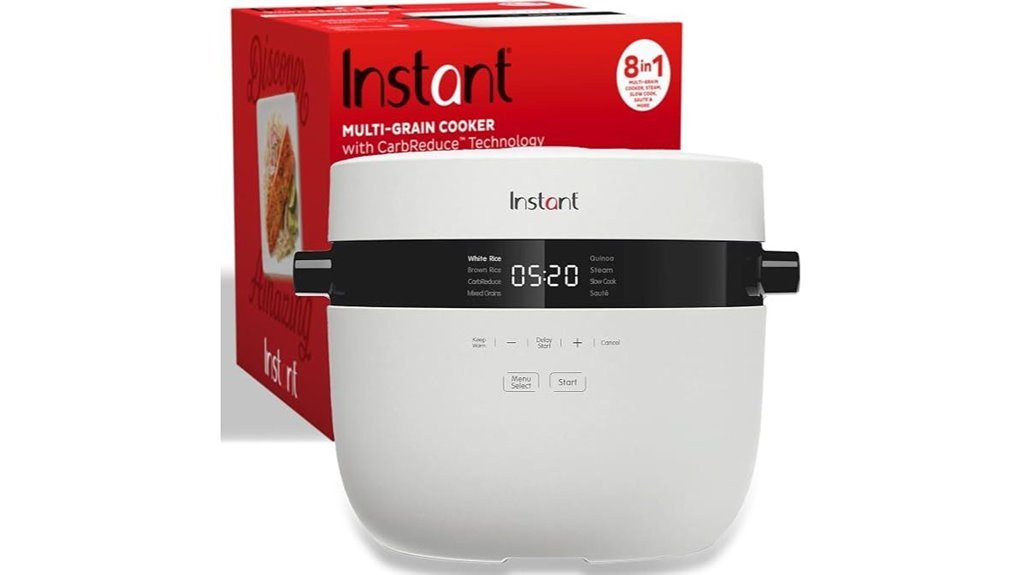
The Instant Pot 20-Cup Rice Cooker with Carb Reducing Technology is a strong fit for larger households or meal preppers seeking an easier way to cut carbs without giving up texture or convenience. With 4.74 liters of capacity, 860 watts of power, and eight presets, it handles rice, grains, quinoa, mixed dishes, slow cooking, sautéing, steaming, and warming for up to 10 hours. Its CarbReduce system lowers carbs and sugar by up to 40%. A matte, space-saving design, dishwasher-safe parts, and included accessories support easy use and cleanup.
Best For: Larger households, meal preppers, and anyone who wants a convenient rice cooker that can reduce carbs without sacrificing texture.
Pros:
- CarbReduce technology can lower carbs and sugar by up to 40%.
- Large 20-cup capacity with 8 versatile cooking presets.
- Dishwasher-safe parts and included accessories make cleanup easy.
Cons:
- Larger size may take up more counter and storage space.
- Only one manufacturer warranty available upon request through customer service.
- Best suited for rice and grain-based cooking, so it may not replace a full multi-cooker for all needs.
GreenPan Rice Cooker with 10 Presets and Timer
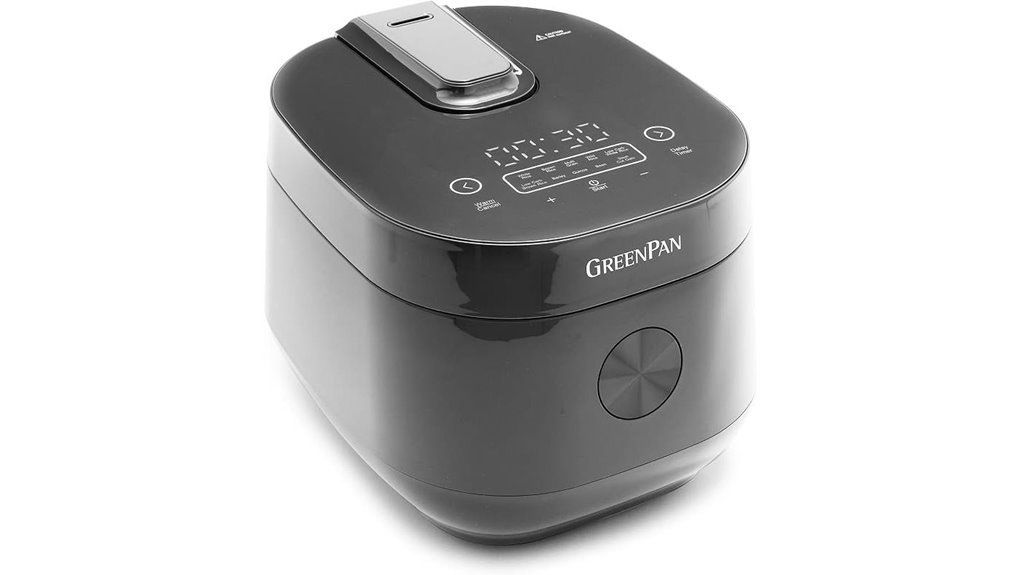
GreenPan suits meal preppers and health-focused cooks who want lower-carb grains without sacrificing convenience. Its fuzzy logic system adjusts time and temperature automatically, while 10 presets cover white rice, brown rice, multigrain, wild rice, low-carb modes, quinoa, beans, steel-cut oats, and soup. The 8-cup cooked capacity supports batch cooking, and the carb-reduction function can lower starch content by up to 33 percent. A PFAS-free ceramic coating, steamer insert, LED display, 24-hour delay start, keep-warm mode, and dishwasher-safe parts add practicality for daily use, cleanup, and versatile meal planning.
Best For: Meal preppers and health-focused home cooks who want versatile, easy-to-use rice cooker features with lower-carb grain options.
Pros:
- Fuzzy logic and 10 presets make it easy to cook rice, grains, beans, oats, and soup with consistent results.
- Low-carb mode can reduce starch by up to 33%, which is appealing for nutrition-conscious users.
- PFAS-free ceramic coating, steamer insert, delay start, keep-warm mode, and dishwasher-safe parts add convenience.
Cons:
- 8-cup cooked capacity may be too small for larger families or bigger batch cooking needs.
- Low-carb functionality may not be useful for users who don’t prioritize starch reduction.
- The variety of presets and settings may feel unnecessary for people who want a very simple rice cooker.
Aroma Housewares SmartCarb Rice Multicooker & Steamer (5Qt)
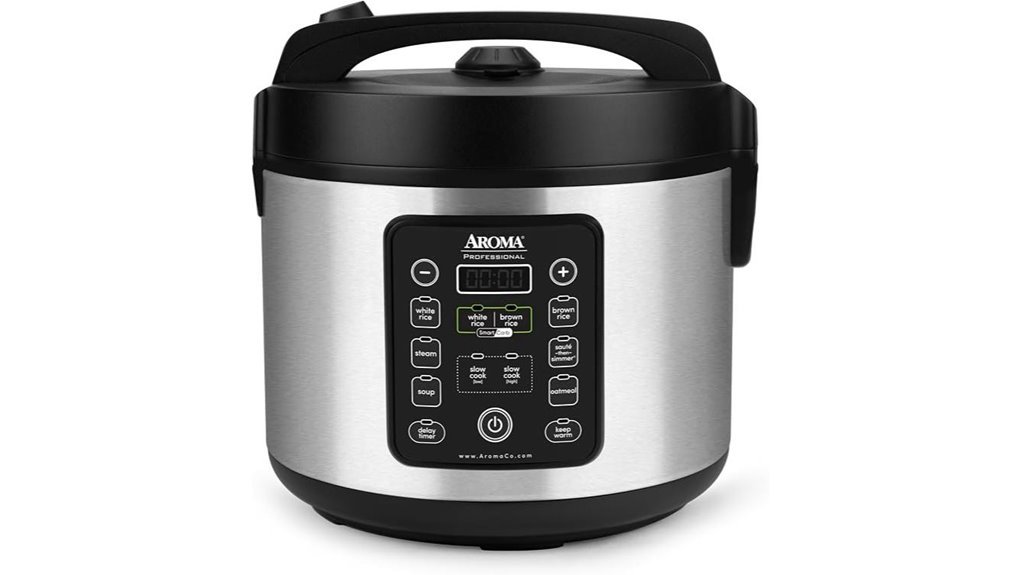
Aroma’s SmartCarb 5-quart multicooker suits households seeking lower-carb rice without sacrificing versatility. The black ARC-1120SBL combines rice cooking, steaming, and slow cooking in one corded electric unit, with eight one-touch presets for rice, grains, vegetables, meats, soups, and sautéing. Its stainless steel carb-reducing pot is designed to remove up to 30% of rice carbs. A 15-hour delay timer supports planned meals, while the keep-warm mode maintains serving temperature automatically. Included accessories cover measuring, steaming, and serving tasks. Hand washing is recommended.
Best For: Households that want a versatile 5-quart multicooker with lower-carb rice cooking, easy one-touch presets, and convenient meal prep features.
Pros:
- Reduces up to 30% of rice carbs with the stainless steel carb-reducing pot.
- Offers 8 preset functions for rice, grains, vegetables, meats, soups, steaming, and sautéing.
- Includes a 15-hour delay timer and automatic keep-warm mode for flexible meal planning.
Cons:
- Hand washing is recommended, which may be less convenient than dishwasher-safe parts.
- Uses a corded electric design with 220 volts, which may not suit all kitchens or regions.
- The 5-quart size may be larger than needed for smaller households.
Yum Asia Kumo YumCarb Rice Cooker with Ceramic Bowl
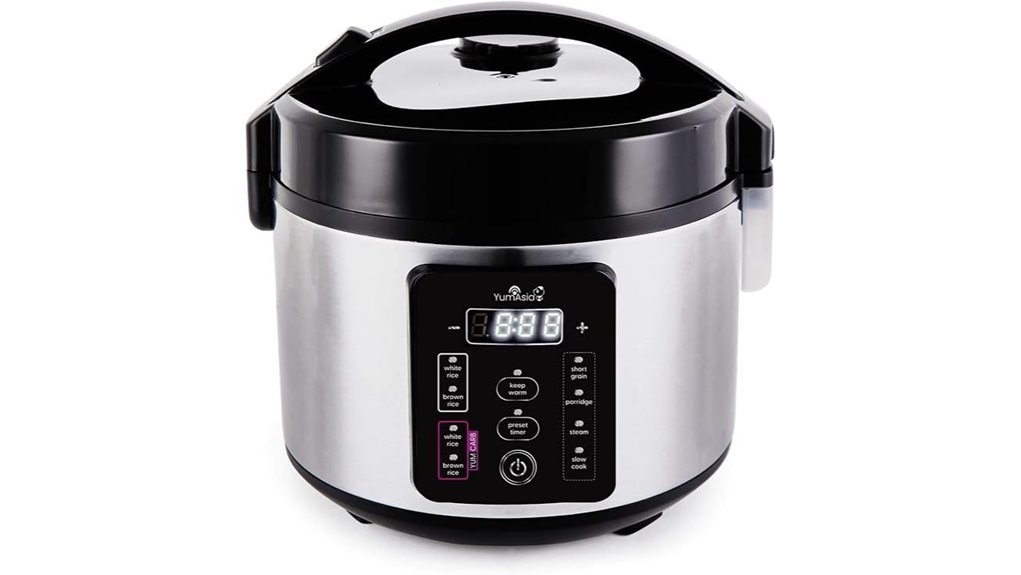
With its low-carb setting and ceramic bowl, the Yum Asia Kumo suits health-focused rice eaters. It offers 5.5 cups of uncooked capacity in a compact 2 kg design with a light stainless steel finish. Advanced Fuzzy Logic automatically adjusts cooking for white, brown, sushi, and low-carb rice, while steam, porridge, and slow-cook modes add flexibility. The 5-layer, 2 mm ceramic-coated bowl supports durability and even results. A LED display and Smart Button panel simplify use. Keep Warm, a 24-hour timer, and a two-year warranty round out the package.
Best For: Health-conscious households and small families who want a compact rice cooker with low-carb options, fuzzy logic precision, and versatile everyday cooking modes.
Pros:
- Low-carb setting plus ceramic bowl for healthier rice preparation
- Compact 5.5-cup size with useful rice, steam, porridge, and slow-cook functions
- Easy-to-use LED display, Smart Button panel, Keep Warm, and 24-hour timer
Cons:
- 5.5-cup capacity may be too small for larger households
- 110V US power limits use in regions with different voltage standards
- 500 watts may be slower than higher-powered rice cookers
TOSHIBA Induction Heating Rice Cooker with Steamer
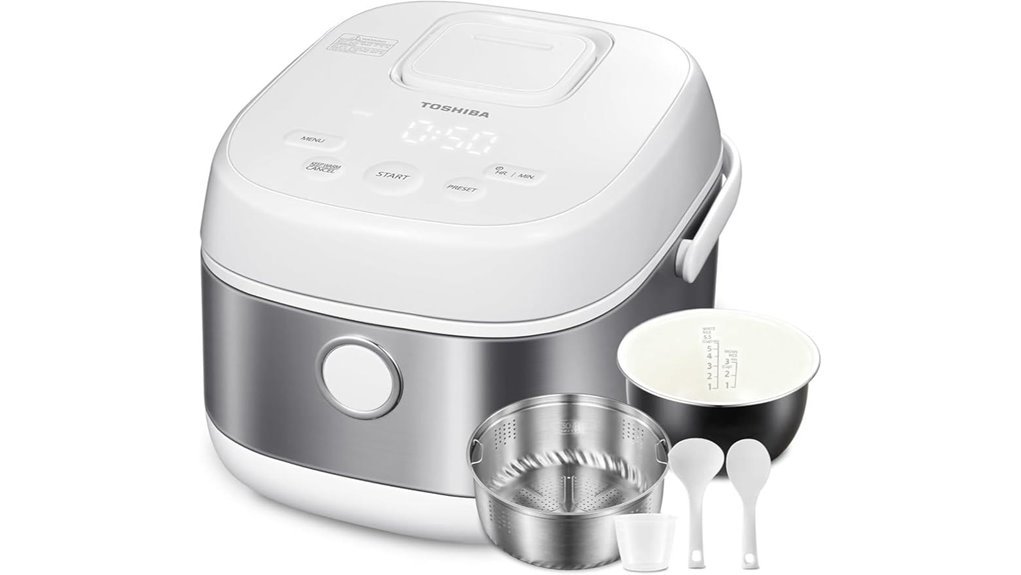
The TOSHIBA TRSH01 suits cooks who want low-carb rice without giving up versatility. This induction heating model offers 8 settings: Low Carb, Quick, White, Brown, Mixed Grain, Quinoa, Steam, and Oatmeal. Its low-carb mode helps reduce digestible starch while increasing resistant starch, making it a practical choice for keto or lower-sugar diets. Fuzzy Logic sensors refine time and temperature for consistent results, and the included steam basket adds flexibility. A nonstick pot, removable valve, and detachable cord simplify cleanup. Safety features include automatic shut-off, thermal fuse, and a locking lid.
Best For: Home cooks who want a versatile induction rice cooker with a low-carb option for keto or lower-sugar diets.
Pros:
- 8 cooking functions offer flexibility for rice, grains, oatmeal, and steaming.
- Low-carb mode helps reduce digestible starch while boosting resistant starch.
- Easy to clean with a nonstick pot, removable steam valve, and detachable cord.
Cons:
- 5.5-cup uncooked capacity may be too small for larger households.
- No mention of advanced digital presets or app connectivity.
- Induction heating models can be pricier than basic rice cookers.
Factors to Consider When Choosing Low Carb Rice Cookers in 2026
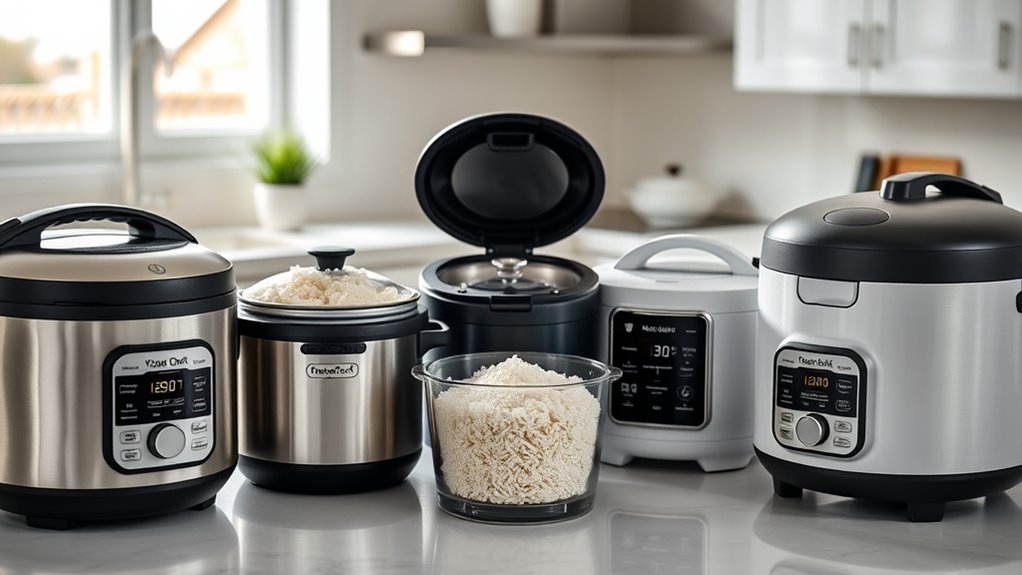
In 2026, low carb rice cookers are often judged by the effectiveness of their carb reduction technology, along with cooking capacity for different household sizes. Preset cooking modes and the heating method also shape how well the appliance handles rice, grains, and other foods. Ease of cleaning remains a practical factor, especially for regular use.
Carb Reduction Technology
Carb reduction technology has become a key differentiator in low carb rice cookers, with many models designed to cut carbohydrate content by up to 40% through specialized cooking methods. These systems often use steam baskets or nonstick inner pots to separate and drain excess starch during cooking. Many units also provide dedicated low-carb settings for specific rice and grain types, improving consistency across different recipes. Fuzzy logic technology adds another layer of control by adjusting time and temperature automatically to preserve texture and flavor while maximizing starch removal. Some models include keep-warm functions that maintain reduced carbohydrate levels after cooking, supporting convenience without sacrificing food quality. For buyers, the most useful technologies combine starch reduction, adaptive control, and reliable finish quality.
Cooking Capacity
After considering how low carb rice cookers reduce starch, attention naturally shifts to capacity, which directly affects how much food can be prepared at one time. Cooking capacity matters because larger models can handle family meals or bulk meal prep with less repetition. Most low-carb rice cookers offer between 5.5 and 20 cups of cooked rice, making them suitable for different household sizes. For small families or regular meal prepping, at least an 8-cup cooked capacity is often practical. Those serving larger groups may find a 20-cup model more appropriate. Uncooked capacity also deserves attention, since it usually determines final output; a common conversion is about 2.5 times the uncooked volume. A versatile size can also support grains and legumes.
Preset Cooking Modes
Preset cooking modes are a key factor when choosing a low-carb rice cooker in 2026, since they determine how well the appliance handles different grains and dishes. Many models offer settings for white rice, brown rice, quinoa, soup, and low-carb cooking, giving greater flexibility across meal types. These presets help match cooking time and temperature to each ingredient, improving texture and flavor. Some advanced units use fuzzy logic to refine these adjustments automatically, supporting consistent results even when ingredients vary. Specialized low-carb programs are especially useful because they are designed to reduce excess starch during cooking. Programmable delay timers and keep-warm functions also add convenience, letting meals be scheduled ahead and served at an appropriate temperature without constant supervision.
Heating Method
Heating method is another important factor to weigh when comparing low-carb rice cookers in 2026, especially after reviewing preset options. Induction heating stands out for its precise temperature control, which can improve cooking efficiency and support stronger starch reduction. Fuzzy logic systems add flexibility by adjusting time and heat to match the rice type and amount, helping produce consistent low-carb results without manual recalibration. Direct heat models, including those with stainless steel pots, can also aid carbohydrate reduction by encouraging excess starch removal during cooking. Multi-phased heating profiles further refine the process by shifting temperature across stages, preserving texture and flavor. The selected method also affects energy use, since some systems finish faster or consume less power while maintaining dependable performance.
Ease Of Cleaning
Ease of cleaning can be a major deciding factor when comparing low-carb rice cookers in 2026. Dishwasher-safe parts, especially non-stick inner pots and removable accessories, reduce the effort required after each use. Models with steam baskets and detachable lids offer better access to areas where residue may collect, making maintenance more practical. Non-stick coatings also help limit food buildup, allowing surfaces to be wiped clean with minimal scrubbing. A streamlined design with fewer crevices is preferable because it leaves fewer places for grains and starch to hide. Some rice cookers include spatulas, ladles, or other cleaning-oriented accessories that help control mess during serving and cleanup. Overall, simple maintenance can make a cooker more convenient for regular use and long-term ownership.
Timer And Keep Warm
A programmable timer can add valuable flexibility to a low-carb rice cooker by letting users delay cooking so the meal is ready at the right time. This feature supports meal planning, since cooking can begin hours in advance and still finish when needed. Many models allow delays of up to 24 hours, which helps avoid overcooking while fitting different schedules. A dependable keep-warm function is equally important, because it maintains safe serving temperature after cooking ends. Some units can hold warmth for as long as 10 hours, helping preserve freshness and convenience. User-friendly digital displays usually make both settings easier to program and monitor, reducing guesswork and improving control. Together, timer and keep-warm functions make daily use more practical and predictable.
Included Accessories
Beyond timer and keep-warm settings, the included accessories can strongly influence how practical a low-carb rice cooker feels in everyday use. Measuring cups and spatulas help maintain portion accuracy and simplify serving, which is especially useful when monitoring carbohydrate intake. Steam trays or baskets add flexibility by allowing vegetables or proteins to cook alongside rice, creating more complete meals with less effort. A removable inner pot that is dishwasher-safe reduces cleanup time and makes regular use less burdensome. Some models also include a carb reduction tray, a useful feature for lowering starch content during cooking. A user manual or quick start guide can improve setup and operation, helping users understand each accessory and get reliable results from the appliance.
Frequently Asked Questions
How Do Low Carb Rice Cookers Reduce Starch Content?
Low carb rice cookers reduce starch content by separating and draining the starchy liquid released during cooking. They often use a two-step or porous basket system that lets excess starch wash away while the rice finishes steaming. Some models also prolong soaking or boiling cycles to encourage more starch to leach out. The result is rice with a lower glycemic impact, though not necessarily carbohydrate-free.
Can I Cook Quinoa in a Low Carb Rice Cooker?
Yes, quinoa can usually be cooked in a low carb rice cooker. These cookers are generally designed for grains as well as rice, so quinoa often works well with the standard grain or white rice setting. The quinoa should be rinsed first, then cooked with the recommended water ratio. Results may vary by model, so checking the manual is wise. Texture, fluffiness, and moisture levels can differ slightly.
Do Low Carb Rice Cookers Require Special Rice Varieties?
No, low carb rice cookers do not require special rice varieties, though certain types work better than others. They are generally designed to reduce starch in regular white rice and can also handle brown rice, sushi rice, and mixed grains. Results may vary by grain type, so the cooker’s settings and basket design matter more than a special variety. For best texture, users should follow the appliance instructions carefully.
How Often Should the Filter Be Cleaned?
The filter should be cleaned after every few uses, or more often if cooking starch-heavy grains; like a quiet gatekeeper, it works best when kept clear. Regular cleaning prevents buildup, preserves airflow, and supports consistent performance. Most users benefit from checking it weekly and washing it as recommended by the manufacturer. If odors, steam blockage, or residue appear, immediate cleaning is wise to maintain efficiency and hygiene.
Are Low Carb Rice Cookers Dishwasher Safe?
Dishwasher safety depends on the model. Many low carb rice cookers have removable inner pots, lids, and steam trays that can go in the dishwasher, while the base and electrical components must never be submerged. The user manual usually specifies which parts are safe for machine washing. For best results, hand washing nonstick surfaces is often recommended to preserve the coating and extend the cooker’s lifespan.
Conclusion
In the end, the best low-carb rice cooker often feels like it appears at just the right moment—when a busy week, a healthier meal plan, and a hungry family all line up at once. Whether it is the spacious Instant Pot, the versatile Aroma, or the refined Yum Asia and Toshiba models, each offers a small coincidence of convenience and wellness. For households seeking easier carb-conscious cooking, the right choice can make daily meals feel unexpectedly simple.
